Spider Mites on Boston Fern: Causes, Checks & Fixes
Quick answer
Spider mites on Boston Fern thrive in dry heated air-they stipple pinnae and weave fine webbing on Nephrolepis exaltata, often mistaken for humidity browning. First step: hold a white paper under a frond and tap; moving specks confirm mites before you raise humidity alone.
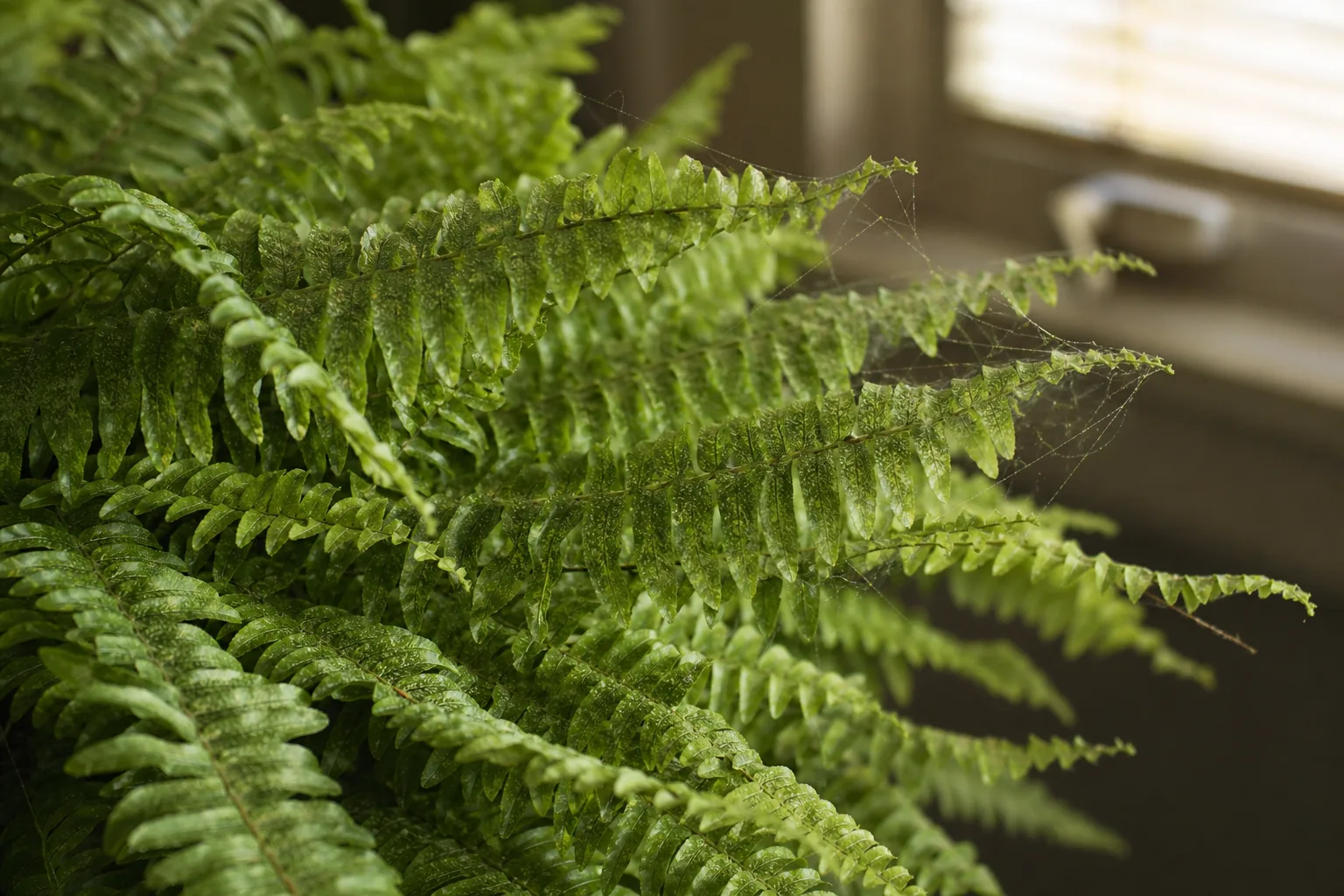
Spider Mites on Boston Fern: Causes, Checks & Fixes
This guide covers spider mites on Boston Fern. See also the general Spider Mites guide, watering, and light pages for this plant.
Spider Mites on Boston Fern: Causes, Checks & Fixes
Quick answer
Spider mites on Boston Fern (Nephrolepis exaltata) are tiny sap-sucking arachnids that thrive in dry heated indoor air-the opposite of this fern’s preferred humid environment. They cause yellow or bronze stippling on pinnae (small leaflets along each frond) and fine silk webbing at frond bases, often misread as low-humidity brown tips alone.
First step: hold white paper beneath a suspect frond and tap the pinnae. Moving specks confirm active mites; static brown edges without stipple or webbing point to humidity or salt issues instead.
Spider mites vs. low humidity on Boston Fern
| Sign | Spider mites | Low humidity alone |
|---|---|---|
| Pattern | Random stipple dots on pinnae | Even brown tips along frond edges |
| Webbing | Fine silk at frond bases | None |
| Paper tap test | Moving specks | No insects |
| Progression | Spreads between fronds weekly | Stable if humidity unchanged |
| Mix moisture | Independent of soil | Independent of soil |
Both problems often coexist in winter-treat mites and raise humidity per the low-humidity guide and watering guide.
What spider mites look like on Boston Fern
- Stippling - Pale yellow or bronze dots on pinnae where mites pierce cells
- Webbing - Fine silk threads connecting pinnae or at the frond base-classic spider mite sign
- Overall dull gray-green fronds as damage accumulates
- Premature pinnae drop on heavily infested fronds
- Mites themselves - Barely visible reddish or greenish dots; confirmed on white paper
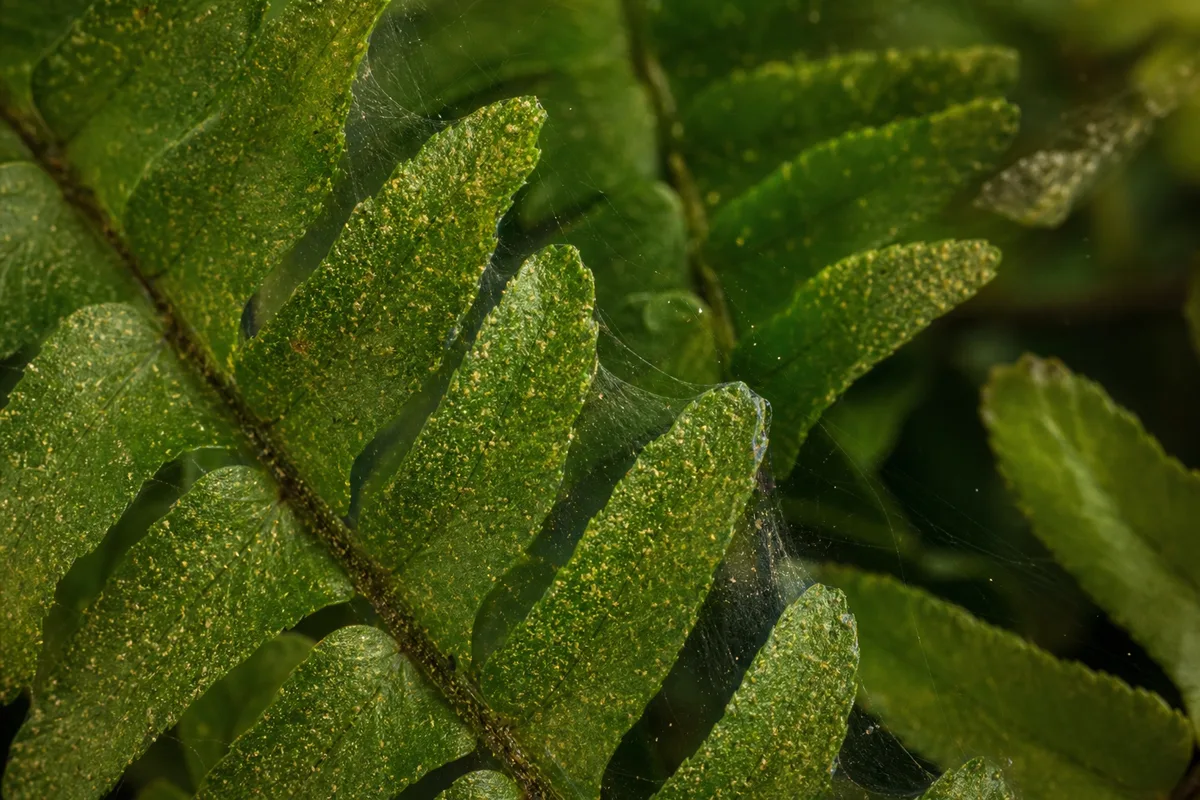
Spider Mites symptoms on Boston Fern - compare with healthy tissue on the same plant.
Mites attack the pinnae, not the soil-do not confuse with fungus gnats at the soil line.
Why Boston Fern gets spider mites
Boston fern prefers high humidity and consistently moist soil. Indoor winter heat drops humidity to 20–30% while furnaces run-spider mites reproduce rapidly in warm, dry conditions.
Hanging baskets near heat vents, south-facing winter sun through dry glass, and neglected humidity trays all stress Nephrolepis into mite territory. Outbreaks also start on newly purchased ferns or plants summered outdoors.
How to confirm the cause
- White paper tap test on multiple fronds
- Webbing check with a hand lens at frond bases
- Stipple pattern - Dotted pinnae vs. uniform tip burn
- Humidity read - Hygrometer below 40% supports mite risk
- Neighbor scan - Mites spread to other houseplants in dry rooms
First fix for Boston Fern
Shower-rinse fronds thoroughly with lukewarm water, focusing on pinnae undersides, then drain the pot completely.
Repeat every three to five days for two weeks. Physical removal knocks down mite populations without chemicals on ferns where oil sprays may weigh down delicate fronds.
Simultaneously raise humidity to 50% or higher with a humidifier or pebble tray-cultural fix supports recovery and slows reinfestation.
If rinses alone fail after two weeks, apply insecticidal soap or horticultural oil labeled for mites, testing one frond first; spray must contact mites directly.
Step-by-step recovery
- Isolate if other plants are nearby
- Shower rinse - Undersides of pinnae; drain pot
- Humidity boost - Humidifier preferred over constant frond misting
- Trim badly stippled fronds at the base to reduce mite reservoirs
- Repeat rinses - Every 3–5 days × 2 weeks minimum
- Soap/oil if needed - After spot-test on one frond
- Monitor new unfurling fronds - Clean pinnae mean success
Recovery timeline
Mite counts drop within one week of consistent rinses. New clean fronds in two to three weeks confirm control. Old stippled pinnae do not re-green-remove for aesthetics.
What not to do
- Do not treat as humidity only if webbing and stipple are present
- Do not leave fronds wet overnight in cold rooms after shower-drain and provide airflow
- Do not use forceful blasts that shred delicate pinnae
- Do not apply oil in hot direct sun on stressed ferns
Boston Fern is non-toxic to cats and dogs.
How to prevent spider mites next time
Maintain 50%+ humidity in winter. Avoid heat vents on hanging baskets. Weekly pinnae checks December–March. Quarantine new ferns. Link routine care to overview humidity targets and low-humidity fixes.
When to worry
Escalate when webbing covers most fronds, pinnae drop in clusters, or mites return within days after three rinse cycles-consider discarding severely infested plants in dense collections to protect others. Early winter detection is far easier than basket-wide infestation in March.
When to use this page vs other Boston Fern guides
- Boston Fern watering guide - Use for routine moisture checks before assuming spider mites is the main issue.
- Boston Fern problems hub - Browse all 16 common issues on this species.
- Low Humidity on Boston Fern - Different entry point when symptoms overlap with spider mites.
- Slow Growth on Boston Fern - Different entry point when symptoms overlap with spider mites.