Brown Tips on Boston Fern: Causes, Checks & Fixes
Quick answer
Brown tips on Boston Fern (*Nephrolepis exaltata*) usually mean dry indoor air, fluoride in tap water, or a heating vent drying one side of the fronds. First step: measure humidity at frond height and move the plant away from HVAC vents before you add water.
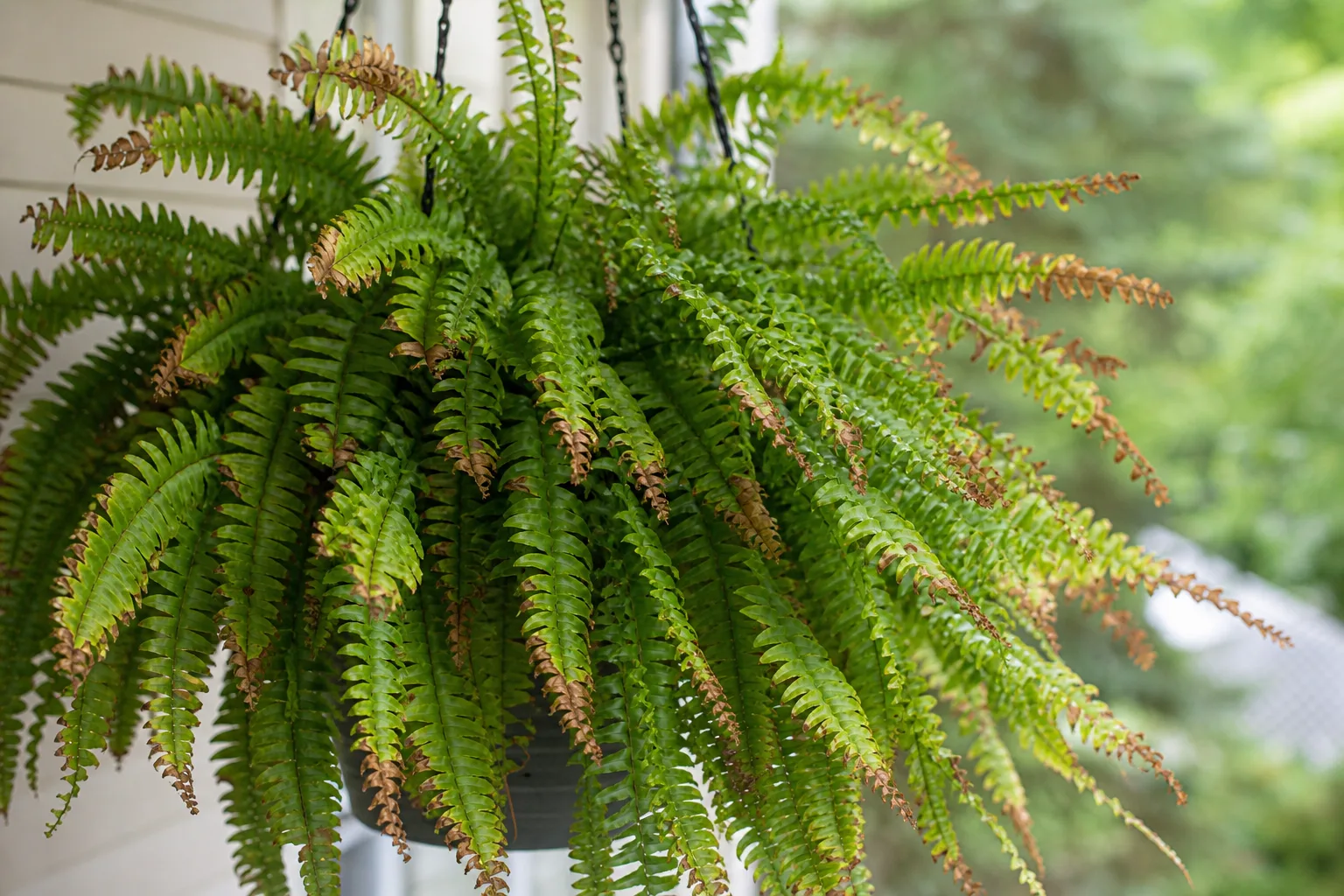
Brown Tips on Boston Fern: Causes, Checks & Fixes
This guide covers brown tips on Boston Fern. See also the general Brown Tips guide, watering, and light pages for this plant.
Brown Tips on Boston Fern: Causes, Checks & Fixes
Quick answer
Brown tips on Boston Fern (Nephrolepis exaltata) are leaflet-margin necrosis-the farthest tissue on each tiny pinna dries out before the rest of the frond fails. On this species, the pattern almost always traces to dry indoor air, fluoride or minerals in tap water, or forced air from heating and cooling vents. Less often, underwatering or fertilizer salt buildup produces the same crispy edges.
First step: measure relative humidity at frond height and move the plant away from HVAC vents before you change your watering schedule. Dry air and drought look similar on arching fronds, but soaking a pot that is already moist will not fix transpiration loss-and can invite root problems. Once air and placement are stable, address water quality if new croziers keep browning.
What brown tips look like on Boston Fern
Tip burn on Boston fern is easy to misread because the plant has hundreds of small leaflets along each arching frond. You are looking for a specific pattern, not general “browning.”
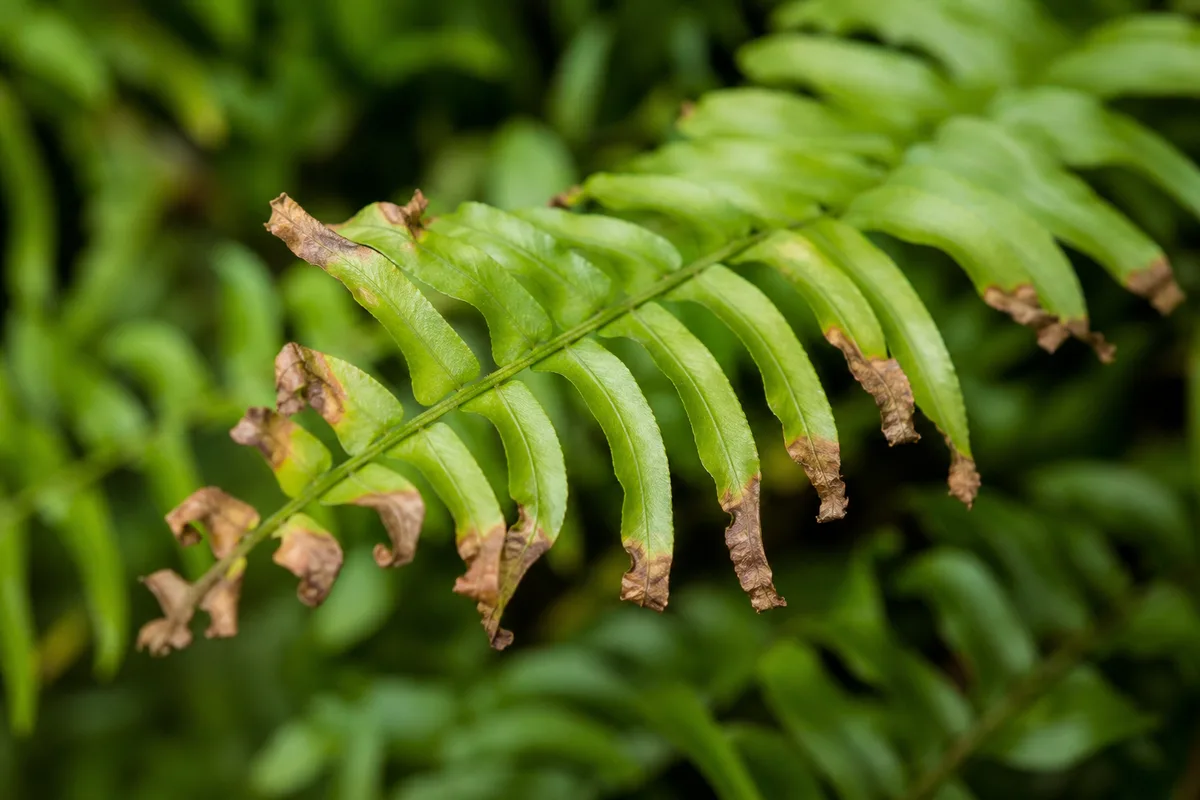
Brown Tips symptoms on Boston Fern - compare with healthy tissue on the same plant.
Typical signs include:
- Dry, tan-to-dark-brown leaflet tips that feel papery or crispy when pinched gently-not soft, wet, or blackened.
- Damage starting at the outermost pinna margins on arching fronds, sometimes spreading a few millimeters inward while the rachis and crown stay green.
- Uniform tip browning across many fronds when humidity is low or the whole room air is dry-common in heated winter homes.
- One-sided browning on fronds nearest a heat vent, radiator, or drafty window-only the exposed side of the arch may crisp while the sheltered side stays green.
- Brown tips on newest unfurling croziers after months of tap-water watering-often paired with white crust on the pot rim.
- Crispy tips with a light pot and dusty dry top inch of mix-points to underwatering layered on dry air, not humidity alone.
- No fine stippling, webbing, or moving specks-those point to spider mites, not environmental tip burn.
Whole-frond scorch from direct sun looks different: entire frond sections bleach or brown at once. Crown decline with soft tissue at the soil line is root rot, not cosmetic tip necrosis.
Why Boston Fern gets brown tips
Boston fern evolved in humid tropical forests where moisture stays high and roots never sit in stagnant water. Its fine fibrous roots and delicate, uncoated pinnae lose water fast when indoor air drops below what the species tolerates. The leaflet tip is the last point in the water pathway from roots-so it browns first.
Low humidity and dry winter air
This is the leading indoor cause. UW–Madison Extension notes that Boston fern pinnae tips and edges may turn brown in dry interiors, especially in winter. Missouri Botanical Garden describes frond tips browning when humidity is low in heated homes. NC State Extension lists high humidity as a core requirement.
Boston ferns in hanging baskets suffer faster than tabletop pots because fronds hang into drier air layers and basket sides dry the root ball quickly. Dense frond architecture also means misting lifts humidity only briefly around outer leaflets-the interior mass still transpires into dry room air. UMN Extension notes that misting is not very effective for ferns and recommends room humidifiers instead.
Fluoride and minerals in tap water
Boston ferns are sensitive to fluoride and salt buildup in tap water. Minerals accumulate in fine leaflets over months, producing tip burn that persists even after humidity improves. Damage often appears on new croziers as well as older fronds. White or pale crust on the soil surface or pot rim supports a water-quality diagnosis.
Cold drafts and heating vents
Forced air from HVAC vents, radiators, and cold winter windows dehydrates fronds on the exposed side. UMN Extension notes that air near upper windows runs hotter and drier, which can brown and kill frond tips. The pattern is asymmetric-one or two fronds facing the vent crisp while the rest of the plant looks fine.
Underwatering and uneven moisture
When the top inch of mix goes bone-dry and the pot feels light, roots cannot resupply transpiring fronds fast enough. Tips brown even if humidity is acceptable. This overlaps with dry-air damage, which is why you check soil moisture before assuming humidity alone is the fix. See our underwatering guide for the dry-soil pattern.
Fertilizer salt buildup
UW Extension warns that over-fertilizing causes browning and drying from the ends of fronds. Boston ferns need only light feeding during active growth. Excess soluble salts in the root zone reduce water uptake-the same marginal scorch pattern as fluoride damage, often with white residue on the soil surface.
How to confirm the cause
Work through these five checks in order-they take five minutes and prevent the wrong fix:
- Humidity at frond height - Use a hygrometer at the level of the hanging fronds, not on a desk. Below 40% strongly supports dry-air tip burn; 50–70% is the workable indoor target. If RH is adequate and tips still brown on new growth, move to water quality.
- Newest crozier test - Find the frond still unfurling. Brown tips on fresh croziers suggest tap-water minerals, fluoride, or fertilizer salts. Only older frond tips affected with clean new growth points to low humidity or vent placement.
- Soil moisture and pot weight - Press into the top inch of mix. Damp soil with crispy tips fits humidity or water-quality stress-not thirst. Bone-dry, light pot with widespread tip burn points to underwatering; see watering rhythm before raising humidity alone.
- Placement scan - Stand beside the plant. Is one side of the basket closer to a heat vent, radiator, or cold window? Asymmetric browning confirms draft or vent damage.
- Soil surface and feed history - White crust, gritty film, or recent full-strength fertilizer supports salt buildup. Months of untreated tap water in a fluoridated area supports fluoride tip burn.
Write down which pattern matches. Change one variable at a time so you can read the plant’s response over the next two to three weeks.
First fix for Boston Fern (by confirmed cause)
If humidity is below 50% (most common)
Run a humidifier near the fern until RH reads 50–70% at frond height, and move the basket away from heating vents.
This single step addresses the leading cause without overwatering a pot that may already be moist. Pebble trays and grouping with other plants help at the margins, but a humidifier is the most reliable fix for dense hanging fronds. Do not mist as a substitute-room humidifiers work better than misting for sustaining humidity around fern fronds.
If new croziers brown on otherwise humid air
Switch all watering to filtered, distilled, or rainwater for the next four weeks, and skip the next fertilizer application.
Pour at room temperature until water runs from drainage holes-the same thorough drink you would use with tap water. Watch the next one or two croziers that unfurl. Clean tips on new growth confirm water quality was the driver.
If soil is bone-dry and the pot is light
Water thoroughly at the sink until the mix is evenly saturated and fully drained-then address humidity.
Underwatering tip burn clears only when roots can resupply fronds. After a proper soak, return to checking the top inch dry-down signal rather than watering on a calendar.
If one side of the plant is affected
Move the basket at least 1 metre (3 feet) from heat vents, radiators, and cold window glass.
Rotate the plant after a week so you can see whether the exposed fronds stabilize. No amount of humidity fully compensates for a direct hot-air stream on arching pinnae.
Recovery timeline
Week one: After humidity rises or water source changes, existing brown tips will not turn green-dead tissue does not recover. You are watching for stabilization: no new tips browning on the worst fronds.
Weeks two to three: The next croziers or leaflet rows should emerge with clean margins. That is your success signal. Trim old crispy tips for appearance once new growth looks healthy.
Weeks four to six: A large Boston fern in a hanging basket may still show older damaged leaflets while new fronds fill in. Full cosmetic recovery can take a full growing season if winter dryness was severe.
Worsening signs: Browning climbing entire fronds, crown softening at the soil line, frond collapse with wet soil, or sour smell from the pot means escalate to root rot checks-not more humidity or water.
Lookalike symptoms to rule out
| What you see | Likely cause | Key difference |
|---|---|---|
| Crispy leaflet tips only, firm crown | Low humidity, tap water, or drafts | No webbing, no yellowing from frond base |
| Fine stippling + webbing on undersides | Spider mites | Dry air favors mites; see spider mites guide |
| Whole frond sections bleached or brown | Direct sun scorch | Affects fronds in the sunbeam, not just tips |
| Yellowing from frond base, wet soil | Overwatering / root stress | Limp fronds despite moisture; see overwatering |
| Soft crown, collapsing fronds, sour soil | Root rot | Urgent-not cosmetic tip burn |
| Normal aging leaflet drop | Old frond senescence | Whole lower fronds yellow and shed; tips on upper growth stay clean |
What not to do
Do not increase watering when tips are brown but soil is already moist-wet mix plus browning fronds can mean damaged roots, not thirst. Do not fertilize a stressed fern to “push new growth”; salts worsen tip burn. Do not remove entire fronds for minor cosmetic tip damage on otherwise green leaflets. Do not use sodium-softened water-softened water accumulates salts that injure fern roots over time. Do not stack Boston Fern repotting guide, heavy pruning, and water-source changes on the same day; make one correction, wait two weeks, then reassess.
Boston Fern care cross-check
Tip burn clears faster when baseline care is stable:
- Humidity: Target 50–70% RH at frond height; see low humidity guide for humidifier placement in hanging baskets.
- Water: Keep mix consistently moist with the top inch allowed to dry slightly-see watering guide.
- Light: Boston Fern light guide; no direct sun on arching fronds.
- Water quality: Filtered or rainwater if tap water produces recurring tips on new growth.
- Drainage: Empty saucers and cachepots after every watering; stagnant bottom moisture causes a different failure mode than dry air.
Species overview and hub links: Boston fern care.
How to prevent brown tips next time
- Run a humidifier through heating season rather than reacting after fronds crisp.
- Check RH at frond height monthly in winter; desk-level readings mislead for hanging baskets.
- Use room-temperature filtered or rainwater if your tap supply is hard or fluoridated.
- Water when the top inch begins to dry, then soak and drain fully-never let the root ball go dust-dry in summer.
- Feed lightly only during active growth; flush salts occasionally by running extra water through the mix.
- Keep baskets off the direct path of heating vents and cold window glass.
- Scout weekly during dry months so tip burn is caught on one frond, not the whole plant.
Related problems when the pattern shifts: low humidity, underwatering, yellow leaves, wilting.
When to use this page vs other Boston Fern guides
- Boston Fern watering guide - Use for routine moisture checks before assuming brown tips is the main issue.
- Boston Fern problems hub - Browse all 16 common issues on this species.
- Low Humidity on Boston Fern - Different entry point when symptoms overlap with brown tips.
- Underwatering on Boston Fern - Different entry point when symptoms overlap with brown tips.
- Overwatering on Boston Fern - Different entry point when symptoms overlap with brown tips.