Underwatering on Boston Fern: Causes, Checks & Fixes
Quick answer
Underwatering on Boston Fern shows as a light pot, limp arching fronds, and bone-dry mix. First step: soak the entire root ball at the sink until water runs freely from the drainage holes, then drain before returning it to its spot.
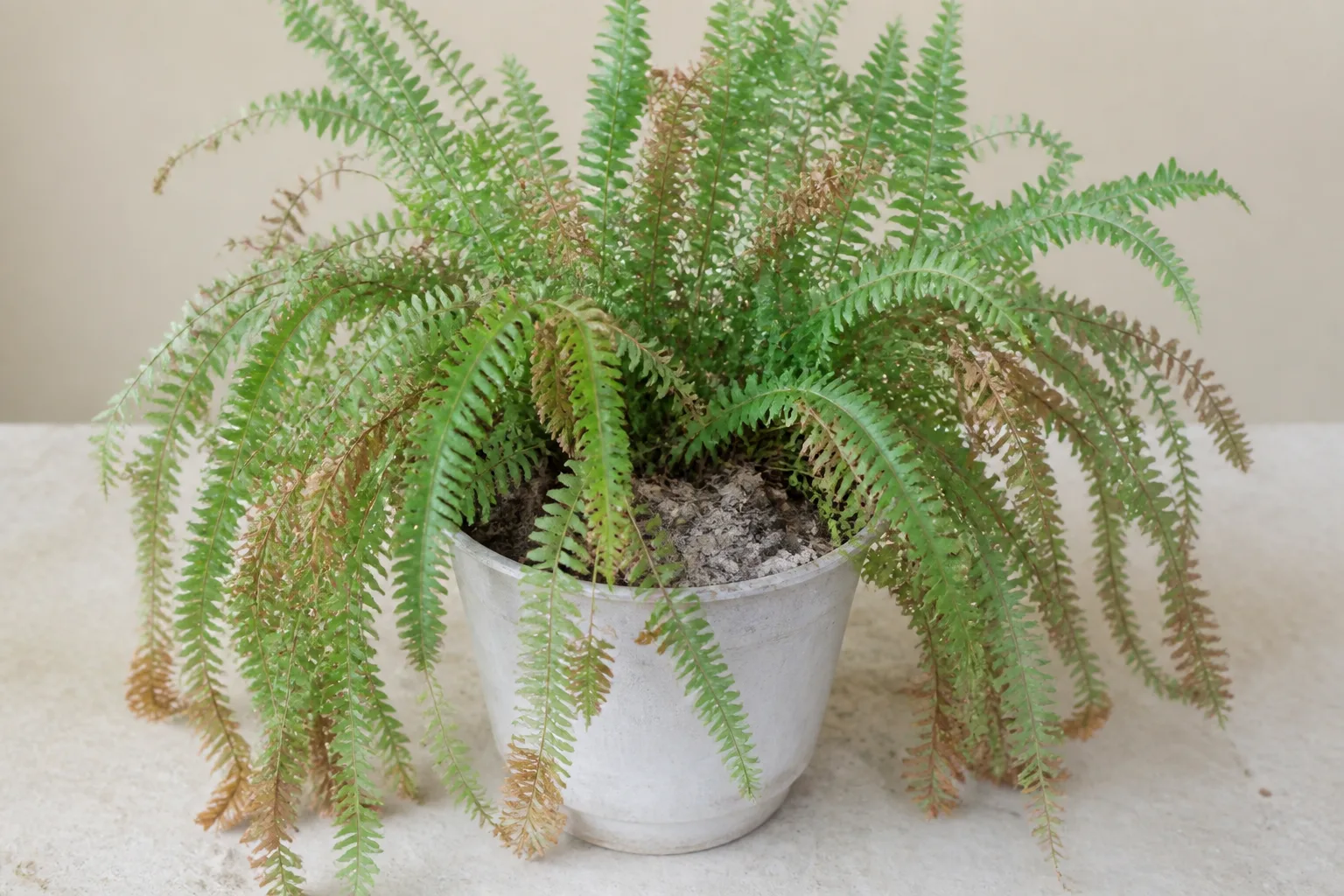
Underwatering on Boston Fern: Causes, Checks & Fixes
This guide covers underwatering on Boston Fern. See also the general Underwatering guide, watering, and light pages for this plant.
Underwatering on Boston Fern: Causes, Checks & Fixes
Quick answer
Underwatering on Boston Fern (Nephrolepis exaltata) means the root ball ran dry long enough that fine roots could not keep up with the plant’s water loss through its broad, arching fronds. Unlike succulents, this fern does not bounce back from a dry spell on its own-it needs consistently moist, well-aerated mix, not swings between desert and flood.
First step: carry the pot to a sink and soak it thoroughly. Run tepid water through the soil until it drains freely from the bottom, let the pot finish dripping, then return it to Boston Fern light guide. Do not mist the fronds, fertilize, or repot until you have confirmed the mix is evenly rewet and the plant responds.
What underwatering looks like on Boston Fern
Boston fern reacts to drought quickly because its fronds have a large surface area and transpire steadily in normal indoor humidity. Early signs are easy to miss if you only glance at the plant from across the room.
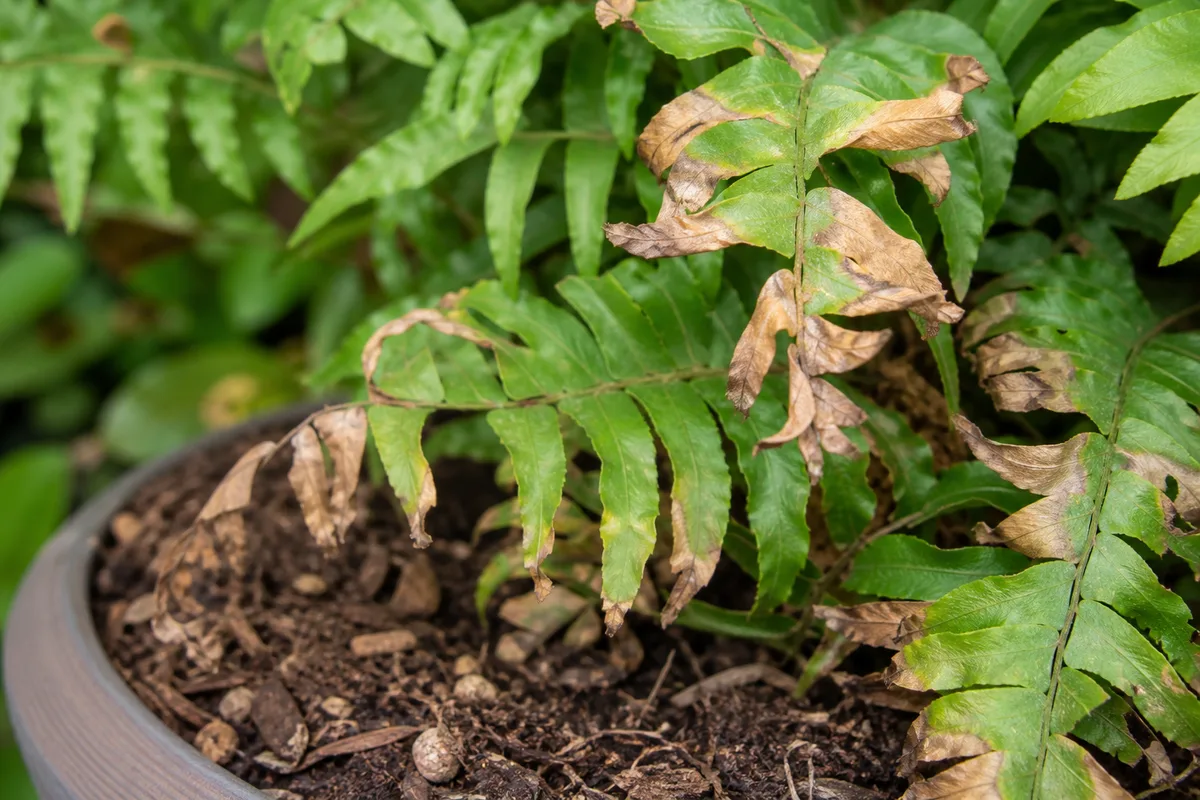
Underwatering symptoms on Boston Fern - compare with healthy tissue on the same plant.
Above the soil, watch for:
- Limp, drooping fronds that lose their usual fountain shape and hang flat
- A dull gray cast on foliage instead of bright medium green-commercial growers describe this as the classic drought signal on Boston fern
- Dry, crispy pinnae (leaflets), especially at frond tips and along outer arching segments
- Premature yellowing and drop of older lower fronds after repeated dry cycles
- Stunted new croziers-the curled fiddleheads at the crown may fail to unfurl or look thin
At the pot, drought shows as:
- Mix that is dry several centimeters down, not just on the surface
- Soil pulling away from the pot wall, leaving a gap water runs past
- A pot that feels noticeably light when lifted
- Water that channels through the center and out the drainage hole without wetting the sides
Healthy underwatered roots, when you inspect them, are usually firm and pale-not brown, mushy, or foul-smelling. That distinction matters because wilted fronds with wet soil suggest rot or heat stress instead.
Why Boston Fern gets underwatered
Boston fern evolved in humid tropical forests. Indoors it is often described as the most drought-tolerant of commonly cultivated ferns, but that tolerance has limits-it still needs even moisture, not occasional sips when you remember.
Missed or shallow watering is the most common trigger. Many owners water until the surface darkens and stop, leaving the core of a dense root ball dry. Hanging baskets and small pots amplify the problem: they lose water fast in bright light, near heating vents, or during summer air conditioning.
Fear of overwatering on Boston Fern pushes some growers to wait too long. Boston fern does hate soggy, stagnant mix-but a light, dusty root zone is worse than a brief period of proper saturation followed by good drainage.
Seasonal mismatch causes winter underwatering too. Lower light and cooler rooms slow growth, so pots dry more slowly-but indoor heating also drops humidity and pulls moisture from fronds. Cutting back too aggressively in winter can still leave the plant chronically dry while you assume it needs less water.
Hydrophobic peat develops when mix dries completely. Old peat-based soil repels water; the surface looks briefly damp while the interior stays dry. This is common on ferns that were neglected during a vacation or moved away from a humid bathroom.
Environmental pull without matching water increases demand: direct sun scorches and dries fronds, low humidity accelerates tip browning that people mistake for thirst, and root-bound plants in small pots may need water every two to three days during active spring growth.
How to confirm the cause
Work through these checks before changing multiple variables at once:
- Pot weight - Lift the pot. Light and dry confirms drought; heavy and wet rules underwatering out.
- Moisture at depth - Insert a finger 2–3 cm into the mix, or use a moisture meter in the upper third of the root ball. Dusty dry throughout supports underwatering.
- Frond color and texture - Gray-dull foliage with limp arching fronds fits drought on Boston fern. Bright green fronds with only brown tips may be low humidity or fluoridated water instead.
- Smell and soil feel - Sour, swampy odor or constantly wet surface suggests overwatering or poor drainage, not drought.
- Recent routine - Has the plant gone more than five to seven days without water in warm active growth? Did you only mist leaves instead of soaking roots?
- Root spot-check - If symptoms persist after a proper soak, slide the plant out. Firm pale roots mean drought was the issue; mushy brown roots mean rot or chronic wet feet.
If the pot is heavy, mix is wet 2 cm down, and fronds still wilt, do not soak again-investigate root rot on Boston Fern, heat stress, or low humidity before adding more water.
First fix for Boston Fern
Soak the entire root ball at the sink.
Remove decorative cache pots if they block drainage. Set the fern in a sink or tub and run tepid water slowly through the mix until it flows steadily from the drainage holes-usually several minutes for a dense root ball. If water runs straight through without absorbing, the mix may be hydrophobic; see recovery steps below.
Let the pot sit until dripping stops. Empty any saucer. Return the plant to bright indirect light-not direct sun on stressed fronds.
That single thorough soak is the first fix. Do not follow it immediately with fertilizer, heavy pruning, or Boston Fern repotting guide. Wait until you see how the plant responds over the next 24–48 hours.
Step-by-step recovery
After the initial soak, adjust care in this order:
Reset the Boston Fern watering guide
For most homes, check the top 2 cm of mix every three to four days during spring and summer active growth. Water when that layer begins to dry-not when the whole plant looks wilted. In cooler low-light winter months, extend checks to every five to seven days, but never let the root ball go fully dust-dry for weeks.
Always water until a small amount drains out, then discard saucer water within 30 minutes.
Fix hydrophobic soil
If the first soak did not evenly moisten the mix:
- Bottom-water by placing the pot in a basin of tepid water for 20–30 minutes until the surface darkens, then drain fully.
- Repeat once if needed. Chronic repelling mix may need repotting into fresh peat- or coco-based medium with perlite-but only after the plant stabilizes, not on day one.
Support humidity without skipping root water
Boston fern prefers high humidity; dry air browns tips even when soil moisture is correct. A pebble tray, grouping with other plants, or a humidifier helps-but misting leaves is not a substitute for rewetting dry roots.
Trim only dead tissue
Cut off fronds that are fully brown and crisp at the base. Leave partially green fronds in place; they may still photosynthesize while new growth returns.
Hold fertilizer
Do not feed a drought-stressed fern until new croziers appear and watering rhythm is stable. Salts on dry roots cause further damage.
Recovery timeline
Mild dehydration-one missed watering cycle with still-green but limp fronds-often shows improvement within 12 to 24 hours after a proper soak. Fronds regain turgor first; tip browning already present will not reverse.
Moderate drought-gray cast, multiple drooping fronds, dry mix throughout-typically needs one to two weeks of steady moisture before new croziers unfurl reliably. Boston fern will shed fronds if soils dry out; old damaged pinnae remain cosmetic blemishes.
Severe or repeated drought-weeks dry, massive frond loss, stunted crown-may take several weeks to months to refill. Some outer fronds never recover; judge success by new runners and center growth, not by restoring every arching arm.
Warning signs recovery is failing: fronds stay limp 48 hours after a confirmed full soak, crown tissue softens, or new growth blackens. Those patterns suggest root loss or rot-stop soaking on schedule and inspect roots.
Lookalike symptoms
| What you see | More likely cause | Quick check |
|---|---|---|
| Brown tips only, fronds still turgid | Low humidity, fluoride in tap water, cold drafts | Soil moist at depth; tips brown but plant not limp |
| Limp fronds + wet heavy soil | Overwatering, root rot, poor drainage | Sour smell; mushy roots when unpotted |
| Wilting in hot direct sun | Sun scorch and heat stress | Recently moved to brighter window; fronds pale or bleached |
| Yellow lower fronds only, soil moist | Natural aging or slight overwatering | Slow change over months; crown still green |
| Gray fronds + dry light pot | Underwatering | Matches UF/IFAS drought description on Boston fern |
Low humidity and underwatering often overlap on Boston fern-fix moisture at the roots first, then address humidity if tips keep browning on otherwise turgid fronds.
Mistakes to avoid
- Misting instead of watering - Surface moisture does not rehydrate roots.
- Daily shallow sips after one dry spell - Alternates drought and soggy surface without rewetting the core; one thorough soak, then a steady rhythm, works better.
- Soaking and leaving the pot in standing water for days - Drain fully; stagnant water invites rot on a fern that was just stressed by dryness.
- Repotting immediately - Unnecessary unless mix is hydrophobic and repeated soaks fail; repotting adds stress on a wilted plant.
- Fertilizing dry roots - Rehydrate first.
- Placing a recovering fern in direct sun - Bright indirect light only until fronds firm up.
- Assuming all drooping is underwatering - Always confirm with soil moisture and pot weight before soaking a wet plant.
How to prevent underwatering next time
Build a check habit tied to this pot in your home, not a generic calendar:
- Probe the top 2 cm every few days during active growth; water when it begins to dry.
- Lift the pot occasionally so you learn how heavy “properly moist” feels versus dry.
- Use a moisture-retentive mix-peat or coco with perlite-and a pot with drainage holes sized to the root ball, not oversized.
- For fast-drying hanging baskets, try double potting: set the inner pot inside a larger outer container lined with moist sphagnum moss to slow evaporation and raise local humidity.
- Keep the fern in bright indirect light and 50–70% humidity so it grows steadily without extreme water swings.
- Before travel, water thoroughly and move the plant away from heating vents; a trusted soak-and-drain beats leaving it dry for two weeks.
When to worry
Underwatering is urgent when the entire plant collapses, the mix has been bone dry for a week or more during warm growth, or no new croziers appear after two weeks of corrected watering. At that point, unpot and inspect roots. If most fine roots are dead and the crown feels soft, the plant may not fully recover-propagate healthy runners if any remain firm.
Conversely, if the plant perks after one soak and new growth emerges within two weeks, the crisis is past. Stay consistent; Boston fern rewards boring, steady moisture more than rescue heroics.
When to use this page vs other Boston Fern guides
- Boston Fern watering guide - Use for routine moisture checks before assuming underwatering is the main issue.
- Boston Fern problems hub - Browse all 16 common issues on this species.
- Wilting on Boston Fern - Different entry point when symptoms overlap with underwatering.
- Brown Tips on Boston Fern - Different entry point when symptoms overlap with underwatering.
- Yellow Leaves on Boston Fern - Different entry point when symptoms overlap with underwatering.