Yellow Leaves on Boston Fern: Causes, Checks & Fixes
Quick answer
Yellow fronds on Boston Fern are a symptom, not a diagnosis. First step: feel the top inch of mix and note room humidity-one aging outer frond on moist soil with green croziers is often normal; multiple yellow fronds on heavy wet soil or dry winter air needs a matched fix before fertilizer or repotting.
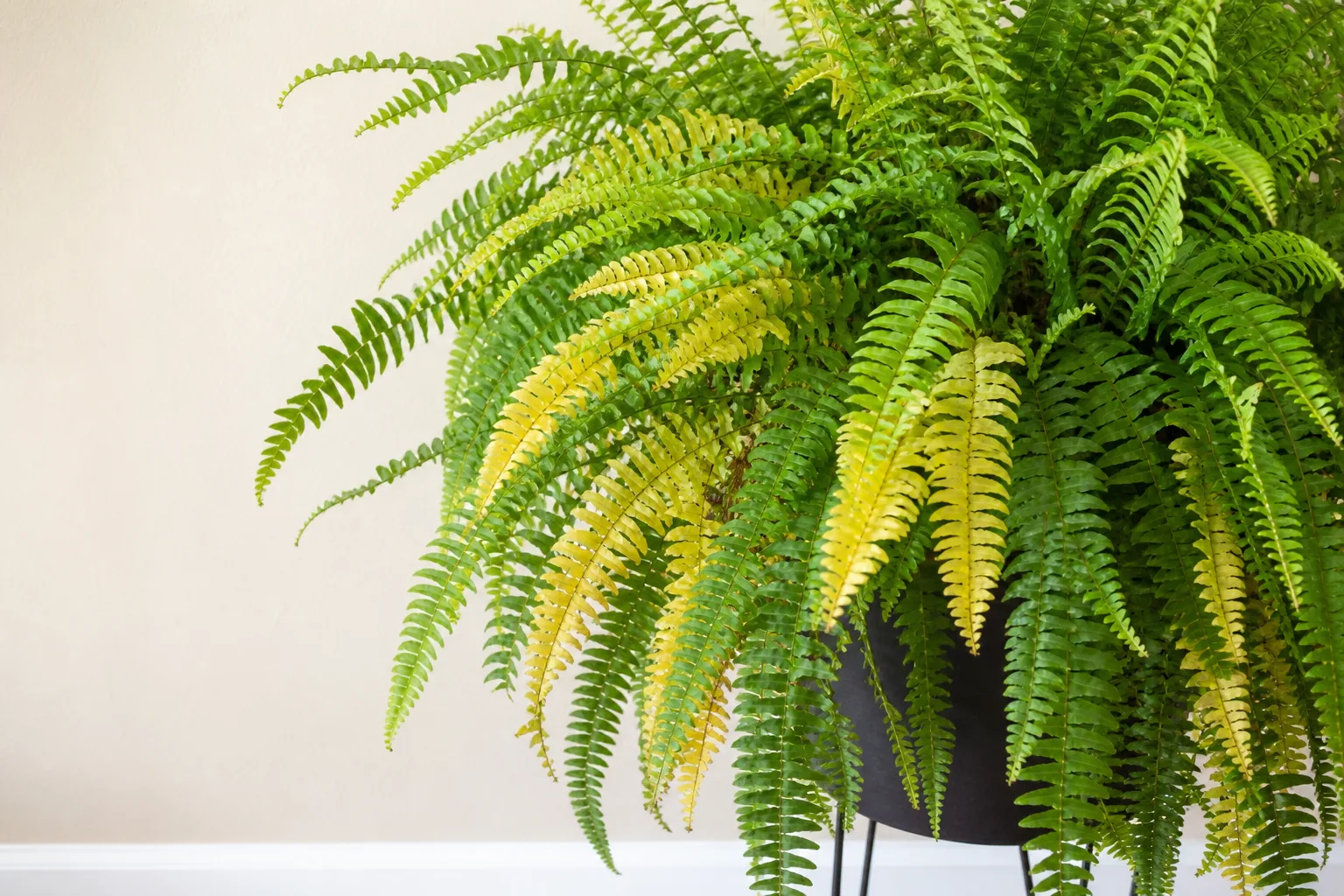
Yellow Leaves on Boston Fern: Causes, Checks & Fixes
This guide covers yellow leaves on Boston Fern. See also the general Yellow Leaves guide, watering, and light pages for this plant.
Yellow Leaves on Boston Fern: Causes, Checks & Fixes
Quick answer
Yellow fronds on Boston Fern (Nephrolepis exaltata) are a symptom, not a diagnosis. This tropical sword fern grows from a short rhizome crown with arching fronds made of hundreds of small pinnae (leaflets) along each rachis-not a rosette of single leaves like many succulents. That architecture changes how yellowing appears: the outermost arching fronds often fade first during normal aging, while stress yellowing can spread across multiple fronds or hit the crown when roots fail.
The diagnostic trap on Boston fern is the same one that catches owners on drooping leaves and wilting: overwatering, underwatering, and low humidity all yellow pinnae, and frond color alone does not tell you which. A heavy wet hanging basket with limp yellow outer fronds points to root stress. A light dry basket with crisp yellow pinnae in a heated winter room points to thirst plus dry air. Uniform pale yellow across several fronds with stretched spacing often means insufficient light.
First step: feel the top inch of mix and note humidity at foliage height. Do not reach for fertilizer, repotting, or extra water until you know whether the root zone is evenly moist, waterlogged, or too dry-and whether room air has dropped below what this humidity-loving fern expects. Fixing the wrong variable is how one aging outer frond becomes a crown-wide collapse.
What yellow fronds look like on Boston Fern
Healthy Boston fern holds medium-green, arching fronds with soft, divided pinnae cascading from a central crown. Yellowing breaks that pattern in ways that narrow the cause if you read the whole plant-not just the most dramatic frond.
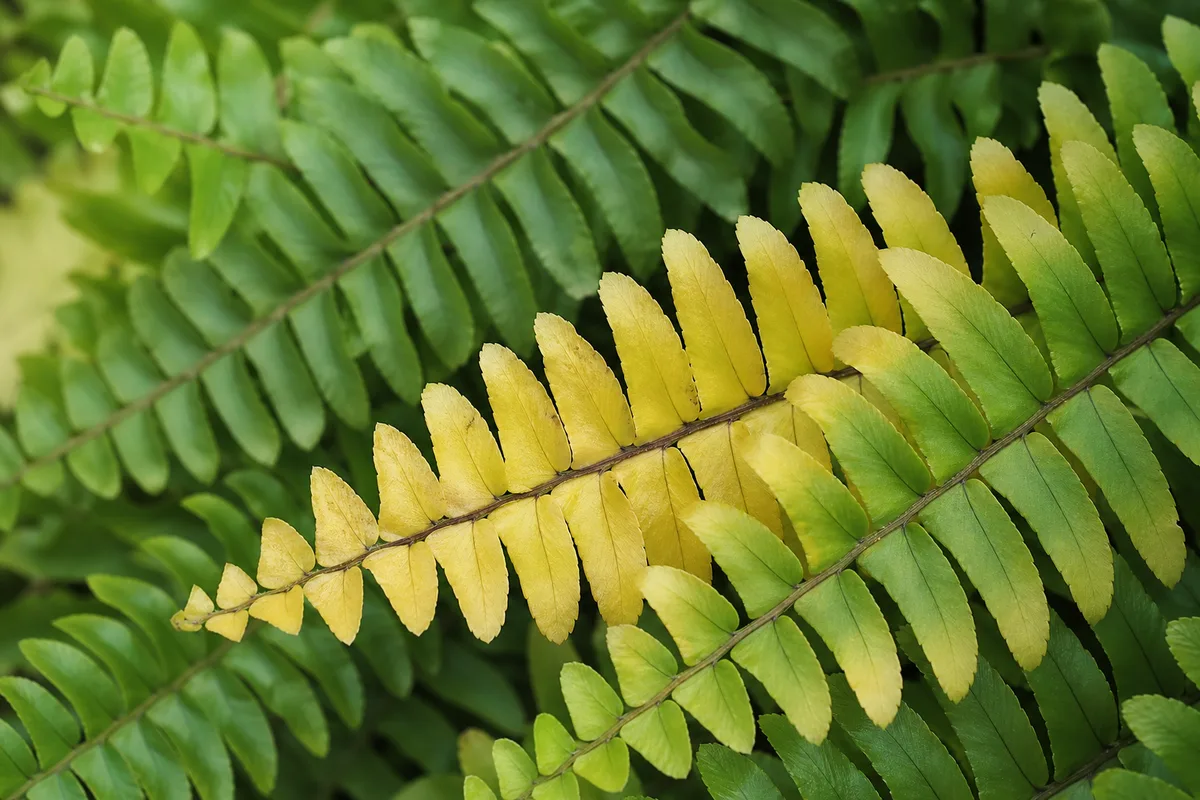
Yellow Leaves symptoms on Boston Fern - compare with healthy tissue on the same plant.
Typical yellow patterns on this species:
- Single outermost frond, uniform yellow from base upward - The oldest arching frond at the edge of the clump fades evenly over weeks while new croziers (coiled new fronds) at the crown stay green. Often normal frond senescence on a mature specimen.
- Multiple outer fronds, limp texture, heavy wet pot - Yellow spreads across several arching fronds with soft pinnae while the basket feels noticeably heavy. Classic overwatering or early root stress; may follow cachepot standing water or blocked drainage holes.
- Crisp yellow or brown pinnae tips, light dry pot, winter heating - Dry air pulls moisture through thin pinnae faster than roots can replace it; edges desiccate before whole fronds fade. Often pairs with low humidity below 40% RH near the fronds. When tips brown before the whole frond yellows, see brown tips for the tip-first pattern.
- Uniform pale yellow across several fronds, long weak rachis - Insufficient light weakens chlorophyll; fronds may look washed out on the side facing away from the window. See not enough light if growth is sparse and pale.
- Yellow pinnae with fine stippling and webbing - Spider mites in dry heated air; soil moisture may be normal. Tap-test pinnae over white paper for moving specks.
- Yellow after porch-to-indoor move in fall - Transition shock from humid outdoor air to dry furnace heat; often combines humidity drop and watering rhythm change.
- Yellow with white crust on pot rim - Mineral or salt buildup from tap water or heavy feeding; pinnae may brown at tips before whole fronds yellow.
Boston fern does not store water in its fronds the way succulents store it in leaves. When stressed, it sheds pinnae and outer fronds to protect the crown-so scattered leaflet drop can precede obvious whole-frond yellowing.
Not the same as normal color: Cultivars like ‘Golden Boston’ and ‘Tiger Stripe’ carry natural chartreuse or variegated sectors that are stable-not spreading chlorosis. Do not confuse those with stress yellowing. If you grow ‘Dallas’ or ‘Whitmanii’, note that both tolerate lower humidity than standard ‘Bostoniensis’-winter yellowing on those cultivars may still trace to dry air, but they often hold green pinnae longer in the same room where a classic Boston fern would crisp.
Diagnostic photos: Side-by-side images of a single outer frond fading with green croziers (normal senescence), a heavy wet basket with multiple limp yellow fronds, and crisp yellow-brown pinnae tips in a low-RH winter room will be added to this guide in a future update. Until then, use the lookalike table below and the six-step confirmation checks as your primary visual reference.
Why Boston Fern gets yellow fronds
This fern evolved in humid tropical forests where fine fibrous roots stay lightly moist between rain events but never sit in stagnant water. Indoors, yellow foliage almost always traces to how water, humidity, oxygen, and light interact in the pot and the room-not a mysterious leaf disease.
Overwatering and root oxygen loss
Saturated mix drives out soil oxygen. Fine fern roots die; remaining roots cannot move water even though the soil feels wet. Outer fronds yellow and droop while the basket stays heavy-a pattern that sends many owners to add more water or mist, which deepens the damage. Hanging baskets, moss-lined pots, and cachepots that trap runoff make this especially common. NC State Extension notes that overwatering can lead to root rot on Boston fern, especially in winter when growth slows but owners keep summer watering frequency.
Underwatering and drought stress
Boston fern has no water-storage tissue in its pinnae. When peat-based mix dries hard-especially in summer when a hanging basket evaporates quickly-the plant sacrifices oldest outer fronds first. Pinnae crisp and drop before the whole plant looks dramatically wilted; UF/IFAS describes graying foliage as a classic insufficient-water signal on Boston fern. See underwatering when the top inch is crusty and the pot feels light despite recent surface watering.
Low humidity and winter dry air
Nephrolepis exaltata needs high humidity and moist soil indoors. Wisconsin Extension notes that in dry interiors-especially during heating season-the tips and edges of pinnae may turn brown, and leaflet drop follows. Clemson HGIC adds that humidity is usually too low in heated homes for fine, thin-leafed ferns like Boston fern, which brown and shed leaflets when air stays dry. Thin, highly divided pinnae lose moisture through transpiration faster than thick waxy leaves on tough houseplants. A fern in 25% RH may yellow and shed pinnae even when you watered two days ago.
Natural outer-frond senescence
Mature Boston ferns regularly shed the oldest outer fronds at the base of the clump while new croziers emerge from the crown. Wisconsin Extension recommends cutting old fronds off at the soil to encourage new growth-confirming that outer-frond loss is an expected part of the growth cycle, not always a crisis. One fading outer frond every few months on otherwise green center growth is low urgency.
Insufficient or excessive light
Boston fern prefers bright indirect light-medium bright indoors, such as an east window or behind a sheer curtain. Too little light produces pale, weak yellow-green fronds with sparse pinnae. Too much direct sun bleaches and scorches pinnae to yellow-tan within hours on the window-facing side. Missouri Botanical Garden lists part shade to shade as the outdoor light preference, which translates to filtered indoor light-not dark corners or south-facing glass without protection.
Fluoride, salts, and water quality
Boston ferns are sensitive to cold tap water, fluoride, and mineral buildup over time-the same water-quality issues covered in the watering guide. Recurring tip burn and gradual frond yellowing despite correct moisture timing often trace to salts accumulating in peat mix. White crust on the pot rim is a visual clue; when brown tips precede whole-frond yellowing, cross-check the brown tips guide.
Pests, drafts, and seasonal transition
Spider mites cause stippled yellow pinnae in dry heat-NC State notes scales or spider mites can be a problem when air around the plant is too dry. Aphids yellow young croziers and leave sticky honeydew. Cold drafts below 50°F (10°C) and hot air from heating vents can shock fronds into yellow-brown patches. Moving a porch fern indoors in fall without raising humidity produces widespread pinnae drop within days.
Lookalike symptoms to rule out
| What you see | Likely cause | Key differentiator |
|---|---|---|
| One outer frond yellowing slowly, green croziers | Normal senescence | Crown firm; soil moisture normal; no smell |
| Multiple fronds yellow, heavy wet pot, limp pinnae | Overwatering / root stress | Wilt on wet soil; cachepot may hold water |
| Crisp pinnae tips, light pot, dry winter air | Low humidity + thirst | RH below 40%; pot weight light |
| Stippled yellow dots, fine webbing | Spider mites | Paper tap test shows moving specks |
| Sticky shine on new croziers | Aphids | Pear-shaped insects on leaflet undersides |
| Pale washed-out fronds, leggy spacing | Not enough light | Soil dries slowly; no wet-soil smell |
| Yellow after recent repot | Transplant shock | Follows handling; roots firm on check |
| Dark brown sori dots on pinnae undersides | Normal spore clusters | Round patterned dots-not insects (NC State) |
Do not confuse normal spore dots on pinnae undersides with pest damage or disease. Boston fern produces round sori in a regular pattern-extension guides specifically warn growers not to mistake these for insects.
How to confirm the cause
Work through these six checks in order before changing care:
- Count affected fronds - One outer frond only strongly favors aging. Three or more yellowing at once favors stress.
- Feel the top inch of mix - Cool and damp: wait before watering. Slightly dry: normal dry-down signal per the watering guide. Constantly wet and heavy: suspect overwatering.
- Lift the hanging basket - Compare weight to how it felt after the last thorough soak. Light pot with yellow crisp pinnae points to thirst; heavy pot with limp yellow fronds points to saturation.
- Measure humidity at foliage height - Use a hygrometer. Below 40% RH for weeks explains winter yellowing even when watering looks unchanged.
- Inspect the crown and drainage - Lift arching fronds gently. A firm rhizome crown with green croziers differs from a soft, dark crown on wet soil. Confirm drainage holes are open and cachepots are empty.
- Check for pests and light exposure - Tap pinnae over white paper, inspect crozier undersides, and note whether yellow fronds face direct sun or a dark corner.
Confirmed diagnosis requires matching pattern + soil moisture + humidity + crown condition-not frond color alone.
First fix for Boston Fern
Feel the top inch of mix and measure humidity at foliage height before you pour, mist, fertilize, or repot.
If soil is wet and heavy with multiple limp yellow fronds: stop watering, empty saucers and cachepots, and improve airflow until the top inch dries slightly. Read overwatering before adding any more water.
If soil is dry and light with crisp yellow pinnae in dry winter air: soak thoroughly at the sink until water runs from drainage holes, drain fully, then address humidity with a humidifier or relocation off heating vents-not endless misting.
If only one outer frond is yellow on otherwise moist soil with green croziers: trim the spent frond at the base with clean scissors and monitor the crown for two weeks before changing anything else.
Do not apply fertilizer to a yellowing fern on wet soil. Do not repot on day one unless roots are confirmed mushy and the crown is soft.
Step-by-step recovery by confirmed cause
After overwatering / wet soil
- Stop watering until the top inch feels slightly dry.
- Empty cachepots and confirm drainage holes are open.
- Move the basket to brighter indirect light with gentle airflow-not a cold draft.
- Remove fully yellow spent fronds to reduce pest hiding spots and improve visibility.
- If yellowing spreads after one week of corrected dry-down, inspect roots per root rot guidance.
After underwatering / dry mix
- Soak the pot at the sink with room-temperature water until the mix rewets fully.
- Drain completely before rehanging-never return a dripping basket to a cachepot.
- Resume the normal top-inch dry-down rhythm from the watering guide.
- Trim fronds that are fully yellow; they will not re-green.
After low humidity (especially winter)
- Run a humidifier targeting 50–70% RH near the plant-not blasting fronds directly.
- Move the basket off radiator ledges and heating vents.
- Group with other plants or use double-potting with moist sphagnum between pots per Clemson HGIC guidance.
- Keep soil evenly moist; do not compensate for dry air by overwatering.
After insufficient light
- Move to bright indirect light-east window or behind sheer south/west glass.
- Rotate the basket weekly for even exposure.
- Hold fertilizer until new croziers emerge green for two weeks.
After pest confirmation
- Spider mites: Shower-rinse pinnae, raise humidity, repeat treatment per the spider mites guide.
- Aphids: Isolate and rinse crozier undersides per the aphids guide.
After salt or fluoride buildup
- Flush the pot at the sink monthly during active growth-water until runoff runs clear.
- Switch to rainwater, filtered, or distilled water if tip burn recurs.
- Reduce fertilizer to half strength every four to six weeks when actively growing, per Wisconsin Extension.
Recovery timeline
First week: After correcting the matched stressor, pinnae drop should slow. Fully yellow fronds will not turn green again-remove them for appearance and pest hygiene.
Weeks two to three: Judge success by new croziers unfurling green without tip burn or limp texture. Old outer fronds may still drop while the crown pushes replacement growth.
Weeks four to six: A large hanging basket may take several weeks to refill gaps after heavy frond loss, but established plants usually outgrow moderate stress once care stabilizes.
Worsening signs: Yellowing spreading inward toward the crown, soft rhizome tissue, sour smell from mix, or wilt on wet soil after you corrected drainage-these mean escalation to root inspection, not more misting.
Example recovery: winter dry air on a porch fern
A common pattern: a Boston fern hung on a shaded porch all summer returns indoors in October. Within ten days, outer pinnae turn crisp yellow-brown while the top inch of mix still feels damp. The owner adds water, which does not help. Hygrometer reading at frond height: 28% RH beside a heating vent.
The matched fix: move the basket off the vent, run a small humidifier targeting 55% RH, and resume watering only when the top inch dries slightly-not on a calendar. By week three, two clean croziers unfurl without tip burn. Fully yellow outer fronds are trimmed; they do not re-green. This matches what extension guides describe for fine ferns in dry winter interiors-humidity correction, not more water, stops the leaflet drop.
What not to do
Do not assume every yellow frond needs fertilizer-salt buildup from overfeeding can also yellow and brown pinnae. Do not increase watering when yellowing is caused by low humidity in winter; that deepens root stress. Do not place a wet fern directly under a heating vent to “dry it out”-hot dry air accelerates pinnae loss.
Do not confuse normal outer-frond senescence with crown rot. A firm crown with one fading outer frond is manageable. A soft dark crown on chronically wet soil is urgent-see root rot the same day you feel softness, not after another week of observation.
Do not repot a stressed fern into a much larger pot hoping it will recover; oversized containers stay wet longer and worsen yellowing.
How to prevent yellow fronds on Boston Fern
- Check the top inch of mix every two to four days in active growth, weekly in winter-use the calendar as a reminder, not the decision.
- Maintain 50–70% RH at foliage height; run a humidifier in heated winter rooms.
- Water with room-temperature water and flush salts monthly if you feed regularly.
- Hang in bright indirect light with open drainage and empty cachepots after every soak.
- Remove spent outer fronds promptly during routine pruning to improve airflow and make new stress visible early.
- Quarantine and acclimate porch ferns before winter move-in; raise humidity before the furnace runs full time.
Prevention is far easier than recovery once fine roots decay or the crown softens on wet soil.
When to worry
Treat as urgent if:
- Many fronds yellow at once on chronically wet, heavy soil
- The rhizome crown feels soft or smells sour
- Wilt persists on wet soil after you stopped watering for five to seven days
- Yellowing reaches young croziers while the center collapses
- Sour smell or fungus gnats accompany widespread frond loss
You can usually wait and monitor if one outer frond yellows slowly over weeks while new croziers stay green and soil moisture is balanced. Do not wait if wet soil and spreading yellow continue after you emptied standing water and corrected dry-down for a full week-unpot and inspect roots that day.
Boston Fern care cross-check
Yellow fronds resolve faster when baseline care is stable:
| Factor | Target for Boston fern | Yellow-frond link |
|---|---|---|
| Water | Top inch slightly dry between soaks; moist but not waterlogged | Wet soil → overwatering; dry crust → underwatering |
| Humidity | 50–70% RH at foliage height | Dry winter air → low humidity |
| Light | Bright indirect; no direct midday sun | Pale fronds → not enough light |
| Drainage | Open holes; empty cachepots | Standing water → root stress |
| Air | Gentle airflow; no heat vents on fronds | Draft + dry heat → pinnae shock |
| Feeding | Half strength every 4–6 weeks when actively growing | Salt buildup → tip burn then yellowing |
A fern already weakened by dark corners, drought cycles, or soggy soil will drop more fronds during any correction-even when you finally fix the right variable.
Related Boston Fern guides
Related Boston Fern guides: overview · watering · overwatering · underwatering · low humidity · root rot · not enough light · spider mites · brown tips · pruning
Conclusion
Yellow fronds on Boston fern are manageable when you read frond pattern, soil moisture, and room humidity together-not frond color alone. One aging outer frond on green center growth is often normal senescence. Multiple limp yellow fronds on wet soil or crisp pinnae in dry winter heat need matched fixes before fertilizer or repotting. If the rhizome crown softens on chronically wet mix, stop watering and inspect roots the same day-delaying past that threshold turns a recoverable moisture mistake into crown rot. Check the top inch, lift the basket, measure humidity, and judge recovery by clean new croziers-not by expecting old yellow pinnae to re-green.