Drooping Leaves on Boston Fern: Causes, Checks & Fixes
Quick answer
Drooping Boston fern fronds usually mean underwatering, low humidity, or root damage in wet soil-not always thirst. First step: lift the hanging basket and stick your finger 2–3 cm into the mix before you pour any water.
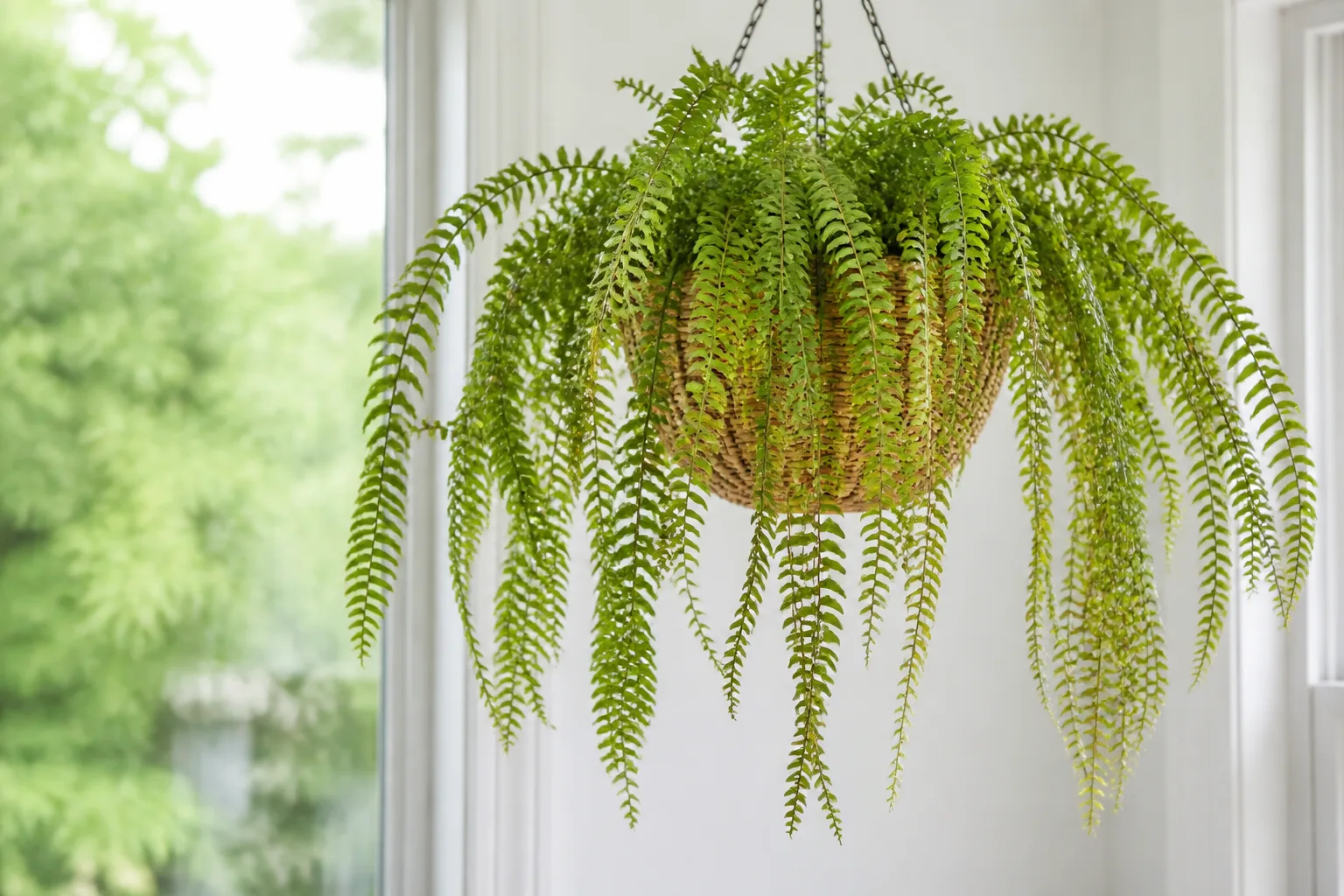
Drooping Leaves on Boston Fern: Causes, Checks & Fixes
This guide covers drooping leaves on Boston Fern. See also the general Drooping Leaves guide, watering, and light pages for this plant.
Drooping Leaves on Boston Fern: Causes, Checks & Fixes
Quick answer
Drooping leaves on Boston fern (Nephrolepis exaltata ‘Bostoniensis’) show up as arching fronds that lose their fountain shape-leaflets hang limp and the cascade looks flattened, especially in hanging baskets where gravity makes the droop obvious. On this species, sagging fronds almost always trace to a moisture or humidity mismatch at the roots, not a leaf disease.
First step: lift the basket and check soil moisture at depth before you pour any water. Stick your finger 2–3 cm into the mix, or compare pot weight to how it felt right after your last thorough watering. Boston fern is notorious for the wet-soil droop trap-fronds hang limp while the pot feels heavy because damaged roots cannot absorb moisture. Extra water makes that worse.
What drooping fronds look like on Boston Fern
Boston fern carries long, gracefully arching fronds with finely divided pinnae. Healthy plants form a cascading fountain. When turgor drops, the arch collapses and fronds hang straight down or lie against the pot rim.
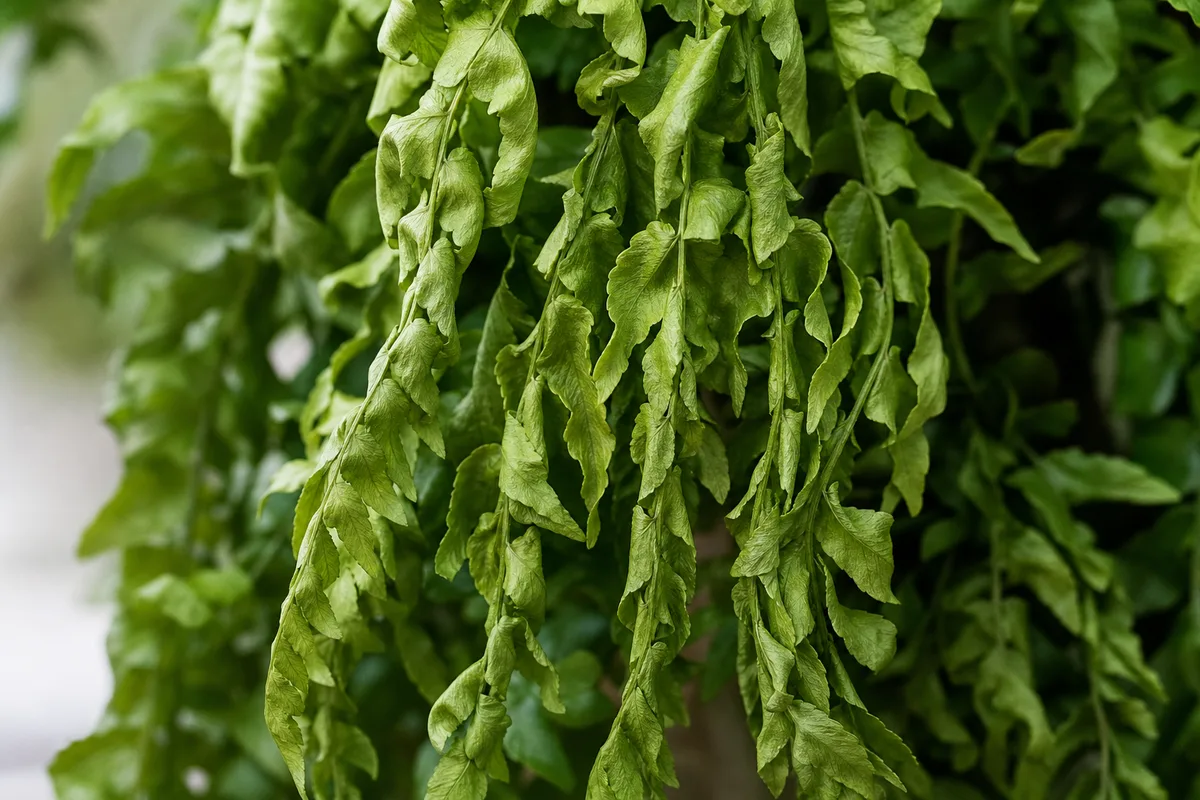
Drooping Leaves symptoms on Boston Fern - compare with healthy tissue on the same plant.
Typical droop patterns:
- Whole-frond sag - Outer and inner fronds lose lift at once; common after a missed watering cycle or heat spike
- Outer-frond droop first - Basket edges dry faster; center mix still damp while outer pinnae go limp
- Afternoon droop, morning recovery - Fronds sag in dry heated air but firm overnight when humidity rises; soil may still be moist
- Persistent limp arch with wet mix - Bright-green fronds stay collapsed despite heavy pot; root uptake failure, not thirst
- Gray-dull droop with light pot - UF/IFAS describes graying foliage as a classic insufficient-water signal on Boston fern
What drooping is not:
- Brown tips only with otherwise firm arching fronds-low humidity, fluoride, or drafts (brown tips guide)
- Round dark sori on frond undersides-normal spore clusters on Nephrolepis, not pests (NC State Extension)
- Gradual stretch with sparse new croziers-insufficient light (leggy growth), not acute droop
Diagnostic photos: Side-by-side images of a dry lightweight hanging basket with limp fronds versus a heavy wet pot with collapsed bright-green fronds will be added to this guide in a future update. Until then, use pot weight and a depth moisture check as your primary visual reference.
Drooping vs wilting on Boston Fern
Searchers use “drooping” and “wilting” interchangeably on ferns-and on Boston fern they describe the same underlying problem: loss of turgor in thin pinnae. The practical difference is emphasis:
| Term | What owners usually mean | Diagnostic focus |
|---|---|---|
| Drooping leaves | Fronds hang lower; arch looks sad but plant may still be green | Hanging-basket dry-down, partial outer-frond sag, humidity dips |
| Wilting | Sudden collapse; plant looks flattened or “dead” | Acute thirst, wet-root failure, transport shock |
Both require the same first move: pot weight + soil depth before water. For a full wet-soil paradox walkthrough, see wilting on Boston Fern-this page focuses on gradual arch loss, basket checks, and the dry-vs-wet pot decision tree.
Why Boston Fern fronds droop
Boston fern evolved in humid tropical forests with fine fibrous roots that expect steady moisture and oxygen-not swings between bone-dry peat and stagnant wet mix. Five causes cover most droop cases indoors.
Underwatering and hanging-basket dry-down
Hanging baskets lose moisture from all sides faster than table pots. When the top inch goes dry and the basket feels light, roots cannot supply the large frond surface. Peat that dries completely can turn hydrophobic-water runs down pot walls while the core stays dry. Missouri Botanical Garden notes Boston fern will shed fronds if soils dry out.
Overwatering, cachepots, and root damage
NC State Extension warns that overwatering can lead to root rot when mix stays saturated. Clemson HGIC notes water standing in pots can lead to root damage. Once fine roots fail, fronds droop despite wet soil-the vascular pathway is broken. Decorative cachepots that hold runoff and blocked drainage holes in basket liners are common indoor triggers.
Low humidity and draft stress
Boston fern needs high humidity and moist soil in ideal culture. In heated homes below 40% relative humidity, fronds lose water through transpiration faster than roots replace it. Wisconsin Extension notes that in dry interiors, pinnae tips and edges may turn brown-and midday droop can appear even when soil moisture is acceptable. Forced-air vents and air conditioners accelerate the loss.
Heat, light shock, and repot stress
Direct sun or hot afternoon heat spikes transpiration beyond root supply. Wisconsin Extension recommends medium bright light without direct sun indoors. Recent repotting, division, or shipping can produce temporary droop until roots re-anchor-especially if humidity dropped at the same time.
Chronic underwatering masked as “drooping only”
Owners sometimes notice droop before crisp brown tips appear. By then the mix may already be dry several centimeters down. Checking soil moisture by touch at depth-not just glancing at the surface-catches this early.
Boston Fern droop diagnostic cross-check
| What you observe | Likely cause | First branch |
|---|---|---|
| Light pot + dry top 2–3 cm + dull gray fronds | Underwatering | Full soak at sink; see underwatering |
| Heavy pot + wet mix + bright-green limp fronds | Root uptake failure / overwatering | Stop water; drain; see overwatering |
| Moist soil + afternoon sag + near AC or vent | Low humidity / heat | Humidifier or pebble tray; see low humidity |
| Drooping after bright window move + bleached pinnae | Sun / heat stress | Move to filtered light; light guide |
| Wet soil + sour smell + yellow lower fronds | Advancing root rot | Inspect roots; root rot guide |
| Drooping 1–2 weeks after repot, roots firm | Transplant shock | Stable moisture + humidity; avoid stacking fixes |
Low humidity and underwatering overlap often. Confirm root-zone moisture and pot weight first, then address humidity if tips keep browning on otherwise moist soil.
How to confirm the cause
Work through these checks in order:
- Pot weight - Lift the hanging basket. Light and dry supports underwatering; heavy and wet rules thirst out.
- Moisture at depth - Probe 2–3 cm into the mix. Dusty dry throughout fits drought; cool damp or soggy wet fits overwatering or humidity droop.
- Frond color - Gray-dull limp fronds with dry soil match drought. Bright green limp fronds with wet soil match root failure.
- Smell and drainage - Sour odor, algae on the surface, or water in saucers for days points to chronic wetness.
- Location scan - Note heating vents, AC blowers, and how fast this basket dries compared to your watering rhythm.
- Time-of-day pattern - Afternoon droop with overnight recovery on moist soil suggests humidity or heat, not dry roots.
- Root spot-check (if unclear) - Slide the plant out. Firm pale roots fit drought or humidity stress; mushy brown roots fit rot.
If the pot is heavy, mix is wet 2 cm down, and fronds still droop, do not add water.
First fix for Boston Fern
Before any water, fertilizer, or repot: lift the basket and check soil moisture at depth.
That single step prevents the costliest Boston fern mistake-watering a drooping plant that is already waterlogged. Once you know your branch, apply one corrective action:
- Dry soil + light pot → Carry the fern to a sink and soak the root ball thoroughly with tepid water until it drains freely; drip dry before remounting.
- Wet soil + heavy pot → Stop watering, empty saucers and cachepots, and let the top 2 inches dry while airflow at the crown improves.
- Moist soil + afternoon droop → Raise humidity toward 50–70% with a humidifier or pebble tray and move away from vents-misting alone does not rehydrate roots.
Wait 24–48 hours before stacking a second treatment.
Step-by-step recovery
If underwatering caused the droop
- Run tepid water through the mix until drainage flows steadily.
- If water channels through dry peat, bottom-water 20–30 minutes until the surface darkens, then drain fully.
- Return to bright indirect light-not direct sun on stressed fronds.
- Reset rhythm: check the top inch every few days per Boston fern watering guidance.
- Trim only fully brown, crisp fronds at the base.
If overwatering or root damage caused the droop
- Stop all watering until the top 2 inches of mix dry.
- Remove standing water from saucers, cachepots, and decorative outer pots.
- Confirm drainage holes are open.
- If fronds stay limp after 48 hours with corrected drainage, unpot and inspect roots-trim mushy tissue and repot only if rot is confirmed.
- Hold fertilizer until new croziers appear.
If low humidity or heat caused the droop
- Move the fern away from heating vents, air conditioners, and hot windows.
- Target 50–70% relative humidity with a humidifier, pebble tray, or bright bathroom spot.
- Keep soil evenly moist-not extra wet-while humidity improves.
- Consider double potting with moist sphagnum between containers to slow basket dry-out.
Recovery timeline
Mild thirst droop-one missed cycle with still-green limp fronds-often improves within 12 to 24 hours after a full soak. The arch returns first; brown tips do not reverse.
Humidity-related afternoon droop may firm overnight once vents are avoided and humidity rises-often 24 to 72 hours for visible improvement.
Wet-soil root stress may need two to four weeks after drainage correction before new croziers prove roots are functioning.
Warning signs recovery is failing: fronds stay limp 48 hours after the correct branch fix, crown tissue softens, or new growth blackens. Inspect roots promptly.
What not to do
- Pour water on every drooping fern - Wet-soil droop worsens with more water.
- Mist fronds instead of checking roots - Surface moisture does not fix dry peat or rotting roots.
- Fertilize a collapsed fern - Salts on stressed roots cause further damage.
- Repot on day one - Unnecessary unless hydrophobic mix or confirmed rot.
- Move to direct sun to “perk it up” - Direct sunlight damages fern foliage; heat increases droop.
- Stack soak + repot + prune + pesticide - One correction at a time keeps diagnosis readable.
How to prevent drooping fronds next time
Build a rhythm around this basket in your home:
- Check the top inch every few days; water when it begins to dry per Boston fern watering.
- Lift hanging baskets weekly to learn how heavy “properly moist” feels versus dry.
- Keep humidity at 50–70% and avoid drafty vent placement.
- Empty saucers within 30 minutes of watering; never let cachepots hold runoff overnight.
- Use a peat- or coco-based mix with perlite and a drainage hole-see soil guidance.
- In winter, stretch intervals because mix holds water longer-but never let the root ball go dust-dry for weeks.
When to worry
Drooping is urgent when the crown feels soft, soil has been waterlogged for days with spreading yellow fronds, or the plant stays limp 48 hours after you applied the correct first fix. Unpot and inspect roots-if most fine roots are mushy, recovery may be partial.
Conversely, if fronds regain arch within a day after a confirmed soak, or new croziers emerge within two weeks after drainage and humidity fixes, the crisis is passing.
Related Boston Fern guides
- Boston fern watering - moisture rhythm, wet-soil wilt FAQ, soak-and-drain technique
- Wilting on Boston Fern - full wet-soil paradox and turgor collapse
- Underwatering on Boston Fern - gray cast, hydrophobic peat, full soak recovery
- Overwatering on Boston Fern - heavy pot, sour mix, drainage fixes
- Root rot on Boston Fern - when limp fronds persist in wet soil
- Low humidity on Boston Fern - afternoon droop, tip browning, humidifier targets
- Boston fern care overview - humidity, temperature, and basket basics
Conclusion
Drooping leaves on Boston fern are a visible alarm-not a mystery disease. The arch collapses when roots cannot supply water, when dry air pulls moisture faster than roots replace it, or when damaged roots sit in stagnant wet mix. Lift the basket, check depth, and match one branch-soak, drain, or humidify. Measure success by firm arching fronds and new croziers, not by old brown pinnae that will not green up again.