Overwatering on Boston Fern: Causes, Checks & Fixes
Quick answer
Overwatering on Boston Fern means stagnant wet mix-not evenly moist soil. First step: stop watering, empty cachepots and saucers, and let the top inch of mix dry while you check drainage on your hanging basket.
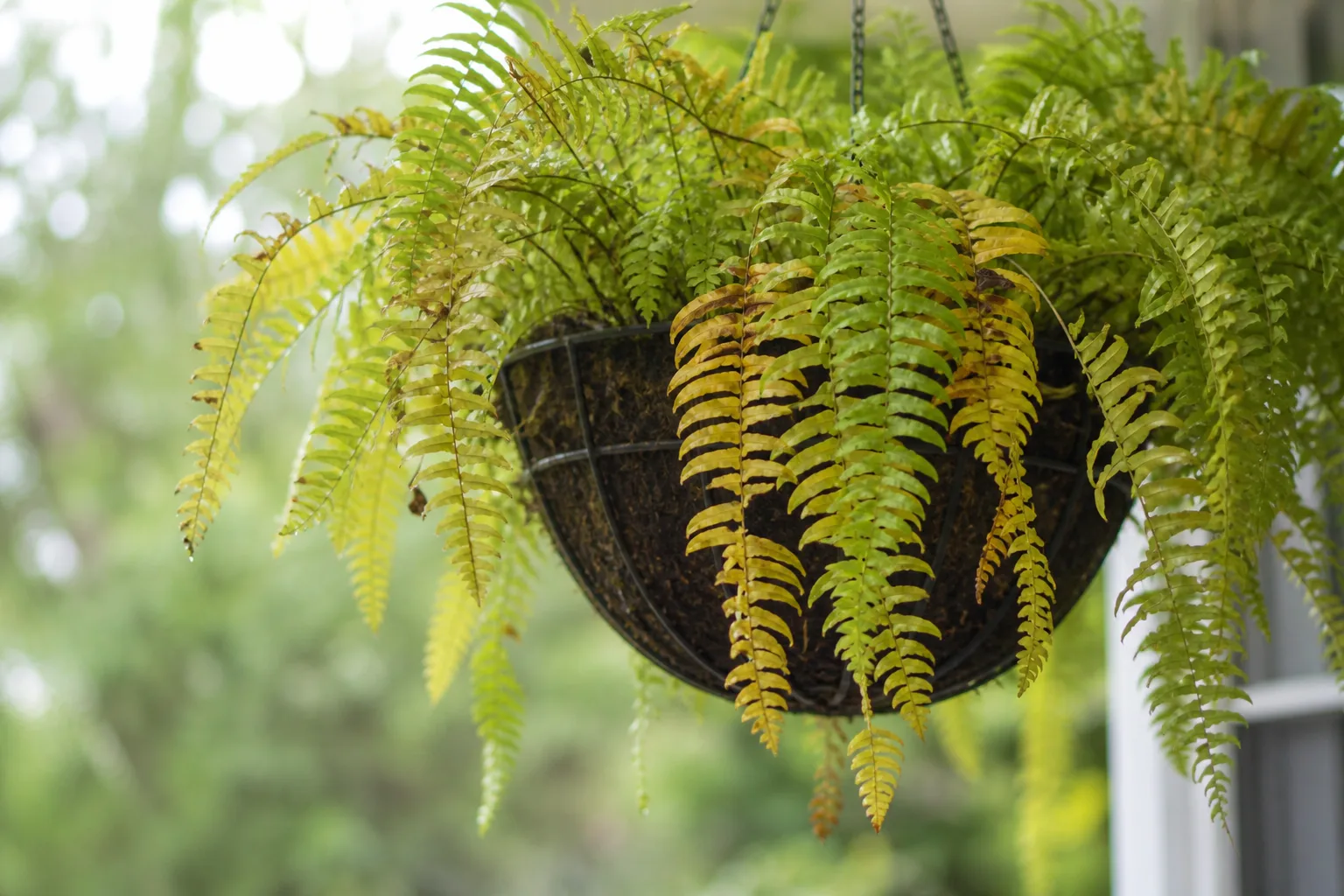
Overwatering on Boston Fern: Causes, Checks & Fixes
This guide covers overwatering on Boston Fern. See also the general Overwatering guide, watering, and light pages for this plant.
Overwatering on Boston Fern: Causes, Checks & Fixes
Quick answer
Overwatering on Boston Fern (Nephrolepis exaltata) is not the same as giving this species the moisture it needs. Boston ferns want consistently moist but not waterlogged mix-cool and damp throughout the root zone, with the top inch allowed to dry slightly so air can re-enter between drinks. Overwatering happens when that balance breaks: the surface stays wet for days, cachepots trap runoff, or calendar watering continues through a cool winter while growth slows.
First step: stop watering and empty every saucer, cachepot, and decorative sleeve. Let the top inch of mix shift from constantly damp to slightly dry before the next thorough soak. Do not mist drooping fronds, fertilize, or repot into a larger pot on day one. If roots are still firm when you inspect them, this early intervention often stops decline before it becomes root rot. For the full moist-but-aerated rhythm this species expects, see the watering guide.
Why Boston Fern gets overwatered
Boston fern evolved in humid tropical forests where fine roots stay lightly moist between rain showers but never sit in stagnant water. Indoors, that biology collides with how most people display the plant: in hanging baskets with long arching fronds that make soil checks easy to skip, and in cachepots that hide standing water until the root ball reabsorbs it overnight.
Several habits push Nephrolepis exaltata past “evenly moist” into harmful saturation:
- Calendar watering instead of checking whether the top inch has dried slightly-especially in winter when overwatering during dormancy can lead to root rot while evaporation slows in low light
- Fear of underwatering after one dry spell, leading to daily shallow top-ups that keep the surface wet without refreshing air in the root zone
- Cachepots and decorative sleeves that hold runoff so the nursery pot sits in standing water
- Blocked or sealed drainage in moss-lined hanging baskets where the bottom never breathes
- Heavy compacted peat that holds moisture long after the frond canopy looks fine
- Oversized pots that stay wet in the center while the owner only touches the surface
- Bottom-watering without draining so the lower root zone saturates while the top looks acceptable
Boston fern does best with well-drained but consistently moist soil, especially in hanging baskets where fronds hang downward and the shallow fine-root zone dries unevenly. The canopy has enormous surface area for transpiration, but the roots are fine and fibrous-quick to absorb water and quick to suffocate when oxygen drops in soggy mix. That mismatch is why overwatering is one of the most common care failures on this species, and why the first visible sign-limp arching fronds-tricks owners into adding more water.
In cool rooms below 65°F (18°C), evaporation slows further. Mix that felt right every three days in summer may need seven to ten days in winter, yet many growers keep the same schedule and wonder why fronds yellow while soil stays clammy.
What overwatering looks like on Boston Fern
Boston fern gives confusing signals because wilt and yellowing appear in both drought and saturation. Overwatering has a distinct pattern once you read the pot, not just the fronds.
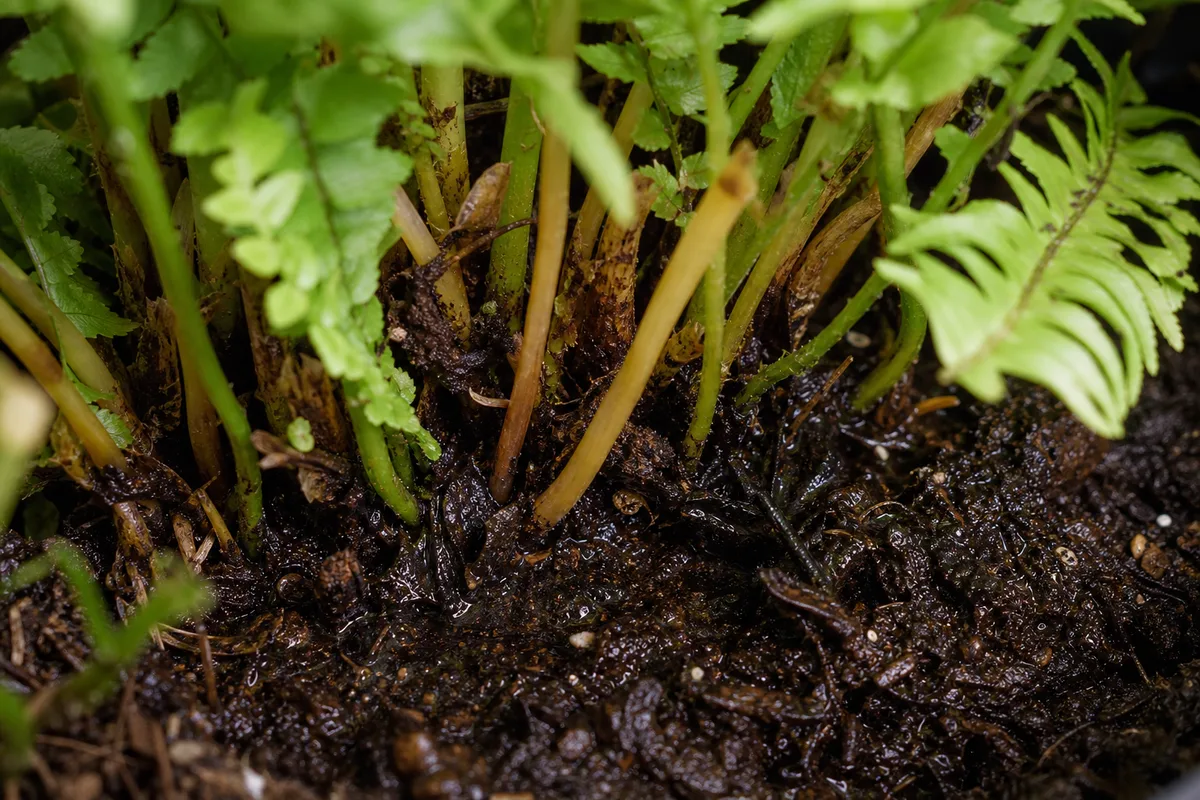
Overwatering symptoms on Boston Fern - compare with healthy tissue on the same plant.
Above the soil line, watch for:
- Limp, drooping fronds that lose their fountain arch while the basket still feels heavy-not light and dry
- Yellowing lower pinnae on outer fronds, often spreading across several arching segments at once rather than one old frond aging out slowly
- Dull green or olive cast on fronds that should look bright medium green, without the gray drought tone underwatering causes
- Edema or soft translucent patches on pinnae where cells take up excess water
- Stunted or blackening croziers at the crown when saturation persists-new fiddleheads fail to unfurl cleanly
- Fungus gnats often appear when soil stays wet too long, a common secondary sign on overwatered houseplants
At the pot, overwatering shows as:
- Mix that stays dark and cool at the surface for many days without the top inch drying
- A basket that feels noticeably heavy when lifted, even as fronds droop
- Standing water in saucers, cachepots, or the bottom of a decorative sleeve
- A sour or swampy smell at the drainage hole-early rot warning, not normal peat aroma
- Mold or algae on the soil surface in chronic wet conditions
Healthy overwatered roots, when you spot-check early, are often still firm and pale-not yet brown and mushy. That is the window this page targets. Once most fine roots turn slimy, you have crossed into root rot territory and need salvage steps, not just a dry-down.
Lookalike symptoms to rule out
| What you see | More likely cause | Quick check |
|---|---|---|
| Limp fronds + light dry pot, gray dull foliage | Underwatering | Pot feels light; mix dry 2 cm down; firm roots on inspection |
| Limp fronds + heavy wet pot, sour smell, mushy roots | Root rot (advanced overwatering) | Confirmed on unpotting; see root-rot guide |
| Brown pinnae tips only, otherwise turgid fronds | Low humidity or fluoride in tap water | Soil moist at depth; tips brown before whole fronds yellow |
| Yellow lower fronds only, slow change over months | Normal outer-frond senescence or slight overwatering | One or two lowest fronds; center croziers still active |
| Widespread yellow pinnae on moist mix | Overwatering or yellow leaves from wet feet | Cluster yellowing on multiple outer fronds; heavy pot |
| Wilting after move to hot direct sun | Heat and light stress | Recent window change; fronds may bleach or crisp at edges |
The trap that sends most Boston fern owners to the wrong fix: limp fronds with wet soil-wilted appearance with moist soil can indicate damaged roots. Both underwatering and overwatering wilt the arching cascade, but the pot weight and moisture at depth tell opposite stories. Always confirm before you soak a wet plant or dry out a thirsty one.
How to confirm overwatering
Work through these checks before changing multiple variables at once:
- Pot weight - Lift the hanging basket. Heavy and wet with limp fronds supports overwatering; light and dry rules it out in favor of underwatering.
- Surface dry-down - Press into the top inch. If it stays cool and clearly damp for five or more days while fronds decline, the wet cycle is too long. The target rhythm is slightly dry at the top inch, not bone-dry throughout.
- Cachepot and saucer audit - Remove decorative outer pots. Pour out any standing water. If runoff returns within hours of watering, drainage is failing somewhere.
- Drainage holes - Confirm holes are open, not sealed by roots, pebbles, or a moss liner pressed flat against the bottom.
- Smell test - A sour odor at the drainage hole suggests anaerobic conditions in the root zone. No smell with heavy wet mix may still be overwatering, but sour smell escalates urgency.
- Frond pattern - Cluster yellowing on several outer fronds plus moist mix fits overwatering better than a single aging lower frond or gray drought cast.
- Root spot-check - If symptoms persist after a proper dry-down, slide the plant out gently. Firm pale roots mean you caught overwatering early; brown mushy roots mean rot-switch to the root-rot guide.
If the pot is light, mix is dusty dry throughout, and fronds look gray, do not stop watering further-that is drought. Soak at the sink per the underwatering page instead.
First fix for Boston Fern
Stop watering and eliminate standing water everywhere.
Remove cachepots and decorative sleeves. Empty saucers. Set the basket where Boston Fern light guide and airflow can help the top inch dry-not direct sun, which scorches fern fronds. Do not mist, fertilize, or repot on day one.
That single pause is the first fix. Boston fern roots need oxygen back in the mix before they can resume moving water to the frond cascade-roots in saturated soil lose oxygen and function. Many growers see the arching fronds droop and reach for the watering can-exactly the wrong response when the basket is already heavy.
After drainage is clear, wait until the top inch of mix feels slightly dry before one thorough soak at the sink. Let water run through until it drains freely, then let the pot finish dripping before returning it to its hook. Discard saucer water within 30 minutes.
Step-by-step recovery by severity
Mild wet cycle-firm roots, no sour smell
If you caught the problem early:
- Pause watering until the top inch dries, usually three to seven days depending on room temperature and light
- Move to bright indirect light if the fern sat in deep shade where evaporation stalled-brighter indirect speeds dry-down without direct sun on fronds
- Resume watering on the check-the-top-inch rhythm from the watering guide: soak thoroughly, drain completely
- Judge improvement by a firm new crozier unfurling within one to two weeks, not by old yellow pinnae greening up
Chronic saturation-yellowing outer fronds, heavy pot, no mushy roots yet
- Complete the dry-down above, then inspect roots by lowering the basket and sliding the root ball out gently
- If roots are firm and pale, return to the pot without Boston Fern repotting guide-repotting adds stress when rot is not confirmed
- If peat is compacted and smells stale but roots are still firm, plan a light repot into fresh peat-perlite mix after the plant stabilizes, not on day one
- Trim fully yellow outer fronds only if they are crisp and clearly dead; partially green fronds may still photosynthesize during recovery
Crown softness or mushy roots-escalate to root rot
If the rhizome crown feels soft, most fine roots are brown and slimy, or the sour smell is strong, stop here and follow the root-rot guide for trimming, repotting, and salvage assessment. Overwatering intervention alone will not reverse advanced decay.
Recovery timeline
Early overwatering with firm roots - Fronds may stay limp for several days after you stop watering while roots regain function. Expect the first signs of recovery when the top inch has dried and you have given one proper soak-and-drain cycle. New croziers firming and unfurling within one to two weeks is a realistic success marker.
Moderate saturation with yellowing outer pinnae - Old yellow pinnae will not turn green again. Recovery is measured by new center growth and stable outer fronds that stop declining. Allow two to four weeks of consistent moist-not-wet rhythm before judging failure.
Cool-room winter overwatering - Dry-down takes longer when evaporation is slow. A basket in a 60°F (16°C) room may need seven to ten days before the top inch shifts-do not interpret slow surface drying as permission to water again while the pot still feels heavy.
Warning signs recovery is failing: fronds keep collapsing inward after a confirmed dry-down and proper soak, crown tissue softens, or new croziers blacken. Those patterns mean root damage is advancing-inspect roots and read the root-rot page.
What not to do
- Do not water because fronds look limp when the basket is heavy and soil is wet-that deepens root suffocation
- Do not mist fronds as a substitute for fixing stagnant mix; brief perk does not restore root oxygen
- Do not fertilize a waterlogged fern; salts on stressed roots cause further damage
- Do not repot into a larger pot “to help drying”-extra volume holds moisture longer and worsens the problem
- Do not place a recovering fern in direct sun to speed dry-down; use bright indirect light only
- Do not assume all drooping is overwatering-confirm with pot weight and moisture at depth before stopping water on a dry plant
- Do not let the pot sit in standing water after bottom-watering; drain within 30 minutes
How to prevent overwatering on Boston Fern
Build a check habit tied to this basket in your home, not a generic calendar:
- Probe the top inch every few days; check soil moisture before watering when it begins to dry, then soak until a small amount drains out
- Lift the basket regularly so you learn how heavy “properly moist” feels versus waterlogged
- Use a light peat- or coco-based mix with perlite in a pot sized to the root ball, with open drainage holes
- Empty cachepots and saucers within 30 minutes of every watering-never let the nursery pot sit in runoff overnight
- In winter low light, stretch intervals toward seven to ten days rather than keeping a summer three-day schedule
- Keep bright indirect light and 50–70% humidity so the plant grows steadily without extreme water swings-see low humidity if tips brown on otherwise correct moisture
- Read the full watering guide for season-by-season rhythm, water quality, and hanging-basket technique
Prevention is far easier than recovery once fine roots decay. Act at the first wilt-with-wet-soil signal before rot advances.
When to worry - escalate to root rot
Overwatering becomes urgent when the rhizome crown softens, the mix smells sour or swampy, or a spot-check reveals brown mushy fine roots. At that stage, pause watering is not enough-you need root inspection, decay removal, and likely repotting per the root-rot guide.
Conversely, if the basket lightens appropriately during dry-down, one thorough soak drains freely, and a new crozier firms within two weeks, the crisis is past. Stay on the moist-not-wet rhythm; Boston fern rewards consistent checks more than rescue flooding.
Related Boston Fern guides: overview · watering · underwatering · root rot · yellow leaves · fungus gnats · wilting · low humidity
Conclusion
Overwatering on Boston Fern is a moisture-balance problem, not a reason to abandon this species’ need for steady humidity in the root zone. The arching fronds tell you early-limp cascade, yellow lower pinnae, heavy wet basket-while cachepots and calendar watering often cause it. Stop watering, drain everything, let the top inch dry, then return to the soak-and-drain rhythm from the watering guide. Measure recovery by new croziers, not by old yellow pinnae that have already senesced. When roots stay firm, this page is enough; when they turn mushy, move to root rot before the crown fails.
When to use this page vs other Boston Fern guides
- Boston Fern watering guide - Use for routine moisture checks before assuming overwatering is the main issue.
- Boston Fern problems hub - Browse all 16 common issues on this species.
- Root Rot on Boston Fern - Different entry point when symptoms overlap with overwatering.
- Yellow Leaves on Boston Fern - Different entry point when symptoms overlap with overwatering.
- Wilting on Boston Fern - Different entry point when symptoms overlap with overwatering.