Fungus Gnats on Boston Fern: Causes, Checks & Fixes
Quick answer
Fungus gnats on Boston Fern mean the soil surface stays wet too long-common when a hanging Nephrolepis gets watered heavily while fronds shade the pot and slow surface dry-down. First step: let the top inch of mix dry slightly before the next drink.
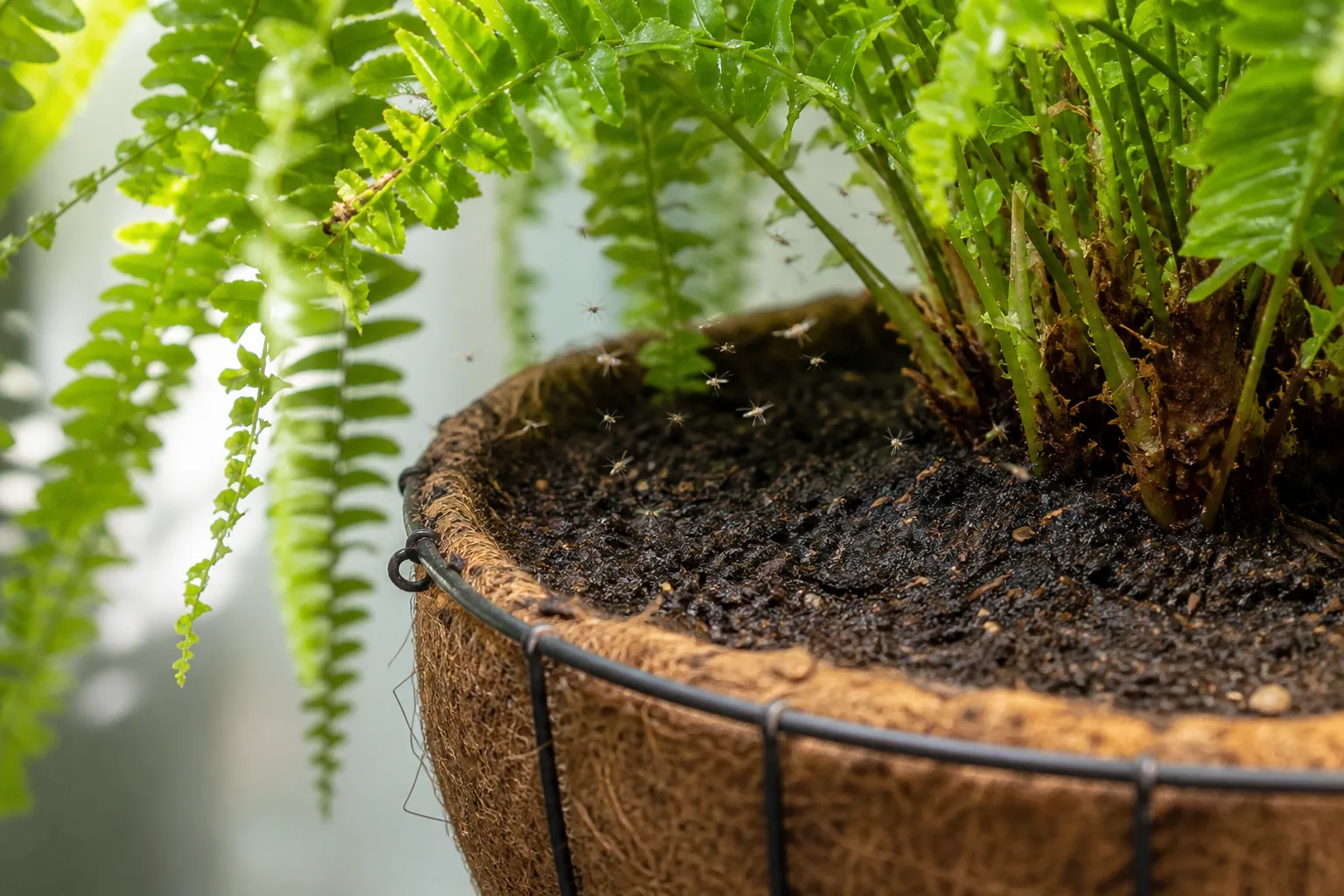
Fungus Gnats on Boston Fern: Causes, Checks & Fixes
This guide covers fungus gnats on Boston Fern. See also the general Fungus Gnats guide, watering, and light pages for this plant.
Fungus Gnats on Boston Fern: Causes, Checks & Fixes
Quick answer
Fungus gnats on Boston Fern (Nephrolepis exaltata) are small flies whose larvae live in damp potting mix-not on fronds. On this classic hanging basket fern, gnats almost always mean the surface peat stays wet too long while owners try to keep “moist fern soil.” Long arching fronds shade the pot rim, slow evaporation, and trap humidity at the soil line-exactly where adult females lay eggs in organic-rich media.
First step: let the top inch of mix dry slightly before the next watering - the same surface dry-down signal in the Boston Fern watering guide. Consistently moist root zone with a breathing surface layer is the target-not permanently soggy peat.
For chronic wet mix with yellow fronds, also read overwatering and root rot. Full species context: Boston fern overview.
What fungus gnats look like on Boston Fern
Fungus gnats are a soil-line problem, not a foliage pest. On Boston fern you will see flies and larvae at the pot, while fronds may look fine until root stress builds.
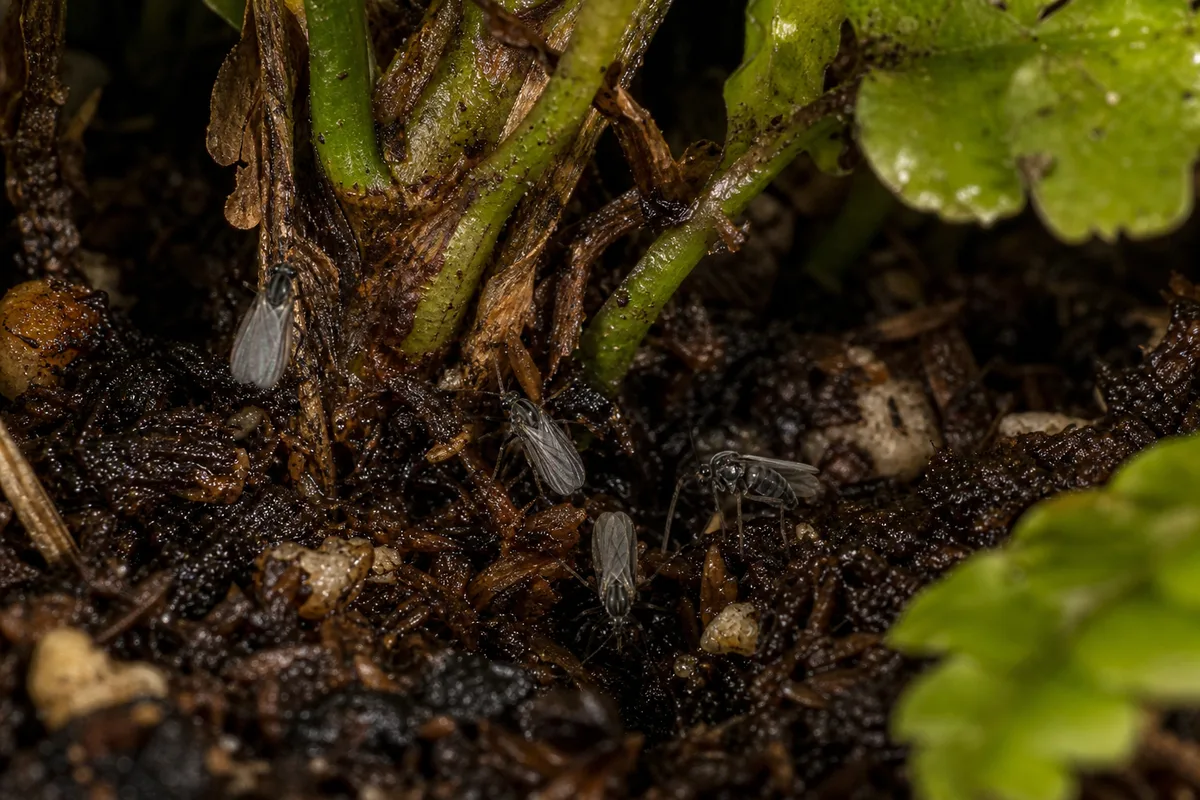
Fungus Gnats symptoms on Boston Fern - compare with healthy tissue on the same plant.
Adults - what you notice first:
- Tiny dark or grayish flies, about 1/8 inch long, resembling miniature mosquitoes
- Weak fliers that scatter when you water at the sink or bump the hanging basket
- Concentration near the soil surface, pot rim, and nearby windows-not crawling on pinnae
- More visible in fall and winter when plants move indoors and watering rhythm does not adjust
Larvae - the damage stage:
- Translucent wormlike larvae with dark head capsules in the top 1–2 inches of peat
- Feed on fungi, decaying organic matter, and fine feeder roots in moist growing medium
- Invisible until you scrape the surface or use a potato wedge test (see confirmation section)
Surface and pot clues:
- Dark damp peat five or more days after watering
- Green algae or mold on soil on chronically wet surface
- Basket feels heavy while fronds look only slightly dull-not the light dry weight of drought
Plant stress that appears later:
- Yellow pinnae on outer fronds when larval feeding and root damage combine with wet mix
- Limp arching fronds despite moist soil-same confusing signal as overwatering
- Sudden loss of vigor or poor new crozier growth when populations are heavy
Fronds do not show gnat feeding marks-no stippling, honeydew, or webbing. If pinnae have fine webbing or stippled yellow dots, see spider mites instead. If tiny flies hover around the kitchen fruit bowl, you may have fruit flies, not fungus gnats.
Why Boston Fern gets fungus gnats
Boston fern sits in an awkward overlap: it genuinely needs moist roots, but fungus gnats breed wherever the surface stays wet continuously. Hanging-basket display makes that balance harder than on a tabletop pothos.
Moist-root / wet-surface confusion
Boston fern needs consistently moist but not waterlogged soil. Many owners interpret “never let it dry out” as “never let the surface dry”-which keeps the top inch saturated around the clock. Colorado State Extension notes that moist growing media high in peat moss is especially attractive to egg-laying females. That is the default mix and watering habit for most indoor Boston ferns.
Hanging basket shade and drainage traps
Arching fronds cascade over the pot rim and shade the soil surface, slowing evaporation on the exact zone gnats colonize. Decorative cachepots and outer sleeves trap runoff so the nursery pot reabsorbs standing water overnight. Moss-lined baskets can seal drainage holes if the liner compacts at the bottom.
Heavy peat without enough perlite
Dense peat holds surface moisture while the center may still feel acceptable-or the entire root ball may stay wet in low winter light when transpiration drops. Oversized hanging baskets stay wet in the middle long after the owner checks only the top crust.
Overwatering after wilt misread
Wilting on wet soil can mean damaged roots from prior saturation-not thirst. Adding water to a limp Boston fern on already-heavy mix deepens gnat habitat and root stress at the same time.
Seasonal indoor move-in
Penn State Extension describes fungus gnats hitchhiking on plants brought indoors for winter. A porch fern moved inside in October often lands in warmer air with the same summer watering frequency-surface peat never dries, and overlapping gnat generations explode within three weeks.
Lookalike symptoms to rule out
| What you see | Likely cause | Key differentiator |
|---|---|---|
| Tiny flies from soil when watering | Fungus gnats | Weak fliers from pot; larvae in top peat |
| Flies around fruit bowl or trash | Fruit flies (Drosophila) | Not tied to soil moisture; no larvae in pot |
| Flies on soil surface only, stronger fliers | Shore flies | Often on algae-covered wet surface; broader body |
| Stippled yellow pinnae, fine webbing | Spider mites | Damage on foliage; paper tap test shows specks |
| White cottony clusters in crown | Mealybugs | Wax on stems/croziers, not soil flies |
| Dark damp soil, no visible flies yet | Early gnat eggs / mold on soil | Potato test or fly scatter on next watering |
| Yellow fronds, sour smell, mushy roots | Root rot | Confirmed on unpotting; gnats may be secondary |
Fungus gnat adults do not damage fronds directly and do not bite people. The nuisance is breeding in your pot-and larvae stressing roots when populations stay high on chronically wet mix.
How to confirm the cause
Work through these checks in order before reaching for sprays:
- Fly scatter test - Water at the sink or lift the basket. Do tiny flies rise from the soil surface? Confirms active adults.
- Top-inch moisture - Press a finger into the top inch. It should shift from cool-damp after a soak to slightly dry before the next drink. If it stays dark and cling-wet for five or more days, surface conditions favor gnats.
- Larva scrape or potato test - Gently scrape the top half-inch of peat or insert a ¼-inch potato wedge into the surface for 48 hours, then check the underside for translucent larvae.
- Basket weight and drainage - Lift the hanger. Heavy pot plus persistent flies points to wet-cycle trouble. Confirm inner pot drains and outer cachepot is empty.
- Cross-check fronds - Yellowing plus sour smell may mean overwatering beyond gnats alone. Stippling on pinnae redirects to mites, not soil treatment.
- Season and history - Recent porch move-in, new plant without quarantine, or winter calendar watering without checking dry-down all support fungus gnat diagnosis over random “house flies.”
Confirmed diagnosis requires flies from soil + larvae in top peat + surface staying wet too long-not a single fly near a window.
First fix for Boston Fern
Adjust watering so the top inch of mix dries slightly between thorough soaks-do not add another drink while that layer clings wet.
This is one clear action, not a stack of treatments on day one:
- Skip the next scheduled watering until the top inch feels slightly dry to the touch.
- When you do water, soak at the sink until mix is saturated, then drain completely before rehanging.
- Empty cachepots and decorative sleeves within 30 minutes-never let the nursery pot sit in runoff.
After that rhythm holds for several days, add yellow sticky traps at soil level to monitor and reduce egg-laying adults. If larvae persist after two weeks of corrected dry-down, use a Bti (Bacillus thuringiensis israelensis) drench labeled for fungus gnat larvae per product instructions.
Do not apply pesticides to fronds for soil gnats-the pests are not on foliage. Do not repot into heavier peat on day one. Do not cover a wet surface with sand before fixing the watering cycle.
Surface-moisture dry-down timeline
Boston fern owners often ask how long the top inch should stay damp. This timeline assumes a standard peat-perlite mix in an open-draining hanging basket at typical room temperatures (65–75°F / 18–24°C):
| Phase after thorough soak | What the top inch should feel like | Gnat risk |
|---|---|---|
| Day 0–1 | Evenly cool and damp throughout | Low if drainage is good |
| Day 2–3 | Surface begins to lighten; still cool below | Normal for active growth |
| Day 3–5 | Top inch shifts to slightly dry; root zone still moist deeper down | Target zone - water when reached |
| Day 5+ | Surface still dark and cling-wet; no dry-down | High gnat risk - adjust volume or drainage |
| Winter (low light) | Dry-down may take 5–7 days | Slow watering frequency; do not keep surface wet “for the fern” |
If your basket never reaches the “slightly dry top inch” window before you water again, gnats will keep breeding even if fronds look healthy. In cool rooms below 65°F (18°C), evaporation slows-extend the interval between soaks rather than keeping the surface saturated.
Bottom-watering option: Setting the nursery pot in a shallow tray until the root zone wicks moisture up can keep the surface drier while roots stay hydrated-useful when you struggle to soak without rewetting the top daily. Drain fully afterward; do not leave the pot standing in water.
Step-by-step recovery
Week 1 - Break the wet surface cycle
- Let the top inch dry slightly between waterings.
- Water at the sink; drain until the basket stops dripping.
- Empty cachepots and confirm drainage holes are open.
- Place yellow sticky traps at the pot rim to catch adults.
- Improve gentle airflow under the basket without blasting dry heat on fronds.
Week 2 - Target larvae if adults persist
- Continue dry-down discipline-do not relapse to daily shallow top-ups.
- Gently loosen crusted wet peat on the surface if compacted (expose eggs to air).
- Apply Bti drench if larvae show on potato test after cultural fixes are in place.
- Remove yellowed outer fronds that are fully spent-reduces decaying organic matter larvae feed on.
Week 3+ - Judge plant recovery, not fly count alone
- Adult numbers should drop sharply once surface cycles correct.
- Watch for new green croziers unfurling without limp texture.
- If fronds collapse on soggy mix or smell turns sour, escalate to root rot inspection-gnats were a warning, not the only problem.
Recovery timeline
Adults: Counts usually fall within one to two weeks once the top inch dries between drinks and traps catch remaining fliers. Penn State notes adults live about one week and lay up to 200 eggs-breaking the wet-surface cycle reduces the next generation immediately.
Larvae: Full cycle disruption needs two to three weeks because multiple life stages overlap at room temperature. Bti drenches speed larval kill when cultural fixes alone stall.
Frond recovery: Yellow pinnae from root stress do not re-green. Judge success by new crozier growth over four to six weeks, not old frond color.
Worsening signs: Swarms increase despite dry surface, wilt on wet soil after two weeks of correction, or sour smell from drainage holes-inspect roots before adding more water.
Example recovery: porch fern move-in
A Boston fern comes indoors in October after a humid summer on a shaded porch. Within ten days, tiny flies scatter every time you mist or water. The top inch has not felt dry since move-in; the basket hangs in a cachepot that held runoff twice this week. Outer pinnae are beginning to yellow.
The matched fix: remove the cachepot during the dry-down phase, water only when the top inch lightens, drain fully at the sink, and set two sticky traps at the rim. By week two, fly counts drop to occasional stragglers. By week four, one clean crozier unfurls green. Yellow outer fronds are trimmed-they will not recover. This pattern matches what extension guides describe: gnats exploit unchanged winter watering on slower-growing ferns, not a mysterious pest invasion.
What not to do
- Do not keep surface peat wet 24/7 to “please” a moisture-loving fern-the roots need damp mix, not a saturated soil line.
- Do not leave baskets in full saucers or cachepots with standing water.
- Do not spray fronds with insecticidal soap or neem for soil gnats-larvae are not on foliage, and wetting fronds overnight in cool rooms adds stress.
- Do not repot into heavier peat without perlite when gnats appear-that worsens surface retention.
- Do not apply sand or gravel top-dressing on an already-too-wet surface before correcting watering-it masks the problem without drying the peat below.
- Do not ignore gnats when yellow fronds appear-they often signal the same wet-cycle stress as overwatering.
Boston Fern is non-toxic to cats and dogs-normal gnat treatment poses low pet risk; keep pets away from wet Bti drenches until mix dries.
How to prevent fungus gnats next time
- Follow the watering guide surface dry-down - top inch slightly dry between soaks, moist root zone below.
- Use airy peat-perlite mix in baskets with open drainage; refresh compacted mix every 12–18 months.
- Empty cachepots after every soak; never let runoff sit in decorative sleeves.
- Quarantine new ferns six weeks before placing near your collection-Penn State recommends isolating plants brought indoors to catch hitchhikers early.
- Adjust winter frequency when light drops and evaporation slows-same volume on a slower schedule keeps the surface wet.
- Store open potting soil sealed and dry-fungus gnats can breed in damp bags in the garage.
- Cross-link with overwatering when gnats and yellow fronds coexist-fixing drainage prevents both.
Prevention is easier than breaking a three-week overlapping life cycle once several generations occupy the pot.
When to worry
Treat as urgent if:
- Fronds collapse on soggy mix with sour smell from drainage holes
- Gnat swarms grow despite a dry top inch for two full weeks
- Yellowing spreads to young croziers while the crown softens
- Wilt persists on wet soil after you corrected drainage and dry-down
You can usually monitor if a few flies appear on slightly damp surface peat and disappear within ten days of dry-down discipline. Do not wait if wet soil, spreading yellow, and rising fly counts continue after you emptied standing water and fixed the watering rhythm for a full week.
Boston Fern care cross-check
Fungus gnats resolve faster when baseline care supports surface dry-down without drying the whole root ball:
| Factor | Target for Boston fern | Gnat link |
|---|---|---|
| Water | Top inch slightly dry between soaks; moist but not waterlogged below | Wet surface 24/7 → gnat breeding |
| Mix | Peat-perlite with open structure | Heavy compacted peat → slow surface dry-down |
| Display | Open drainage; empty cachepots | Standing runoff → permanent wet surface |
| Light | Bright indirect; adjust winter watering when growth slows | Low light → slower dry-down, same water volume |
| Air | Gentle airflow under basket | Stagnant humid pocket at soil line |
| Quarantine | 6 weeks for new or outdoor plants | Hitchhikers on fall move-in |
Related Boston Fern guides
Related Boston Fern guides: overview · watering · overwatering · underwatering · yellow leaves · root rot · mold on soil · spider mites · low humidity · pruning
Conclusion
Fungus gnats on Boston fern are a surface-moisture signal, not a mysterious flying pest. The fern needs moist roots; the gnats need a wet top inch of peat. Let that surface breathe between soaks, drain hanging baskets fully, and trap adults while larvae starve in drier upper mix. Judge recovery by fewer flies and new green croziers-not by expecting old yellow pinnae to re-green. When gnats persist alongside collapse on soggy soil, treat the root problem first.