Mold on Soil on Boston Fern: Causes, Checks & Fixes
Quick answer
White or gray fuzz on Boston Fern soil is usually harmless saprophytic mold on a damp peat surface-not a frond disease. First step: scrape the top layer, remove fallen frond debris, and let the top inch of mix dry before you water again.
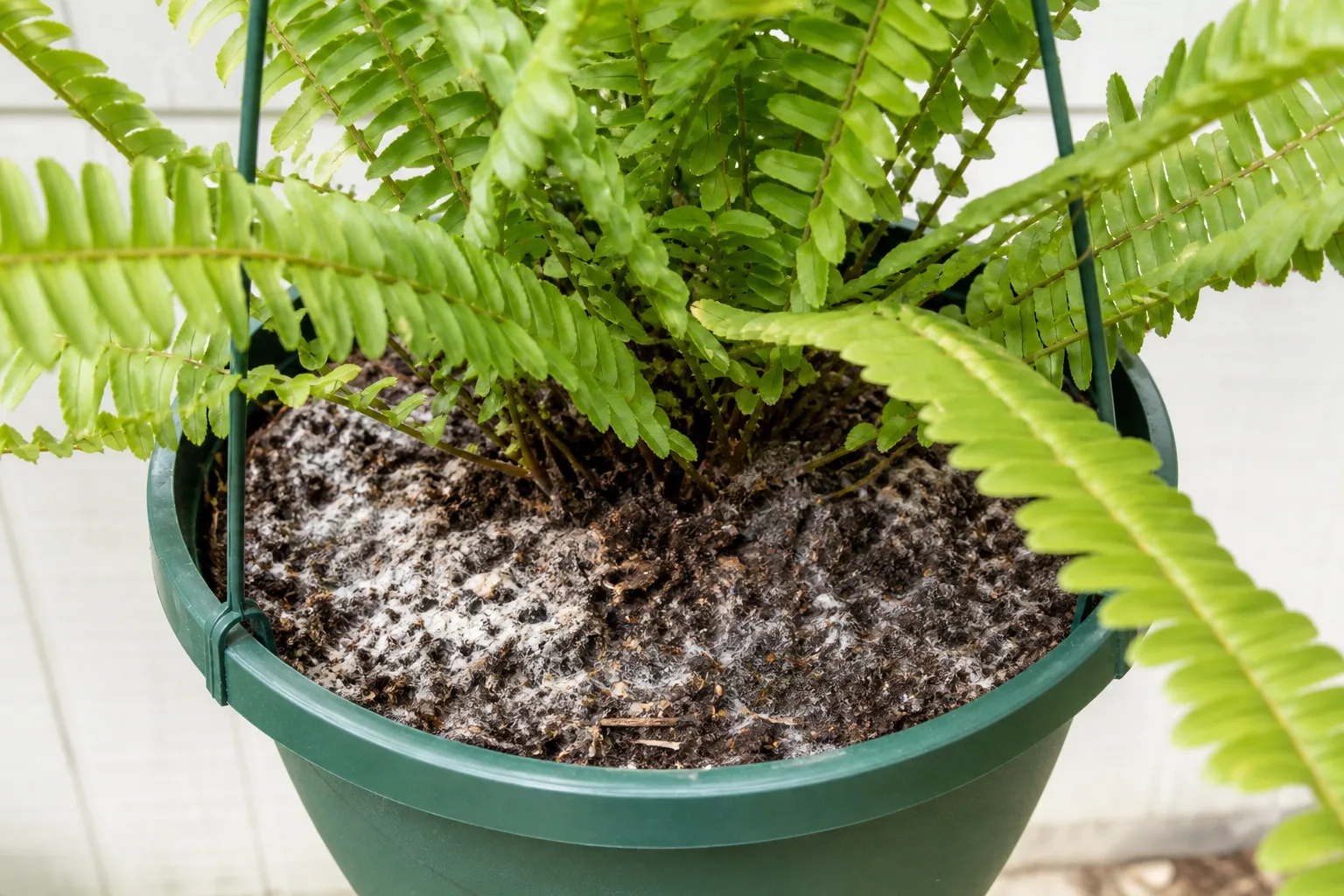
Mold on Soil on Boston Fern: Causes, Checks & Fixes
This guide covers mold on soil on Boston Fern. See also the general Mold on Soil guide, watering, and light pages for this plant.
Mold on Soil on Boston Fern: Causes, Checks & Fixes
Quick answer
White or gray fuzz on Boston Fern potting mix is almost always saprophytic mold-a fungus breaking down dead organic matter in damp peat, not a disease attacking the arching fronds above. Nephrolepis exaltata needs consistently moist but not waterlogged soil, which confuses many owners into keeping the surface wet at all times. That is when mold appears.
First step: scrape off the top half-inch to inch of moldy soil, pick off fallen frond debris, and do not water again until the top inch of mix feels dry to your finger. Do not repot, fertilize, or spray fungicide on day one unless the mix smells rotten or roots are already mushy. Fix the surface moisture rhythm first.
What mold on soil looks like on Boston Fern
Surface mold shows up on the potting mix, not on healthy green pinnae. Unless a separate problem is active, fronds should still arch normally and new croziers should stay firm.
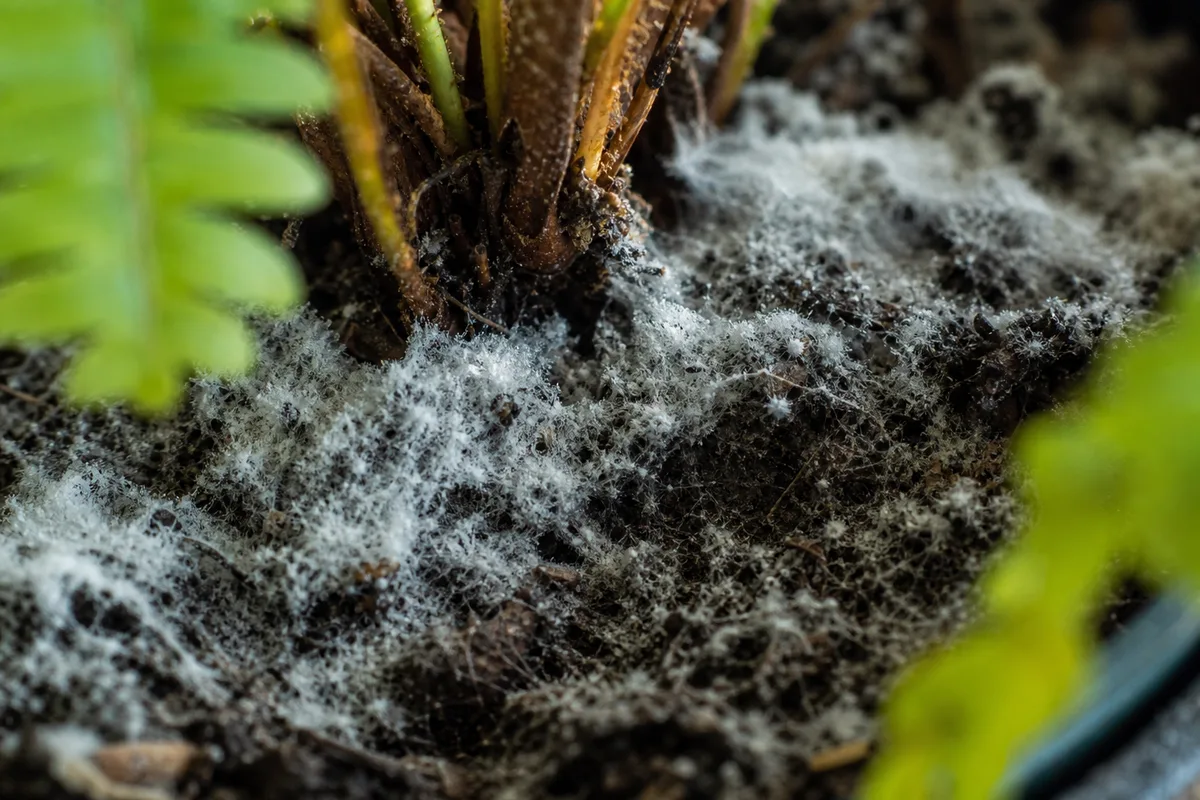
Mold on Soil symptoms on Boston Fern - compare with healthy tissue on the same plant.
Typical mold patterns on Boston Fern pots:
- White, gray, or yellow-tan fuzzy patches on the soil surface, sometimes spreading to the inner pot wall
- Thread-like mycelium visible after overhead watering or misting near the crown
- Top layer staying cool and clinging to your finger several days after the last drink
- A faint musty smell when you lift trailing fronds to inspect the rim
- Small dark flies rising when you water-fungus gnats thrive in damp soil and share the same wet surface niche
- Fallen brown pinnae or trimmed frond stubs sitting on wet peat where mold anchors
What is usually not soil mold:
- Dark brown round clusters on frond undersides-those are normal Boston Fern spores, not fungus on the mix
- Brown crispy tips on pinnae edges-low humidity, fluoride, or drafts, not potting-mix mold
- Fine webbing on frond undersides-spider mites in dry air, unrelated to soil surface fuzz
- Slimy green film on the rim-algae from constant surface moisture and low light, treated like mold but needs slightly brighter placement
Soil mold by itself rarely yellows whole fronds overnight. If leaves go limp while the pot stays heavy and wet, treat that as a root-moisture problem-not cosmetic fuzz alone.
Why Boston Fern gets mold on soil
Mold on houseplant soil is typically a saprophytic fungus feeding on decaying organic matter in the mix. On Boston Fern, the trigger is almost always how long the peat surface stays damp-not a random infection attacking the plant.
Plant-specific reasons this fern grows surface mold:
- Moisture-retentive peat mix - Boston Fern performs best in well-drained but moisture-retaining medium such as peat with perlite or vermiculite. That organic surface holds water and feeds saprophytic fungi when it never dries between waterings.
- “Consistently moist” read as “always wet on top” - The root zone should stay evenly damp, but the top inch still needs to dry slightly before the next drink. Watering on a fixed calendar in winter-when growth slows-keeps the surface soggy for days while the plant uses less water.
- Hanging baskets shading the pot - Long arching fronds hang over the rim and block airflow and light from reaching the soil surface. Evaporation slows exactly where mold germinates.
- High humidity without surface dry-down - Boston Fern needs humid air for leaf edges, but humid still corners also slow top-layer drying. Double-potting with moist sphagnum around the outer container helps fronds yet can trap moisture at the soil line if overdone.
- Organic debris on the surface - This fern sheds older pinnae naturally. Cutting old fronds at the soil encourages new growth, but trimmed bits left on wet peat give mold an easy food base.
- Overhead watering and crown splash - Soaking fronds from above washes debris onto the mix and can leave the surface wet longer than the roots need. Fine fern foliage holds droplets that drip back onto soil.
- Oversized pots or blocked drainage - Extra soil volume without matching roots stays wet at the center while mold shows on top first. Saucers left full keep the bottom saturated even when the surface looks merely dark.
The mold was always present in spores or the mix. Wet, stagnant surface conditions let it reproduce. The fungus may be harmless on its own, but the same wetness invites fungus gnats and root rot when it persists.
How to confirm the cause
Work through these checks before changing anything else:
- Surface moisture - Insert your finger to the first knuckle (roughly 2 cm). If the top inch feels wet, cool, or clings to your skin days after watering, mold has an active moisture source.
- Pot weight - Lift the hanging basket or container. A heavy, cold pot many days after watering confirms slow dry-down or poor drainage.
- Frond health - Arching green fronds with firm stipes suggest surface mold only. Widespread yellowing, gray wilted fronds, or collapsing crowns point toward root stress beneath the fuzz.
- Wilting paradox - A wilted plant with moist soil often signals root rot from chronically wet mix, not thirst. Boston Fern droops when underwatering on Boston Fern too, but soggy weight plus wilt is the danger pattern.
- Drainage audit - Confirm open drainage holes, no plugged bottom, and no standing water in a cache pot or full saucer.
- Light and season - Note if the basket moved farther from a window or if winter shortened days while watering stayed the same.
- Gnat test - Tap the pot rim or water lightly. Small dark flies hovering confirm a shared wet-soil ecosystem with mold.
- Root peek if worried - Slide the root ball out gently. Firm whitish roots with surface mold only mean cosmetic fungus on wet peat. Brown mushy roots mean escalate beyond scraping.
If the top inch is dry, fronds look normal, and mold appeared once after a heavy watering, a single scrape-and-dry cycle may be enough.
First fix for Boston Fern
Scrape off the top half-inch to inch of moldy soil, discard fallen frond debris, and do not water again until the top inch of mix feels dry to your finger.
Use a spoon or small trowel. Boston Fern is non-toxic to cats and dogs, but moldy soil and dust can still irritate sensitive people-wash hands after handling.
After scraping:
- Empty any saucer so the pot is not sitting in runoff.
- Move the basket to brighter indirect light-not direct sun, which scorches fronds-so the surface can dry faster.
- Do not mist the soil surface while correcting mold; target humidity at leaf level instead.
That is the complete first response. Do not repot, fertilize, or spray fungicide on day one unless stems at the crown are mushy or the mix smells sour.
Step-by-step recovery
Once the surface is clean and you have paused watering:
- Track dryness daily - Mark when the top inch dries. Active Boston Fern in spring may need water every three to five days; in cool dim winter, seven to ten days or longer is common in many homes.
- Water deeply when dry - When the top inch is dry, soak until a little runs from drainage holes, then discard excess from the saucer within 30 minutes. Avoid light sips that wet only the surface.
- Water at the soil line - Direct water beneath the frond cascade so moisture does not pool in the crown where leaves fold together. Bottom-watering for 15–30 minutes can moisten roots while keeping the surface drier-remove the pot from standing water promptly.
- Remove debris promptly - Brush fallen pinnae off the soil after trimming old fronds. Do not let brown leaf litter compost on wet peat.
- Improve airflow - Space baskets so air moves between them. A gentle room fan helps surface drying without blasting cold drafts on tropical foliage.
- Refresh the surface if needed - Once the top inch is dry, add a thin layer of dry peat-perlite mix to replace what you removed-only if the surface was heavily colonized.
- Address fungus gnats together - If flies appeared with mold, use yellow sticky traps for adults while the soil surface dries. Let the top 1–2 inches dry completely before rewatering; traps alone do not fix wet mix.
- Repot only if mold keeps returning - Chronic recurrence with compacted, sour mix, or an oversized pot may need fresh airy medium and a right-sized container. Trim only mushy roots; leave firm rhizomes intact.
Hold fertilizer until new croziers open cleanly. Stressed roots do not need extra nitrogen while you correct moisture.
Recovery timeline
A single mold flare after one heavy watering often clears within one to two weeks once the top inch dries reliably between drinks. Surface fuzz should not return if the dry-down rhythm holds.
If mold reappears within three to five days, the underlying moisture problem is still active-expect another one to two weeks of adjusted watering and light before the surface stays clean.
Judge success by a mold-free soil surface, firm arching fronds, and new rolled croziers opening green-not by old brown tips at pinnae edges. Severe root damage from prolonged wet soil can push full recovery into the next active growing season.
Lookalike symptoms to rule out
Green algae on soil and pot rim - Slimy green film in constant surface moisture and low light. Scrape and dry like mold, but increase Boston Fern light guide slightly so the pot rim dries between waterings.
Flower pot mushrooms - Small yellow or white caps rising from the mix are also saprotrophic and harmless to the plant, but signal wet soil. Remove caps if curious pets might ingest them; fix watering the same way.
Root rot (advanced wet soil) - Mushy brown roots, sour smell, yellow wilting fronds while mix stays wet. Scraping mold is not enough-inspect roots and repot if needed.
Mineral crust on soil - White or tan hard crystals, not cottony threads. Common with hard tap water or salt buildup on ferns sensitive to fluoride. Flush during the next proper watering; it is not fungal.
Powdery mildew on fronds - Dry white dust on foliage, not soil. Improves with airflow around leaves, not surface scraping alone.
Mistakes to avoid
Do not scrape mold repeatedly while keeping the surface wet. Removal without drying guarantees return within days.
Do not interpret “keep soil moist” as “keep the top layer soggy at all times.” Boston Fern needs damp roots with a slightly dry surface between drinks-not a permanently wet crust.
Do not overhead-soak the entire frond mass on every watering if mold keeps returning. That washes debris onto soil and slows surface drying.
Do not assume mold is harmless and ignore it for months. The fungus itself may not eat living roots, but overwatering can lead to root rot on ferns kept too wet in winter.
Do not repot into an oversized hanging basket “to reduce watering frequency.” Extra soil volume holds water longer and makes surface mold chronic.
Do not use heavy fungicide sprays on soil as a first response. They do not fix drainage or watering habits.
Do not compost moldy scrapeings if fungus gnats were present-you can spread larvae elsewhere.
Boston Fern care cross-check
Mold correction should align with how this fern normally grows:
- Water when the top inch begins to dry, while the root ball stays cool and moist below-not bone dry, not swampy on top.
- Use peat- or coco-based mix with perlite for moisture retention with drainage.
- Target bright to medium indirect light so the plant uses water steadily and the pot surface dries evenly.
- Maintain 50–70% humidity for fronds without keeping the soil surface constantly wet-humidity at leaf level and dry-down at the rim are separate jobs.
- Reduce watering frequency in winter when the plant is dormant and overwatering risks root rot.
If mold appeared right after Boston Fern repotting guide, the new mix may be too dense or the pot too large. If it appeared in autumn, shorter days-not a new pathogen-are likely slowing dry-down while watering stayed the same.
How to prevent mold next time
Let the top inch of mix dry slightly between waterings while keeping the root zone evenly moist. Lift the basket to learn its weight when properly watered versus when the surface is ready for another drink.
Use pots with drainage holes and empty saucers after every watering. Never let Boston Fern sit in standing water overnight.
Remove fallen fronds and trimmed debris from the pot surface promptly. Old pinnae on wet peat feed mold faster than bare mix.
Place hanging baskets where bright indirect light reaches the soil rim-not only where the fronds look best cascading over a dim corner.
Consider bottom-watering or watering at the soil line when surface mold is a recurring issue. That pattern keeps roots hydrated without leaving the top layer soggy after every session.
Quarantine and inspect new ferns before grouping them. Spores travel on air, but mold only persists where moisture lingers at the surface.
When to worry
Escalate beyond surface scraping when:
- Mold returns within 48–72 hours after scraping despite dry surface checks
- Fronds wilt or yellow widely while the pot feels heavy and wet
- The mix smells sour or rotten when you slip the plant out
- Fungus gnats persist on Boston Fern for weeks even with a dry surface-larvae may be deep in saturated mix
- New croziers stall or collapse despite firm-looking upper fronds
- Brown mushy roots appear on inspection
Those patterns suggest root rot or a failing potting environment, not cosmetic mold alone. Trim mushy roots, repot into fresh airy mix, and reduce watering until new growth resumes.
Surface mold on an otherwise vigorous Boston Fern with firm arching fronds is not urgent. Fix moisture, watch for two weeks, and intervene deeper only if warning signs appear.
Conclusion
Mold on Boston Fern soil looks alarming but is usually a harmless saprophytic fungus telling you the peat surface stays too wet. Scrape the top layer, clear fallen frond debris, and let the top inch dry before the next drink while keeping the root zone moist below-not soggy on top. That path clears surface fuzz, keeps fungus gnats in check, and protects the fine roots this humidity-loving fern depends on-without unnecessary fungicides or day-one repotting.
When to use this page vs other Boston Fern guides
- Boston Fern watering guide - Use for routine moisture checks before assuming mold on soil is the main issue.
- Boston Fern problems hub - Browse all 16 common issues on this species.
- Fungus Gnats on Boston Fern - Different entry point when symptoms overlap with mold on soil.
- Overwatering on Boston Fern - Different entry point when symptoms overlap with mold on soil.
- Root Rot on Boston Fern - Different entry point when symptoms overlap with mold on soil.