Boston Fern Fertilizer: When, How Much, and Common Mistakes
Boston Fern Fertilizer: When, How Much, and Common Mistakes
Boston Fern Fertilizer: When, How Much, and Common Mistakes
What Boston Fern actually needs from fertilizer
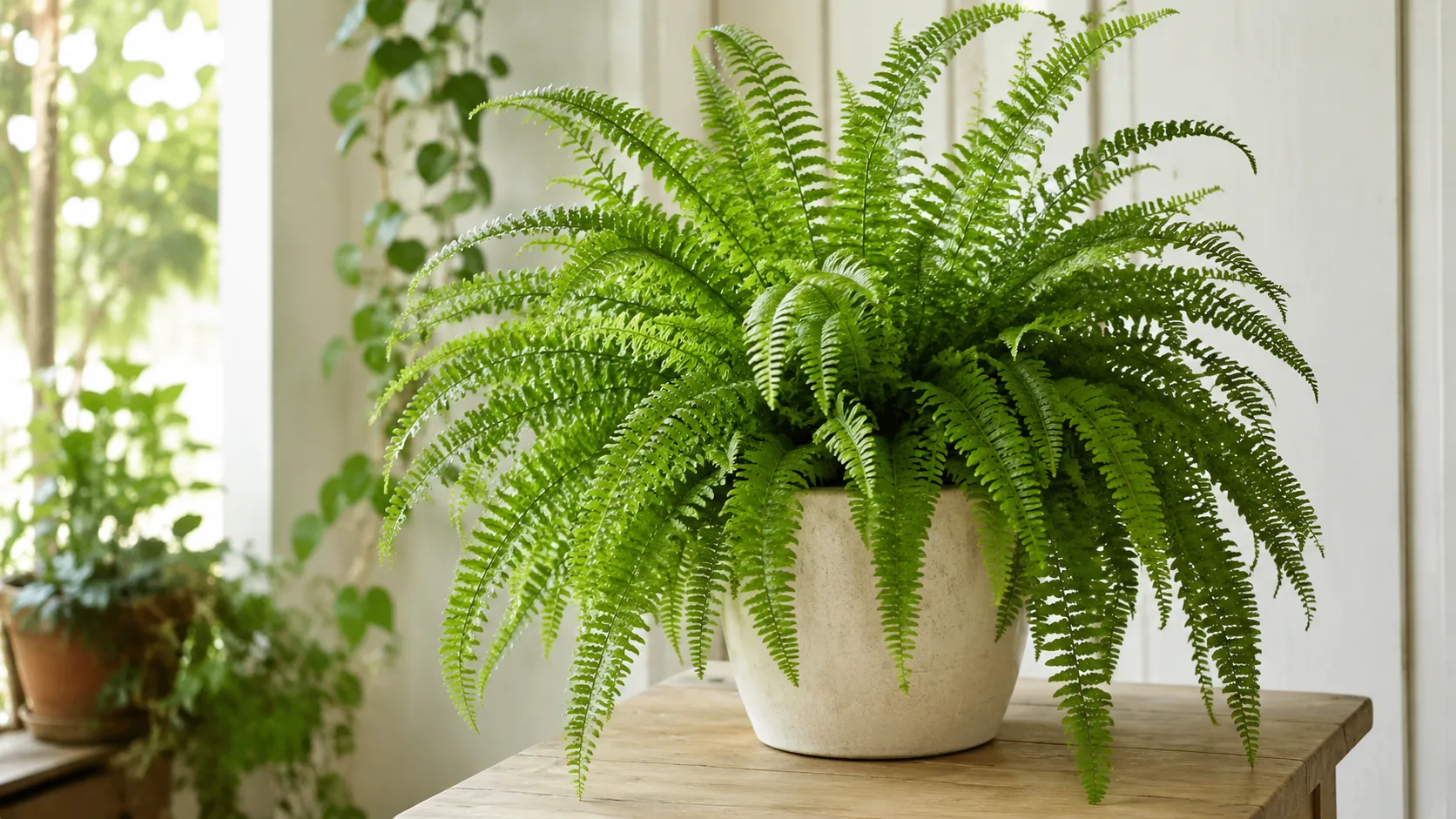
Boston fern (Nephrolepis exaltata ‘Bostoniensis’) is grown for cascading fronds, not flowers or fruit. That changes the entire fertilizer conversation. You are not trying to push blooms or bulk up a woody trunk. You are trying to keep arching pinnae deep green, encourage steady new frond emergence, and support the thin runners that sometimes root at the pot edge. Fertilizer helps with all of that, but only when the plant is actively growing and only when the dose stays mild.
The most useful mental model is this: Boston fern is a moderate feeder during the growing season and a non-feeder the rest of the year. University of Wisconsin–Madison Extension notes that Boston fern does best in fertile soil or with regular fertilization - liquid or slow-release houseplant fertilizer at half strength every 4 to 6 weeks when actively growing - and that the amount should be cut back sharply in winter. Over-fertilizing, the same source warns, causes browning and drying from the ends of the fronds.
That last sentence matters more than most growers realize. Boston fern is easier to damage with too much fertilizer than to rescue with too little. A slightly under-fed fern in good light and evenly moist soil still looks respectable. An over-fed fern in the same pot develops brown pinnae tips, white salt crust, and sometimes sudden frond drop - symptoms that are easy to blame on dry air when the real problem is dissolved salts in the root zone.
Why ferns are moderate feeders, not heavy feeders
Ferns evolved in humid forest understories where nutrients arrive in small, steady doses through rain and leaf litter. Boston fern is not a fast vine like a pothos, and it is not a heavy tropical aroid. In a typical indoor hanging basket, new frond production is steady but measured. The root system is fine and fibrous, living in peat- or coco-based mix that holds moisture well but leaches nutrients quickly with each watering.
That combination means Boston fern benefits from light, periodic feeding, not concentrated bursts. BBC Gardeners’ World recommends a weak liquid feed once a month in spring and summer, which aligns with Wisconsin guidance of every 4 to 6 weeks at reduced strength.
Compare that to heavy-feeding houseplants that stall without regular nutrition. Boston fern rarely sends that signal in a well-run home. Pale, thin fronds more often trace back to too much direct sun, underwatering on Boston Fern, or depleted mix. Rule out light and moisture before increasing fertilizer.
How NPK supports fronds, runners, and root growth
Every fertilizer label shows three numbers - N-P-K - for nitrogen, phosphorus, and potassium. Nitrogen drives chlorophyll production and the overall green color of fronds. Phosphorus supports root development and general energy transfer. Potassium helps regulate water movement inside plant tissues and improves stress tolerance. Boston fern needs all three because it is producing foliage continuously through the warm months, sending out stolons in favorable conditions, and maintaining a fibrous root mat in a relatively small container.
For a foliage fern, a balanced formula such as 10-10-10 or 20-20-20 at half the label strength is the standard recommendation across extension and houseplant guidance. You do not need a high-phosphorus “bloom booster” because Boston fern is not grown for flowers. A slightly nitrogen-forward formula can make sense if fronds look pale despite good care, but pushing nitrogen hard without fixing light or watering first usually creates soft, floppy growth rather than the crisp arching habit the plant is known for.
Micronutrients matter too, especially in peat-heavy mixes that contribute little mineral nutrition on their own. A complete water-soluble houseplant fertilizer with iron, manganese, and other trace elements is safer than a bare NPK product. Iron deficiency on ferns can show up as pale new fronds while older fronds stay green - a pattern that looks like under-feeding but may also reflect high pH or poor root function. If you use purified or very soft water, a complete fertilizer becomes even more important because the irrigation water is not supplying background minerals.
Choosing the right fertilizer type and NPK ratio
The best Boston fern fertilizer for most home growers is a complete, water-soluble, balanced liquid formula diluted to half the label strength. That covers the majority of indoor setups: hanging baskets, table ferns, and seasonal porch plants brought inside before frost. Product choice matters less than dilution, timing, and salt management, but a few label details help you avoid problems before they start.
If you want a single default: 20-20-20 or 10-10-10 liquid houseplant fertilizer at half strength, applied to moist soil every 4 to 6 weeks from spring through early autumn, with a full pause in winter. That is the core program. Everything else in this section is refinement.
Balanced liquid formulas vs fern-specific products
Balanced liquid fertilizers are widely available, easy to dilute, and simple to pause when the plant slows down. They dissolve in water, distribute through the root zone evenly, and leave no guesswork about when the dose ends - unlike slow-release pellets that keep releasing whether the plant is growing or not. For Boston fern in a 8-to-12-inch hanging basket, liquid feeding is usually the most controllable option.
Some products are marketed specifically for ferns or foliage plants. These are often milder out of the bottle or include micronutrients suited to acid-loving plants. They can be excellent choices, especially if the label already assumes indoor dilution. The key is to read the guaranteed analysis and the mixing instructions rather than the word “fern” on the front. A fern-labeled product used at full strength on dry soil can still burn roots.
Avoid combining multiple synthetic products in the same week - for example, a balanced liquid feed plus a high-nitrogen foliar spray plus Epsom salt in the irrigation water. Boston fern has a limited root volume, and stacked inputs accumulate as salts faster than the plant can use them. One well-chosen liquid fertilizer, properly diluted, is enough for routine care.
Slow-release granular fertilizer is a different category. Wisconsin Extension mentions slow-release houseplant fertilizer at half strength as an option, but for indoor Boston fern in small pots, slow-release prills are harder to control. Heat, constant moisture, and a small root zone can cause uneven release. If you use slow-release at all, choose a low-dose formulation, mix it lightly into the top inch of fresh mix at Boston Fern repotting guide rather than top-dressing heavily, and skip liquid feeding on the same schedule. Most indoor growers have an easier time with liquid alone.
Organic options: fish emulsion, seaweed, and compost tea
Organic fertilizers are optional for Boston fern, but they fit the plant’s ecology well because ferns in nature receive nutrients through decomposing organic matter rather than concentrated salts. Fish emulsion, seaweed extract, and compost tea are the most common organic choices for indoor ferns. Each has trade-offs.
Fish emulsion can green up pale fronds at half label strength once a month during active growth, but it smells for a day or two indoors. Seaweed extract adds micronutrients but is not a complete feed on its own. Compost tea is the most variable option and can introduce gnats if unfinished.
A practical organic-friendly routine uses mild synthetic liquid as the primary feed at half strength every 4 to 6 weeks, with optional diluted seaweed once or twice in summer. Worm castings at repotting - roughly 10 percent by volume - provide a slow base layer. Do not stack organic top-dressing, synthetic liquid, and Epsom salt soaks in the same month without a clear reason.
The full year-round Boston Fern fertilizer schedule
Boston fern follows a seasonal rhythm even indoors. Day length, room temperature, and humidity shift with the calendar, and the plant’s nutrient demand shifts with them. The feeding schedule should track active frond production, not a fixed calendar habit you never adjust. The general rule is straightforward: feed during visible growth, taper as growth slows, stop in winter, and restart only when new fronds are emerging again.
| Season (Northern Hemisphere) | Growth phase | Feeding frequency | Dilution |
|---|---|---|---|
| March – April | Waking up | First feed only after new frond growth is visible | 1/2 label strength |
| May – August | Peak active growth | Every 4 to 6 weeks (or monthly weak feed) | 1/2 label strength |
| September | Growth slowing | Every 6 to 8 weeks at most, only if still producing fronds | 1/2 label strength |
| October – February | Rest / low growth | No fertilizer | - |
| March (following year) | Restart | Resume after second new frond or 2–3 weeks of steady growth | 1/2 label strength |
Spring and summer: feed every 4 to 6 weeks
From late spring through midsummer, Boston fern is usually at its most active indoors or on a shaded porch. This is the window for half-strength liquid fertilizer every 4 to 6 weeks, matching University of Wisconsin Extension guidance. If you prefer a simpler calendar habit, once a month with a weak liquid feed - as BBC Gardeners’ World recommends - falls safely inside that range.
The application routine matters as much as the date. Water the plant normally first, let excess drain, then pour the diluted fertilizer through the moist mix until a little runs from the drainage holes. Never pour fertilizer onto bone-dry peat; the sudden osmotic stress pulls water out of fine roots and causes tip burn within days. If you forgot to water and the basket feels light, give plain water today and fertilizer in two or three days after the mix has rehydrated evenly.
Through peak summer, watch new frond color and thickness rather than the calendar alone. Deep green, well-spaced pinnae on fresh fronds mean the current program is working. Pale new growth with good light and moisture may justify keeping the same schedule rather than increasing strength - try half strength on the normal interval before trying full strength, which Boston Fern overview rarely needs indoors.
Autumn taper and winter pause
As daylight shortens and indoor heating dries the air, Boston fern growth slows even if the plant still looks full. September is the month to stretch the interval - from every 4 to 6 weeks toward every 6 to 8 weeks - and to feed only if the plant is still pushing new fronds. If frond emergence has nearly stopped by mid-October, skip the autumn feed entirely. Wisconsin Extension is explicit: cut fertilizer back sharply in winter.
The winter pause is not optional. A plant that is barely growing cannot use nutrients at a meaningful rate. Any fertilizer added from late autumn through winter accumulates as soluble salts in the pot. University of Maryland Extension notes that excessive fertilizer use and frequent applications drive up salt levels in container media, producing leaf-tip browning, root damage, and stunted growth - symptoms that overlap with what Boston fern growers often see after a winter of well-intentioned feeding.
Brown frond tips in winter are often blamed on dry air alone. Low humidity does cause edge browning on ferns, but salt stress and dry air can happen at the same time, and salt makes the plant less forgiving of dryness. Stopping fertilizer in winter removes one major stressor and makes it easier to diagnose humidity and watering issues accurately.
Restarting fertilizer after dormancy or repotting
Resume feeding in early spring only after the plant shows clear new growth - a fresh frond unfurling, visible croziers, or steady runner activity. The first feed of the year should be at half strength, applied to moist soil, with no temptation to “kick-start” the plant at full label rate. If the fern spent winter looking sparse, the first fix is usually brighter indirect light and consistent moisture, not stronger fertilizer.
After repotting or division, wait four to six weeks before feeding unless the new mix already contains a modest amount of slow-release fertilizer or worm castings. Fresh roots need time to re-establish contact with the medium. Fertilizer applied immediately after root disturbance can burn cut surfaces and set recovery back. When you do restart, use half strength on the normal spring interval and treat the first month as observation, not escalation.
How to apply Boston Fern fertilizer safely
Application technique separates a healthy Boston fern from one that chronically shows burned pinnae. The plant’s fine roots and moisture-loving habit mean that how you feed is as important as what you feed. Three habits cover most of the risk: dilute properly, water first, and flush salts on a schedule.
Dilution, watering first, and monthly flushing
Half the label strength is the default dilution for Boston fern across extension guidance. If the label says one teaspoon per gallon for houseplants, start with half a teaspoon per gallon. If fronds are healthy and new growth is steady, stay there. Quarter strength is appropriate if you choose to feed more frequently - for example, a very weak dose every watering - but that approach demands more disciplined flushing because salts still accumulate over time.
Always apply fertilizer to already-moist soil. Water the plant, wait for drainage, then apply the fertilizer solution. This reduces osmotic shock and distributes nutrients through the root zone instead of concentrating them in dry pockets of peat.
Flushing - running plain water through the pot to leach salts - is the maintenance step most growers skip. Colorado State University’s PlantTalk guidance on leaching container plants describes running water through the soil several times to dissolve and carry away accumulated salts. For Boston fern, a monthly plain-water flush during the feeding season is a strong preventive habit, especially in hanging baskets that dry and re-wet repeatedly. Take the pot to a sink, water slowly until water runs freely from the drainage holes, empty any saucer, and repeat once. Resume normal watering and keep the next fertilizer application on schedule unless you see salt crust - in that case, pause feeding and flush more aggressively.
Use room-temperature water for both feeding and flushing. Cold water shocks roots. If your tap water is very hard, consider filtered or rainwater for flushing because hard water adds calcium and magnesium salts on top of fertilizer salts.
Pot size, hanging baskets, and slow-release cautions
Boston fern is often grown in hanging baskets where the long fronds can arch downward. Smaller baskets dry faster, which tempts growers to water lightly and often. Light, frequent watering without periodic flushing concentrates salts in the bottom third of the pot where roots are most active. If your fern hangs in a sunny window and dries every two or three days in summer, monthly flushing matters more, not less.
Double potting - placing the nursery pot inside a larger outer container lined with moist sphagnum - helps humidity but can slow drying. Slower drying means fertilizer salts linger longer in the saturated zone. If you use double potting, check the inner pot’s drainage every time you water and flush on the same monthly schedule as a single-pot plant.
Pot size changes the dose, not just the schedule. A 6-inch basket needs less total solution than a 12-inch floor pot, but both should receive the same concentration at half strength. Do not compensate for a small pot by using full-strength fertilizer “because it’s only a little plant.” Small pots have less buffering capacity and burn faster.
Slow-release pellets, osmote-style prills, and fertilizer spikes are risky in small indoor fern pots because release rate depends on temperature and moisture. A warm, constantly moist basket can dump nutrients during summer exactly when you are also liquid feeding. If slow-release is already in the mix from repotting, skip liquid fertilizer for the first two months and observe rather than stacking inputs.
When not to fertilize Boston Fern
Certain conditions should always trigger a feeding pause, no matter what month the calendar shows. Skipping fertilizer in these situations prevents damage that takes weeks to reverse.
Do not feed when the soil is dry or the plant is wilting from underwatering. Rehydrate with plain water first and wait until the frond turgor recovers. Do not feed immediately after repotting or division, as described above. Do not feed when you see white crust on the soil surface or pot rim - that is accumulated salt, and adding more fertilizer makes it worse. Do not feed when the plant is dropping fronds rapidly, smells sour at the soil line, or sits in soggy mix; those are root-stress signals, and fertilizer intensifies the damage.
Do not feed during winter rest when frond production has stalled. Do not feed a Boston fern you have just brought home from a shop unless it has been in your care for at least three to four weeks and looks actively growing; commercial growers often feed heavily before sale, and the plant needs acclimation time. Do not feed while treating active pest infestations such as scale or mealybug on heavily damaged fronds; stabilize the plant first.
If you are unsure, default to no feed this month. Boston fern tolerates a missed application far better than an extra one.
Signs your Boston Fern needs more food - or less
Nutrient problems on Boston fern overlap with humidity, light, and watering problems, which is why symptoms alone are never enough. Use context: season, recent feeding history, soil surface condition, and the rest of your care routine.
Possible under-feeding shows up as pale green new fronds over several months, slow frond emergence despite Boston Fern light guide and consistent moisture, and thin pinnae on otherwise healthy-looking older fronds. Before increasing fertilizer, confirm the plant is not rootbound, sitting in depleted mix older than two years, or receiving too little light. Fresh mix with a modest worm-casting component often fixes pale growth without any liquid feed change.
Over-feeding and salt stress are more common indoors. Watch for brown, crispy tips and margins on pinnae - especially the oldest fronds first - white or yellowish crust on the soil or inner pot rim, sudden frond drop after a recent feed, and stunted new fronds that emerge small and burn at the tips quickly. Wilting despite moist soil is a serious sign that roots are struggling to take up water because of high salt concentration.
Remember that brown tips alone do not prove fertilizer burn. Wisconsin Extension notes that fern pinnae tips and edges may brown in dry interiors, especially in winter. Low humidity and salt stress often coexist in heated homes. If you see tip browning without salt crust and you have not fed in months, look at humidity and watering first. If you see tip browning with crust, or browning within a week of feeding, fertilizer is the prime suspect.
Over-fertilization, salt buildup, and recovery
Once salts have accumulated, the fix is leaching and rest, not another mild feed to “balance things out.” The recovery protocol is simple, but it requires patience.
First, stop all fertilizer immediately. Second, scrape away visible white crust from the soil surface and discard that material. Third, take the plant to a sink or outdoor hose and flush the pot slowly with plain room-temperature water three to five times over 30 to 60 minutes, letting the pot drain fully between passes. Colorado State’s leaching guidance emphasizes repeated water passes because a single rinse moves salts down but may not clear them from the root zone entirely. Fourth, if the mix is old, compacted, or heavily crusted, repot into fresh peat- or coco-based fern mix after flushing rather than trying to salvage exhausted soil.
Do not fertilize again for four to six weeks after a serious flush. Watch for new fronds emerging with clean pinnae tips. Badly burned fronds will not green up again; remove them at the base if they are mostly brown. Wisconsin Extension notes that cutting old fronds at the soil line encourages new frond growth, which is useful during recovery as long as you leave enough healthy foliage for the plant to photosynthesize.
Prevention is easier than recovery. Half-strength feeding, no winter fertilizer, water-before-feed application, and monthly plain-water flushing keep most Boston ferns out of trouble for years.
How fertilizer connects to light, water, and soil
Fertilizer is the last pillar of Boston fern care, not the first. Light, water, and soil determine how much nutrition the plant can actually use. A fern in bright indirect light photosynthesizes actively and draws more nutrients from the mix. The same plant in a dim corner uses less and accumulates salts faster if you keep feeding on a summer schedule year-round.
Boston Fern watering guide matters because nutrients move into roots only when water and oxygen are both available. Boston fern prefers evenly moist but not saturated soil. Soggy conditions damage roots; drought stress makes any fertilizer dose more dangerous on dry peat.
Soil chemistry matters too. Boston fern does best in well-drained, moisture-retaining, slightly acidic mix - often peat or coco with perlite, around pH 5.0 to 5.5. In that range, micronutrients such as iron stay available. If pale fronds persist despite correct feeding, repot into fresh acidic mix before increasing fertilizer strength.
Humidity influences how fronds look after feeding, not how much fertilizer roots absorb. Pair sensible feeding with humidity above roughly 40 to 50 percent for the cleanest frond edges.
Common Boston Fern fertilizer mistakes to avoid
Most Boston fern fertilizer problems come from a short list of repeatable errors. Feeding at full label strength tops the list - half strength is the ceiling for routine indoor use, not the starting point for an “extra hungry” plant. Feeding on a calendar without checking growth is second: if no new fronds are emerging, skip the feed. Feeding in winter lets salts accumulate while the plant rests, and the damage shows up in spring.
Applying fertilizer to dry soil causes rapid tip burn. Using slow-release pellets in small pots while also liquid feeding creates untrackable double nutrition. Treating fertilizer as a cure for yellowing or frond drop fails because those symptoms usually trace to water, light, or root stress first. Ignoring monthly flushing lets salts build even on careful programs, especially with hard tap water. Combining Epsom salt soaks with regular liquid fertilizer adds salt load without adjusting the schedule - use Epsom salt rarely, if at all, alongside standard feed.
When in doubt, feed less, flush more, and let new frond color guide you.
Conclusion
Boston fern fertilizer is not complicated, but it is easy to overdo. A balanced liquid houseplant fertilizer at half strength every 4 to 6 weeks during active spring and summer growth - or a monthly weak feed in the same window - matches extension guidance and fits how the plant actually grows indoors. Water before you feed, flush with plain water about once a month while feeding, and stop entirely from late autumn through winter when frond production slows.
Choose a complete water-soluble formula such as 10-10-10 or 20-20-20, skip bloom boosters, and be cautious with slow-release products in small hanging baskets. Organic options like fish emulsion or seaweed can supplement a mild synthetic program, but they still count toward total nutrition and should not be stacked blindly.
If brown pinnae tips, white soil crust, or sudden frond drop appear after feeding, treat it as salt stress first: flush thoroughly, pause fertilizer for four to six weeks, and restart at half strength only when new fronds emerge cleanly. Boston fern rewards a lighter hand. Less fertilizer, applied at the right time to a plant that already has good light, even moisture, and fresh acidic mix, keeps the arching fronds green without the chronic tip burn that sends so many hanging baskets to the compost bin.
When to use this page vs other Boston Fern guides
- Boston Fern overview - Start here for whole-plant context before deep-diving this topic.
- Boston Fern problems hub - Jump to symptom-specific fix guides when this care topic does not resolve the issue.
Related Boston Fern guides
- Boston Fern overview
- Boston Fern watering
- Boston Fern light
- Boston Fern soil
- Boston Fern propagation
- Boston Fern repotting
- Boston Fern problems
Related tool
Try the Fertilizer Dilution Calculator with boston-fern pre-selected to estimate needs for your setup.