Not Enough Light on Boston Fern: Causes, Checks & Fixes
Quick answer
Boston ferns need bright indirect light to stay full and arching. Sparse, dull fronds that lean toward windows usually mean the spot is too dim. First step: move the plant to an east-facing window or within a few feet of filtered south or west light-without putting fronds in direct sun.
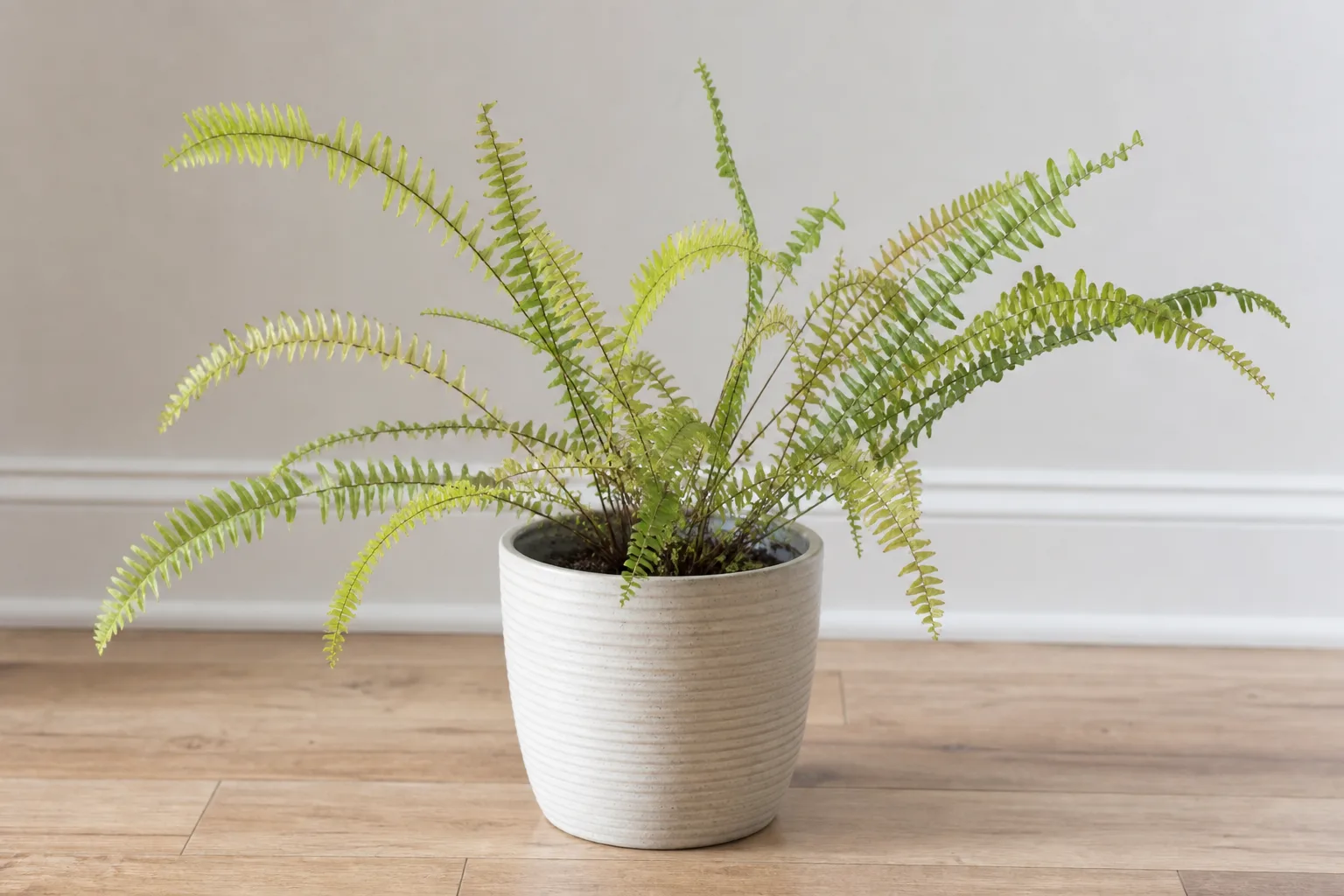
Not Enough Light on Boston Fern: Causes, Checks & Fixes
This guide covers not enough light on Boston Fern. See also the general Not Enough Light guide, watering, and light pages for this plant.
Not Enough Light on Boston Fern: Causes, Checks & Fixes
Quick answer
Boston fern (Nephrolepis exaltata) is often sold as a shade-loving plant, but indoors it needs bright indirect or filtered light to keep its arching fronds dense. When light is too low, the plant survives for a while, then thins out: new fronds emerge small and spaced far apart, older fronds look dull, and the whole basket leans toward the brightest window.
First step: move the fern to the brightest safe indirect spot in your home-typically an east-facing windowsill, or within a few feet of a south or west window behind a sheer curtain. Do not jump straight into direct sun; Boston fern fronds scorch quickly in harsh rays.
What not enough light looks like on Boston Fern
Low light on Boston fern shows up as a growth pattern, not a single brown tip.
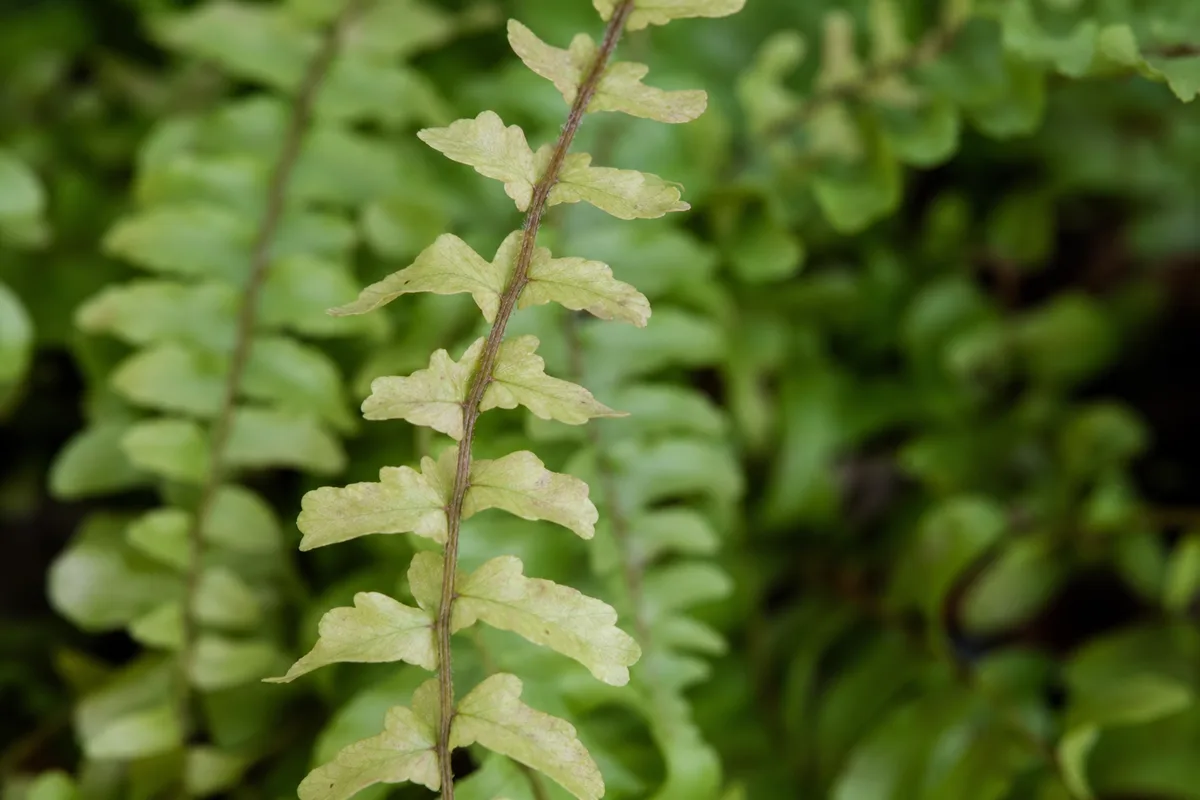
Not Enough Light symptoms on Boston Fern - compare with healthy tissue on the same plant.
Typical signs:
- New fronds emerge smaller than older ones, with long gaps between them on the crown
- Fronds look flat green or dull instead of fresh and arching
- The basket or hanging hook side tilts toward the window over weeks
- Overall spread stays thin even with steady watering and humidity
- Soil dries slowly because the plant is not photosynthesizing enough to use water
Boston fern does not flower indoors, so sparse appearance is always a foliage and structure issue-not a bloom failure.
What low light usually is not:
- Crispy brown tips alone, which more often trace to dry air or fluoride in tap water
- Sudden bleached patches on sun-facing pinnae, which indicate too much direct light
- Yellow lower fronds with bone-dry soil, which point to underwatering on Boston Fern
Why Boston Fern gets not enough light
Ferns have a reputation for tolerating dim rooms, but Boston fern is a medium-light houseplant that uses steady photosynthesis to push continuous soft frond growth. It needs enough intercepted light to fuel that output without scorching its thin pinnae.
Several home situations push Boston fern below its comfort zone:
Placement too far from windows. Indoor light drops sharply with distance. A fern on a bookshelf across the room may look fine to your eyes while receiving far less usable light at leaf level than a spot near the glass.
North corners without supplementation. A north window can work when the fronds sit close to the glass, but deep interior north rooms often fall below what keeps Boston fern full through winter.
Seasonal daylight loss. Shorter winter days reduce hours and intensity even when the pot never moved. Fronds that looked acceptable in summer can thin after the solstice.
Blocked or filtered glass. Heavy curtains, tinted windows, overhangs, and dirty panes cut light more than most owners notice.
The low-light overwatering on Boston Fern trap. Boston fern in dim light uses less water. Soil that stays wet too long stresses roots, which yellows fronds and mimics a watering problem. Fixing water alone without improving light often fails.
How to confirm the cause
Work through these checks before Boston Fern repotting guide, fertilizing, or pruning heavily:
- Shadow test at frond height. Hold your hand between the window and the fronds around midday. A soft, fuzzy shadow suggests usable indirect light. No shadow means the spot is likely too dim; a sharp dark shadow means you may be too close to direct sun.
- New frond spacing. Compare the last two flushes of growth from the crown. Increasing distance between new fronds strongly suggests light is limiting growth.
- Lean direction. Consistent tilt toward one window confirms the plant is actively seeking more light.
- Soil dry-down speed. If you have been watering on schedule but the mix stays wet for a week or more, pair a moisture check with a light check-dark, slow-growing ferns drink slowly.
- Two-week placement trial. Move the fern to a brighter indirect location and change nothing else. New frond spacing tightening within two to four weeks confirms light was the main issue.
If fronds scorch or bleach after the move, you overshot into direct sun-step back or add a sheer curtain.
First fix for Boston Fern
Move the fern to bright indirect light today-east window, or filtered south/west window within a few feet.
This single change addresses the root cause without stacking stressors. Practical placements that work in most homes:
- East-facing window: Morning light is mild; fronds can sit close to the glass without burning.
- North-facing window: Acceptable when fronds are near the glass; watch for winter thinning and add a grow light if new growth stalls.
- South or west window: Keep the plant behind a sheer curtain, or far enough back that sunbeams never hit pinnae directly.
After moving, let the plant acclimate one to two weeks before judging results. Rotate the basket a quarter turn every week so fronds fill evenly instead of reaching one direction only.
If no window provides enough indirect light, add a full-spectrum LED grow light 12 to 18 inches above the crown for 12 to 14 hours daily. That replaces missing window light rather than competing with it.
Step-by-step recovery
Once light improves, support recovery in this order:
- Adjust watering to the new dry-down rate. Brighter light usually means faster moisture use. Check the top of the mix every three to four days rather than watering on autopilot.
- Maintain humidity. Boston fern still wants humid air while it fills back in. A pebble tray, grouping with other plants, or a bathroom with good window light helps prevent brown tips on recovering fronds.
- Remove only fully spent fronds. Trim brown or collapsed fronds at the base once the crown is stable. Do not shear the whole plant unless most fronds are dead-Boston fern can regenerate from a hard cutback, but that is a last resort, not a light fix.
- Hold fertilizer until new growth looks normal. Feed lightly only after two to three weeks of improved frond spacing. Fertilizer cannot substitute for light on a stressed fern.
Recovery timeline
Expect the first sign of improvement-tighter new frond spacing-within two to four weeks after a meaningful light increase. A thin basket may take one full growing season to look lush again because old stretched fronds do not shorten; the plant rebuilds density from the crown outward.
Signs recovery is working:
- New fronds emerge closer together with better color
- Lean stops increasing and may correct slightly after rotation
- Soil dry-down becomes more predictable
- Crown stays firm and green
Signs the problem is worsening:
- Continued yellowing with wet soil despite less frequent watering
- Crown softening or sour-smelling mix
- Widespread frond drop after a dark move
- New growth still sparse after four weeks in a clearly brighter spot-look for root damage or pests
Lookalike symptoms
| What you see | More likely cause | Quick check |
|---|---|---|
| Brown frond tips only | Low humidity or fluoride | Tips crisp; crown still produces normal-spacing fronds |
| Yellow fronds, wet soil | Overwatering in dim light | Mix soggy; roots may smell |
| Yellow fronds, dry soil | Underwatering | Pot light; fronds limp and dry |
| Bleached patches on sun side | Too much direct light | Damage on exposed pinnae only |
| Webbing on undersides | Spider mites | Mites thrive in dry, stressed conditions-still fix light |
Leggy, sparse fronds with no pest signs and slow dry-down almost always trace back to placement.
Mistakes to avoid
- Assuming all ferns tolerate the same dim corners. Boston fern needs more light than cast-iron plant or heart-leaf philodendron to stay full.
- Moving into direct south or west sun to “fix” sparseness quickly. Direct sunlight will damage the foliage; acclimate gradually if you must increase intensity.
- Over-fertilizing a thin fern. Salt buildup and forced growth stress a plant that still lacks adequate light.
- Watering on the old schedule after a bright move. Faster photosynthesis means faster dry-down; recheck moisture before each watering.
- Repotting on day one. Unless roots are clearly rotting, fix light and Boston Fern watering guide first.
Boston Fern care cross-check
Not enough light rarely exists in isolation. While correcting placement, confirm the rest of the baseline:
- Humidity: Target 50–70% if brown tips appear alongside sparseness.
- Temperature: Cool to average room temps suit Boston fern; hot dry air near heating vents worsens both tip burn and mite risk.
- Soil: Use a peat- or coco-based mix that holds moisture but drains; waterlogged mix in a dark spot compounds stress.
- Airflow: Gentle air is fine; cold drafts and heat blasts dry fronds fast.
How to prevent not enough light next time
Choose placement for the fern’s light needs before décor. An east window with room to arch, or a filtered south window, keeps fronds dense with less intervention than a dim hallway that needs constant troubleshooting.
Clean window glass seasonally, open sheers during daylight, and watch for winter slowdown-supplement with a grow light when days shorten. Rotate the basket weekly during active growth so one side does not dominate.
When buying or dividing Boston fern, start new baskets in the same bright indirect tier as the parent. A healthy fern moved into a darker guest room will thin within a few months even if watering stays perfect.
When to worry
Most Boston ferns recover from moderate low-light stress once light improves. Worry when the crown softens, soil smells sour, or fronds yellow in clusters while the mix stays wet-those patterns suggest root decline that light alone will not reverse. Inspect roots, trim dead tissue, and repot into fresh mix only if rot is confirmed.
If the plant has lived in deep shade for many months with almost no new fronds, recovery may be slow or partial. A hard cutback to a few inches above the soil can trigger fresh growth, but only after light and humidity are already corrected.
When to use this page vs other Boston Fern guides
- Boston Fern watering guide - Use for routine moisture checks before assuming not enough light is the main issue.
- Boston Fern problems hub - Browse all 16 common issues on this species.
- Leggy Growth on Boston Fern - Different entry point when symptoms overlap with not enough light.
- Slow Growth on Boston Fern - Different entry point when symptoms overlap with not enough light.
- Yellow Leaves on Boston Fern - Different entry point when symptoms overlap with not enough light.