Yellow Leaves on Ajwain Plant: Causes, Checks & Fixes
Quick answer
Yellow leaves on ajwain plant (Plectranthus amboinicus) most often trace to soil staying wet too long on a semi-succulent herb-not thirst. First step: probe the top 2–3 cm of mix and squeeze the square stems at the soil line. Wet soil with soft stems means hold water and inspect roots; dry soil with papery lower leaves means water deeply.
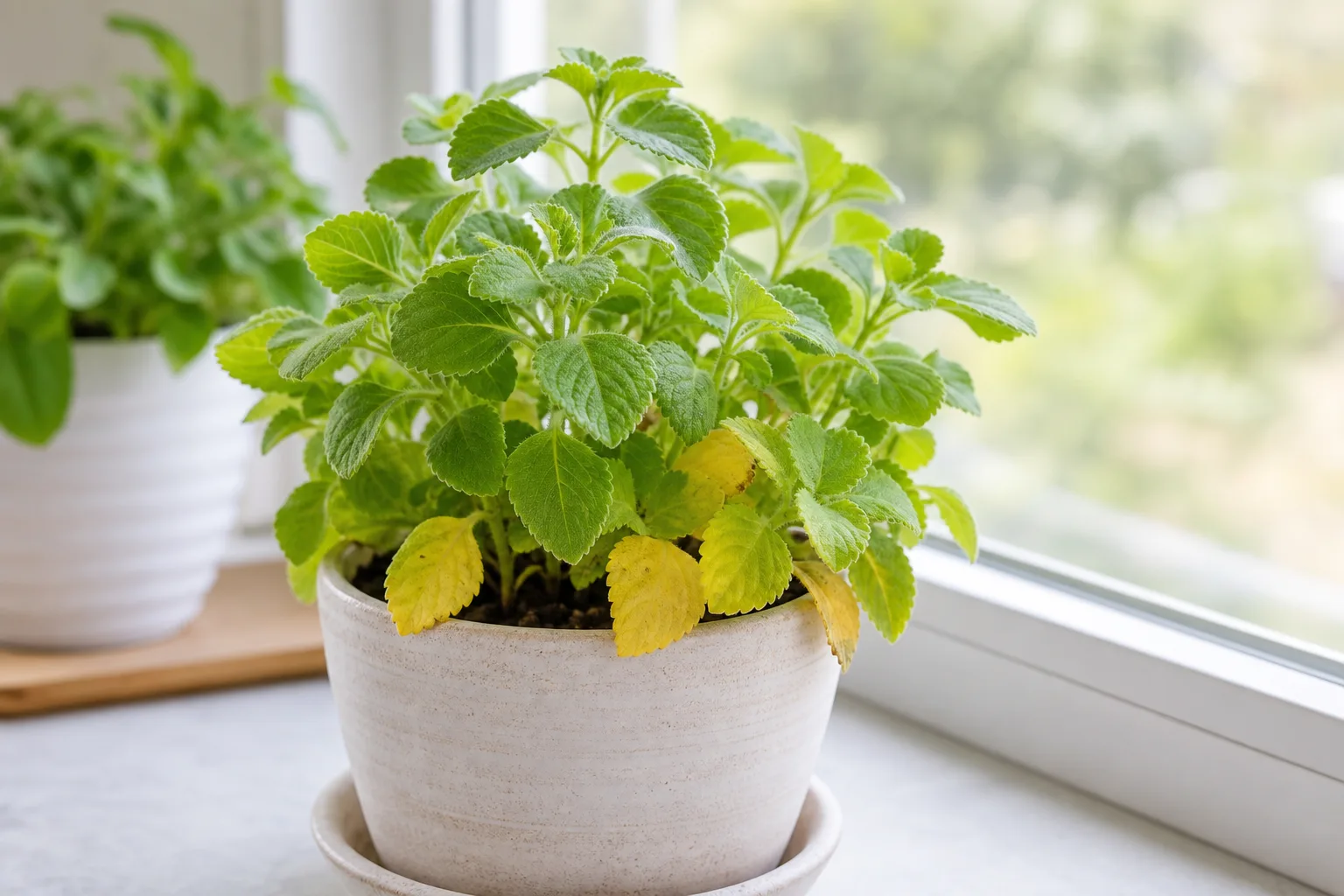
Yellow Leaves on Ajwain Plant: Causes, Checks & Fixes
This guide covers yellow leaves on Ajwain Plant. See also the general Yellow Leaves guide, watering, and light pages for this plant.
Yellow Leaves on Ajwain Plant: Causes, Checks & Fixes
Quick answer
Plectranthus amboinicus-the ajwain plant, Indian borage, or Cuban oregano sold as a kitchen windowsill herb-is a sprawling, mounding semi-succulent in the mint family with thick fuzzy leaves and square, water-storing stems. Yellow leaves are a stress signal, not one diagnosis. On this species, the leading triggers are soil that stays wet too long, cold drafts on a tropical herb, and insufficient light-in that order of likelihood.
North Carolina Extension notes that Plectranthus amboinicus prefers a hot, dry location for best performance and that its leaves are fleshy and velvety on thick square stems. That biology means the plant tolerates short dry spells far better than a constantly wet pot. Full species context: ajwain plant overview.
First step: probe the top 2–3 cm of mix and squeeze the square stems at the soil line. Wet, cool soil with soft stems means hold water and inspect drainage-not add more. Dust-dry mix with a lightweight pot and papery lower leaves means water deeply after a real dry-down. If leaves touch a cold window or AC vent, move to stable warmth before you change anything else.
Separate normal lower-leaf aging from stress yellowing before you reach for fertilizer or repot.
What yellow leaves look like on ajwain plant
Ajwain does not yellow uniformly. The leaf position, stem texture, and soil moisture tell you which cause fits.
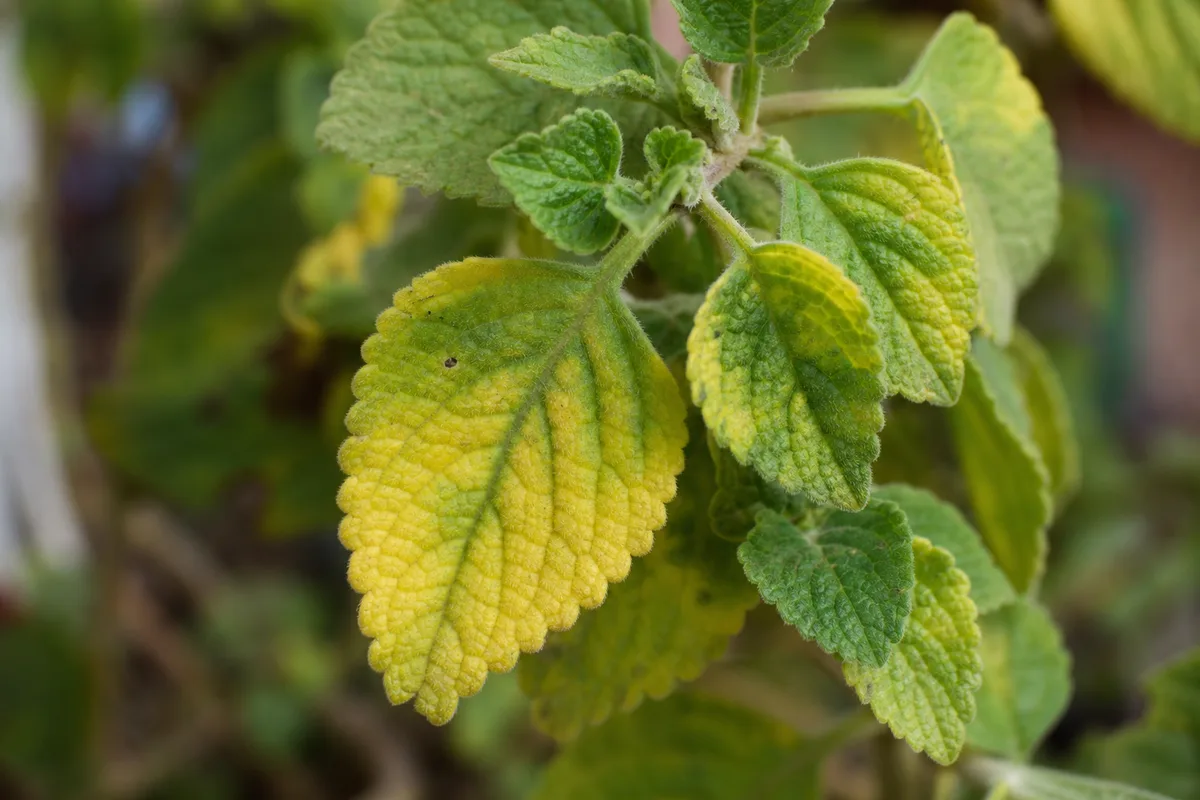
Yellow Leaves symptoms on Ajwain Plant - compare with healthy tissue on the same plant.
Normal lower-leaf aging (common and harmless):
- One oldest bottom leaf fades from green to yellow over weeks or months
- New leaf pairs at the center stay firm, fuzzy, and aromatic
- Stems feel solid when pinched; soil dries on a normal schedule between drinks
- The plant keeps its mounding, spreading habit without collapse
Overwatering and root stress (most common problem):
- Multiple lower leaves turn uniform yellow or pale green
- Leaves feel soft and limp even though soil is wet or cool at depth
- Square stems at the soil line feel mushy when squeezed-a key ajwain-specific warning sign
- Pot stays heavy days after watering; mix may smell sour
- Fungus gnats may hover near the surface-see overwatering on ajwain plant
Cold draft or windowsill shock:
- Yellowing appears suddenly on leaves touching cold glass, an AC vent, or after a sharp temperature drop
- Tissue may look water-soaked along veins before turning yellow
- Soil moisture may be normal; stems still feel firm unless cold stress has persisted with wet soil
- Common in winter kitchens when the plant sits on an uninsulated sill
Insufficient light:
- Pale yellow-green new growth on long, stretched stems
- Lower leaves may yellow as the plant sheds shaded foliage
- Aroma weakens; internodes lengthen-overlap with not enough light on ajwain plant
- Often pairs with slow winter dry-down that makes normal watering effectively become overwatering
underwatering on Ajwain Plant (less common but real):
- Lower leaves yellow with dry, papery edges; pot feels light
- Top 2–3 cm of mix is dusty dry; stems stay firm, not mushy
- Pattern builds over weeks of skipped watering, not overnight with wet soil
Pest stress (secondary):
- Stippling, webbing, or sticky residue on fuzzy leaf undersides from spider mites or aphids
- Yellowing follows visible pest damage-see spider mites and aphids if confirmed
Worry when yellowing spreads up the plant, pairs with wet soil and soft stems, or hits new center growth-not when a single bottom leaf fades slowly on an otherwise stable plant.
Why ajwain plant gets yellow leaves
Overwatering and slow winter dry-down
Ajwain stores water in its fleshy leaves and thick stems, so owners often read limp yellow leaves as “thirsty” and water again-deepening the exact problem. When the mix stays saturated, roots lose oxygen and stop functioning normally. The plant sheds older lower leaves first because it cannot support them.
This pattern worsens in cool, dim winter when growth slows and a pot that dried in five days in summer may stay damp for two weeks. Watering on the same summer schedule in December keeps the root zone wet-a common path from yellow leaves to root rot. Heavy peat-based mix, blocked drainage holes, oversized pots, and saucers left full of runoff all extend wet time beyond what this semi-succulent tolerates.
The reliable watering rule from our ajwain watering guide: water thoroughly when the top 2–3 cm of mix is dry, roughly once a week in active warm growth and every two to three weeks in winter-always confirmed by touch, not calendar.
Cold drafts and windowsill shock
Ajwain is frost-tender and tropical. NC Extension lists USDA Zones 9a–11b for outdoor culture; indoors, sustained exposure below about 15°C (60°F) disrupts leaf metabolism. Cold windowsills, AC vents blowing directly on the pot, and frequently opened doors in winter are frequent triggers. Cold stress often overlaps with wet soil in winter-the combination that pushes a forgiving kitchen herb into rapid decline.
Insufficient light on a bright-light tropical herb
Plectranthus amboinicus grows best with bright light and some protection from the hottest midday sun. In dim corners, photosynthesis and water use drop. Soil dries slowly, making a normal watering habit effectively become overwatering while new growth pales and stretches. Light detail: ajwain plant light guide.
Natural lower-leaf senescence
New leaves emerge from the center of the mounding, spreading shrub, so the oldest pairs at the bottom eventually yellow and drop. On a healthy ajwain, this happens gradually-one leaf at a time-with firm new growth above. Removing fully yellow leaves keeps the base tidy. Discard fallen leaves safely-the plant is toxic to cats, dogs, and horses if ingested.
Underwatering and salt stress (secondary)
Repeated long dry cycles can yellow and crisp lower leaves. Nutrient deficiency or salt buildup from overfeeding usually follows years in depleted mix or frequent fertilizer without flushing-more often causing tip burn than random full-leaf yellowing. Do not assume fertilizer is the fix until moisture, temperature, and light are stable.
Lookalike symptoms to rule out
Before Ajwain Plant repotting guide or spraying, rule out these common misreads:
- Brown tips only - Usually sun scorch through hot glass, underwatering, salt buildup, or cold drafts-not the full-leaf yellowing discussed here. See brown tips on ajwain plant.
- Wilting with firm stems and dry soil - Points to thirst or heat stress, not rot. See wilting on ajwain plant.
- Root rot - Advanced overwatering with mushy stems, sour soil, and collapsing growth. Yellow leaves are an early sign when soil stays wet; soft tissue at the soil line means escalation is urgent.
- Leggy pale growth - Long stems and washed-out new leaves point to too little light, which may overlap with overwatering but needs a placement fix, not just less water.
If wet soil and multiple yellow lower leaves appear together, treat watering and drainage first.
How to confirm the cause
Work through this inspection in order:
- Moisture at 2–3 cm depth - Cool and damp at your fingertip means pause watering. Dust-dry through that zone means you can water soon. Bone-dry deep mix with a lightweight pot suggests underwatering.
- Stem firmness at the soil line - Pinch the square stems where they enter the mix. Firm supports dry-down or light fixes. Soft or mushy confirms root stress-inspect roots the same week.
- Pot weight and drainage - Lift the pot before and after watering. A heavy pot days later confirms slow dry-down. Check drainage holes are open and saucers are empty.
- Which leaves are affected - Bottom only, slowly = aging likely. Multiple lower leaves quickly + wet soil = overwatering likely. Sudden patchy yellow on window-side leaves = cold or light stress. New center growth yellowing = more serious root or environmental stress.
- Temperature placement - Is the pot on a cold windowsill, under an AC vent, or above a radiator? Night temperatures below 15°C (60°F) support cold stress.
- Light exposure - Dim corner with wet soil? Hot south-facing glass with bleached upper leaves? Both patterns have distinct fixes.
- Root spot-check (if wet soil + spreading yellow + soft stems) - Gently slide the plant partway out. Firm pale roots support a dry-down fix. Mushy brown roots confirm rot-see root rot on ajwain plant.
Confirmed overwatering shows at least two signs: wet mix at depth, yellowing lower leaves, and a heavy pot that is not drying on schedule-or soft stems at the soil line.
First fix for ajwain plant
Hold water until the top 2–3 cm of mix is dry-and check stem firmness before you add anything else.
That single pause breaks the wet cycle that causes most ajwain yellow leaves. Do not compensate with fertilizer, misting, or an immediate repot unless roots are already mushy.
After the mix dries:
- Water thoroughly until runoff exits drainage holes, then empty the saucer within 30 minutes-do not let the pot sit in drainage water
- Keep the plant in bright indirect light with some gentle morning sun-ajwain needs brightness but not hot midday glass
- Move away from cold windows and AC drafts if leaf yellowing appeared after a temperature drop
Remove fully yellow leaves at the base with clean scissors. Pick up fallen leaves promptly if pets share the home-the plant is toxic if ingested. Partially green leaves can stay-they still photosynthesize while the plant recovers.
Make this one correction first. Wait two weeks before stacking repotting, feeding, or pest treatments unless roots are clearly rotting.
If soil is wet and stems are soft
When a spot-check finds brown, slimy roots and sour-smelling mix, escalate to root-rot recovery: unpot, trim dead roots, let cut surfaces dry briefly, and repot into fresh gritty mix. Do not water for five to seven days after repotting. That path is for confirmed rot-not for a single aging bottom leaf.
If cold-exposed
Move to a stable 18–27°C (65–80°F) spot away from vents and freezing glass. Remove severely damaged leaves; do not water heavily while the plant is cold-stressed. Allow normal dry-down before the next drink.
If underwatered
Water deeply until runoff, empty the saucer, and resume the top 2–3 cm dry-down rule. Do not flood repeatedly-one thorough drink, then wait for real dryness.
If aging only
Snip off fully yellow bottom leaves. No watering or light change needed if new growth stays firm and the pot dries on a healthy schedule.
Step-by-step recovery
Match follow-up steps to what you confirmed:
Overwatering (wet soil, firm or slightly soft crown):
- Let the top 2–3 cm of mix dry fully between waterings.
- Adjust winter frequency-ajwain often needs water every two to three weeks in cool months versus roughly weekly in active summer growth.
- Improve airflow around the pot and ensure drainage holes are clear.
- Watch for new leaf pairs staying green and fuzzy for two consecutive weeks.
Cold stress:
- Move to stable warmth above 15°C (60°F) away from vents and cold glass.
- Remove severely damaged leaves; do not water heavily while the plant is cold-stressed.
- Allow normal dry-down before the next drink.
Low light compounding wet soil:
- Shift to a brighter spot-east window or supplemented bright indirect light.
- Reduce watering frequency to match slower winter dry-down in the new location.
- Pinch leggy tips after light improves to encourage bushier recovery-see ajwain pruning guide.
Normal aging:
- Snip off fully yellow bottom leaves.
- No watering or light change needed if new growth stays firm.
Recovery timeline
Fully yellow leaves do not turn green again. They drop or can be removed. Recovery is measured by new growth from the center:
- Mild overwatering - Yellowing often stops within one to two weeks once soil oxygen returns. New fuzzy leaf pairs emerge within two to three weeks.
- Cold shock - Damaged leaves may drop; new growth resumes after stable warmth within two to four weeks.
- Advanced root rot - Recovery takes longer and may be partial. If stems soften further or new leaves keep yellowing after a dry-down and root trim, the plant may not be saveable-propagate healthy tip cuttings as backup.
Signs of improvement: pot weight drops on a normal schedule, new leaves hold green color and aroma, stems feel firm, and yellowing does not climb toward the center. Signs of worsening: sour smell, soft stems, yellowing on new growth, or soil that never dries.
What not to do
Do not water more because leaves look limp when soil is already wet-that deepens root stress on a semi-succulent herb.
Do not fertilize a yellowing, wet-rooted plant. Salt buildup from overfeeding can also yellow foliage and burn edges.
Do not repot on day one unless roots are mushy or drainage has failed. Repotting a waterlogged plant into a bigger pot often makes drying slower.
Do not mist the fuzzy leaves to “help humidity.” Wet foliage in stagnant air invites fungal spotting without fixing yellowing.
Do not ignore cold placement while fixing watering. Wet soil plus cold air is the fastest route from yellow leaves to stem rot.
How to prevent yellow leaves on ajwain plant
Prevention comes down to matching water to how fast the pot actually dries in your home:
- Water on dryness, not calendar - Check the top 2–3 cm every time. Summer may mean weekly; winter often means every two to three weeks.
- Use gritty, fast-draining mix - See ajwain soil guide; Plectranthus amboinicus requires well-drained soil with only occasional irrigation outdoors and the same drainage discipline indoors.
- Keep temperatures stable - Above 15°C (60°F) always; ideal range 18–27°C (65–80°F).
- Place in bright light - Enough brightness for compact aromatic growth; protect from hot midday glass.
- Remove spent lower leaves promptly - Keeps the base clean and makes new problems easier to spot early. Discard safely away from pets.
- Match winter watering to slow growth - Dim, cool months mean the pot dries much slower; the same summer schedule becomes overwatering.
When to worry
Treat yellow leaves as urgent when:
- Many leaves yellow within a week, not one bottom leaf over months.
- Soil smells sour or square stems feel soft at the soil line.
- New center growth yellows while older leaves also decline.
- The plant collapses despite moist soil-roots may be failing to absorb water.
A single yellow bottom leaf on an otherwise stable ajwain with normal dry-down is routine. Widespread yellowing with wet soil and soft stems is not-inspect roots the same week.
Ajwain care cross-check
If yellow leaves keep returning after you adjust watering, compare your routine to what this species actually needs:
| Checkpoint | Healthy target | Yellow-leaf risk when wrong |
|---|---|---|
| Soil moisture | Top 2–3 cm dry before watering | Wet mix for days after each drink |
| Seasonal rhythm | Less water in cool, dim months | Summer schedule all year |
| Light | Bright indirect with some morning sun | Deep shade + wet soil, or hot glass scorch |
| Temperature | 18–27°C (65–80°F), above 15°C minimum | Cold windowsills and AC drafts |
| Stem feel | Firm square stems at soil line | Soft, mushy base with wet soil |
| Pot and mix | Drainage holes open; gritty, airy mix | Oversized pot, saucer water, heavy soil |
Fix the condition that fails this check before adding fertilizer, repotting for size, or treating for pests you have not confirmed.
When to use this page vs other Ajwain Plant guides
- Ajwain Plant watering guide - Use for routine moisture checks before assuming yellow leaves is the main issue.
- Ajwain Plant problems hub - Browse all 16 common issues on this species.
- Overwatering on Ajwain Plant - Different entry point when symptoms overlap with yellow leaves.
- Underwatering on Ajwain Plant - Different entry point when symptoms overlap with yellow leaves.
- Not Enough Light on Ajwain Plant - Different entry point when symptoms overlap with yellow leaves.