Wilting on Ajwain Plant: Causes, Checks & Fixes
Quick answer
Wilting on ajwain usually means moisture stress - but wet soil and dry soil both collapse the same thick fuzzy leaves. First step: push your finger 2–3 cm into the mix and pinch the square stem at the base. Wet and heavy with soft stems means stop watering; light and dry with papery leaves means a deep soak.
Wilting on Ajwain Plant: Causes, Checks & Fixes
This guide covers wilting on Ajwain Plant. See also the general Wilting guide, watering, and light pages for this plant.
Wilting on Ajwain Plant: Causes, Checks & Fixes
Quick answer
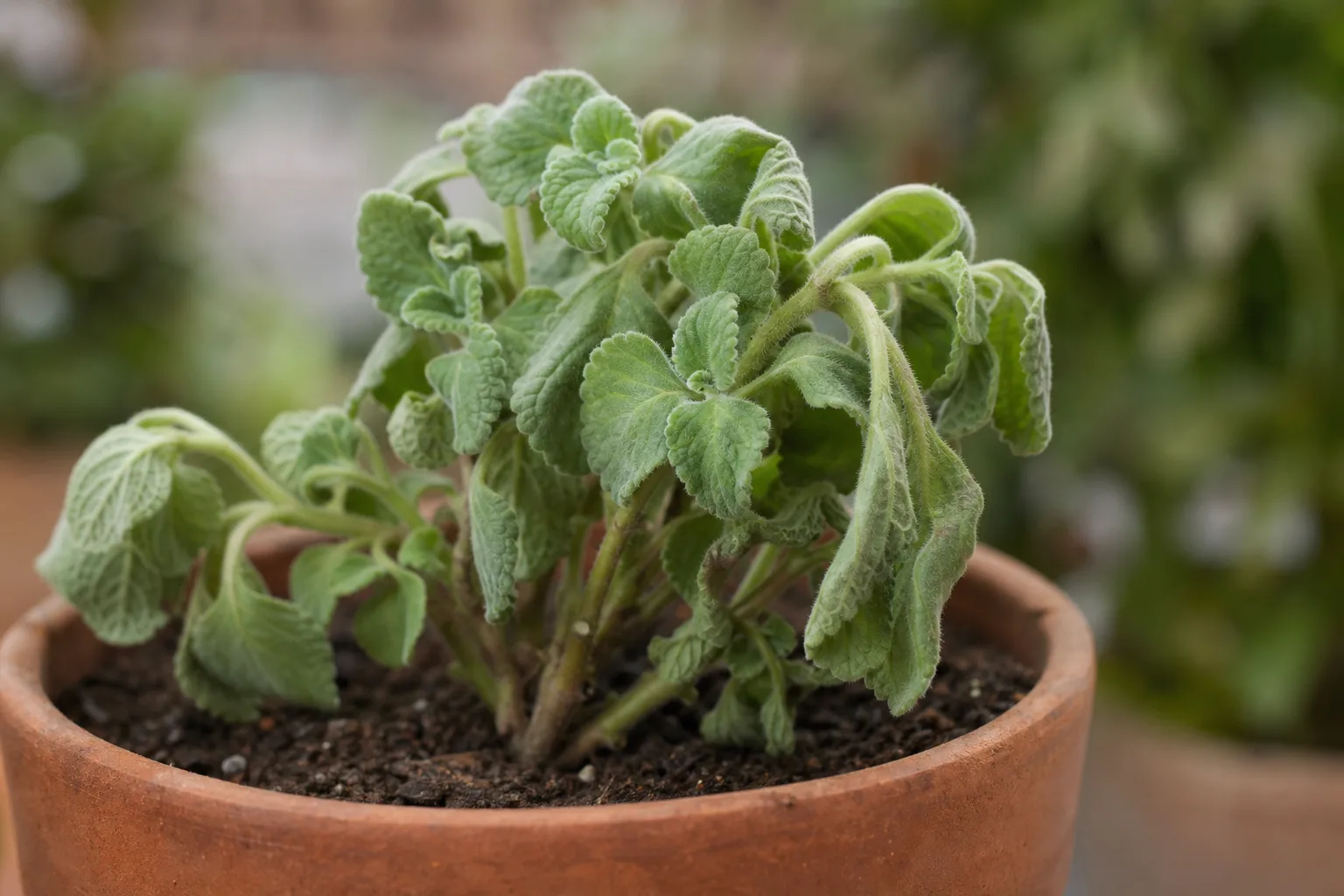
Wilting on ajwain (Plectranthus amboinicus, also sold as Coleus amboinicus - Indian borage, Cuban oregano, Mexican mint) shows up as limp, soft-hanging fuzzy leaves that have lost the thick, rubbery turgor healthy ajwain normally holds. The trap is that underwatering and overwatering look almost identical from across the room on this semi-succulent mint-family herb.
First step: check soil moisture at depth and stem firmness at the base before you touch the watering can. Push your finger 2–3 cm (about 1 inch) into the mix near the pot edge. Pinch the square stem where it meets the soil at the same time.
- Wet, heavy pot + limp leaves + soft stems → likely overwatering or root rot. Stop watering. Softness at the base is urgent.
- Light, dry pot + papery limp leaves + firm stems → likely underwatering. One thorough soak, then drain fully.
Ajwain stores water in its thick, fleshy leaves and succulent stems, so dry wilt can look dramatic - but it rebounds fast after a proper drink. It cannot survive repeated cycles of soggy, airless soil, especially in cool winter rooms when growth slows.
Wilting vs. drooping on ajwain - which page to use
These two symptoms get searched separately, but they are not the same emergency:
| Symptom | What you see | Timeline | Use this page? |
|---|---|---|---|
| Wilting | Acute soft collapse, lost stiffness, may hit several stems at once | Hours to 1–2 days | Yes - emergency moisture triage |
| Drooping leaves | Downward angle, sometimes chronic; stems may still feel partly firm | Days to weeks | See drooping leaves for gradual posture issues |
Wilting means turgor has dropped fast - the plant needs a wet-vs-dry decision now. Drooping often reflects slow moisture imbalance, weak light, or a top-heavy pot without the dramatic soft collapse of true wilt. If your ajwain went limp suddenly after you skipped watering or after a heavy soak, start here.
What wilting looks like on Plectranthus amboinicus
On ajwain, wilting is visible once turgor drops. NC State Extension describes Plectranthus amboinicus as an herbaceous mint-family plant with fleshy, velvety, fragrant leaves on thick, square stems - normally held at a confident angle on a mounding, spreading shrub. When stressed, those thick leaves go floppy and thin-feeling, veins show on the undersides, and stems may lean or collapse outward from the pot center.
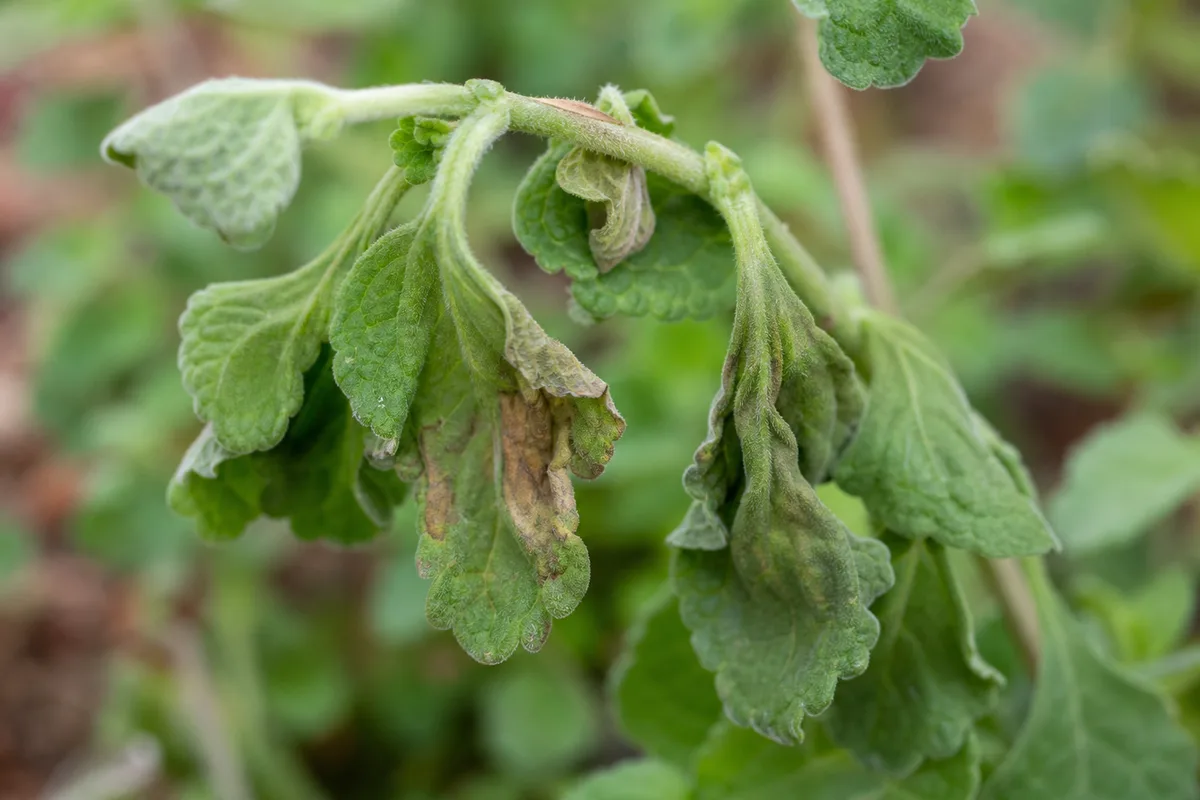
Wilting symptoms on Ajwain Plant - compare with healthy tissue on the same plant.
Dry wilt vs. wet wilt on semi-succulent stems
The diagnostic split that saves ajwain plants:
Dry-pot wilt: Pot feels light. Top 2–3 cm and deeper mix are dry. Leaves feel papery or thinner than normal but stems at the base stay firm. Recovery after one deep watering is usually fast - often within hours to one day.
Wet-soil wilt: Pot stays heavy for days or weeks after the last watering. Surface may look dry while the center stays damp. Leaves sag despite moisture. Lower leaves may yellow. Stem pinch at soil line feels spongy or dark. Sour smell, fungus gnats, or a saucer full of standing water support root rot - not thirst.
University of Maryland Extension notes that excess moisture reduces soil oxygen, damages fine roots, and produces wilting that mimics drought - the classic indoor ajwain trap, because the fuzzy leaves look thirsty even when roots are drowning.
The square-stem firmness test
Ajwain stems are square in cross-section with a fleshy, semi-woody base - a mint-family trait you can feel between thumb and finger. For wilt triage:
- Pinch the main stem at soil level, not the soft tip growth.
- Firm and slightly succulent → roots may still be functional; branch on soil moisture next.
- Soft, mushy, or dark → treat as root failure; do not add water.
This test matters because ajwain’s thick leaves mask overwatering - they stay plump-looking longer than basil while roots rot underneath.
Why ajwain wilts - ranked causes
1. Overwatering and root oxygen loss (most common indoors)
Indoor ajwain fails more often from too much water than too little. NParks FloraFaunaWeb classifies Coleus amboinicus as a succulent plant needing moderate water and well-drained soils - not constantly damp mix. When soil stays saturated, roots cannot breathe. They decay. The plant wilts because uptake has failed, not because the soil lacks water.
Calendar-watering on a winter schedule, saucers left full, and treating ajwain like thirsty basil are the primary indoor routes from wilt to rot. See the watering guide for the top-inch dry rule and five-step overwatering rescue.
2. Underwatering and dry-down exceeding leaf storage
Ajwain tolerates missed drinks better than basil, but extended drought still collapses turgor. A heat wave, a pot that dried unevenly after shrinkage pulled mix from the walls, or forgetting a terracotta pot on a sunny sill can leave roots unable to supply demand. UF/IFAS Gardening Solutions notes Cuban oregano wants well-drained soil and only occasional irrigation - the dry-down between soaks is part of normal care, not neglect.
Underwatering wilt is usually easier to reverse than rot if stem bases remain firm.
3. Cold draft or winter stress with wet soil
Cool roots slow water uptake. An ajwain near a cold window in winter may sit in damp mix for weeks while leaves look tired. NC State recommends a hot, dry location for best performance - cold, wet roots combine badly. The wilt pattern pairs slow growth, cool room, and heavy pot. Fix by reducing water frequency and improving warmth, not by adding more moisture.
4. Recent repot or propagation transplant shock
Freshly disturbed roots underperform for days to two weeks. Wilting after repotting - especially into oversized pots with wet outer rings of unused mix - is common on fast-rooting ajwain. Hold watering until the root ball approaches normal dry-down, provide bright indirect light, and avoid fertilizing until new growth firms. Details in the repotting guide.
5. Sap-sucking pests (mealybugs, spider mites)
Pests listed on NC State’s profile include mealybugs and spider mites. Heavy infestations drain sap and can cause localized wilt on affected stems. Check leaf undersides and stem joints for white cottony clusters or fine webbing before assuming moisture alone - but if soil is wet and the stem base is soft, treat root failure first.
How to confirm the cause - six-step inspection
Work through these in order. Stop when one branch clearly fits.
- Finger test at 2–3 cm depth - Dry throughout? Lean dry branch. Cool damp clinging to skin? Lean wet branch.
- Pot weight - Compare to how it felt right after the last thorough watering. Light = dry. Still heavy days later = wet.
- Square-stem firmness - Pinch at soil line. Firm = safer. Soft, dark, or mushy = unpot soon.
- Leaf feel - Papery and thin = dry branch. Soft and yellowing lower leaves with wet soil = wet branch.
- Saucer and drainage - Standing water, blocked holes, or cachepot pooling? That explains wet-soil wilt even if you “water correctly.”
- Light and recent changes - Repot, move, heat wave, or winter slowdown in the last two weeks? Context narrows the branch.
If wet and dry signs conflict - surface dry but pot heavy - trust weight and depth over leaf appearance. Large plastic pots often have dry tops and wet centers.
Wet soil vs. dry soil - diagnostic table
| Check | Dry-pot wilt | Wet-soil wilt |
|---|---|---|
| Top 2–3 cm mix | Dry, warm | Cool, damp; may cling to finger |
| Pot weight | Light | Heavy days after last watering |
| Leaf feel | Papery, thinner; veins visible | Soft, limp; lower leaves may yellow |
| Stem at soil line | Firm, slightly succulent | Spongy, dark, or mushy |
| Smell | Neutral | Sour or musty from pot |
| After deep soak | Perks within hours | No improvement or worsening |
| First fix | Thorough soak + drain | Stop watering; inspect roots if soft |
First fix for ajwain wilting (by confirmed cause)
Make one primary correction, then wait three to seven days before stacking more interventions.
| Confirmed cause | First fix |
|---|---|
| Dry pot / underwatering | Thorough soak + full drain; reset check routine per watering guide |
| Wet pot / overwatering | Stop watering until top inch dries; improve light and airflow |
| Mushy stem / root rot | Unpot, trim rot, repot smaller; see root rot guide |
| Cold + wet winter soil | Reduce water; move off cold sill; let mix dry longer |
| Repot shock | Stable bright light; water only when root ball dries normally |
| Pests on firm roots | Isolate; rinse undersides; confirm pests before spraying |
The single most costly mistake on ajwain is watering a wet, wilted plant because the fuzzy leaves look thirsty. Minnesota Extension notes that a wilted plant with moist soil often means root rot from constantly wet soil - adding water kills recoverable plants.
If soil is wet and stems are soft
Stop all watering immediately. Move to bright indirect light with good airflow. Empty the saucer. If stems stay soft after the top inch dries, unpot and inspect roots - pale and firm is recoverable; brown, slimy tissue needs trimming per the root rot page.
If soil is dry and pot feels light
Water thoroughly until runoff, let the pot sit ten minutes, then pour off saucer water. For severely shrunken mix that repels water, bottom-soak 20–30 minutes then drain. Leaves should firm within hours if stems were still solid.
Pet note: Ajwain is toxic to cats and dogs if ingested. If you remove wilted leaves during recovery, discard them where pets cannot reach them.
Recovery timeline
Recovery expectations differ by cause:
Underwatering: Turgor often returns within several hours to 24 hours after a proper soak. Crispy brown edges on old leaves may stay cosmetic. Success = firm square stems and a new leaf pair opening.
Overwatering caught early: Stop watering and let mix dry. Lower yellow leaves may not re-green. Allow one to two weeks for root function to stabilize. Success = no new yellowing and firm stem base.
Root rot after trimming: Two to six weeks minimum. Many old leaves stay limp permanently. Judge recovery only by firm stem tissue and new growth - not by old leaf re-firming.
Repot shock: One to two weeks for wobble and mild wilt to settle if rot is absent.
Winter cold wilt: Improves once water frequency drops and warmth stabilizes - often one to three weeks.
Do not declare failure at day three on wet-soil cases. Do declare failure if stem softness spreads, smell worsens, or newest growth collapses despite corrected watering.
Lookalike symptoms to rule out
Wilting overlaps with several ajwain plant problems:
| Lookalike | How it differs from true wilt | Where to go |
|---|---|---|
| Drooping leaves | Gradual downward angle; less acute soft collapse | Chronic posture page |
| Yellow leaves | Often pairs with wet-soil wilt; yellow alone without limpness may be senescence | Yellow-leaves guide |
| Overwatering | Wet soil focus; wilt is one symptom among edema and gnats | Overwatering deep dive |
| Not enough light | Leggy stretch + weak floppy new growth; soil may stay wet too long | Light guide |
| Mealybugs / spider mites | Stippling, cottony clusters, webbing on stems | Pest pages after moisture ruled out |
If multiple stems wilt while soil is wet and the base softens, treat as root failure first - not fertilizer, not a bigger pot, not misting the fuzzy leaves.
What not to do
Do not water again when soil is wet and leaves are limp - that is the fastest route to stem rot on Plectranthus amboinicus.
Do not fertilize a wilted plant to “perk it up.” Stressed roots cannot use nutrients; fresh fertilizer salts worsen damage.
Do not repot into a larger container on day one hoping drainage improves - oversized wet rings around the root ball prolong saturation.
Do not mist wilted ajwain leaves. Wet fuzzy foliage invites fungal leaf spot; the watering guide specifically warns against leaf misting on this species.
Do not stack repotting, heavy pruning, and pesticide on the same day. Fix moisture first.
Do not confuse normal older-leaf drop with wilt - one aging lower leaf yellowing while the rest stay firm and soil checks are normal is not an emergency.
How to prevent wilting next time
Build the same check-based rhythm described in the ajwain watering guide:
- Water when the top 2–3 cm dries and the pot feels lighter - roughly every 5–10 days in active growth, every 2–4 weeks in winter when semi-dormant
- Use well-draining mix with perlite; see the soil guide
- Empty saucers within 30 minutes; never let cachepots hold standing water
- Keep the plant in bright light so the pot dries predictably - NC State recommends partial shade from harsh midday sun indoors; see the light guide
- Treat ajwain like oregano or rosemary, not basil - deep soak, real dry-down, repeat
Weekly pot lifts during the first month after any wilt scare teach you what “ready to water” feels like for your room - more reliable than any calendar.
When to worry
Treat wilting as urgent when:
- Square stem at soil line feels soft, dark, or mushy
- Soil smells sour or musty despite your pause in watering
- Limpness spreads to newest leaf pairs over 48–72 hours
- Wet soil persists more than two weeks in a typical indoor pot
- Wilting continues after a confirmed dry-pot soak - suggests hidden rot, not thirst
Lower urgency when one missed watering on firm stems perks the plant within hours. Heat afternoon wilt that resolves by evening with stable moisture is manageable.
If more than half the root system is mushy on inspection, recovery is uncertain - propagate healthy tip cuttings per the propagation guide rather than nursing every old stem.
Ajwain care cross-check
Stable ajwain resists wilt when three systems align:
| Factor | Wilting risk when wrong |
|---|---|
| Water | Wet cycles in winter OR chronic drought in summer sun |
| Light | Dim rooms keep mix wet; harsh midday sun scorches leaves |
| Roots / mix | Dense soggy mix OR no drainage holes |
| Pot | Oversized wet ring, cachepot pooling, or saucer standing water |
Cross-link your routine: the overview hub summarizes placement; watering covers seasonal ranges and the five-step rescue; overwatering and underwatering go deeper on each branch; root rot covers emergency stem-base rescue.
Conclusion
Wilting on ajwain is a moisture diagnosis problem disguised as a leaf problem. Thick fuzzy leaves look thirsty quickly, but Texas A&M AgriLife notes that succulent leaves rot if the plant stays too wet - and Wisconsin Horticulture Extension confirms that root rot pathogens thrive in waterlogged soil. Before you water, confirm wet versus dry at depth, lift the pot, and pinch the square stem at the base. Stop watering wet limp plants; soak dry limp ones thoroughly. Judge recovery by firm stem tissue and new leaf pairs - not by whether every old leaf re-stiffens. Get the wet-dry branch right and ajwain returns to the aromatic, harvest-ready mound that makes the plant worth the patience.
When to use this page vs other Ajwain Plant guides
- Ajwain Plant watering guide - Use for routine moisture checks before assuming wilting is the main issue.
- Ajwain Plant problems hub - Browse all 16 common issues on this species.
- Underwatering on Ajwain Plant - Different entry point when symptoms overlap with wilting.
- Overwatering on Ajwain Plant - Different entry point when symptoms overlap with wilting.
- Root Rot on Ajwain Plant - Different entry point when symptoms overlap with wilting.