Not Enough Light on Ajwain Plant: Causes, Checks & Fixes
Quick answer
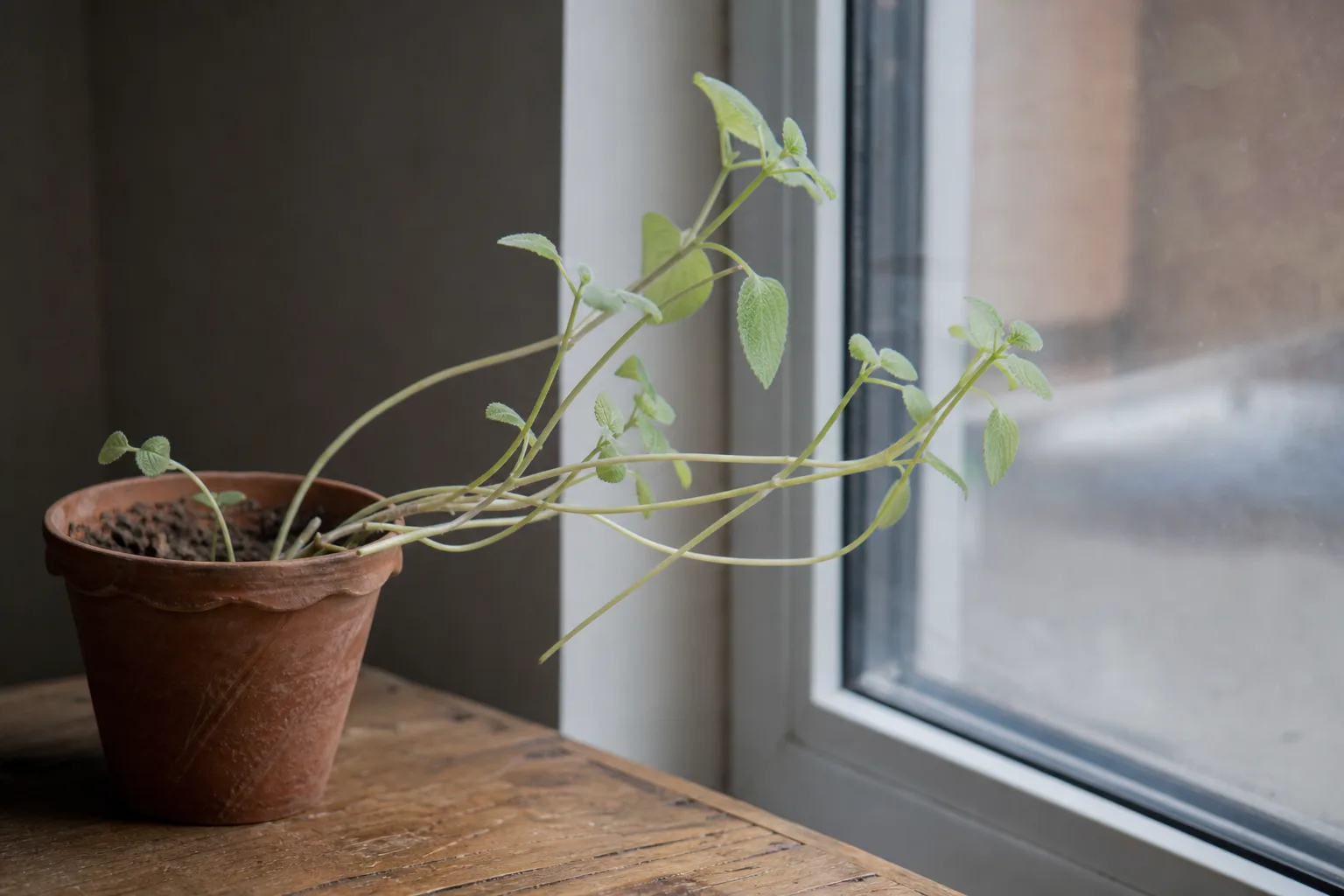
Not enough light on ajwain shows up as a weaker leaf crush scent before stems look obviously stretched-then pale small leaves, long gaps between leaf pairs, and a loose habit. First step: move the pot to an east-facing windowsill or within one to three feet of your brightest window before changing water, fertilizer, or pot size.
Not Enough Light on Ajwain Plant: Causes, Checks & Fixes
This guide covers not enough light on Ajwain Plant. See also the general Not Enough Light guide, watering, and light pages for this plant.
Not Enough Light on Ajwain Plant: Causes, Checks & Fixes
Quick answer
Not enough light on ajwain - Plectranthus amboinicus, also called Indian borage, Cuban oregano, Mexican mint, and karpooravalli - does not usually kill the plant quickly. It strips away the reason most people grow it: crush a leaf and the oregano-thyme aroma fades before the stems look obviously stretched. In dim corners the internodes lengthen, fuzzy leaves turn pale and small, the bushy shape opens up, and harvest quality drops.
First step: move the pot to the brightest appropriate spot in your home today - ideally an east-facing windowsill that catches morning sun, or within one to three feet of your brightest window. Do not repot, fertilize, or increase watering until placement is fixed. A dim plant drinks less than a bright one; extra water in low light often causes more harm than the darkness itself. For proactive window placement and grow-light setup, see the ajwain light guide.
What not enough light looks like on Ajwain Plant
Ajwain is a semi-succulent tropical herb in the mint family - not a shade-tolerant foliage plant. When light is too weak, it shows structural stress with a few signals that are easy to miss if you only look at leaf color.
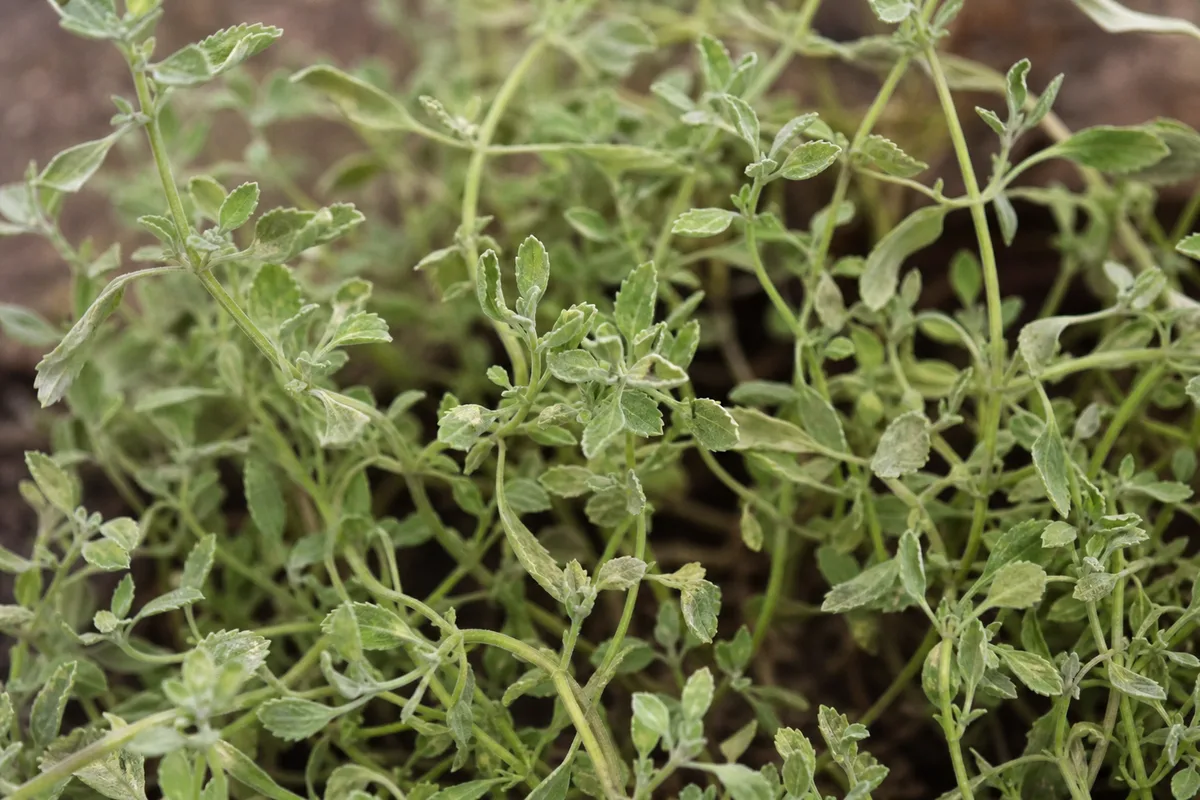
Not Enough Light symptoms on Ajwain Plant - compare with healthy tissue on the same plant.
Early signs:
- Muted aroma - when you crush a leaf, the scent is noticeably weaker. This plant is grown for flavor and fragrance; a drop in smell often appears before visual stretch becomes obvious.
- Stretched stems (etiolation) - gaps between leaf pairs widen and new internodes grow longer than older ones. The plant leans toward the brightest direction. Etiolation produces elongated, spindly stems and pale leaves when plants are grown in low-light conditions.
- Smaller, paler new leaves - healthy ajwain leaves are thick, slightly gray-green, and velvety. Under low light, new foliage emerges thinner, lighter, and less substantial than leaves produced in good light.
- Open, floppy habit - instead of a compact bush, the center sprawls and stems flop outward because they are too weak to hold themselves up.
Later signs if nothing changes:
- Very slow or stalled new growth, especially in winter
- Lower leaves yellowing and dropping while upper stems keep stretching
- Increased pest pressure on soft, weak tissue (aphids and mealybugs favor stressed growth)
What low light usually does not look like on ajwain: crisp brown leaf tips from direct hot sun, bleached white patches from sudden sunburn, or sudden collapse with sour-smelling wet soil. Those patterns point to too much sun, overwatering on Ajwain Plant, or root rot on Ajwain Plant - not simple insufficient light.
Why Ajwain Plant gets not enough light
Ajwain evolved in semi-open tropical landscapes - bright morning sun, then filtered light through the rest of the day. NC State Extension notes it prefers a hot, dry location with some protection from harsh summer sun; full sun can burn the fuzzy leaves. Indoors, the most common reasons it ends up underlit are placement choices, not a mysterious failure of the plant.
Interior distance from windows. Light intensity drops sharply with distance from the glass. A spot that looks “bright” to your eyes may be too dim for compact herb growth, especially more than four to six feet from a window or on a shelf far from any natural light source.
Wrong window for the season. North-facing windows in the Northern Hemisphere often fail in autumn and winter even when they worked in summer. Short days and a low sun angle can turn a once-adequate spot into a dim one without you moving the pot.
Decor-first placement. Ajwain is often kept on a kitchen counter or bathroom shelf for convenience. Those spots frequently have ambient room light only, not the bright indirect light plus several hours of direct sun this species prefers.
Blocked or filtered glass. Heavy curtains, tinted windows, overhangs, and dirty panes all cut usable light. A plant sitting behind closed sheers all day may survive but will stretch.
No supplemental light in dark rooms. Apartments with a single north window, rooms with small windows, or spaces far from exterior walls usually need a grow light for ajwain to stay compact and fragrant year-round.
Seasonal daylight drop. The same windowsill that delivers enough light in June may be borderline in December. Stretching that starts in late autumn often tracks shortening days, not a sudden watering mistake.
Ajwain can tolerate low light longer than true sun-lovers like hibiscus, but tolerance is not the same as thriving. It will stay alive in a dim corner while slowly losing density, scent, and harvest quality.
How this differs from leggy growth on Ajwain Plant
These two pages overlap because low light is the main cause of leggy stretch on ajwain - but they answer different search intents.
This page (not enough light) is for diagnosing insufficient brightness: pale small new leaves, one-sided lean toward the window, weak crush scent, and wet soil that stays damp for days in a dim room. The first fix is relocate the pot before you prune, fertilize, or repot.
Leggy growth on ajwain covers structural sprawl even when light may be adequate - especially harvest neglect on an east windowsill where color is decent but long bare lower stems and leaf tufts at the tips show months without pinching. If new growth stays compact after two weeks in a brighter spot, you still need regular tip cuts per the pruning guide.
Rule of thumb: fix light first when scent is weak and stems lean; fix pinching when light is already strong and the center is still open.
How to confirm the cause
Work through these checks before treating watering, pests, or fertilizer.
- Window direction and distance - Is the pot on an east, south, or west windowsill, or set back in the room? Measure roughly how many feet it sits from the glass. Ajwain does best with bright light near the window, not deep in the room.
- Direct sun hours - Does the plant receive any direct sunbeams during the day? Aim for about three to five hours of gentle morning sun with bright ambient light the rest of the day - within the partial-shade range of two to six hours of direct sun this species tolerates. Zero direct sun for weeks strongly suggests underlighting.
- Growth direction - Are stems leaning or reaching toward one side? One-sided stretch confirms the plant is hunting for more light.
- New vs. old leaves - Compare the newest leaves to older ones near the base. Smaller, paler new foliage with longer stem gaps between them fits low light. Uniform yellowing of old bottom leaves alone may be normal aging or overwatering instead.
- Aroma test - Crush one older leaf and one new leaf. Noticeably weak scent alongside visual stretch supports a light diagnosis.
- Soil moisture pattern - Stick a finger into the top two to three centimeters. If soil stays wet for many days while the plant looks tired in a dim spot, low light plus overwatering may both be involved - cross-check the watering guide. If soil dries quickly and leaves are firm, underwatering on Ajwain Plant is more likely than rot.
- Two-week placement test - Move the pot to your brightest safe spot (east windowsill or one to three feet from a bright window). If the next set of new leaves is more compact within two to three weeks, light was the main limiter.
Seasonal walkthrough: A pot on a north-facing kitchen counter in October may show only mild pale new leaves. By March, stems can be wand-like with almost no scent when crushed. Moving that same pot to an east windowsill in early spring - without Ajwain Plant repotting guide or feeding - often produces noticeably larger, greener, more fragrant leaves within three to four weeks. That timeline confirms light was the limiter, not a mysterious “winter dormancy.”
If the plant wilts with wet soil in a dark room, inspect roots for rot before assuming this is only a light problem.
First fix for Ajwain Plant
Move the pot to the brightest appropriate location in your home.
For most growers, that means:
- Best default: an east-facing windowsill where the plant gets three to four hours of direct morning sun and bright indirect light the rest of the day.
- Alternative: one to three feet from a south- or west-facing window, ideally behind a sheer curtain in summer so afternoon rays do not scorch the fuzzy leaves.
- If no window is bright enough: add a full-spectrum LED grow light six to twelve inches above the canopy for twelve to fourteen hours daily, with at least eight hours of darkness overnight - most plants need a dark period and should not receive more than sixteen hours of light per day when using supplemental lighting.
Make one change at a time. Do not repot, fertilize, or prune heavily on the same day you move the plant. Give it one to two weeks in the new spot, then assess new growth.
After light improves, reduce watering slightly if the pot was staying wet in the old dim location. A plant in stronger light uses water faster; a plant that was overwatered in shade needs the soil to dry properly before the next drink.
Step-by-step recovery
Once the pot is in better light, follow this sequence over the next few weeks.
- Week 1 - Relocate only. Move to the brighter spot. Rotate the pot a quarter turn every few days so growth does not lean hard to one side. Hold off on fertilizer.
- Week 2 - Read new growth. Look at the smallest new leaves and stem spacing. Compact new foliage means the fix is working. Continued stretch means move closer to the window or add or adjust a grow light.
- Week 3 - Prune stretched material. Cut leggy stems back to just above a healthy leaf node with clean scissors - see the pruning guide for how much to remove in one session. Old stretched stems will not compact on their own; pruning redirects energy into bushier new shoots under better light.
- Ongoing - Harvest lightly. Regular pinching or harvesting of stem tips keeps ajwain dense. An underlit plant that is never cut back often looks sparse even after light improves.
- Winter - Supplement if needed. If stretching returns each autumn, keep the plant at the brightest window or run a grow light through the short-day months instead of accepting slow, pale winter growth.
Do not jump the plant from a dim room to harsh all-day outdoor sun. Acclimate to stronger light over seven to fourteen days if you move it outside for summer - the light guide covers outdoor hardening.
Recovery timeline
Low-light stress on ajwain reverses forward, not backward.
- Within one to two weeks of better placement, leaning should slow and the plant should look more stable.
- Within two to four weeks, new leaves should be noticeably larger, deeper green, and more fragrant when crushed.
- Stretched stems never shorten. They stay long until you prune them. Judge success by new growth, not old leaves - etiolated tissue does not compact once light improves.
- Full bushy shape may take one to two months of good light plus light pruning or harvesting, especially if the plant was neglected in shade for a long time.
If new growth stays pale and stretched after four weeks in a clearly brighter spot, the location is still too dim - move closer to the window or increase grow-light intensity or duration.
Lookalike symptoms
Several other problems mimic “not enough light” on ajwain. Separating them prevents wrong fixes.
| What you see | More likely cause | Quick check |
|---|---|---|
| Long stems, pale leaves, weak scent | Not enough light | Improves in brighter spot; no sour soil smell |
| Yellow lower leaves, wet soil for days | Overwatering / root stress | Pot heavy; roots may be soft when inspected |
| Wilting with dry soil, firm leaves | Underwatering | Pot light; soil dry through top few centimeters |
| Bleached or crispy patches on sun-facing leaves | Too much direct sun | Damage on leaves facing the window after a sudden move |
| Slow growth in winter only | Seasonal slowdown | Stems firm; may still need grow light indoors |
| Sparse center, long stems, but good light | Infrequent pruning or harvest | Light is adequate; see leggy growth guide |
Leggy growth and not-enough-light overlap heavily on ajwain. If light is already strong on an east windowsill and the plant still sprawls, infrequent harvesting may be the second factor - cut back long stems after confirming placement is correct.
Mistakes to avoid
- Treating ajwain as a low-light plant. It survives shade but loses aroma, density, and flavor. Plan for bright light or a grow light from the start.
- Moving straight into harsh midday sun to “fix” legginess. Unfiltered south or west sun in summer can scorch fuzzy leaves within days. Increase light gradually.
- Overwatering a dim plant. Low light means slower water use. Wet soil in a dark corner invites root rot and fungus gnats.
- Fertilizing to compensate for darkness. Fertilizer does not replace light and can burn roots on a stressed plant.
- Repotting before fixing light. A larger pot in the same dim spot holds more wet soil and often makes growth worse.
- Judging recovery by old leaves. Stretched, pale leaves will not revert. Watch the next flush of growth instead.
- Ignoring winter. A spot that worked in summer may fail in December without a grow light or a move to the brightest window.
Ajwain Plant care cross-check
Light connects directly to watering and pest risk on this species.
- Watering: Let the top two to three centimeters of mix dry between waterings. In low light, extend the interval - do not keep the calendar schedule you used in summer sun. Full details in the watering guide.
- Soil: Well-draining mix is essential. Wet, dense soil in a dim room is one of the fastest paths to root problems.
- Temperature: Ajwain prefers warm conditions roughly 20°C to 38°C. Warm but dim rooms often produce soft, stretched growth; cooler bright windows often produce tighter plants than hot dark corners.
- Harvest: Regular tip pinching keeps the plant bushy once light is adequate. Light fixes the energy supply; pruning shapes the plant.
How to prevent not enough light next time
- Default placement: East window or bright indirect light with morning sun. Treat north windows and interior shelves as temporary unless supplemented.
- Rotate weekly - a quarter turn when you water keeps growth even.
- Clean windows seasonally to maximize light entering the room.
- Track new growth monthly. Compact, fragrant new leaves mean the spot still works. Stretching means move the pot before the habit becomes woody and sparse.
- Adjust watering when you move the plant. Brighter light increases water use; dimmer light requires less.
Grow-light winter backup
When natural light drops below what ajwain needs, a supplemental fixture is often the difference between compact harvests and pale stretch.
- Fixture type: Full-spectrum white LED in the 3000K to 6500K range - not a standard incandescent desk lamp, which is too weak and too hot for compact herb growth.
- Distance: Six to twelve inches above the foliage is typical for small LED fixtures; adjust if new leaves bleach or still stretch.
- Duration: Fourteen to sixteen hours daily when supplementing natural light in winter, with at least eight hours of darkness - do not exceed sixteen total hours of light per day.
- Wattage starting point: A 10–20 watt full-spectrum LED bulb or bar fixture over a single counter pot is usually enough for compact growth; judge by new-leaf aroma and internode spacing after two weeks, not wattage alone.
- Timer: A mechanical or smart outlet timer keeps the schedule consistent through short-day months.
When to worry
Pure light stress is gradual. Escalate quickly if you see:
- Wilting with wet soil and sour smell in a dark location - inspect roots for rot; this is more urgent than simple stretch.
- Sudden widespread leaf drop after a move - may be shock from a drastic environment change; stabilize light and avoid extra stress.
- Pest coating on new growth - weak, stretched tissue attracts aphids and mealybugs; isolate and treat pests after improving light.
If the plant has been in deep shade for many months and is mostly bare stems with few leaves, it may still recover with bright light and pruning - but restarting from a fresh cutting is sometimes faster for harvest-focused growers. Stem cuttings root easily; see the propagation guide.
When to use this page vs other Ajwain Plant guides
- Ajwain Plant watering guide - Use for routine moisture checks before assuming not enough light is the main issue.
- Ajwain Plant problems hub - Browse all 16 common issues on this species.
- Leggy Growth on Ajwain Plant - Different entry point when symptoms overlap with not enough light.
- Slow Growth on Ajwain Plant - Different entry point when symptoms overlap with not enough light.
- Yellow Leaves on Ajwain Plant - Different entry point when symptoms overlap with not enough light.
Related Ajwain Plant guides
- Ajwain Plant overview
- Ajwain Plant watering
- Ajwain Plant light
- Ajwain Plant soil
- Leggy Growth on Ajwain Plant
- Slow Growth on Ajwain Plant
- Yellow Leaves on Ajwain Plant
- Ajwain Plant problems
Conclusion
Ajwain Plant needs bright light to stay compact, green, and aromatic. Not enough light shows up as a fading crush scent, stretched stems, small pale leaves, and a loose habit - not usually as sudden collapse. Move the pot to an east-facing windowsill or your brightest safe window first, then prune stretched stems once new growth proves the spot is working. Old stretched tissue will not shrink back; new leaves and restored aroma tell the truth. Match watering to the light level, add a grow light when windows fall short, and treat this herb like the sun-loving tropical it is - not a dim-corner survivor.