Root Rot on Ajwain Plant (Indian Borage): Causes, Checks &
Quick answer
Root rot on ajwain (Indian borage, Plectranthus amboinicus) follows watering it like basil instead of a semi-succulent herb-limp fuzzy leaves on heavy wet mix are the trap. First step: stop watering, lift the pot, and check whether square stems feel soft at the base before you unpot.
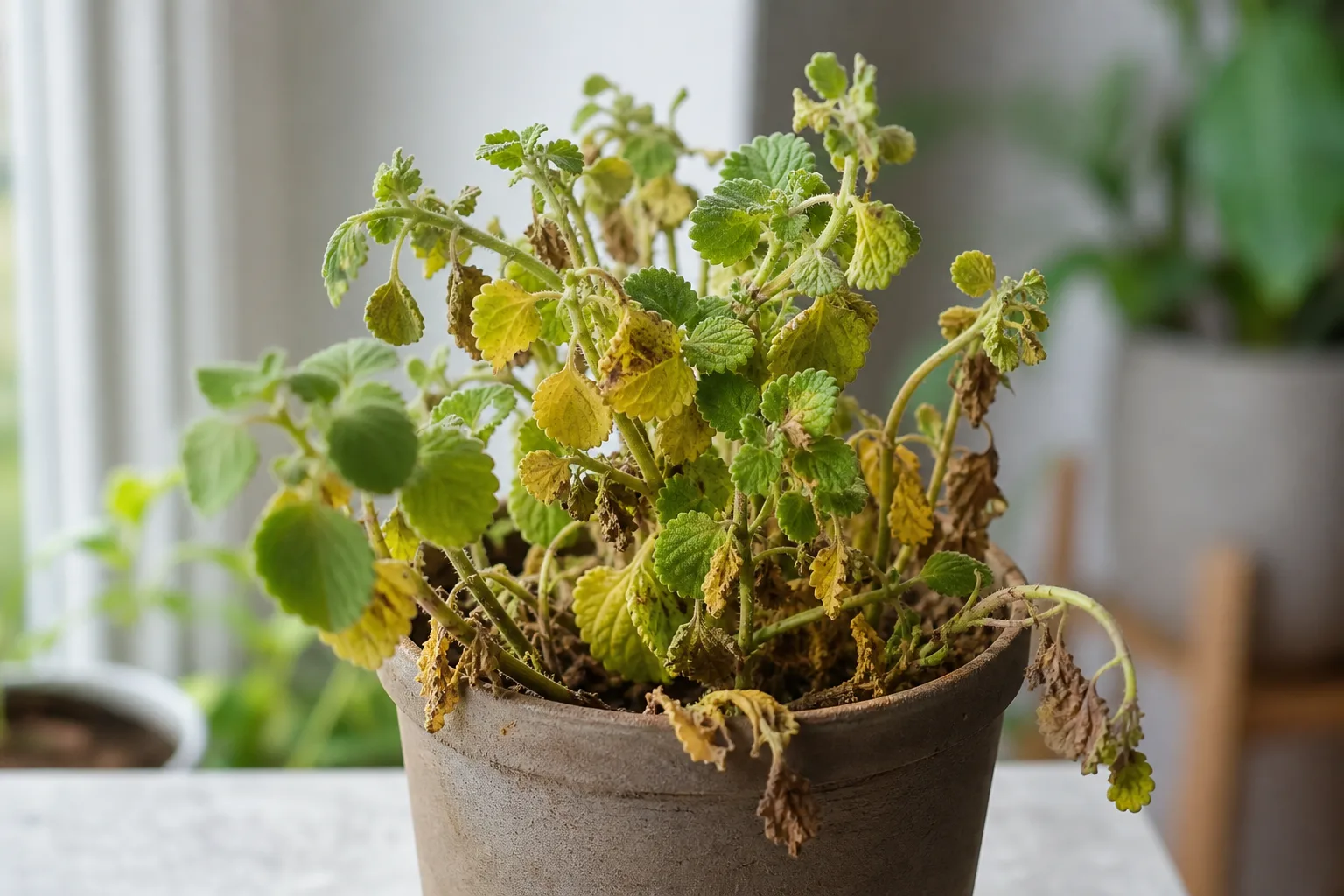
Root Rot on Ajwain Plant: Causes, Checks & Fixes
This guide covers root rot on Ajwain Plant. See also the general Root Rot guide, watering, and light pages for this plant.
Root Rot on Ajwain Plant: Causes, Checks & Fixes
Quick answer
Root rot on ajwain (Indian borage, Cuban oregano, Plectranthus amboinicus) is almost always a watering habit mismatch, not a mysterious disease. This semi-succulent mint-family herb stores water in thick, fuzzy leaves and square stems-growers who treat it like basil or mint keep the mix wet, and roots in waterlogged soil cannot function and begin to rot.
First step: stop watering immediately. Lift the pot. If the mix is heavy and clings wet to your finger an inch down, press a square stem at the soil line. Soft mushy tissue at the base plus yellow lower leaves on damp soil means treat root rot as likely before you add more water or fertilizer.
For the full dry-down rescue protocol and seasonal intervals, cross-check the ajwain watering guide-especially the five-step overwatering rescue section. Species baseline care and naming clarity: ajwain plant overview. This page focuses on confirming rot, trimming roots, and deciding when to restart from tip cuttings.
Root rot vs. other ajwain problems
The wilt-on-wet-soil paradox separates root rot from thirst better than any single leaf symptom on this plant.
| Pattern | Pot weight | Soil at 1 inch | Stem at soil line | What it usually means |
|---|---|---|---|---|
| Root rot | Heavy | Wet, cool, clings | Soft or blackening | Failed roots on saturated mix |
| Underwatering | Light | Dry and crumbly | Firm, slightly thin leaves | Turgor loss from drought |
| Edema (early overwatering) | Medium-heavy | Damp for days | Firm stems | Water-soaked blisters on leaf undersides-rot may follow |
| Winter dormancy slowdown | Normal | Dry on long interval | Firm | Few new leaves; not rot unless mix stays wet |
Compare with overwatering before roots fail: edema and persistent damp soil without mushy roots still need a dry-down, not surgery. Compare with underwatering: a light pot, thin floppy but firm leaves, and quick recovery after one deep soak point away from rot.
Fungus gnats hovering over the pot often appear alongside chronically wet mix-they signal surface moisture staying too high, the same condition that invites rot.
What root rot looks like on ajwain
Ajwain is a sprawling mounding herb, not a tight rosette. Symptoms show on lower stems and older leaves first while upper growth may still look acceptable.
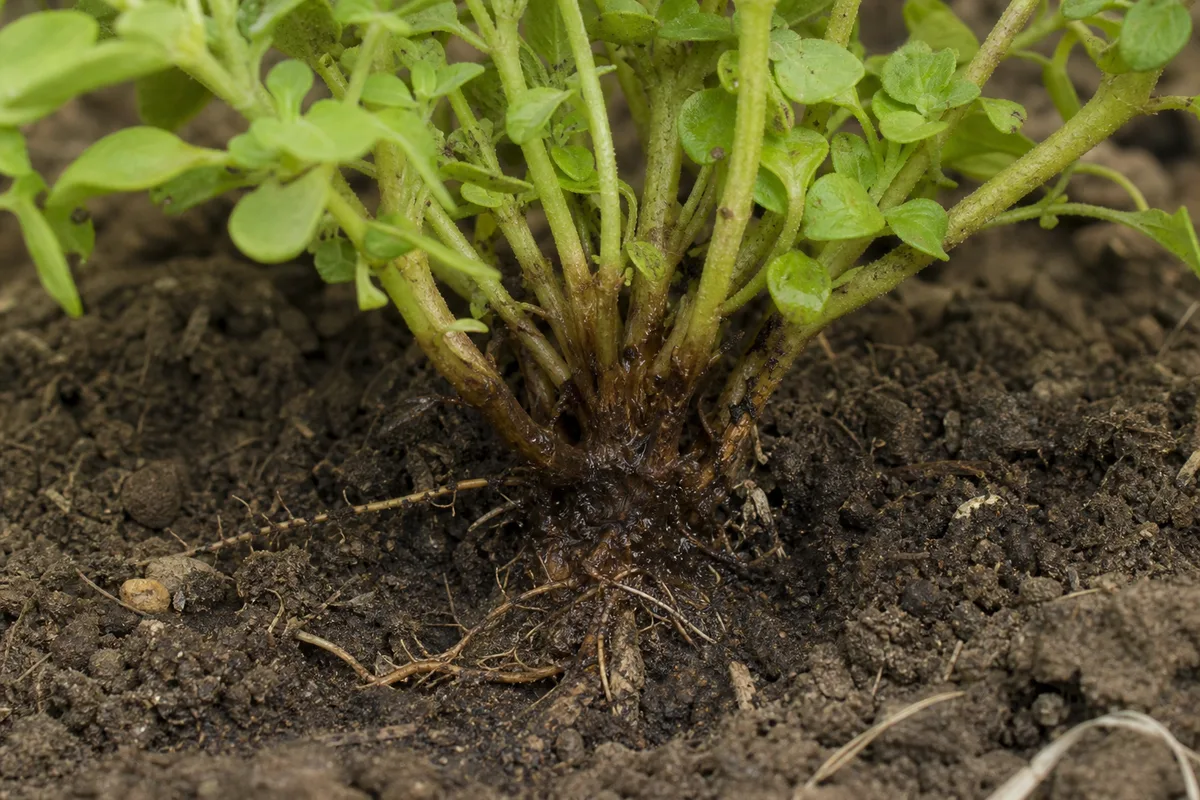
Root Rot symptoms on Ajwain Plant - compare with healthy tissue on the same plant.
Early signs
- Yellowing lower leaves while mix stays damp-not the gradual fade of one old leaf aging out
- Edema - small water-soaked blisters on leaf undersides when roots take up more water than leaves can transpire
- Limp fuzzy leaves on wet soil that do not firm up after you water
- Sour or rotten smell when you lift the pot or press the surface
- Fungus gnats near the soil line in a pot that never dries down
Photo check (edema): On the fuzzy underside of a lower leaf pair, look for tiny translucent bumps or blisters before stems soften-edema is an early overwatering warning, not rot yet, but the same wet mix will rot roots if watering continues. Original symptom photo pending for a future update.
Advanced signs
- Soft, mushy square stems at or just above the soil line-rot climbing the stem is urgent
- Brown or black tissue where thick stems meet wet mix
- Collapse of trailing stems with leaves turning brown and papery despite moisture
- Roots that slip off when touched-healthy ajwain roots stay firm and white or tan
Photo check (stem base): Press the square stem where it meets the mix. Firm green tissue with only yellow lower leaves suggests early stress; blackened mush that dents under gentle pressure means salvage cuttings from upper stems, not another soak. Original stem-base photo pending for a future update.
Why ajwain gets root rot
Watered like basil instead of a semi-succulent. NParks lists Coleus amboinicus as a succulent plant with moderate water needs-fleshy aromatic leaves covered in trichomes that slow evaporation. UF/IFAS notes Cuban oregano needs well-drained soil and only occasional irrigation. Daily shallow watering keeps the surface damp while deeper roots suffocate.
Heavy mix and blocked drainage. Dense peat without perlite, decorative pots without holes, and saucers left full after watering keep the root zone anaerobic. Root rot organisms attack when soils stay wet and roots are stressed.
Winter overwatering. Ajwain goes semi-dormant in cool months and uses far less water. The same summer schedule leaves mix wet for weeks-wet roots in cold soil are the most common winter killer on kitchen windowsills.
Monsoon and high humidity outdoors. In-ground ajwain in tropical beds or balcony planters faces a different risk than indoor pots: sustained rain plus humidity can prevent dry-down between storms even when drainage looked adequate in dry weather. Raised beds, extra perlite, and moving containers under eaves after heavy rain matter more than another indoor-style deep soak. Container ajwain on a sheltered balcony still needs saucers emptied and holes checked-clogged drainage after monsoon dust is a common outdoor rot trigger.
How to confirm the cause
- Pot weight - A heavy pot days after watering on a plant that looks wilted suggests failed roots, not thirst.
- Stem squeeze - Firm square stems at the base mean rot may still be early; mushy black tissue confirms advanced decay.
- Smell test - Sour, egg-like odor from drain holes or surface soil supports rot over simple overwatering stress.
- Unpot and rinse - Knock the plant gently out of its pot. Healthy roots are firm and pale; rotted roots are brown, translucent, or slimy and may smell.
- Wilt paradox - Wilting with moist soil often means roots cannot absorb water because they are drowning or decaying-do not interpret collapse as a signal to water again.
Firm vs. mushy roots: urgency table
| Root inspection finding | Stem base | Urgency | First action |
|---|---|---|---|
| Mostly firm white or tan roots; mix damp but not sour | Firm square stems | Low | Dry-down 5–7 days; repot only if mix stays wet |
| 25–50% brown mushy roots; upper stems still firm | Stems firm or slightly soft at one point | Moderate | Unpot within 24 hours; trim rot; repot airy mix; withhold water 5–7 days |
| More than half roots are slime; sour smell | One or more stems soft at soil line | High | Trim all rot same day; cut matching top growth; repot dry |
| No firm root tissue left; base stems black and collapsing | Multiple mushy square stems | Critical | Tip cuttings from firm upper growth only-see propagation guide |
First fix for ajwain
Stop watering and unpot to inspect roots within 24 hours if stems are soft or the mix smells sour.
This single step prevents the most common mistake-adding water to a wilted plant whose roots are already failing. Lay the root ball on newspaper, rinse away old mix, and trim every dark mushy root back to firm pale tissue with clean scissors. If more than half the root system is gone, prune a matching amount of top growth so the remaining roots can support the plant.
Let cut root surfaces air-dry for several hours. Repot into fresh, well-drained mix (potting soil plus perlite plus a little compost) in a clean pot with working drainage holes. Withhold water for five to seven days, then resume the top-inch dry test from the watering guide.
If main stems at the base are already mushy, skip saving the mother plant-take tip cuttings from firm upper growth and follow the propagation guide.
Step-by-step recovery
- Isolate - Move the pot away from other herbs to avoid spreading fungus gnats or splashing contaminated mix.
- Trim roots - Remove all brown, black, or slimy tissue. Sterilize scissors between cuts if rot was advanced.
- Trim stems - Cut soft stem sections back to firm green tissue above the rot line.
- Dry and repot - Use airy mix; do not bury stems deeper than before. See repotting guidance for pot sizing.
- Withhold water - Five to seven days minimum so cut surfaces callus.
- Resume dry-check watering - Top inch dry, then deep soak until runoff. Empty saucers within 30 minutes.
- Monitor new growth - Firm new leaves on upper stems mean the rescue worked.
Recovery timeline
Mild cases with firm upper stems and partial healthy roots may stabilize within one to two watering cycles after repot. Severe base rot where multiple stems mush usually requires tip-cutting restart-NC State Extension notes stem cuttings propagate easily on P. amboinicus, and new rooted cuttings often outpace a struggling mother plant within three to four weeks.
Judge success by firm new leaves on upper stems and stable root color on re-inspection, not by saving every yellow lower leaf. Old damaged foliage rarely re-greens.
Annotated recovery snapshot (illustrative)
A kitchen windowsill ajwain watered twice weekly through a cool November developed yellow lower leaves and a heavy pot while upper fuzzy growth still looked acceptable. Unpotting showed roughly 40% brown mushy roots and firm square stems at the base. After trimming rot, air-drying cut surfaces four hours, and repotting into perlite-amended mix with no water for six days, the first firm new leaf pair appeared on an upper stem around week two. At week four, a light finger test at one inch dry resumed normal deep-soak watering. Original before/after root photos pending for a future update-use firm new growth and re-inspected root color, not old yellow lower leaves, as progress markers.
Harvest and kitchen safety during rot rescue
Because ajwain leaves are edible, rot rescue timing matters alongside root surgery.
- During active rot: Do not harvest leaves from stems touching contaminated mix or showing yellowing from root failure. Trim away damaged tissue; cook only from firm upper growth if you must harvest before repot is complete.
- After root trim and repot: Wait until new growth is clean and the mix has cycled through at least one proper dry-down before cooking with rescued foliage. Rinse any harvest leaves under cool running water.
- Handling: Wash hands after touching mushy roots or sour mix. Keep trimmed plant debris away from food prep surfaces.
- Pets: Indian borage is toxic to cats and dogs if ingested-secure the pot during rescue and discard rotted material where pets cannot reach it.
What not to do
- Do not keep watering because leaves look wilted when soil is already wet-watering a wilted plant with failing roots makes the problem worse.
- Do not mist leaves during recovery; damp fuzzy foliage invites fungal leaf spot.
- Do not fertilize until new growth resumes-stressed roots cannot process nutrients.
- Do not repot into dense garden soil or a pot without drainage.
How to prevent root rot next time
Water on soil dryness, not calendar: let the top inch dry completely, then soak deeply. Use perlite-amended mix, terracotta or drilled pots, and stretch winter intervals. Empty saucers after every watering.
NC State Extension recommends a hot, dry location for best P. amboinicus performance-that translates indoors to bright light and full dry-down between soaks, not a dim corner where pots stay wet for weeks.
When to worry
Escalate immediately when mushy stems spread up multiple square stems, the entire base collapses, or roots are mostly slime with no firm tissue remaining. At that point, tip cuttings from the healthiest upper stems are the realistic save-not repeated repots of the rotting base.
Related ajwain problems
- Overwatering - edema and damp soil before roots fail
- Underwatering - light pot and firm thin leaves, not mushy stems
- Fungus gnats - chronically wet surface mix signal
- Yellow leaves - lower-leaf yellowing with multiple causes
- Watering - semi-succulent dry-down rhythm after rescue
- Propagation - tip-cutting salvage when base rots
- Ajwain plant overview - species hub
FAQs
How can I confirm root rot on ajwain plant?
Confirm when the pot stays heavy for days, the mix smells sour, lower leaves yellow on damp soil, and unpotting shows brown mushy roots instead of firm pale ones. Edema blisters on leaf undersides often appear before stems soften. A light dry pot with thin but firm leaves usually means underwatering, not rot.
Can I save ajwain from tip cuttings if the base is mushy?
Yes-this is the standard salvage path for Plectranthus amboinicus. Take 4–6 inch cuttings from firm upper stems with at least two nodes, let cuts air-dry one day, and root in perlite-heavy mix or water. The semi-succulent stems root easily when the main plant’s base has already rotted.
Why does my ajwain wilt when the soil is still wet?
Wilt on wet soil means roots are failing, not that the plant needs more water. Ajwain stores moisture in thick fuzzy leaves and square stems, so foliage can look thirsty while rotting roots cannot absorb. Watering again accelerates decay-stop and inspect the root zone first.
When is root rot urgent on ajwain plant?
Act within days when multiple stems turn mushy at the soil line, the plant collapses on soggy mix, or more than half the roots are brown slime on inspection. Mild yellow lower leaves with firm upper stems and mostly white roots can wait for a careful dry-down and targeted repot.
How do I prevent root rot on ajwain next time?
Water like a Mediterranean herb, not basil-deep soak when the top inch is dry, then let the mix dry down fully. Use perlite-amended mix, terracotta or drilled drainage, and stretch winter intervals to every 2–4 weeks. See the ajwain watering guide for the full dry-check routine.
Conclusion
Root rot on ajwain is a semi-succulent watering mismatch, not a random disease. Heavy wet mix, edema blisters on fuzzy leaf undersides, and wilt despite moisture point to failing roots before you add another soak. Stop watering, use the firm-vs-mushy root table to set urgency, trim all decay, and withhold water after repot until cut surfaces callus. When square stems at the soil line turn mushy, tip cuttings from firm upper growth beat repeated repots of a rotting base. Match future watering to soil dryness-not calendar habit-and this kitchen herb recovers faster than growers expect once the mix finally dries down.
When to use this page vs other Ajwain Plant guides
- Ajwain Plant watering guide - Use for routine moisture checks before assuming root rot is the main issue.
- Ajwain Plant problems hub - Browse all 16 common issues on this species.
- Overwatering on Ajwain Plant - Different entry point when symptoms overlap with root rot.
- Yellow Leaves on Ajwain Plant - Different entry point when symptoms overlap with root rot.
- Wilting on Ajwain Plant - Different entry point when symptoms overlap with root rot.