Overwatering on Ajwain Plant (Indian Borage): Causes
Quick answer
Overwatering on ajwain (Indian borage, Plectranthus amboinicus) happens when growers treat this semi-succulent herb like basil-edema on fuzzy leaf undersides and yellow lower leaves on heavy wet mix are early signs. First step: stop watering and confirm with pot weight and a finger test at one inch down.
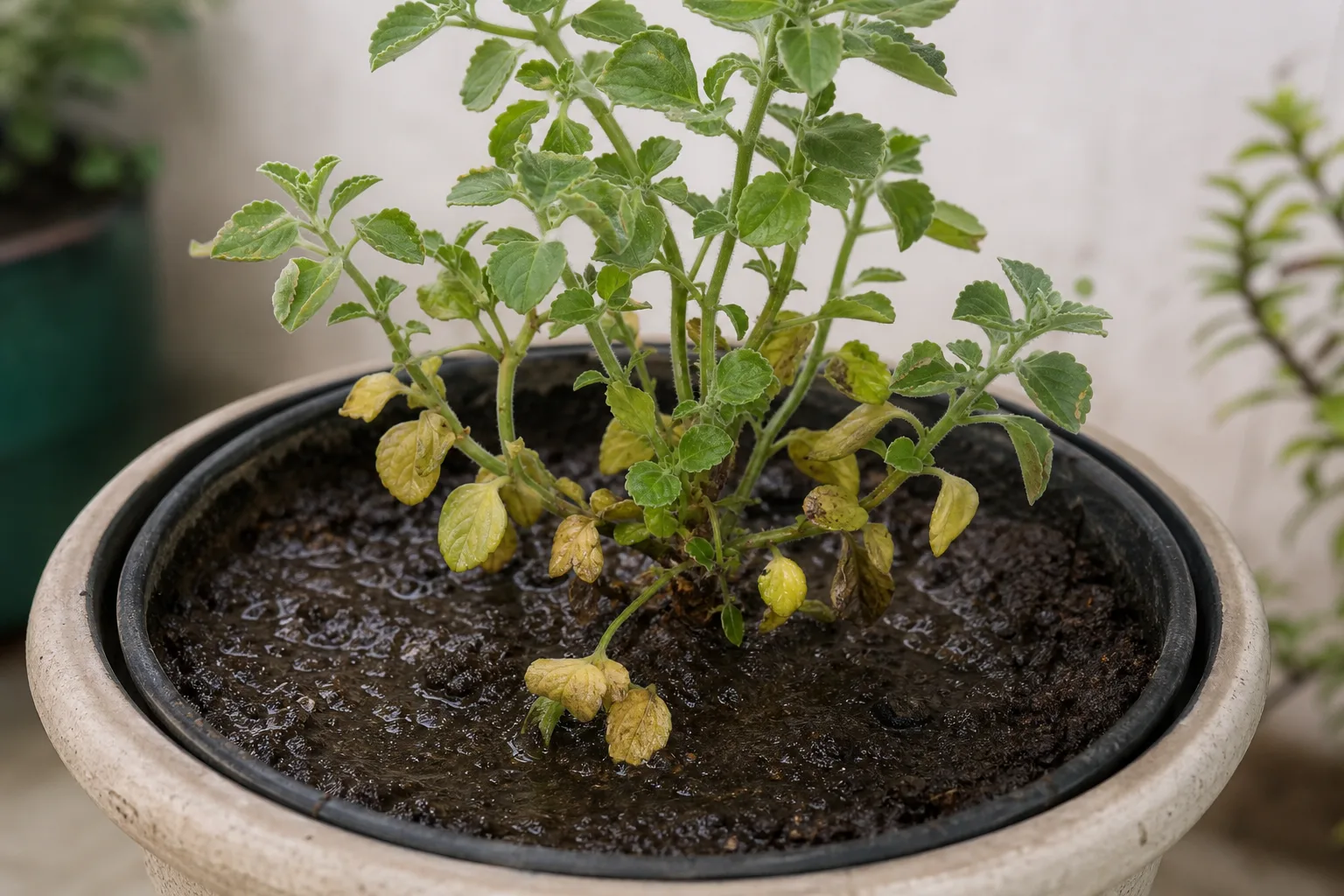
Overwatering on Ajwain Plant: Causes, Checks & Fixes
This guide covers overwatering on Ajwain Plant. See also the general Overwatering guide, watering, and light pages for this plant.
Overwatering on Ajwain Plant: Causes, Checks & Fixes
Quick answer
Overwatering on ajwain (Indian borage, Cuban oregano, Plectranthus amboinicus) is almost always a watering habit mismatch-treating a semi-succulent mint-family herb like basil or mint. Ajwain Plant overview stores water in thick, fuzzy leaves and square stems; shallow daily watering keeps the surface damp while roots in waterlogged soil lose oxygen and stop functioning.
First step: stop watering immediately. Lift the pot. If the mix is heavy and clings wet to your finger an inch down, you are overwatering-do not add more water because leaves look limp. Move the plant to Ajwain Plant light guide with airflow so the mix can dry.
Early signs include edema (water-soaked blisters on fuzzy leaf undersides), yellow lower leaves on persistently damp soil, and fungus gnats hovering near the surface. For the full dry-down rhythm and seasonal intervals, see the ajwain watering guide. If stems turn mushy at the base, cross-check root rot on ajwain-this page covers catching overwatering before rot advances and the rescue steps when it has.
Overwatering vs. other ajwain problems
The wilt-on-wet-soil paradox is the single most useful diagnostic on this plant. Both overwatering and underwatering cause limp leaves, but the pot weight and stem feel tell them apart instantly.
| Pattern | Pot weight | Soil at 1 inch | Stem at soil line | Leaf feel | What it usually means |
|---|---|---|---|---|---|
| Overwatering | Heavy | Wet, cool, clings | Firm early; soft if rot follows | Soft, limp on wet mix | Too much water, slow dry-down |
| Edema (early overwatering) | Medium-heavy | Damp for days | Firm | Thick leaves with blisters underneath | Roots outpace leaf transpiration |
| Underwatering | Light | Dry, crumbly | Firm | Thin, floppy but firm | Turgor loss from drought |
| Root rot (advanced) | Heavy | Wet, may smell sour | Soft, blackening | Limp despite moisture | Failed roots on saturated mix |
Compare with underwatering: a light pot, dry soil, and leaves that perk within hours of one deep soak point away from overwatering. Compare with root rot when mushy stems and sour-smelling mix confirm decay beyond simple wet stress.
Fungus gnats near the pot often appear when the surface stays damp too long-they signal the same chronic moisture that leads to overwatering damage.
Do not confuse this with mold on soil. Fluffy white or gray fuzz on a damp topsoil surface-while square stems stay firm and thick leaves feel normal-is harmless saprophytic mold fixed by dry-down and scraping. Overwatering on ajwain means tissue stress: edema blisters, yellow lower leaves on wet mix, limp foliage that does not perk, and eventually soft stems or failed roots. Both problems share wet soil, but mold alone does not need unpotting or root surgery.
What overwatering looks like on ajwain
Ajwain is a sprawling mounding herb with thick square stems and velvety, aromatic leaves-not a tight rosette. Symptoms show on lower stems and older leaves first while upper growth may still look acceptable.
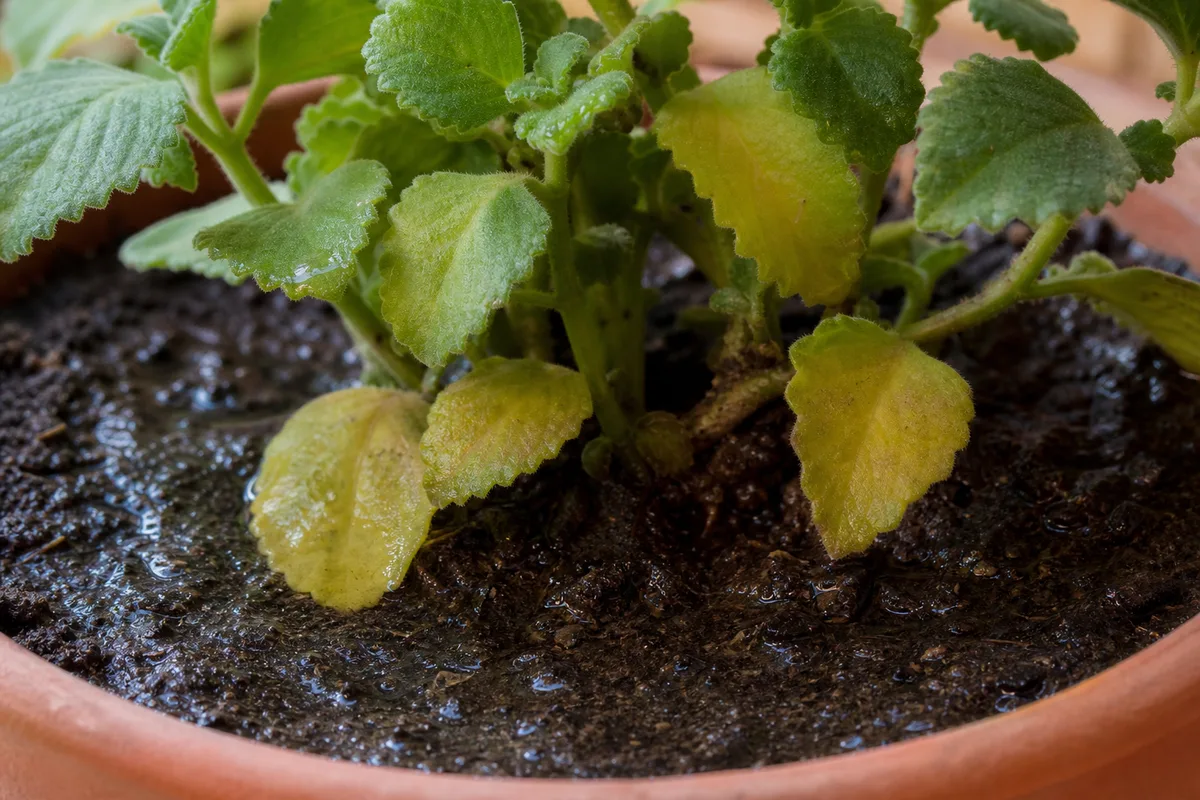
Overwatering symptoms on Ajwain Plant - compare with healthy tissue on the same plant.
Early signs
- Edema - small water-soaked blisters or corky bumps on the undersides of fuzzy leaves, caused when roots take up more water than leaves can transpire
- Yellowing lower leaves while mix stays damp-not the gradual fade of one old leaf aging out
- Soil that stays wet for more than a week with no obvious rain or recent soak
- Limp fuzzy leaves on wet soil that do not firm up after you water
- Fungus gnats hovering near the soil line in a pot that never dries down
- Pot feels heavy days after the last watering
Advanced signs
- Soft, mushy square stems at or just above the soil line-rot is climbing; see root rot
- Wilting that does not improve after watering on Ajwain Plant - paradoxically, overwatered ajwain wilts because rotting roots cannot absorb water
- Sour or rotten smell when you lift the pot or press the surface
- Brown or papery lower leaves spreading upward despite moisture
The tactile leaf test
A well-hydrated ajwain leaf feels thick, almost rubbery, and snaps cleanly when bent. An overwatered leaf on wet soil feels soft and limp without the thin papery quality of drought. An underwatered leaf feels thin and floppy but still firm in the tissue itself. Touch a leaf and push a finger into the soil before you reach for the watering can.
Why ajwain gets overwatered
Watered like basil instead of a semi-succulent. NParks lists Coleus amboinicus as a succulent plant with moderate water needs-fleshy aromatic leaves covered in trichomes that slow evaporation. Daily shallow watering keeps the surface damp while deeper roots suffocate. UF/IFAS notes Cuban oregano requires well-drained soil and only occasional irrigation-the same discipline applies indoors.
Calendar watering without checking soil. Ajwain needs a deep soak, then a real dry-down, then another soak-the wet-dry cycle its semi-succulent biology expects. Watering every Tuesday regardless of pot weight guarantees overwatering in cool months and under-potted plants in summer.
Heavy mix and blocked drainage. Dense peat without perlite, decorative pots without holes, and saucers left full after watering keep the root zone anaerobic. Root rot pathogens thrive in waterlogged soil-overwatering is the setup; rot is the consequence.
Winter overwatering. Ajwain goes semi-dormant in cool months and uses far less water. The same summer schedule leaves mix wet for two to three weeks-wet roots in cold soil are the most common winter killer. Stretch intervals to every 2–4 weeks and confirm with the chopstick test from the watering guide.
Monsoon and high humidity outdoors. When rain and humidity prevent dry-down between storms, even outdoor ajwain can stay saturated if drainage clogs or pots sit in standing water.
Oversized pots. A small ajwain in a large decorative pot holds a huge volume of wet mix that never dries at the center while the surface looks acceptable-classic slow overwatering.
How to confirm the cause
Do not guess from across the room. Walk over, touch a leaf, and test the soil before any fix.
Pot weight and finger test
Pick up the pot. A heavy pot days after watering on a plant that looks wilted suggests failed roots or chronic saturation, not thirst. Push your finger into the mix to the first knuckle-about 2–3 cm. If soil feels cool and damp, do not water. If it feels dry and warm, underwatering is more likely.
Chopstick or skewer test
Push a plain wooden chopstick into the mix to about half the depth of the pot. Leave it thirty seconds, pull it out. Soil clinging or a dark damp stripe means the lower mix is still wet even if the surface looks dry. Dry wood with no discoloration means it is safe to water-if the plant actually needs it.
Stem squeeze and smell
Press a square stem at the soil line. Firm green tissue means overwatering may still be early. Soft mushy tissue means rot is likely-unpot within 24 hours. A sour or egg-like odor from drain holes supports advanced overwatering or rot over simple stress.
Unpot inspection (when stems soften or smell is sour)
Knock the plant gently out of its pot. Healthy ajwain roots are firm and pale, smelling earthy. Stressed roots from chronic wetness may be dark at tips but still firm; mushy brown or translucent roots confirm rot. Rinse away old mix and inspect before deciding between dry-down alone and full trim-and-repot.
First fix: stop water and dry the mix
Stop watering immediately. This single step prevents the most expensive mistake-adding water to a wilted plant whose roots are already failing on saturated mix.
Move the pot to bright indirect light with good airflow so evaporation speeds up. Remove any decorative cache pot that traps water. Empty the saucer and do not bottom-water until the top inch is fully dry.
If stems are still firm, no sour smell, and roots look pale when you spot-check, a dry-down alone may be enough:
- Withhold all water until the top inch of mix is dry to the touch
- Confirm with chopstick test that lower soil is approaching dry-not just the surface
- Resume one deep soak until water runs from drainage holes; empty saucer within 30 minutes
- Return to the top-inch dry rule from the watering guide
If stems are soft, mix smells sour, or roots show dark mushy tissue, proceed to the step-by-step rescue below-dry-down alone will not save an advancing case.
Step-by-step rescue when roots or stems are mushy
When overwatering has progressed to root damage or stem softness, a five-step rescue gives the best chance of saving the plant. Mild yellow leaves on firm stems may recover with dry-down alone; mushy tissue needs surgery.
- Stop watering and unpot. Lay the root ball on newspaper in bright indirect light. Rinse away old mix so you can see every root.
- Trim rotted roots. Cut every dark, mushy, or slimy root back to firm white or pale tan tissue with clean, sharp scissors. Sterilize blades between cuts if rot was advanced.
- Trim damaged stems. Cut soft stem sections back to firm green tissue above the rot line. If more than half the root system is gone, prune a matching amount of top growth.
- Air-dry and repot. Let cut root surfaces dry for several hours. Repot into fresh, well-drained mix (potting soil plus perlite plus a little compost) in a clean pot with working drainage holes. Terracotta helps dry-down. See repotting guidance for pot sizing-do not upsize.
- Withhold water five to seven days, then resume the top-inch dry test. Do not fertilize for at least a month.
If rot has reached the base of multiple stems, take healthy tip cuttings from the upper part of the plant and follow the propagation guide. The mother plant is unlikely to recover once the base is slime, but cuttings root reliably within three to four weeks.
If you grow ajwain for kitchen use, wash hands and tools after handling trimmed roots and avoid harvesting leaves from a plant under active rescue until new growth is clean.
Recovery timeline
Mild overwatering - firm stems, edema or yellow lower leaves, mostly healthy roots - often stabilizes within one to two weeks after a proper dry-down and corrected watering rhythm. Edema blisters may scar but new leaves should look normal.
Moderate cases with partial root trim and repot may need three to four weeks before new firm leaves appear on upper stems. Old yellow lower leaves rarely re-green; judge success by new growth at stem tips, not by saving every damaged leaf.
Severe base rot where multiple stems mush usually requires tip-cutting restart - new rooted cuttings often outpace a struggling mother plant within three to four weeks.
Signs recovery is working: pot weight drops between waterings on schedule, new leaves feel thick and firm, chopstick test shows proper dry-down cycles, and no new yellowing spreads upward.
Signs the problem is worsening: stems soften further, sour smell returns after repot, wilt persists on wet mix, or fungus gnats increase-re-inspect roots immediately.
What not to do
- Do not keep watering because leaves look wilted when soil is already wet-watering a wilted plant with failing roots makes the problem worse.
- Do not mist leaves during recovery; damp fuzzy foliage invites fungal leaf spot.
- Do not fertilize a waterlogged plant-stressed roots cannot process nutrients and salts worsen damage.
- Do not repot into a larger pot “to help drying”-more wet mix volume makes things worse.
- Do not bury stems deeper during repot hoping to stabilize the plant-buried stem tissue rots faster.
- Do not resume daily watering once leaves perk up; return to the deep-soak-then-dry-down rhythm only.
How to prevent overwatering next time
Water on soil dryness, not calendar: let the top inch dry completely, then soak deeply until runoff. Empty saucers within 30 minutes. Use perlite-amended mix, terracotta or drilled pots, and stretch winter intervals to every 2–4 weeks.
Three checks beat guessing: finger or chopstick test, pot-lift weight, and leaf feel together. If you have only grown basil or mint, treat ajwain like oregano or rosemary-NC State Extension notes it prefers a hot, dry location for best performance with good drainage, which indoors means not keeping the mix constantly damp.
Avoid decorative cache pots without drainage, oversized containers, and misting leaves. During monsoon or extended rain outdoors, focus on dry feet-move pots under cover so soil can drain between showers.
When to worry
Escalate immediately when multiple square stems turn mushy at the soil line, the entire base collapses on soggy mix, or unpotting shows roots that are mostly brown slime with no firm tissue. At that point, tip cuttings from firm upper stems are the realistic save-not repeated watering or another week of waiting.
Also act within 24 hours when wilt persists on wet soil, sour smell comes from drain holes, or edema spreads while you have already stopped watering for a week-roots may be failing even if upper leaves still look acceptable.
For the full root-failure protocol and propagation fallback, see root rot on ajwain plant.
When to use this page vs other Ajwain Plant guides
- Ajwain Plant watering guide - Use for routine moisture checks before assuming overwatering is the main issue.
- Ajwain Plant problems hub - Browse all 16 common issues on this species.
- Root Rot on Ajwain Plant - Different entry point when symptoms overlap with overwatering.
- Yellow Leaves on Ajwain Plant - Different entry point when symptoms overlap with overwatering.
- Wilting on Ajwain Plant - Different entry point when symptoms overlap with overwatering.