Mold on Soil on Ajwain Plant (Indian Borage): Causes
Quick answer
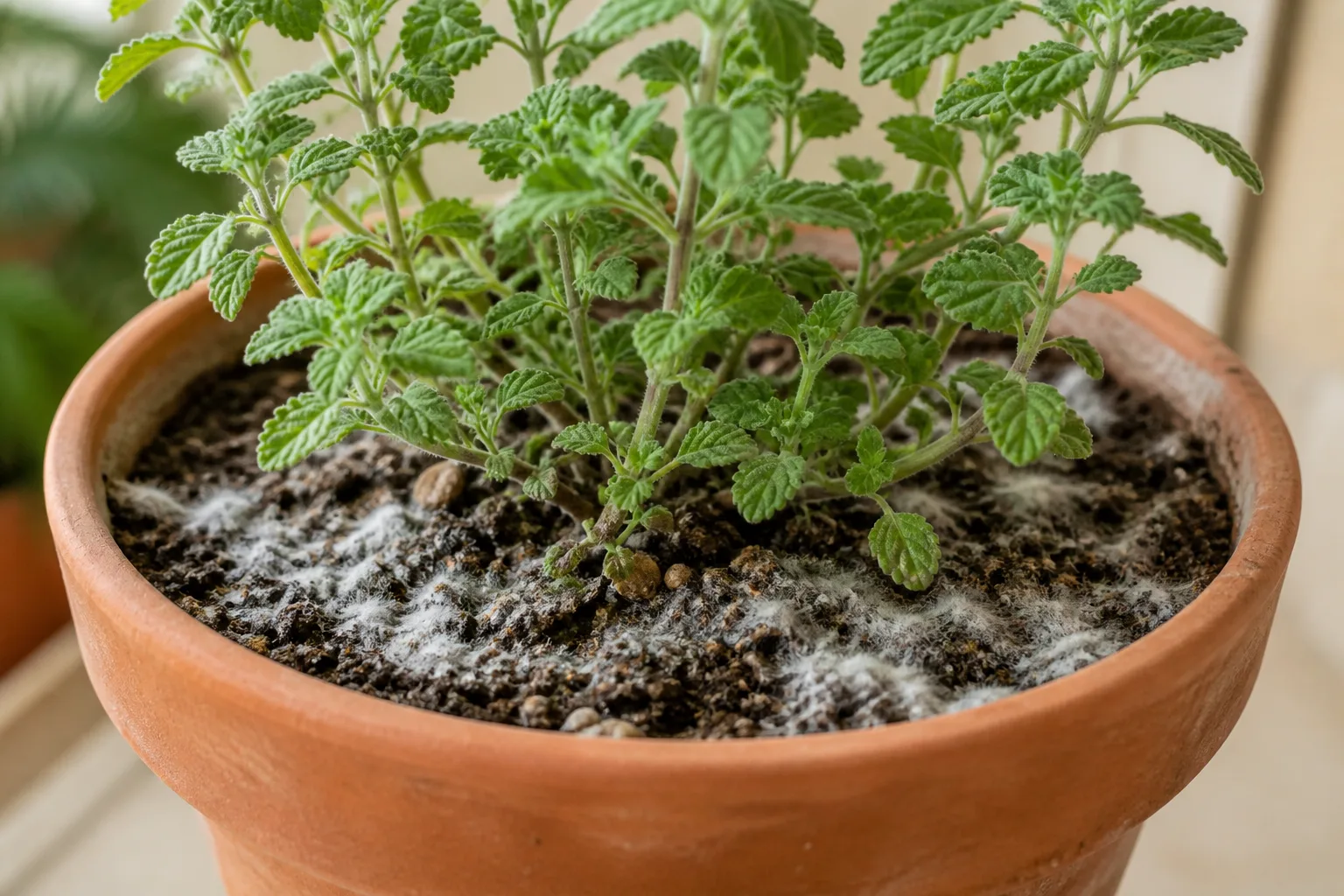
Fluffy white or gray mold on Ajwain Plant soil is almost always harmless surface fungus feeding on wet organic mix-not a leaf disease. First step: stop watering and let the top 2–3 cm of soil dry completely before you scrape mold or change anything else.
Mold on Soil on Ajwain Plant (Indian Borage): Causes, Checks & Fixes
This guide covers mold on soil on Ajwain Plant. See also the general Mold on Soil guide, watering, and light pages for this plant.
Mold on Soil on Ajwain Plant (Indian Borage): Causes, Checks & Fixes
Quick answer
You pinched a handful of Indian Borage for dinner, noticed white fuzz on the damp soil by morning, and wondered whether your kitchen herb is dying. On Ajwain Plant (Plectranthus amboinicus-also sold as Cuban Oregano or Mexican Mint), that fuzz is almost always saprophytic mold: a harmless fungus breaking down organic matter on a surface that stayed wet too long. It is a moisture and airflow warning, not an emergency leaf disease.
First step: pause watering and let the top 2–3 cm of mix dry completely. Ajwain stores water in thick, fleshy, velvety leaves, so the soil surface can lag behind what the plant actually needs. Scraping mold before the mix dries often brings it back within days-the same damp conditions that invite fungus gnats on this semi-succulent herb.
What mold on Ajwain soil looks like (and what it is not)
On this sprawling kitchen herb, mold almost always starts on the soil surface, not on the velvety leaves. Typical signs:
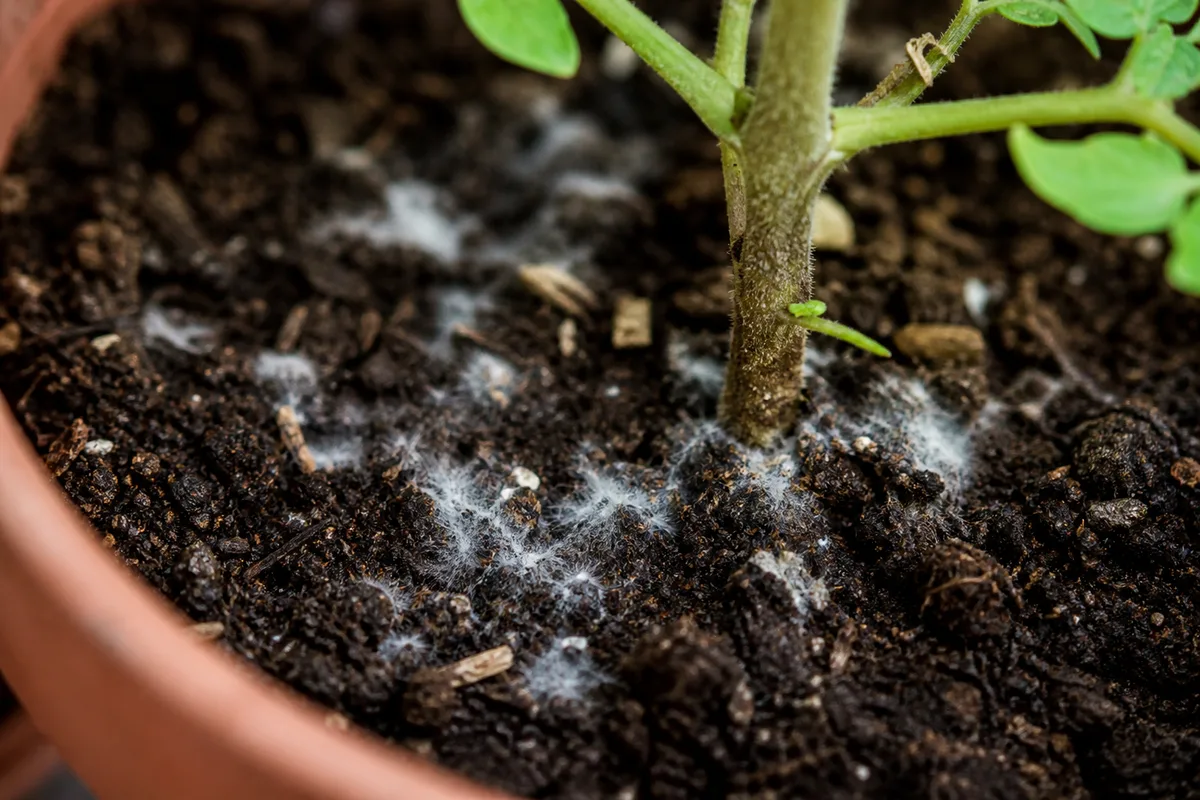
Mold on Soil symptoms on Ajwain Plant - compare with healthy tissue on the same plant.
- White, gray, or occasionally yellow-white cottony or powdery patches on topsoil
- Fuzz clustered where fallen harvest trimmings or old stem tips sit on the mix
- Surface that stays dark and damp for days after you water
- A faint musty smell when you lift trailing stems to peek underneath
Healthy Ajwain tissue above the soil should still look normal: thick leaves feel firm when hydrated, square stems are sturdy, and new growth at tips stays green. Mold confined to soil with firm stems above it points to surface conditions, not a foliar fungus.
Easy lookalikes:
- Mineral crust - hard, chalky white on pot rims or soil surface; does not look fuzzy; often from hard tap water or fertilizer salts
- Powdery mildew - white dust on leaf surfaces, not soil alone
- Mealybugs - white cottony clumps on stem joints and leaf axils, not evenly spread across soil; see the mealybugs guide if wax hides in leaf pairs
If fuzz grows on leaves or stems, treat that as a different problem. Soil-surface mold alone rarely harms Ajwain foliage directly.
Why Ajwain gets surface mold: harvest debris, sprawling shade, and wet topsoil
Ajwain evolved for warm climates with sharp drainage between rains. NC State Extension notes it prefers a hot, dry location with good drainage and only occasional irrigation, and UF/IFAS lists well-drained soil and occasional watering for Cuban oregano. Indoors, the same plant often sits in rich compost-heavy mix on a kitchen sill, gets watered like basil, and sprawls until stems shade their own pot-conditions that keep the top layer moist while thick leaves keep the plant looking fine below.
Harvest trimmings accelerate surface decomposition
Unlike a decorative pothos you rarely cut, Ajwain is an edible herb you pinch often. Each harvest drops aromatic, oil-rich leaf bits onto the mix. Those trimmings decompose within days on a damp surface-exactly the food saprophytic fungi need. A pot that looked clean on Monday can show white fuzz by Thursday if you cooked with the herb twice and watered before the surface dried.
Practical habit: Brush trimmings into a bowl or compost bin, not back onto the soil. Wipe the rim after heavy harvests on a 15–20 cm windowsill pot.
Sprawling stems trap humid air at the rim
Square succulent stems spill over the pot edge and block airflow at the soil line-the same microclimate that keeps fungus gnats breeding in the top inch of mix. Overhead watering that runs down stems funnels moisture to the center surface without reaching deep roots efficiently.
Plant-specific factors that make mold more likely on Ajwain Plant:
- Watering before the top 2–3 cm dries - follow the ajwain watering guide finger or chopstick test, not a calendar
- Low airflow around a wide, trailing pot - stems seal the rim against a backsplash or neighbor pot
- Compost-rich or peaty mix - holds surface moisture longer than the sandy, well-drained soil Ajwain Plant overview prefers outdoors; see the ajwain soil guide for a chunkier blend
- Dim placement - partial shade suits Ajwain, but a dark corner slows evaporation without slowing your watering schedule
- Oversized pots - a small root ball in a large wet zone keeps the top damp between waterings
Mold often appears alongside fungus gnats, which also breed in wet organic soil. Gnats do not cause the mold, but both signal the same care imbalance tied to overwatering on this semi-succulent herb.
Indoor kitchen sill vs. outdoor monsoon pot
On a balcony or terrace in a warm, humid climate, mold after heavy rain is common on any organic mix-and Ajwain outdoors often recovers faster once sun and wind dry the surface. Indoors, evaporation is slower: a north-facing kitchen sill can keep the top centimeters damp for two weeks in winter even when you cut back watering. The fix is the same (dry the surface), but indoor pots usually need longer between drinks and more deliberate airflow at the rim than outdoor plants after a single rain event.
Confirm the cause in seven checks
Work through these checks before scraping or Ajwain Plant repotting guide:
- Stem firmness at soil line - Gently pinch the lowest square stem. Firm and green = surface mold likely; soft, dark, or collapsing = suspect stem or root rot from chronic wetness.
- Topsoil moisture - Insert a finger 2–3 cm deep. Soggy or cool-wet confirms an overwatering pattern. Dry with only surface fuzz means you may have already corrected timing.
- Leaf feel - Thick leaves firm and aromatic = plant still hydrated. Widespread yellow lower leaves plus wet mix = deeper water stress or rot, not mold alone.
- Debris scan - Lift trailing stems and remove matted fallen leaves and harvest trimmings on the surface.
- Pot weight and drainage - Lift the pot after watering. Heavy days later with no dry-down, or water sitting in a saucer, confirms poor drying per the watering guide.
- Pest check - Small flies when you disturb the pot suggest fungus gnats sharing the same wet habitat.
- Smell - Neutral or slightly earthy is normal for surface mold. Sour or swampy means inspect roots.
If stems are firm, leaves look normal, and only the soil surface is fuzzy, you have confirmed harmless surface mold tied to moisture and airflow-not a pathogen attacking living Ajwain tissue.
First fix: dry the top 2–3 cm before you scrape anything
Stop watering and let the top 2–3 cm of soil dry completely.
Do not scrape, cinnamon-dust, or repot on day one. Ajwain’s fleshy leaves buffer drought for several days; letting the surface dry breaks the fungal habitat without stressing the plant. Wait until the top layer feels dry to the touch and the pot feels noticeably lighter.
Once dry:
- Scrape off the top 1–2 cm of moldy mix and discard it-do not add moldy soil to compost you use for edible gardens.
- Remove debris - fallen leaves, harvest trimmings, and any mulch sitting on the surface.
- Increase airflow - pull the pot away from crowded neighbors, open a window briefly, or run gentle room circulation so trailing stems are not sealed against the rim.
- Resume watering only when the top 2–3 cm is dry again-test with your finger, not a fixed calendar.
That single drying pause is the fix most Ajwain owners need. Secondary steps come only if mold returns after you have corrected timing for two full watering cycles.
If mold returns: bottom-water, trim sprawlers, refresh top layer
If fuzz reappears within a week despite dry-down watering:
- Refresh the top layer - Replace scraped soil with a thin layer of dry, well-draining mix (potting soil plus perlite or coarse sand, matching your normal Ajwain blend from the soil guide).
- Switch to bottom-watering - Set the pot in a tray of water for 15–20 minutes so roots drink while the surface stays drier-especially helpful when trailing stems funnel splash to the pot center.
- Brighten slightly - Move toward brighter indirect light or a few hours of morning sun if the plant was in a very dim spot; faster growth uses water and speeds surface drying.
- Trim sprawlers - Cut back stems that completely shade the pot rim so air reaches the soil.
- Repot only if needed - Choose repotting when mix smells sour, roots feel mushy on inspection, or mold persists through two drying cycles. Use fresh, chunky mix and a pot with drainage holes sized to the root ball-not dramatically oversized.
Do not reach for fungicide sprays on an edible herb unless a plant pathologist has confirmed a different disease. Cinnamon or baking soda may help after the surface is dry, but they are not substitutes for fixing chronic wetness.
Recovery timeline for Ajwain Plant
Surface mold should stop spreading within a few days once the top layer stays dry. Visible fuzz may darken and collapse; you can scrape the remainder when you resume watering on a dry schedule.
Expect one to two weeks to know your new rhythm is working. If no new patches appear through two full dry-down cycles, the episode is resolved.
Signs you are improving:
- Topsoil lightens in color and feels dry before each watering
- No new white patches after scraping
- Firm stems and steady new tip growth
- Fewer or no fungus gnats when you water
Signs the underlying problem is worsening:
- Lower leaves yellow while soil stays wet
- Stems soft or blackening at the base
- Musty or sour smell from the pot
- Wilting despite damp mix (possible root damage from chronic wetness)
- Mold returns within 48 hours of scraping without any dry period
Ajwain leaves damaged by rot do not green up again-judge recovery by new firm growth, not old yellow foliage. If multiple stems collapse at the base, follow the root-rot rescue path or root fresh tip cuttings before the parent plant is gone.
Lookalikes: mealybugs, powdery mildew, mineral crust, root rot
| What you see | Likely cause | First check |
|---|---|---|
| White fuzz on soil only; firm stems | Surface saprophytic mold | Dry top 2–3 cm; scrape; improve airflow |
| White powder on leaf tops | Powdery mildew or mineral dust | Wipe leaf; inspect pattern; improve air circulation |
| White cotton at stem joints | Mealybugs | Mealybugs guide-inspect axils with a magnifier |
| Hard white crust on pot rim | Salt or mineral buildup | Flush soil; use lower-mineral water |
| Yellow lower leaves + wet soil + soft base | Overwatering or root rot | Overwatering or root rot-unpot and inspect |
| Tiny flies when watering | Fungus gnats in wet mix | Fungus gnats guide-dry topsoil; fix watering |
| Harvest trimmings on damp soil + fuzz at debris | Surface mold on decaying leaves | Remove debris; dry surface; change harvest habit |
Stem rot and root rot on Ajwain share the same overwatering root cause as mold but need root inspection-not just surface scraping.
Mistakes that bring mold back
- Scraping mold daily without drying the soil - spores return overnight on a wet surface
- Watering on a calendar - thick leaves and seasonal growth change uptake; always check the top 2–3 cm
- Overhead drenching a sprawling pot - water runs down stems and keeps the center surface soggy
- Leaving harvest trimmings on the soil - cut leaves decompose fast on this aromatic herb
- Decorative pot covers or tight saucers - trap humidity around the soil line
- Cinnamon or fungicide as the only step - cosmetic fixes fail if the mix stays wet
- Repotting immediately - unnecessary stress unless roots are compromised or mold is chronic
Prevent mold after harvest and pruning
- Check the top 2–3 cm before every watering; skip the drink if it is still damp
- Brush harvest debris off the soil the same day you pinch leaves for cooking
- Bottom-water or pour slowly at the soil edge so the center surface dries faster
- Use pots with drainage holes; empty saucers after watering
- Avoid oversized containers that hold a large wet zone around small roots
- Space pots so trailing Ajwain stems do not seal the rim against a wall or neighbor
- Refresh the top inch of mix every few months if you use compost-heavy blends
Consistent dry-down between waterings prevents most surface mold on Ajwain. The goal is a surface that dries at roughly the same pace this fast-growing herb uses water below-not a constantly moist top layer.
When to worry and inspect roots
Surface mold with firm stems and normal leaves is low urgency. Treat it as a care adjustment.
Escalate promptly if:
- Stems are mushy or black at the soil line
- More than a few lower leaves yellow while mix stays wet
- The pot smells sour or rotten
- Wilting occurs with damp soil (possible root loss)
- Fungus gnats are heavy and persistent despite dry topsoil
In those cases, unpot, inspect roots for brown mushy tissue, trim decay to firm white roots, and repot into fresh, gritty mix only after cuts callus. Ajwain roots easily from healthy stem cuttings if the parent base is too far gone.
Your next 10 minutes and this week
Right now (about 10 minutes):
- Stop watering.
- Pinch the lowest square stem-firm or mushy?
- Lift the pot and check weight; scrape any harvest debris off the surface.
- Move the pot so trailing stems are not pressed against a wall.
This week:
- Let the top 2–3 cm dry fully before any scrape or refresh.
- Resume watering only with the dry-down test.
- If flies swarm when you water, open the fungus gnats guide.
- If stems soften or mix smells sour, switch to overwatering and root-rot checks instead of repeating surface scrapes.
What to read next on Ajwain care
- Fungus gnats - when small flies hover over the same damp pot
- Overwatering - yellow lower leaves, edema, or heavy wet mix
- Root rot - mushy square stems or sour smell
- Mealybugs - white cotton in leaf axils, not on soil alone
- Watering - dry-down rhythm for this semi-succulent kitchen herb
- Soil - chunkier mix so the surface dries between drinks
When to use this page vs other Ajwain Plant guides
- Ajwain Plant watering guide - Use for routine moisture checks before assuming mold on soil is the main issue.
- Ajwain Plant problems hub - Browse all 16 common issues on this species.
- Fungus Gnats on Ajwain Plant - Different entry point when symptoms overlap with mold on soil.
- Overwatering on Ajwain Plant - Different entry point when symptoms overlap with mold on soil.
- Root Rot on Ajwain Plant - Different entry point when symptoms overlap with mold on soil.