Fungus Gnats on Ajwain Plant (Indian Borage): Causes
Quick answer
Fungus gnats on Ajwain Plant mean the soil surface stays wet too long for a semi-succulent herb. First step: stop watering and confirm the top 2–3 cm of mix is dry with the chopstick test from the watering guide before any spray or drench.
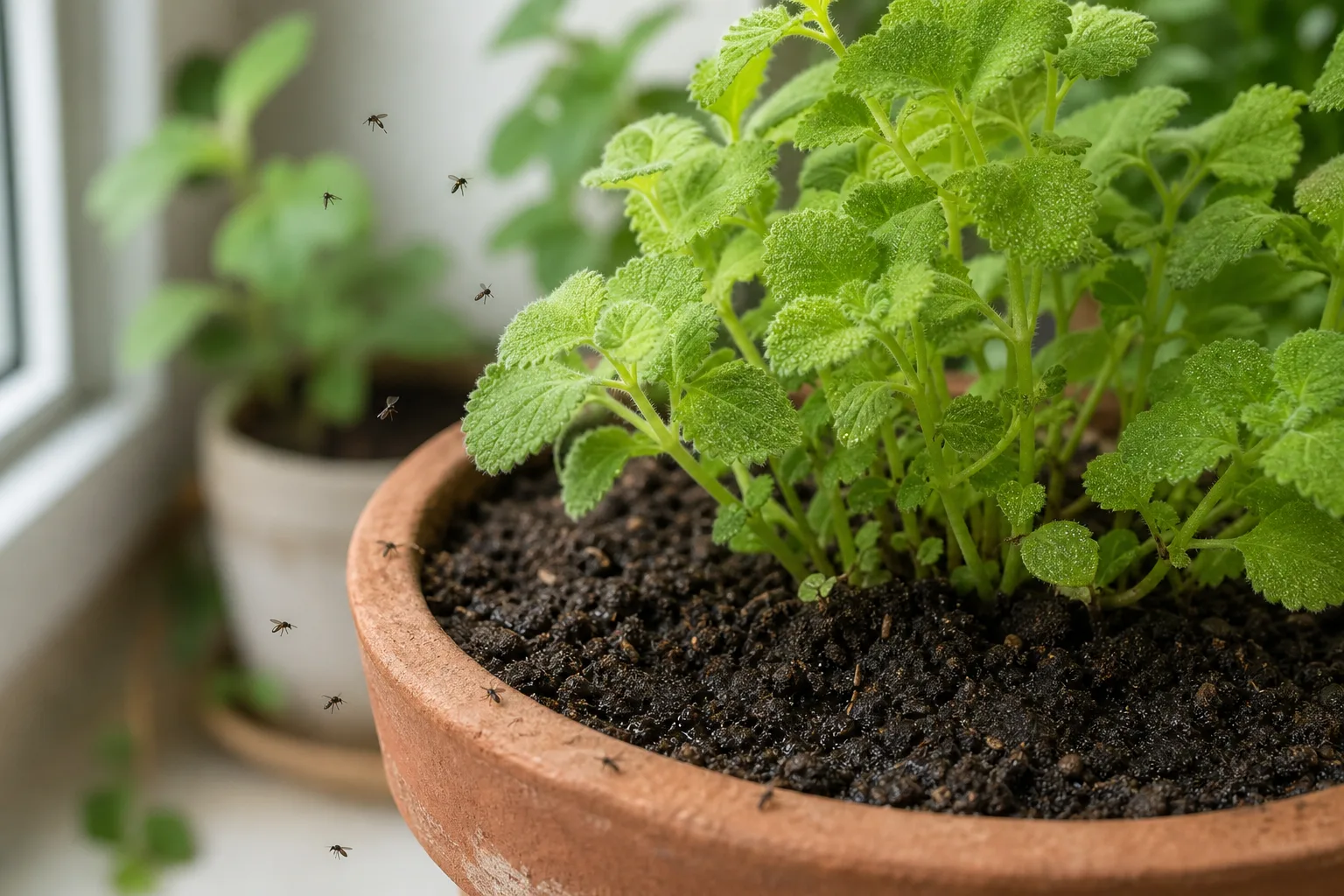
Fungus Gnats on Ajwain Plant (Indian Borage): Causes, Checks & Fixes
This guide covers fungus gnats on Ajwain Plant. See also the general Fungus Gnats guide, watering, and light pages for this plant.
Fungus Gnats on Ajwain Plant (Indian Borage): Causes, Checks & Fixes
Quick answer
Fungus gnats on Ajwain Plant (Plectranthus amboinicus, also called Indian Borage, Cuban Oregano, or Mexican Mint) mean the soil surface has stayed wet too long for a semi-succulent kitchen herb. The flies are annoying, but on this species they are mainly a watering and drainage signal-the same damp conditions that invite edema, yellow lower leaves, and eventual root rot if you do not correct the rhythm.
First step: stop watering and run the top 2–3 cm dry test from the ajwain watering guide-finger, chopstick, or pot-lift-before you add traps, drenches, or sprays. Larvae in the top inch of mix cannot survive once that layer stays dry for several days.
Why Ajwain gets fungus gnats (and why it matters more than on leafy herbs)
Ajwain is not basil. NC State Extension describes Plectranthus amboinicus as preferring a hot, dry location with well-drained soil and only occasional irrigation, and UF/IFAS notes the same well-drained, occasional-watering preference for Cuban oregano. Thick, velvety leaves and square succulent stems store water between drinks. When growers water this herb like mint-frequent splashes that keep the surface damp-larvae have exactly the habitat they need.
Semi-succulent biology and surface moisture
Adult fungus gnats lay eggs in consistently moist organic potting mix. Larvae feed on fungi, algae, and decaying organic matter in the top layer, and may nibble fine roots when populations are high. On a typical 15–20 cm kitchen windowsill pot, daily or every-other-day top watering often wets only the upper centimeters while deeper soil stays cooler and slower to dry. That is enough for generations of gnats even when the plant’s thick leaves still look fine.
The wet-dry cycle Ajwain actually needs-a deep soak, then a real dry-down, then another soak-is the opposite of what fungus gnats prefer. Gnats showing up on an otherwise green Ajwain usually means your watering rhythm has drifted toward “constantly damp surface,” not that a random flying pest found your windowsill.
Fuzzy leaves and slow evaporation at the soil line
Ajwain’s trichomes-the fine hairs that make leaves velvety-slow evaporation from leaf surfaces. That adaptation helps the plant in hot sun outdoors, but indoors it has a side effect: sprawling stems overhang the pot rim and shade the soil line, trapping humid air right where gnats breed. Overhead watering that splashes fuzzy foliage also keeps the crown damp longer without helping roots.
Do not mist Ajwain leaves while fighting gnats. Misting adds surface moisture, raises fungal risk on foliage, and works against the dry-down you need at the soil line. If indoor air is dry in winter, adjust room humidity or watering interval-not leaf wetting.
What fungus gnats look like on Ajwain
Adults around the pot
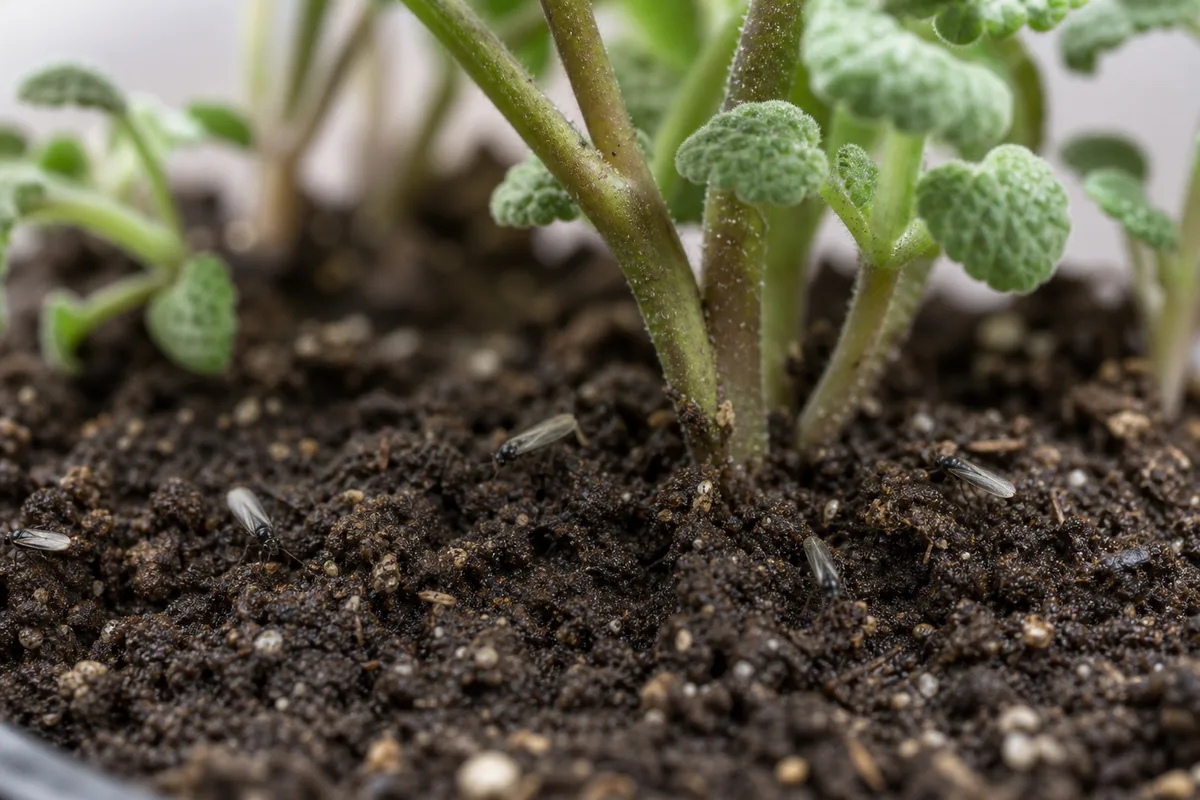
Fungus Gnats symptoms on Ajwain Plant - compare with healthy tissue on the same plant.
Adult fungus gnats are small, delicate dark flies about 1/8 inch long with long legs and translucent wings folded on their backs. On Ajwain, you will see them:
- Hovering an inch or two above the soil when you water or bump the pot
- Resting on the rim of a 15–20 cm kitchen pot or crawling across damp topsoil
- Gathering near yellow sticky traps placed at soil level-not around fruit bowls
They are weak fliers compared with houseflies. A cloud that rises from the pot when you move a trailing stem is classic fungus-gnat behavior on a moisture-heavy herb pot.
Larvae in the top inch of mix
Larvae are pale, translucent worms with dark heads, roughly 1/4 inch long when mature. Gently scrape the top centimeter of mix with a chopstick: small worms curling away confirm larvae. On Ajwain’s relatively shallow indoor root ball, most feeding stays in that upper layer-exactly where chronic top-watering keeps conditions favorable.
Signs your Ajwain is already overwatered (edema, soft stems)
Gnat damage to established Ajwain roots is usually minor unless rot is also present. Watch the plant, not only the flies:
- Edema - water-soaked blisters on fuzzy leaf undersides
- Yellow lower leaves while mix stays dark and damp
- Soft square stems at or just above soil level
- Sour or swampy smell when you lift the pot
Firm thick leaves and sturdy stems with only a few flies point to a correctable moisture habit. Mushy base tissue means escalate to root rot on ajwain-gnat treatment alone will not fix decaying roots.
Confirm fungus gnats in 5 checks
- Fly behavior - Slender dark insects hovering over the Ajwain pot, not round reddish-eyed flies around the fruit bowl (see lookalikes below).
- Larva scrape - Pale worms in the top inch of mix when you disturb the surface.
- Watering link - Flies appear within a day of watering and numbers drop when the surface stays dry for a week.
- Stem firmness - Square stems firm at the base; soft stems mean check for rot, not only gnats.
- Surface partners - White fuzzy mold on topsoil or chronic mold on soil often shares the same wet-surface habitat.
Fungus gnats vs fruit flies (kitchen herb growers)
| Signal | Fungus gnats | Fruit flies |
|---|---|---|
| Body shape | Slender, long legs, mosquito-like | Rounder, compact, housefly-like |
| Eyes | Small, dark | Often reddish and prominent |
| Where you see them | Over and on moist potting soil | Near fruit, drains, fermenting scraps |
| What traps work | Yellow sticky traps at soil level | Vinegar or ferment traps in kitchen |
| Fix for Ajwain pot | Dry soil surface, BTI if needed | Remove food source-not a plant-soil issue |
Fungus gnats and fruit flies are distinct insects; vinegar traps that catch kitchen fruit flies will not monitor or control gnats on your herb pot.
First fix: dry the pot using the Ajwain watering test
Let the top 2–3 cm of mix dry completely before the next watering. Use the finger test, chopstick test, or pot-lift test detailed in the ajwain watering guide. On a semi-succulent herb in a 15–20 cm pot, that often means waiting several extra days beyond what you would allow for basil-especially in cool winter when evaporation slows.
Practical dry-down steps:
- Pour out any water sitting in the saucer after every watering
- Move the pot slightly away from overhanging trailing stems so the soil line gets airflow
- Remove fallen velvety leaves from the surface-they hold moisture and feed larvae
- If you have been top-watering daily from habit, switch to deep soak only when dry, not calendar splashes
This single correction breaks the gnat life cycle because larvae cannot survive in dry soil. Do not reach for insecticides until you have started the dry-down and confirmed stems are still firm.
Treat adults and larvae (after dry-down)
Once the surface is drying between waterings, add targeted tools if adults keep appearing.
Yellow sticky traps
Place yellow sticky traps at soil level beside the pot-one per small windowsill herb is enough. Replace when coated or every few weeks. Traps catch egg-laying adults and help you track whether counts are falling over seven to fourteen days. They do not replace drying the soil.
BTI soil drench
If larvae persist after two weeks of proper dry-down, use a Bacillus thuringiensis israelensis (BTI) drench-the same biological control found in mosquito bits products labeled for fungus gnat larvae. BTI targets fly larvae in moist soil and is commonly used on houseplants; UC IPM notes repeated applications at roughly five-day intervals because BTI does not persist long indoors.
For an edible Ajwain pot: apply only after reading the label, avoid harvesting leaves the same day, and rinse leaves you plan to cook after the soil surface dries. Many kitchen-herb growers clear mild infestations with dry-down plus traps alone.
What not to spray on fuzzy Ajwain leaves
Do not use broad pesticide sprays, horticultural oil, or soapy foliar mixes on Ajwain’s velvety leaves. Water droplets and spray residue sit on trichomes and leave permanent pale water spots that do not heal. Gnats live in soil, not on foliage-treating leaves adds risk without targeting larvae. If you need chemical help, keep it in the root zone (BTI drench) or use traps for adults.
Do not keep soil constantly moist to “help” a stressed plant. Do not repot solely for gnats unless mix is clearly broken (always wet, hydrophobic, or sour-smelling). Do not confuse this with aphids on tender new shoots-those are soft-bodied insects on stem tips, not flies over soil.
Recovery timeline
Adult counts on sticky traps should drop within one to two weeks once the surface stays dry between waterings. Full control often takes three to four weeks because gnat generations overlap-eggs already in mix hatch even after adults decline.
Signs you are winning:
- Fewer flies when you water or move the pot
- Top 2–3 cm dry on schedule without the plant wilting from thirst
- Firm square stems and thick leaves at branch tips
- New growth emerging clean after a dry-down cycle
Signs you need to escalate:
- Stems softening at the base while soil stays wet
- Yellowing spreading up the plant with sour-smelling mix
- Gnat clouds unchanged after four weeks of dry-down plus traps
- Larvae still abundant in the top inch after two BTI cycles
That pattern points to overwatering damage or root rot, not a pest-only problem.
When gnats mean root rot - not just pests
Fungus gnats are common on overwatered houseplants and usually cause only cosmetic nuisance to adults. On Ajwain, the bigger risk is what the gnats indicate: chronic moisture on a species that evolved for sharp dry-downs.
Treat as a root emergency when:
- Stems are mushy at soil level
- Lower leaves yellow while mix stays damp for ten or more days
- Roots are brown and slimy when you slide the plant partway out of the pot
- The same pot had mold on soil, edema, or wilting that did not improve after one deep soak
Follow the dry-down and root-trim protocol in the overwatering and root rot guides. Gnat traps and BTI can run in parallel, but they do not replace fixing wet, decaying roots.
Mistakes Ajwain growers make
- Watering like basil or mint - Shallow frequent splashes keep the surface damp; Ajwain needs soak-then-dry.
- Ignoring winter slow-down - Same summer interval in December leaves mix wet for weeks; gnats persist in cool, slow-drying soil.
- Misting leaves for “humidity” - Adds crown moisture; conflicts with gnat and fungal prevention.
- Spraying fuzzy foliage - Water spots are permanent; larvae are in soil anyway.
- Harvesting same day as drenches - Edible leaves need a clean interval after any soil treatment.
- Assuming gnats equal rot - Firm stems and dry-down-responsive plants often recover with moisture correction alone.
Prevent gnats on Ajwain long term
Match watering to semi-succulent biology: deep soak when the top 2–3 cm is dry, empty saucers, and use gritty mix with perlite as described in the ajwain soil guide. On a kitchen windowsill, keep one yellow sticky trap at soil level during monsoon or winter months when evaporation is slow-that catches the first adults before generations build.
Winter dormancy adjustments
Ajwain growth slows in cool months. Stretch watering toward every two to four weeks and confirm with the chopstick test before every soak. A pot that dried in five days in summer may take two to three weeks in winter; gnats exploit that lag if you water on habit instead of soil readings.
Harvest-safe ongoing care
Pinch stems regularly for cooking, but remove fallen leaves from the soil surface promptly. When you bring outdoor pots indoors in autumn, inspect the top layer for larvae before placing the pot near other herbs-hitchhiking gnats are a common source of winter infestations.
Pet and kitchen safety notes
ASPCA lists Indian Borage (Coleus ampoinicus) as toxic to cats and dogs if ingested, with vomiting, diarrhea, and depression possible from essential oils in the foliage. That matters in a kitchen-herb setup where pets investigate pots and fallen leaves.
- Keep BTI-treated pots and sticky traps where pets cannot chew them
- Pick up dropped velvety leaves after pruning or harvest
- Rinse leaves before cooking; avoid harvesting immediately after soil drenches
- Call your veterinarian or ASPCA Animal Poison Control at (888) 426-4435 if a pet eats a large amount of plant material
For species baseline care and toxicity context, see the ajwain plant overview.
Conclusion
Fungus gnats on Ajwain Plant are a moisture diagnostic, not a mysterious invasion. On Plectranthus amboinicus, they flag surface soil that stays wet too long for a semi-succulent kitchen herb-often the same pattern that precedes edema and root rot. Confirm slender flies and larvae in the top inch, run the top 2–3 cm dry test first, then add sticky traps and BTI only if adults persist. Judge success by falling trap counts, firm square stems, and a soil surface that stays dry between soaks-not by how many flies you swat in a single afternoon.
When to use this page vs other Ajwain Plant guides
- Ajwain Plant watering guide - Use for routine moisture checks before assuming fungus gnats is the main issue.
- Ajwain Plant problems hub - Browse all 16 common issues on this species.
- Overwatering on Ajwain Plant - Different entry point when symptoms overlap with fungus gnats.
- Mold on Soil on Ajwain Plant - Different entry point when symptoms overlap with fungus gnats.
- Root Rot on Ajwain Plant - Different entry point when symptoms overlap with fungus gnats.