Aphids on Ajwain Plant (Indian Borage): Causes, Checks &
Quick answer
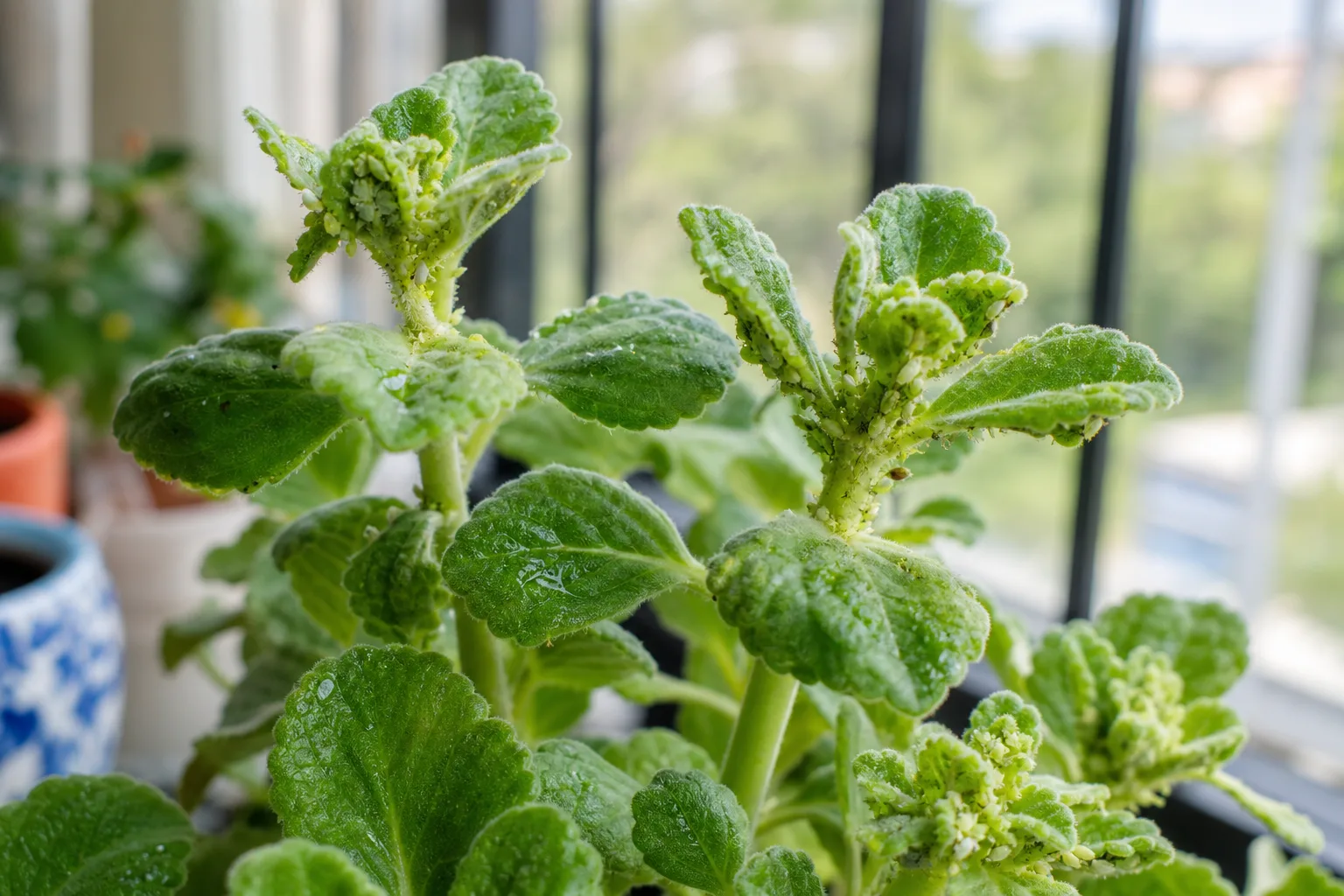
Aphids on Ajwain Plant cluster on the newest fuzzy shoots and leaf pairs, leaving sticky honeydew on thick aromatic leaves. First step: isolate the pot and rinse colonies off with a firm stream of water, targeting stem tips and leaf undersides.
Aphids on Ajwain Plant (Indian Borage): Causes, Checks & Fixes
This guide covers aphids on Ajwain Plant. See also the general Aphids guide, watering, and light pages for this plant.
Aphids on Ajwain Plant (Indian Borage): Causes, Checks & Fixes
Quick answer
You pinched Ajwain for harvest and now the softest new shoots are coated in tiny insects-that is the classic aphid pattern on Plectranthus amboinicus (Indian Borage, Cuban oregano), not the ajwain seed spice Trachyspermum ammi. Aphids cluster on tender harvest regrowth and in fuzzy leaf pairs along square stems, leaving sticky honeydew on thick aromatic leaves.
Before you spray anything, run the firm-leaf check: thick mature leaves that stay plump while only the tips curl and feel sticky point to sap feeders. Soft, wrinkled leaves across the whole plant on dry soil point to thirst-see the underwatering guide instead.
First step: isolate the pot away from curry leaf, mint, and other kitchen herbs, then rinse colonies off with a firm stream of water targeting stem tips and leaf undersides. Aphids are soft-bodied and knock off easily with water spray; repeat every two to three days before you escalate to soap or neem on edible foliage.
What aphids look like on Ajwain Plant
On this sprawling Lamiaceae herb, aphids colonize the tissue you harvest first-not the thick mature leaves lower on the stem.
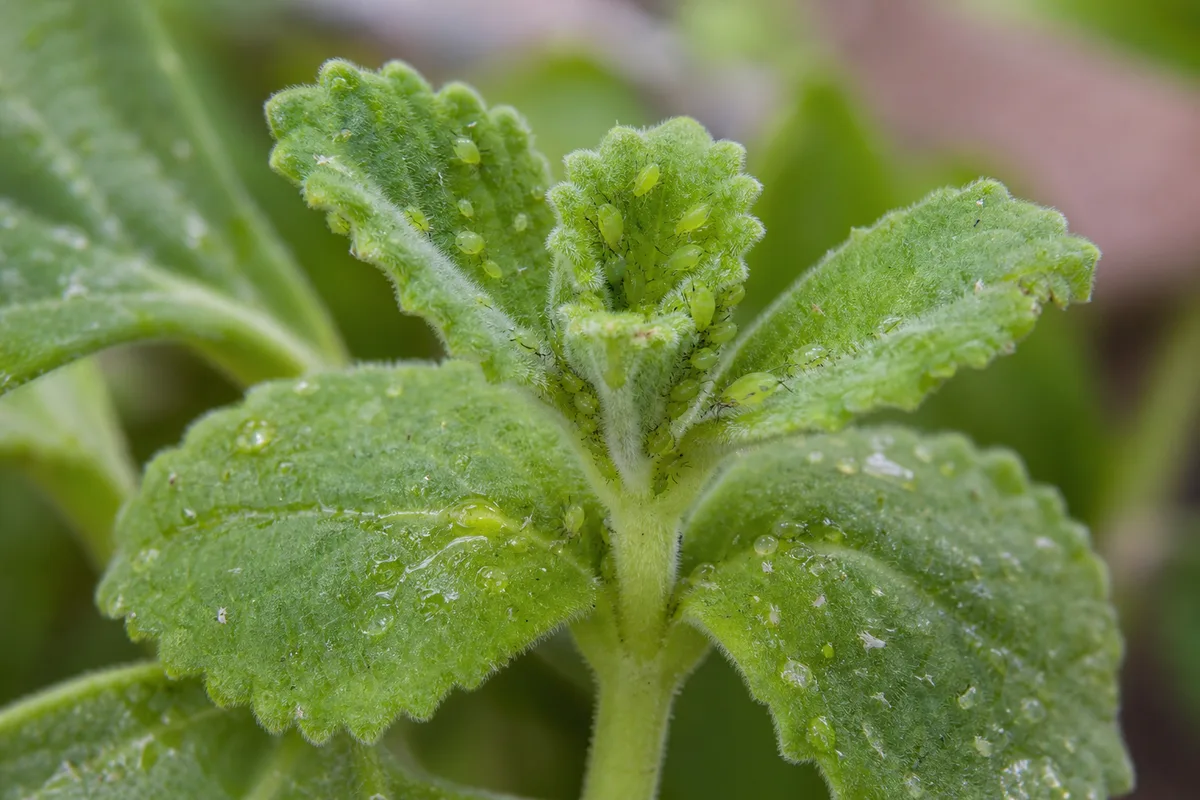
Aphids symptoms on Ajwain Plant - compare with healthy tissue on the same plant.
Typical signs:
- Small pear-shaped insects-green, black, pink, or yellow-clustered on new shoots and in fuzzy leaf pairs
- Colonies tucked where opposite leaves meet the square succulent stem
- Sticky, shiny honeydew on leaf surfaces or pot rims
- Ants traveling up stems toward branch tips
- Curling, yellowing, or stunted newest leaves while older thick leaves stay firm
- White cast skins on leaf undersides after molting
- Sooty mold darkening sticky patches on fuzzy foliage
Ajwain’s thick, fleshy mature leaves often look healthy from across the kitchen while a colony builds unnoticed in the fuzzy crotch of opposite leaf pairs at the stem tip you pinched last week. That harvest-regrowth architecture is why aphid damage shows up right when you planned to cook with the plant.
Honeydew and follow-on problems: Aphids excrete sugary honeydew as they feed. On fuzzy Ajwain leaves, stickiness collects dust and can turn into black sooty mold-the same secondary chain described on our mealybugs guide. Ants sometimes arrive to harvest honeydew and will protect aphid colonies; if you see ant trails on a shared herb shelf, inspect leaf pairs immediately.
Why Ajwain Plant gets aphids
Aphids are not proof you failed as a grower. They arrive on new nursery plants, open balcony windows, or infested neighbors on a kitchen windowsill. Ajwain has a few traits that make outbreaks common once aphids are in the room.
Harvest regrowth is the main feeding zone. Ajwain Plant is grown for frequent leaf harvest, and each pinching event per the pruning guide sends out tender shoots with thin new leaves. Aphids gather on unopened leaf pairs and stem tips where sap is easiest to reach-exactly the tissue you want for cooking.
Warm, fast growth speeds outbreaks. This herb grows rapidly in the 20–38°C range and during monsoon-active months. Female aphids give birth to live young and populations can expand within days when temperatures stay warm and new shoots keep appearing.
Indoor and balcony placement invites hitchhikers. New nursery plants, open windows in warm weather, and nearby infested herbs on a shared shelf can introduce winged aphids. Poor airflow around dense sprawling stems-common on crowded kitchen windowsills-lets colonies establish in protected leaf axils.
Soft, over-fed shoots are easier targets. Heavy nitrogen fertilizer during strong light produces succulent growth aphids favor. Ajwain Plant thrives in modest nutrient conditions per the fertilizer guide; weak stretched indoor growth combined with stagnant air is a common setup for pest buildup.
Aromatic oils do not make the plant immune. The strong oregano-like scent comes from oils in thick leaves, which can deter some insects outdoors. Indoor specimens with mealybugs and spider mites still suffer pest pressure when airflow is poor-aphids fit the same pattern on soft new tissue. See our spider mites guide if you see fine webbing instead of moving pear-shaped insects.
How to confirm the cause
Work through these checks before you treat. The goal is to confirm live aphids-not to guess from one curled tip on a plant you were about to harvest.
- Isolate first - Move the pot away from other kitchen herbs before handling so winged aphids do not walk to neighboring plants.
- Tip scan - Start at the newest shoots and any stems you cut back in the last two weeks.
- Leaf-pair check - Spread opposite leaves gently; colonies often hide in the fuzzy crotch where they meet the stem.
- Honeydew test - Wipe a leaf; if stickiness returns within a day, sap feeders are still active.
- Movement check - Touch a cluster with a cotton swab; aphids crawl or drop, confirming soft-bodied insects.
- Firmness check - Thick leaves that stay firm and only show damage on tips point to pests. Soft, wrinkled leaves on dry soil point to underwatering-cross-check the watering guide before you spray.
Confirmed diagnosis requires pear-shaped insects plus stickiness or ants on harvest regrowth or leaf pairs along square stems. A single yellow lower leaf on an otherwise firm plant is not enough.
Lookalike symptoms
| What you see | Likely cause | Quick check |
|---|---|---|
| Soft pear-shaped clusters on new shoots | Aphids | Crawl when touched; sticky honeydew |
| White cottony tufts in leaf pairs at square stems | Mealybugs | Smears pink when crushed; see mealybugs guide |
| Hard brown immobile bumps on woody stem sections | Scale | Fingernail test-shell does not move |
| Fine webbing and yellow stippling on older leaves | Spider mites | See spider mites guide-no pear-shaped clusters |
| Brown dry edges after sudden sun move | Sun scorch | No insects; damage on exposed blades only |
| Soft wrinkled leaves, dry light pot | Underwatering | No stickiness; leaves feel thin, not coated |
Unlike mealybugs, aphids are not cottony white. Unlike scale, they move when disturbed. Unlike spider mites, they do not leave fine webbing or yellow stippling across older leaves. Unlike underwatering, the thick leaves usually stay plump-wrinkling from thirst feels soft and dry, not sticky.
First fix for Ajwain Plant
Isolate the pot and rinse colonies off with a firm stream of water.
That single action knocks off soft-bodied aphids you can reach and confirms the pest is alive before you commit to sprays on edible foliage. UMN Extension recommends a strong spray of water to physically knock aphids off plants; on Ajwain’s fuzzy semi-succulent leaves, rinse in early morning or evening so foliage dries before strong afternoon sun hits a balcony pot-wet succulent leaves in peak heat can scorch per our light guide.
Once isolated and rinsed:
- Target new shoots, leaf undersides, and stem joints where opposite leaves meet the square stem
- Repeat every two to three days to knock down nymphs that hatch between rinses
- Wipe honeydew from thick fuzzy leaves with a damp cloth so sooty mold does not spread
- Check neighboring kitchen herbs you have not yet isolated
Do not repot, fertilize heavily, or change light and watering on the same day you start treatment. Make one correction first so you can read the plant’s response.
Morning and evening rinse timing for balcony pots
During monsoon or hot balcony season, timing matters as much as pressure. Rinse when leaves can dry within a few hours-not at midday on a sun-exposed rail. Move the pot to bright indirect light for 24 hours after a heavy rinse if afternoon sun is intense. If tips still scorch despite correct timing, review light placement before you blame the rinse itself.
Insecticidal soap and neem on edible Ajwain leaves
If colonies remain after two or three rinse cycles, apply insecticidal soap or neem oil labeled for ornamentals. Clemson HGIC notes these are contact insecticides-they only kill aphids they touch, so coverage must reach leaf pairs, stem joints, and undersides. Repeat every five to seven days for two to three cycles.
Harvest wait: Do not cook with leaves sprayed the same day. Follow the product label re-entry interval before any harvest-typically 24 to 48 hours or longer. When in doubt, pinch and use only from upper stems that were never coated in spray.
Spot-test first: Insecticidal soap can injure sensitive foliage in direct sun or on drought-stressed plants. Test one hidden fuzzy leaf, wait 48 hours, then treat the whole plant in morning or evening.
CSU Extension notes that imidacloprid systemic products are not labeled for indoor food crops-on a kitchen herb, stick to water rinse and contact sprays rather than soil-applied systemics you might use on ornamental houseplants.
Pinch-and-root alternative for coated shoots
Pinch off heavily infested stem tips if spray cannot reach every hiding spot in dense growth. Ajwain Plant roots easily from cuttings-follow the propagation guide and sacrifice a coated shoot rather than fighting a colony deep inside a mat of stems.
Pet and kitchen safety note
Indian Borage is toxic to cats and dogs if chewed, with essential oils that can cause vomiting and diarrhea. Keep pets away from freshly rinsed or sprayed foliage until it dries, wear gloves when handling heavily infested stems, and contact your veterinarian if a pet ingests treated leaves or large amounts of plant material. Do not assume the herbal scent means the plant is safe for pets to nibble.
Recovery timeline
Visible aphids should clear within one to two weeks of consistent rinsing or soap treatment. Expect clean new shoots within two to four weeks during active warm-season growth. Distorted young leaves will not fully flatten once they harden. Stems you pinched away can be replaced by rooting healthy cuttings in moist soil within one to two weeks.
What can recover: New shoots that emerge after treatment should open clean and usable for harvest within two to four weeks. Firm thick leaves throughout treatment are a good sign.
What may not recover: Leaves that already curled or yellowed while infested often stay cosmetically damaged. They still photosynthesize, but they will not fully green up.
Signs treatment is working: Fewer clusters at each check, no fresh honeydew on new tissue, ants disappearing, and clean fuzzy regrowth at pinched stem tips.
Signs the problem is worsening: New shoots repeatedly emerge coated after three full treatment cycles, sooty mold covers most fuzzy foliage, or ants make colonies impossible to rinse away.
Yellowing lower leaves with soggy soil point to overwatering-not aphids-and need a different response per the overwatering guide immediately.
Harvest and kitchen safety after treatment
Because Ajwain leaves are edible, treatment timing matters as much as pest removal.
- After water rinses alone: You can harvest once foliage is dry and you have rinsed leaves under cool running water. Honeydew-coated but unsprayed leaves should be washed before cooking-stickiness alone is not a reason to discard the whole plant if insects are gone.
- After insecticidal soap or neem oil: Follow the product label re-entry interval before any harvest. Do not cook with leaves sprayed the same day.
- Pinch strategy: When in doubt, harvest only from upper stems that were never coated in spray or heavy honeydew, and pinch away infested sections for propagation rather than trying to clean every fuzzy crotch before dinner.
For full species context and naming clarity between Ajwain leaf-herb and true ajwain seed spice, see the ajwain plant overview.
What not to do
- Do not increase watering because tips look stressed-check whether thick leaves are firm first.
- Do not apply oil sprays at midday on sun-exposed balcony plants.
- Do not harvest leaves the same day you spray soap or neem.
- Do not use harsh homemade dish-soap mixes that can burn fuzzy Lamiaceae foliage-use labeled insecticidal soap instead.
- Do not ignore ants-they protect aphid colonies from predators.
- Do not assume the strong herbal scent means pests will leave on their own.
- Do not return the plant to the herb shelf until two weekly inspections find zero live aphids.
How to prevent aphids next time
Quarantine every new Ajwain Plant for two weeks before placing it near other herbs. Inspect stem tips and leaf pairs weekly during spring and monsoon growth spurts. Rinse foliage occasionally when you water, especially after moving plants between balcony and indoor shelf. Keep bright indirect light to partial sun per the light guide, good drainage, and dry-down watering per the watering guide so regrowth stays firm rather than overly soft.
When you harvest, remove the top few centimeters of stem regularly so the plant bushes out with healthy tissue rather than leaving one long soft shoot that aphids can colonize undisturbed. Avoid stacking nitrogen feeds on a plant already pushing fast warm-season growth.
When to escalate
Escalate if new shoots repeatedly emerge coated in aphids after three full treatment cycles, if sooty mold covers most fuzzy foliage, or if ants make colonies impossible to rinse away. Chronic feeding during peak growth can stall harvest quality and weaken sprawling stems over months even when roots remain healthy.
Aphids alone rarely kill a mature Ajwain Plant with firm leaves and active roots, but they can ruin a harvest flush and spread to curry leaf, mint, or other Lamiaceae herbs on the same shelf. For chronic infestations that survive repeated contact sprays on an edible herb, contact your local cooperative extension office for integrated pest management options rather than reaching for unlabeled systemic products indoors.
One takeaway before you close this tab: sticky curled tips on firm thick leaves mean aphids-soft wrinkled leaves on dry soil mean thirst. Check leaf firmness before you change watering or spray on day one.
When to use this page vs other Ajwain Plant guides
- Ajwain Plant watering guide - Use for routine moisture checks before assuming aphids is the main issue.
- Ajwain Plant problems hub - Browse all 16 common issues on this species.
- Mealybugs on Ajwain Plant - Different entry point when symptoms overlap with aphids.
- Spider Mites on Ajwain Plant - Different entry point when symptoms overlap with aphids.
- Yellow Leaves on Ajwain Plant - Different entry point when symptoms overlap with aphids.