Ajwain Plant Fertilizer Guide: NPK, Schedule, and Organic
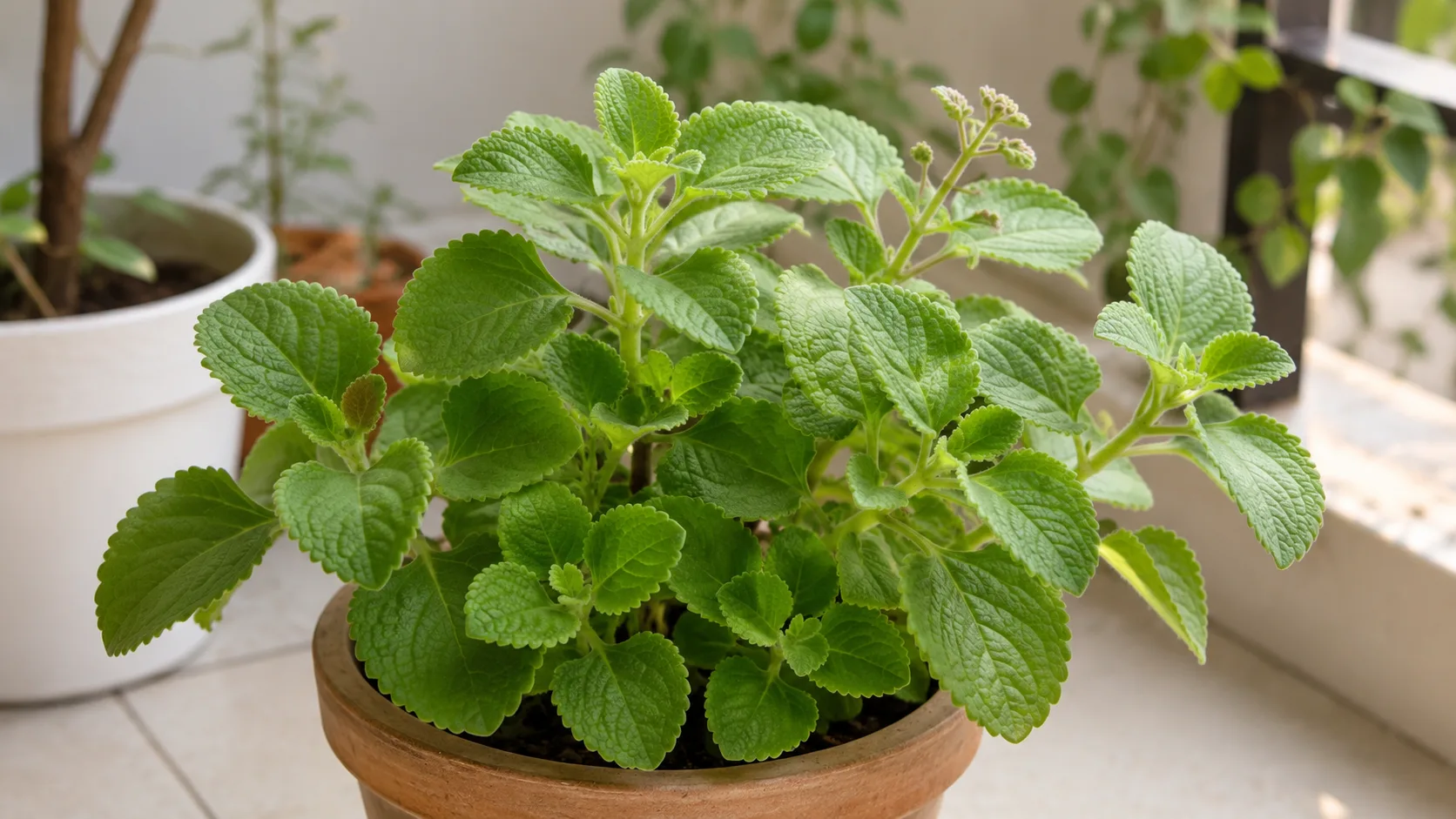
Ajwain Plant Fertilizer Guide: NPK, Schedule, and Organic Options
Ajwain Plant Fertilizer Guide: NPK, Schedule, and Organic Options
There’s a moment every ajwain plant owner recognizes: a sprig that smells like thyme, oregano, and carom seeds all at once, plucked from a windowsill. That signature aroma comes from volatile oils - mostly carvacrol and thymol - stored in the thick, fuzzy leaves of Plectranthus amboinicus. Those oils are the same phenolic monoterpenes documented in peer-reviewed analyses of the species’ essential oil, and they are also why the plant responds to feeding so dramatically. Push it too hard with nitrogen and the leaves balloon into soft, watery growth that smells like very little. Feed it too little and the new growth stalls, the plant gets leggy, and the kitchen harvest thins out.
The right fertilizer routine sits in the middle. This guide walks through the NPK ratio that suits ajwain plant best, the seasonal schedule that keeps the leaves pungent, the organic options that build flavor instead of stripping it, and the warning signs of over-fertilization that almost always show up before the plant is in real trouble.
If symptoms persist, see the Yellow Leaves on Ajwain Plant guide.
What “Ajwain Plant” Actually Means (Plectranthus amboinicus vs Trachyspermum ammi)
The name “ajwain” causes more confusion than almost any other kitchen herb, because two very different plants wear it. The plant most houseplant owners and Indian home gardeners grow as “ajwain plant,” “ajwain patta,” “doddapatre,” “karpooravalli,” “Indian borage,” “Cuban oregano,” or “Mexican mint” is Plectranthus amboinicus (synonym Coleus amboinicus), a semi-succulent perennial in the mint family Lamiaceae. It never produces carom seeds. What it does produce are thick, fuzzy, scalloped leaves that smell and taste like ajwain.
The plant that actually grows the spice sold in jars as “ajwain” or “carom seeds” is Trachyspermum ammi, an annual herb 60–90 cm tall in the carrot family Apiaceae, native to dry soils in India, Iran, and Afghanistan. It looks completely different - feathery, fennel-like foliage and umbel flowers that mature into the pungent seed-like fruits used in tempering and spice mixes.
The fertilizer needs of these two plants are not the same. T. ammi is grown for seed in field cultivation and responds to agronomic fertilizer rates described in spice-crop literature. P. amboinicus is grown for leaves in pots and kitchen gardens, where the goal is steady, modest nutrition to support oil-rich foliage without burning the relatively shallow, semi-succulent root system.
This guide is written for the leaf herb - the Plectranthus amboinicus that most readers mean when they search for “ajwain plant fertilizer.” If you are growing true Trachyspermum ammi for seed, the schedules and ratios below are not the right reference.
Why Ajwain Plant Needs Light, Not Heavy, Feeding
Plectranthus amboinicus evolved on rocky slopes, coastal bush, and loamy or sandy flats in Southern and Eastern Africa, the Arabian Peninsula, and India. That origin shows up in the plant’s leaf structure: thick, water-storing, aromatic, and built to survive lean soils and irregular rainfall. The roots are correspondingly shallow and sensitive.
A consistent observation across horticultural references is that Plectranthus “do[es] not show [its] best coloration if over fertilized” and that growers should “be conservative and consistent” (Travaldo’s blog, Plectranthus amboinicus care and culture). Travaldo also notes that half-strength liquid fertilizer applied every two weeks over the growing season is sufficient for the genus, and that container plants respond well to slow-release balanced mixes. Other growers recommend a more conservative every-4-to-6-week rhythm (PlantIn; Sai Nursery), reflecting the same underlying principle: Ajwain Plant overview prefers steady, low-strength feeding to heavy, infrequent doses.
A peer-reviewed study from the Federal University of Maranhão confirmed the same pattern in field settings. When Plectranthus amboinicus was grown under two different organic fertilization regimes, leaf nutrient content rose with poultry manure plus bovine manure, but the chemical profile of the essential oil - measured by gas chromatography–mass spectrometry - stayed remarkably stable across treatments. Carvacrol, the dominant aroma compound, remained the major constituent regardless of fertilizer type. The practical translation is straightforward: feeding affects how much leaf the plant produces, but does not change the chemotype that gives the plant its flavor. Over-feeding gives you more leaf of the same flavor; under-feeding gives you less. Light, consistent feeding is the practical sweet spot.
A separate peer-reviewed study in Industrial Crops & Products showed that phosphorus addition combined with arbuscular mycorrhizal fungi inoculation roughly doubled the essential-oil content of P. amboinicus shoots compared with non-inoculated controls. That result is a useful signal for kitchen gardeners who want to push flavor without pushing raw NPK: building soil biology (through compost, worm castings, and mycorrhizal-friendly practices) gives you a bigger essential-oil payoff than a heavier dose of 10-10-10 ever will.
The Best NPK Ratio for Ajwain Plant
Balanced Synthetic Feeds (10-10-10 or 20-20-20)
For a kitchen gardener who just wants a simple liquid fertilizer, a balanced water-soluble formula is the easiest starting point. PlantIn’s care guide for Plectranthus amboinicus recommends an NPK of 10-10-10 applied every 4–6 weeks during the growing season, diluted to half the label strength. Sai Nursery gives the same advice: a balanced, water-soluble fertilizer every 4–6 weeks in spring and summer, reduced in fall and winter.
If you prefer a slightly more foliage-leaning ratio for lush leaf production - useful if you cook with the plant heavily - a 20-20-20 mixed at half strength works equally well. The key is the dilution, not the brand. A 10-10-10 at full strength will build up salts fast in a 6-inch or 8-inch pot; the same 10-10-10 at half strength is a much gentler steady feed. Yarafert’s indoor plant guide recommends using 1 teaspoon of 10-10-10 per gallon of water as a starting dilution for indoor container plants, then watching the plant’s response.
The case for going balanced rather than nitrogen-heavy is partly about flavor. Aromatic herbs grown with too much nitrogen produce abundant but bland foliage, because the plant allocates energy to leaf mass instead of secondary metabolites like carvacrol and thymol. Clemson HGIC puts the same point bluntly: most herbs do not need a highly fertile soil, and “very fertile soils tend to produce lush leaves that lack flavor.” For a plant whose value is its essential oil, that recommendation matters.
Organic and Lower-Salt Alternatives
Aromatic herbs respond as much to soil biology as to raw NPK numbers. Several extension services and herb-focused guides recommend an organic, low-salt approach for culinary herbs in general, and Plectranthus fits that pattern well. The Michigan State University Extension study on organic culinary herb production used an 8-4-4 turkey-litter-based slow-release fertilizer (Suståne) at 8.4 to 12.6 pounds per cubic yard of substrate to finish herbs like basil, parsley, and sage in containers. Note the low nitrogen and the high organic matter - exactly the profile that suits a leaf herb.
For a ready-to-use organic liquid, the most consistent recommendations across the herb-fertilizer literature are fish emulsion and seaweed/kelp extracts, often used together, almost always diluted to half the label rate for containers. The reasons are practical: fish emulsion supplies steady nitrogen and amino acids; kelp supplies more than 60 trace minerals plus natural growth hormones; and the combination has a low salt index relative to synthetic 10-10-10. The result is steadier growth with far less risk of tip burn.
Fertilizer Schedule by Season
| Season | Frequency | Strength | Notes |
|---|---|---|---|
| Spring (new growth → early summer) | Every 4–6 weeks | Half label rate | Skip the first 4–6 weeks after Ajwain Plant repotting guide |
| Summer (peak growth) | Every 3–4 weeks | Half label rate | Water the day before, never on dry soil |
| Autumn (growth slows) | Every 6–8 weeks | Half label rate | Switch to lower-nitrogen if possible; add worm castings top-dress |
| Winter (dormancy) | Pause | None | Resume only when new growth appears at the tips |
Spring: Ramp Up with New Growth
Spring is when ajwain plant pushes out its first wave of new leaves after the winter slowdown. As soon as you see active new growth at the stem tips - usually when daytime temperatures hold above roughly 18 °C (65 °F) - start your feeding schedule. The first spring feed should be at half the label rate. Hold off for 4–6 weeks after any repotting; fresh potting mix already contains starter nutrients, and young roots are sensitive to salt. A single half-strength feed of 10-10-10 or fish emulsion, applied to already-moist soil, is enough for the first round. Per NC State Extension’s indoor-herb guidance, herbs indoors need only modest fertilizer, and a synthetic feed applied at ¼–½ of the label rate is a sensible default.
Summer: Peak Growing Frequency
Summer is the plant’s main production window. This is the season when Plectranthus amboinicus is actively expanding leaves, and when volatile-oil concentration in those leaves tends to be at its seasonal peak in field studies. In container culture, plan on a feed every 3–4 weeks through late spring and summer - closer to the 2–4 week end of the spectrum if you are harvesting heavily, closer to 4 weeks if the plant is established in a large pot. Always water the plant the day before, then pour the diluted fertilizer over the moist soil. Never apply fertilizer to bone-dry soil; the salts concentrate against the roots and burn them.
Autumn: Taper as Days Shorten
As daylight drops and temperatures cool in mid to late autumn, ajwain plant growth visibly slows. Cut the feeding frequency in half - from every 3–4 weeks down to every 6–8 weeks - and switch to a lower-nitrogen feed if you have one. The aim is to let the plant harden off for winter without pushing soft, nitrogen-rich growth that is more vulnerable to cold damage and sap-sucking pests. A top-dressing of worm castings applied in early autumn is a gentle way to deliver slow-release nutrition that will not over-stimulate late growth.
Winter: Stop Feeding Almost Entirely
In most climates, ajwain plant enters a soft dormancy through the cooler months. The leaves may slow their production, the plant may shed a few older leaves, and growth at the tips will essentially stop. Feeding a dormant plant is a waste of fertilizer at best and a salt-loading event at worst: the roots are not taking up nutrients, so the salts sit in the soil and accumulate. Pause all feeding from late autumn through early spring, then resume at the half-strength spring rate when new growth reappears. NC State Extension makes the same point: do not over-apply fertilizer, and reduce feeding when the plant is not actively growing. One exception: if you grow ajwain plant indoors under stable, warm conditions and a grow light year-round, you can keep a very light half-strength feed going monthly - but skip it if the plant is resting.
Organic Options that Build Flavor and Soil
Fish Emulsion and Seaweed Blends
Fish emulsion and kelp/seaweed extract are the workhorses of organic herb feeding for good reason. Fish emulsion is a slow-release nitrogen source built from fish byproducts; it carries amino acids, micronutrients, and a low salt index compared with synthetic 10-10-10. Liquid kelp adds more than 60 trace minerals and natural plant hormones such as cytokinins and auxins, which support root strength and overall plant resilience.
For ajwain plant specifically, a homemade blend of 1 tablespoon fish emulsion and 2 tablespoons liquid kelp per gallon of water, applied as a soil drench every 3–4 weeks in summer, gives a balanced low-salt feed that supports leaf production without overpowering the plant’s flavor chemistry. Apply it to soil that is already moist, and never spray it directly on the leaves in midday sun - both fish and kelp products can scorch foliage if applied in heat.
Vermicompost and Worm Castings
Worm castings are one of the safest fertilizers you can use on a culinary herb, because they are essentially impossible to over-apply. The Old Farmer’s Almanac and several vermicomposting sources all converge on a 1:4 to 1:5 ratio of castings to potting mix at repotting. For an established potted plant, the simplest method is a top dressing: spread 1/4 to 1/2 inch of castings over the soil surface, keep it away from the stem, and water normally. Microbes in the castings migrate down into the root zone with each watering.
For ajwain plant, a worm-casting top dress every 6–8 weeks during the growing season, paired with a light monthly liquid feed, produces noticeably better growth than liquid fertilizer alone - particularly in plants that have been in the same pot for over a year. The improvement is gradual rather than dramatic, and that is the point. Worm castings build long-term soil structure and microbial diversity; they are not a quick green-up tool.
Compost Tea and Homemade Brews
Compost tea is a steeped, aerated extract of finished compost that delivers soluble nutrients and a wide range of beneficial microorganisms. For herbs, the standard recipe is one part well-aged compost to five parts water, brewed with optional aeration for 24–48 hours, then strained and applied as a soil drench at full strength or diluted to 1:10 for a lighter feed.
For ajwain plant, compost tea is a useful bridge between synthetic and pure-organic approaches: it is more mineral-balanced than fish emulsion, more microbial than worm castings, and free of the high salt load of 10-10-10. Use it once a month during the growing season, alternating with a half-strength fish/seaweed feed. Avoid brewing compost tea with dairy, meat, or fatty kitchen scraps - those brews attract pests and throw off the nutrient balance.
How to Apply Fertilizer Without Burning the Leaves
The single most common cause of fertilizer damage on ajwain plant is applying concentrated feed to dry soil. The salts in any fertilizer - organic or synthetic - concentrate against the root surface when the soil is dry, and the plant’s semi-succulent roots are not adapted to push back against that osmotic stress. The result is the same “burn” the gardening literature describes for houseplants in general: brown leaf tips, wilting despite moist-looking soil, and a white crust forming on the soil surface as water evaporates and leaves salts behind (Better Homes & Gardens, “How to Tell If You’re Overfertilizing Your Houseplants”; The Spruce, “All About Fertilizer Burn on Plants, and How to Fix It”).
A safe application sequence looks like this:
- Water the plant the day before with plain water, until the pot drains freely.
- Mix the fertilizer at half the label rate in a separate container - never at full strength in a small pot.
- Pour the diluted solution slowly over the soil, never onto the leaves, and let it drain through.
- Empty the saucer after 15–20 minutes; ajwain plant roots hate sitting in runoff.
- Skip the next scheduled plain-water watering if the soil is still moist 2–3 days later.
For foliar feeding - which is sometimes recommended for kelp-based products - apply only in early morning or late afternoon, never in direct midday sun. And if you have just repotted, hold off on fertilizer for at least 4–6 weeks; the fresh potting mix carries starter nutrients and the disturbed root system needs time to recover before it can handle salt loads of any kind.
Signs of Over-Fertilization on Ajwain Plant
Reading the Leaves: Tip Burn, Curling, Yellowing
The hallmark of fertilizer burn on any houseplant is “tip burn”: the very edges and tips of the leaves turn brown and crispy, even while the rest of the leaf stays green. For ajwain plant, this often shows up first on the oldest, lowest leaves, because the plant is moving water and nutrients outward to the new growth at the tips, and the older leaves lose the tug-of-war.
A second leaf symptom is curling. Urban Harvest Lab describes the dark green, downward-curling leaf as “the claw,” and it is a classic sign of nitrogen excess. The leaves look artificially lush, almost shiny, and they cup downward rather than sitting flat. A third symptom is sudden leaf drop with no obvious cause - no pest, no recent move, no cold snap. If the plant is shedding otherwise healthy-looking leaves shortly after a feed, over-fertilization is high on the list of suspects.
A subtle but important warning: if the plant is producing plenty of leaves but they have lost the punchy ajwain smell, you are likely over-feeding. The volatile oils in P. amboinicus - carvacrol, thymol, p-cymene - are concentrated more strongly in leaves grown under modest nutrient stress than in leaves pushed by heavy nitrogen. If your harvest smells flat, skip the next two feeds before reaching for more fertilizer.
Reading the Soil: White Crust and Salt Rings
A white crust on the soil surface, around the inside rim of the pot, or on the outside of terracotta pots is the visible fingerprint of salt buildup. It is a late-stage warning. By the time the crust is obvious, the salt concentration in the root zone is already high enough to cause osmotic stress - meaning the soil is so salty that water flows out of the roots back into the soil, the same physical mechanism Rivulis describes in their six-signs-of-over-fertilization guide. That is the literal origin of the phrase “burning” a plant.
Other soil-level signals include a persistently sour or chemical smell, soil that stays wet for noticeably longer than it used to (salts disrupt soil structure), and a pot that feels unusually heavy several days after watering. If you see crust, scrape the top 1/4 inch of soil off and replace it with fresh, unfertilized potting mix before doing anything else. Then follow up with a deep flush: pour plain, room-temperature water through the pot until it runs freely from the drainage holes, wait 15 minutes, and repeat once more. Skip fertilizer for at least 4–6 weeks after a flush. The plant will usually push out a fresh round of healthy growth once the salt load drops; badly burned leaves will not heal, but they can be trimmed to let the new growth take over.
Conclusion: Build a Routine Your Ajwain Plant Will Reward
The simplest, most reliable fertilizer routine for ajwain plant is a half-strength balanced 10-10-10, or a half-strength fish-and-kelp blend, applied every 3–4 weeks from spring through early autumn, with a 1/4-inch worm-casting top dress once or twice in summer, and no feeding at all from late autumn through early spring. Skip a month when the plant is freshly repotted, drought-stressed, or visibly resting. Watch the new growth for tip burn, white crust, and flattening of aroma - the three warning signs that almost always appear before the plant is in real trouble.
A peer-reviewed thread running through the agronomic literature on Plectranthus amboinicus supports this conservative approach: nutrient inputs change how much leaf the plant produces, but not the carvacrol-dominant chemotype that gives the plant its identity. The implication for a kitchen gardener is clear - feeding more does not deliver more flavor, just more leaf. A modest, consistent fertilizer routine, tuned to the plant’s natural rhythm and dialed back at the first sign of salt stress, is what gives you a steady harvest of pungent, aromatic ajwain leaves from the same plant for years. Treat the fertilizer as a tool, not a growth hack, and the plant will return the favor at every harvest.
When to use this page vs other Ajwain Plant guides
- Ajwain Plant overview - Start here for whole-plant context before deep-diving this topic.
- Ajwain Plant problems hub - Jump to symptom-specific fix guides when this care topic does not resolve the issue.
Related Ajwain Plant guides
- Ajwain Plant overview
- Ajwain Plant watering
- Ajwain Plant light
- Ajwain Plant soil
- Ajwain Plant propagation
- Ajwain Plant repotting
- Ajwain Plant problems
Related tool
Try the Fertilizer Dilution Calculator with ajwain-plant pre-selected to estimate needs for your setup.