Ajwain Plant Pruning: When, How, and What to Cut First
Ajwain Plant Pruning: When, How, and What to Cut First
Ajwain Plant Pruning: When, How, and What to Cut First
Quick Answer
First, remove only dead, yellow, or clearly damaged leaves and stems with clean, sharp scissors - cut just above a healthy leaf pair on any stem you are keeping. Once the plant looks clean, decide whether you need light pinching for shape or a harder cut-back for legginess. For routine care, pinch or snip the top 1–2 cm of actively growing stems just above a node during warm months; that single habit keeps Ajwain Plant compact and flavorful.
Know Which Plant You Are Pruning
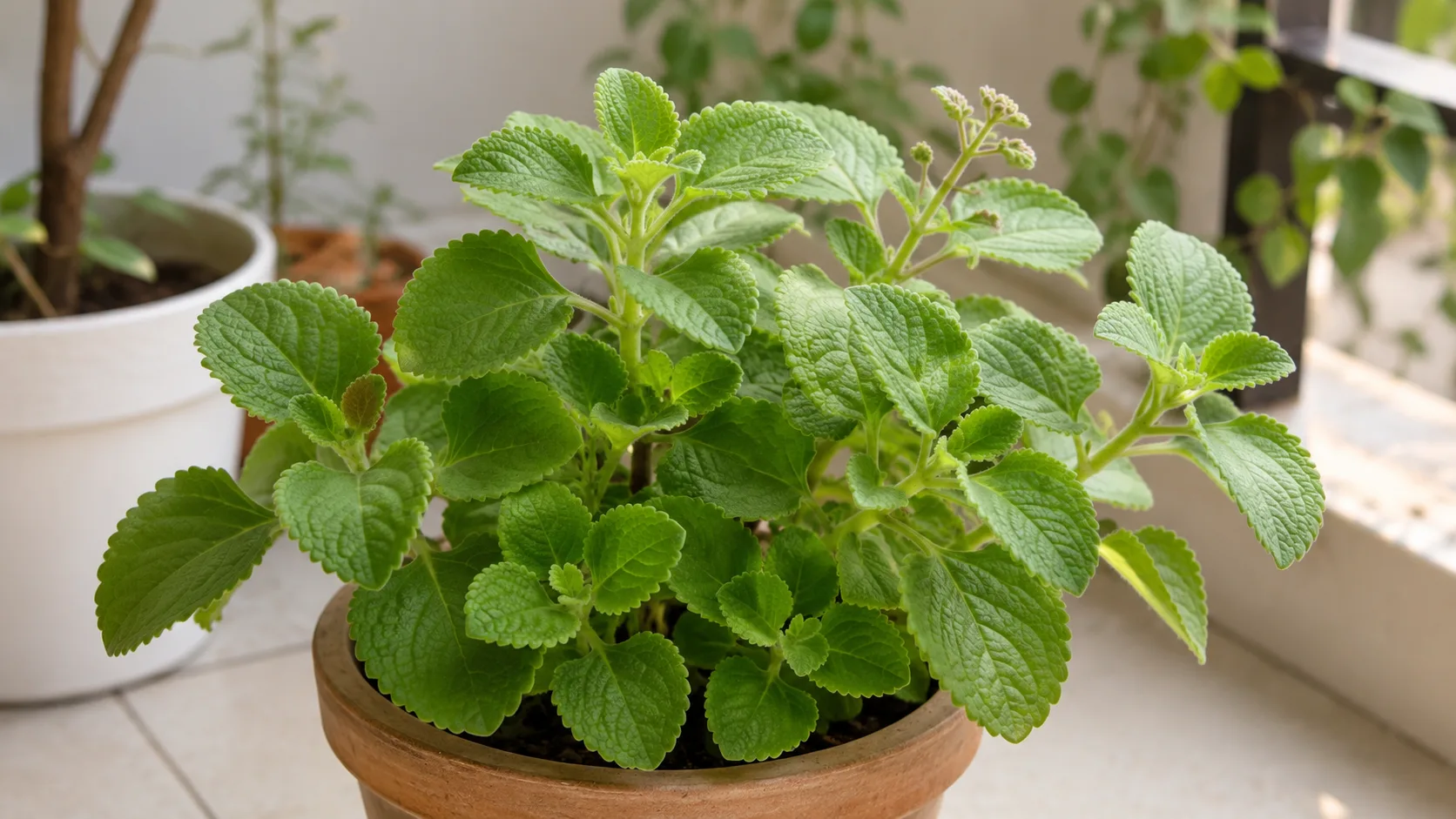
The pot labeled “ajwain” in most Indian nurseries is almost always Indian borage (Plectranthus amboinicus), not true ajwain seed spice (Trachyspermum ammi). P. amboinicus belongs to the mint family (Lamiaceae) with square stems, opposite thick leaves, and a strong oregano-thyme aroma. True ajwain is an unrelated annual grown for seeds. Every pruning step below applies to P. amboinicus - the leafy herb also sold as Mexican mint, Spanish thyme, Cuban oregano, karpooravalli, and doddapatre.
What Pruning Does for Ajwain Plant
Ajwain Plant is grown for fresh shoots and leaf flavor, not for keeping old woody stems forever. While a stem tip stays intact, the plant suppresses side buds through apical dominance - one reason unpruned plants stretch tall with leaves clustered at the ends. Remove the growing tip just above a leaf pair and the dormant buds in that node wake up, sending out two branches. Regular pruning encourages the plant to grow more leaves and stems, which matches how most kitchen gardeners use this herb.
Pruning also concentrates flavor. Young, actively growing leaves hold more of the aromatic compounds - mainly carvacrol and thymol - that make the herb worth harvesting. Older stems left unharvested tend toward tougher leaves and flower spikes that pull energy away from foliage.
When to Prune Ajwain Plant
Ajwain Plant follows warmth and light, not a rigid calendar. In tropical and Indian balcony conditions it often grows year-round; in cooler climates it slows when temperatures drop below roughly 18°C.
Active season pinching and harvest
From late spring through early autumn - or any stretch of steady warmth where you see new shoots every week - you can pinch tips and harvest lightly. This is the safest window for cuts that remove more than a few leaves. Pinch stem tips regularly to retain compact shape and encourage branching - the same hormonal response applies across many Plectranthus species with opposite leaves.
Light pinching that takes only the top 1–2 cm is gentle enough to repeat every 2–4 weeks during active growth, or whenever you are cooking and need fresh leaves.
When to avoid heavy cuts
Stick to dead-leaf cleanup and tiny pinches when growth is slow - cool winters, weak light, or a recently stressed plant. A cut that removes a third or more of the foliage should wait until you see firm new shoots and stable Ajwain Plant watering guide. Heavy rejuvenation on a dormant plant leaves open wounds on semi-succulent stems that heal slowly and can invite rot at the base.
What to Check Before You Cut
Run a quick inspection before any blade touches the plant:
- Stem condition: soft, brown, or hollow bases mean rot or old wood - mark those for removal, not pinching.
- Pests: mealybugs and aphids often hide under thick leaves; disinfect tools if you cut through infested tissue.
- Light context: leggy spacing between leaf pairs usually means insufficient light - pruning helps, but brighter placement keeps new growth compact.
- Soil moisture: avoid major cuts right after overwatering on Ajwain Plant; wet soil plus open wounds raises stem-rot risk on this rot-sensitive herb.
- Flowers: note any tall spikes forming above the foliage - decide whether you will pinch them for leaf production or keep one for pollinators.
The First Cut to Make
Remove dead, yellow, or damaged material only. Snip each bad leaf or stem back to healthy tissue, cutting just above a live node or flush to the main stem if the whole branch is gone. Do not start with aggressive shaping on the same day - a clean plant makes it easier to see which live stems need pinching next.
How to Prune Ajwain Plant Step by Step
Light pinching for bushiness
Choose stems at least 10–15 cm long with firm, green tissue. Place scissors or thumbnail about 5–10 mm above a leaf pair and remove the top 1–2 cm including the growing point. Work outward-facing nodes when you can so new branches grow into open space rather than crowding the center. Repeat on any stem racing upward faster than the rest.
Harvest cuts for the kitchen
Harvesting is pruning. Snip the top 5–10 cm of a stem above a node, taking the youngest leaves for cooking. Plants are typically harvested continuously via the cut-and-come-again method - take a little often rather than stripping one side bare. Morning harvest, after dew dries, usually gives the strongest aroma.
Use scissors instead of tearing leaves. A clean cut calluses in days; a torn leaf pulls stem tissue and heals slowly.
Removing flower spikes
When leaf flavor is the goal, pinch flower spikes as soon as you see them - a slender stalk rising above the foliage with small bud clusters. Cut at the base of the spike where it meets a leaf pair. The plant redirects energy into side shoots and tender leaves. If you want blooms for bees, allow one back stem to flower and keep pinching the rest.
Hard cut-back for leggy plants
When stems are long and bare at the base with leaves only at the tips, gentle pinching is not enough. In early warm season, cut all live stems back to a short framework 7–10 cm above the soil, always just above a node or remaining leaf pair. Discard woody lower sections. Place the pot in bright indirect to partial sun, water sparingly until new shoots appear, then resume normal care. New growth usually shows within 10–14 days in warm, bright conditions.
Where to Cut on the Stem
Ajwain stems are square with opposite leaves - each node carries two dormant buds facing opposite directions. The cut belongs just above the node, not through it and not far below it.
- Too high: a bare stub above the node browns and dies back.
- Through the node: you remove the buds meant to branch.
- Mid-stem with no leaves: no growth point remains - the tip above may die.
Leave roughly 5–10 mm of stem above the node. A slight angled cut helps water run off semi-succulent tissue, but location matters more than angle.
How Much You Can Safely Remove
For routine pinching and harvest, stay under one-third of total foliage per session. Ajwain Plant needs leaves to fuel regrowth; removing more shocks the plant, especially outside active season. If the plant needs major reshaping, stage cuts across two or three weeks rather than one dramatic session.
A hard rejuvenation cut that leaves only short stubs is the exception - it is intentional reduction, not a weekly harvest - and should happen once per year at most, timed to active growth.
What Not to Cut
- The entire plant to soil level in one go unless you are discarding a rotten specimen - leave at least one node above the mix on each stem.
- Only old woody base stems when trying to bush out the top - remove woody sections during rejuvenation, not during light harvest.
- Stems with active pest colonies without cleaning tools afterward - you spread the problem stem to stem.
- Every leaf on a young seedling - let new plants build a framework before heavy harvest.
Tools and Sanitation
Sharp bypass pruners, kitchen scissors, or snips slice semi-succulent stems cleanly. Dull blades crush tissue and slow healing. Wipe blades with 70% isopropyl alcohol before you start and between plants, or after cutting diseased material. Alcohol at 70% concentration is effective against bacteria and fungi on pruning tools without the corrosion risk bleach can cause on metal.
Using Pruned Stems for Propagation
Healthy tip cuttings from pruning are the standard way to multiply Ajwain Plant. Take 10–15 cm non-flowering stems with at least two leaf pairs. Cut just below a lower node, strip leaves from the bottom half, and plant directly in moist, well-draining mix. Stem cuttings rooted in water are likely to rot - soil rooting is more reliable for Ajwain Plant overview. Roots often form in 1–2 weeks in Ajwain Plant light guide.
Do not propagate from stems you sprayed with pesticide or cut from rot-damaged bases.
Aftercare and Recovery
For light pinches, return the plant to the same bright spot and water when the top 2–3 cm of mix is dry - its normal rhythm. For hard cut-backs, keep soil slightly drier than usual until new shoots emerge; the smaller leaf area uses less water. Hold fertilizer until you see fresh growth - feeding before the plant is ready produces weak, stretched shoots.
Expect pinched stems to show new side shoots within 1–2 weeks in warm weather. A rejuvenated plant fills out over 3–4 weeks when light is adequate (bright indirect to partial sun, roughly 3–5 hours direct sun).
Signs Pruning Worked - or Went Too Far
Pruning worked when you see paired new shoots below recent cuts, stems stay firm and green, and the plant looks denser within a month. Flavor stays strong on young regrowth.
Pruning went too far or was badly timed when cut stubs turn black and mushy, the base softens, growth stalls for weeks in cool weather, or new shoots are pale and stretched. Those signs mean reduce watering, improve light, and wait - do not keep cutting.
Mistakes to Avoid
- Pruning for shape without fixing light - the plant will legg out again within weeks.
- Cutting bare stem with no node - no branches form; the top may die back.
- Harvesting only outer leaves while ignoring tips - taking lower leaves without pinching the leader produces a tall, unstable plant. Stems are liable to snap if they get too long; keep them short with regular tip work.
- Letting the whole plant flower unchecked when you want leaves - energy leaves the foliage.
- Stacking prune day with repot and fertilizer - give the plant one stress at a time.
When Not to Prune
Skip heavy pruning when the plant is wilting from drought, recovering from root rot on Ajwain Plant, or sitting in cold, stagnant air. Skip major cuts right after bringing a new pot home - let it stabilize first. If more than half the stems are mushy at the base, treat it as a health rescue (dry soil, better light, possible restart from cuttings) rather than a shaping session.
Conclusion
Ajwain Plant rewards a simple rhythm: clean dead growth first, then pinch or harvest stem tips just above nodes during warm months, and save hard cut-backs for early active growth when stems go leggy. Harvest often, remove flower spikes if leaves matter most, and keep blades clean. The plant roots easily from trimmings - so every good cut can become a backup pot instead of compost.
When to use this page vs other Ajwain Plant guides
- Ajwain Plant overview - Start here for whole-plant context before deep-diving this topic.
- Ajwain Plant problems hub - Jump to symptom-specific fix guides when this care topic does not resolve the issue.
- Leggy Growth on Ajwain Plant - Escalate here when pruning adjustments are not enough.
- Slow Growth on Ajwain Plant - Escalate here when pruning adjustments are not enough.
- Brown Tips on Ajwain Plant - Escalate here when pruning adjustments are not enough.