Brown Tips on Ajwain Plant: Causes, Checks & Fixes
Quick answer
Brown tips on ajwain plant (Plectranthus amboinicus) usually trace to hot midday sun through a window, underwatering a semi-succulent pot, salt buildup from frequent feeding, or cold AC drafts-not low humidity. First step: note which leaves are affected (upper sun-facing vs. lower drought-stressed), check soil moisture 2–3 cm down, and move the pot back from harsh glass before misting or fertilizing.
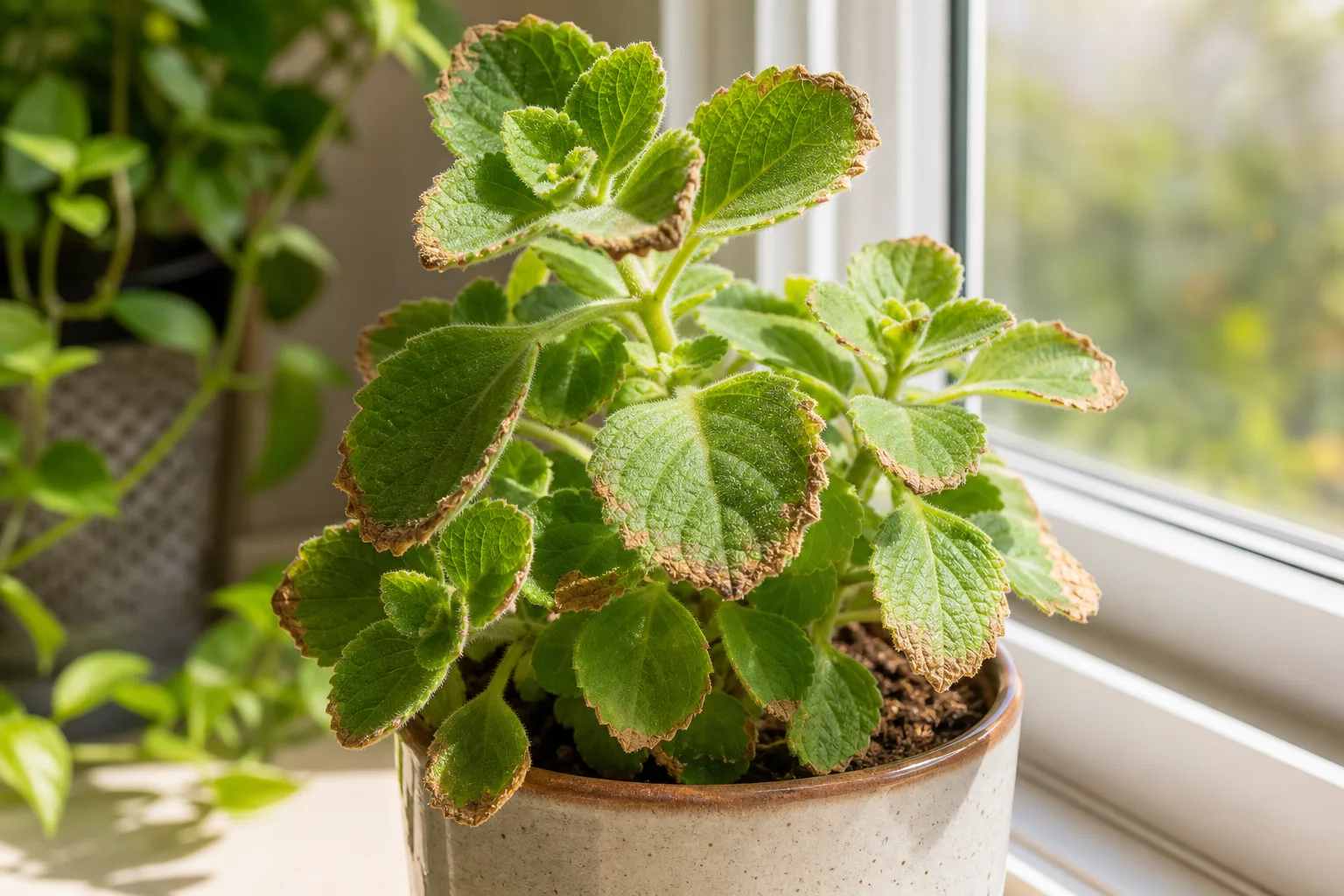
Brown Tips on Ajwain Plant: Causes, Checks & Fixes
This guide covers brown tips on Ajwain Plant. See also the general Brown Tips guide, watering, and light pages for this plant.
Brown Tips on Ajwain Plant: Causes, Checks & Fixes
Quick answer
Plectranthus amboinicus-the ajwain plant, Indian borage, or Cuban oregano sold as a kitchen windowsill herb-has thick, fuzzy, oil-rich leaves on square, semi-succulent stems. That leaf structure stores water but also shows stress fast: tips and margins brown from hot midday sun through glass, underwatering on Ajwain Plant, overwatering, salt buildup from frequent feeding, or cold drafts-not from the low humidity that tropical foliage plants need.
North Carolina Extension notes that full sun can burn the leaves even though the species prefers a hot, dry location overall. Full species context: ajwain plant overview.
First step: look at which leaves browned and check soil moisture 2–3 cm below the surface. Upper, sun-facing leaves with bleached papery patches mean move back from the window before anything else. Lower leaves with dry, crispy tips and light soil mean water thoroughly. Wet, heavy soil with soft stems means stop watering and inspect drainage-see overwatering on ajwain plant. Do not mist; this is not a humidity plant.
What brown tips look like on ajwain plant
Ajwain does not brown uniformly. The position, texture, and soil moisture tell you which cause fits.
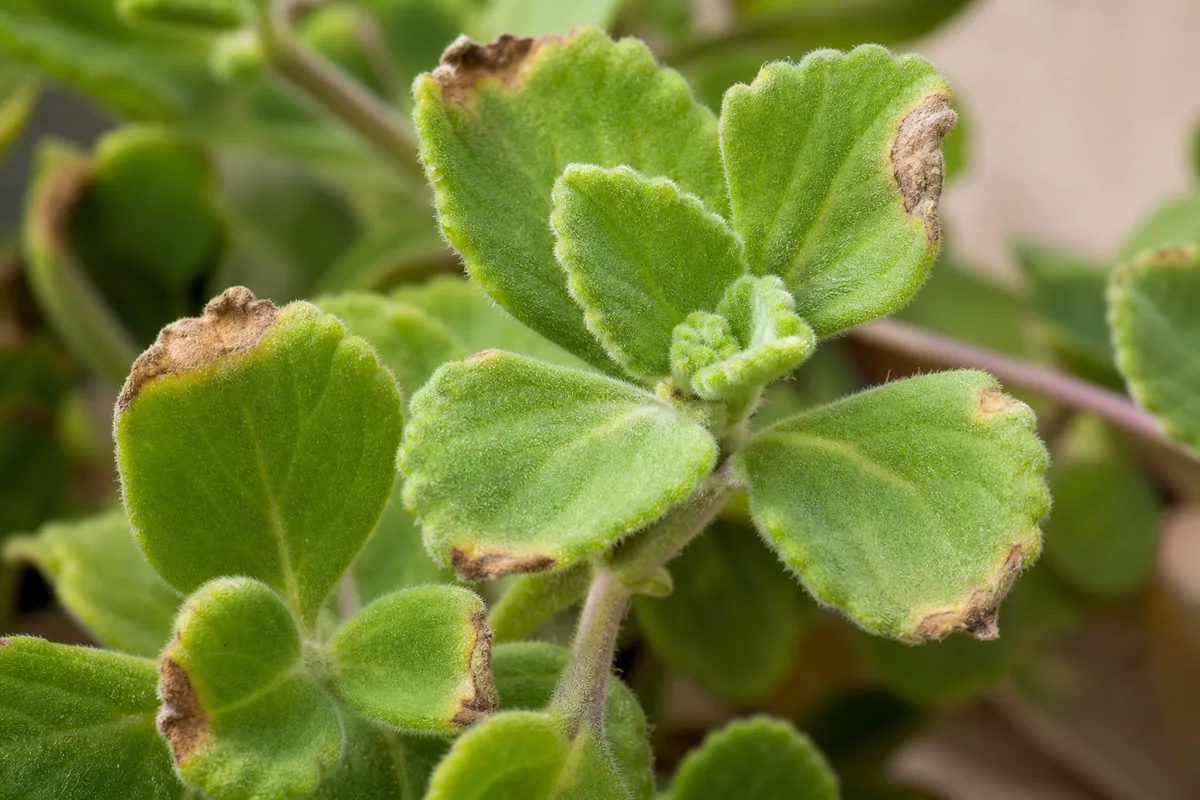
Brown Tips symptoms on Ajwain Plant - compare with healthy tissue on the same plant.
Sun scorch through hot windows (very common indoors):
- Upper leaves facing south- or west-facing glass turn bleached yellow-tan, then papery brown at tips and margins
- Damage appears on the canopy side closest to the window, often after a sunny week or a sudden move closer to glass
- Leaf center may stay green while edges crisp; texture is dry and crackly, not soft
- Variegated ‘Variegatus’ forms with cream margins often show burn on the pale edge first
Underwatering / chronic drought:
- Lower and older leaves develop narrow brown, crispy tips while the pot feels light and the top 2–3 cm of mix is dusty dry
- Leaves may feel slightly thinner but stems stay firm-unlike rot
- Pattern worsens slowly over weeks of skipped watering, not overnight
Overwatering and root stress:
- Brown margins may spread from tips inward; leaves feel soft or limp while soil stays wet for days
- Stems at the base can feel mushy; the plant may also show yellow lower leaves-see yellow leaves on ajwain plant
- Often follows a heavy, moisture-retentive mix or a pot sitting in a full saucer
Salt or fertilizer burn:
- Brown, sometimes blackened tips after repeated feeding without flushing-excess salts from too much fertilizer can burn leaf tips
- White crust on the pot rim or soil surface
- New growth may emerge smaller or distorted while older leaves show tip necrosis first
Cold draft or AC blow:
- Sudden brown edges on leaves nearest an AC vent, frequently opened door, or a freezing winter window ledge
- Can hit random leaves in the airflow path rather than only upper or lower canopy
Post-harvest trim browning (cosmetic, not disease):
- Brown edge only at a fresh cut where you snipped a leaf for cooking
- Rest of the leaf and plant look healthy; new growth from the node below is green
Unlike true ajwain seed plant (Trachyspermum ammi), which is rarely grown as a windowsill herb, leaf-tip problems on Plectranthus amboinicus always relate to this semi-succulent herb’s light and watering needs-not seed-plant field culture.
Why ajwain plant gets brown tips (not a humidity plant)
Plectranthus amboinicus evolved for warm, bright, relatively dry conditions. Its biology explains why generic “raise humidity” advice fails here.
Thick, oily leaves transpire and scorch differently. The fuzzy cuticle and high essential-oil content make leaves sensitive to intense direct sun while still needing bright light for compact growth. Too much midday glass magnifies heat; too little light produces weak growth-but tip burn on a bright windowsill is usually excess sun, not dim conditions. Light detail: ajwain plant light guide.
Semi-succulent stems tolerate dry spells poorly when overcorrected. The plant stores water in leaves and stems, so owners often overwater when leaves look tired-or underwater because the plant “looks succulent.” Both extremes reach the leaf tips first. Watering detail: ajwain plant watering guide.
Light feeding still builds salts in a small pot. Herbs in fertile mix can produce lush but weak growth; frequent fertilizer without flushing leaves mineral residue that burns tips on sensitive foliage.
Cold air hits exposed margins fast. Frost-tender tropical stems damaged below about 10°C (50°F) often show edge necrosis on leaves that sat in the cold microclimate even when the room thermometer reads warmer.
How to confirm the cause
Work through these checks in order. One matched pattern beats guessing.
- Leaf position - Upper, window-facing, bleached-tan tips → sun scorch. Lower leaves with dry soil → underwatering. Widespread soft leaves with wet soil → overwatering.
- Soil moisture at 2–3 cm depth - Push a finger or dry chopstick into the mix. Dusty dry confirms drought; cool, wet, clinging mix confirms excess moisture.
- Stem firmness at the base - Firm square stems with dry crispy tips only → sun or drought. Soft, discolored stems with wet soil → root stress; inspect before watering again.
- Pot weight and drainage - Lift the pot. Very light means drought. Heavy, waterlogged feel with no recent watering means poor drainage or overwatering.
- Salt check - White rim crust or gritty soil surface after monthly feeding suggests flush need before more fertilizer.
- Draft map - Note AC vents, winter window ledges, and exterior doors. Brown edges on leaves in the airflow path point to cold or dry moving air, not disease.
- Recent harvest - Single brown line at a cut site only → normal trim browning; no care change needed.
You have a working diagnosis when one pattern clearly matches soil moisture, light exposure, and stem condition together.
Lookalike comparison
| Pattern | Likely cause | First direction |
|---|---|---|
| Bleached papery upper tips near hot window | Sun scorch | Move back 30–60 cm or sheer curtain |
| Crispy lower tips; light pot; dry top 2–3 cm | Underwatering | Thorough soak; empty saucer |
| Brown margins; wet soil; soft stems | Overwatering | Stop watering; check drainage |
| Tips after feeding; white pot crust | Salt burn | Flush soil; pause fertilizer |
| Brown edges on leaves in AC/draft path | Cold or dry moving air | Relocate away from vent or glass |
| Brown only at fresh cut edge | Harvest trim | Cosmetic; watch new node growth |
| Yellow lower leaves plus tip brown | Overlapping stress | See yellow leaves |
First fix for ajwain plant
Apply one correction matched to your diagnosis-not misting, Ajwain Plant repotting guide, and fertilizer on the same day.
If sun scorch fits: move back from harsh glass
Relocate the pot 30–60 cm away from the hottest window or hang a sheer curtain to filter midday rays. East-facing morning sun is usually safe; south- and west-facing afternoon sun through clear glass is the usual culprit. Protection from the hottest summer sun prevents leaf burn while keeping bright light. Do not plunge the plant into a dark corner-aim for bright indirect light after the move.
If underwatering fits: water thoroughly once
Water until it runs from drainage holes, then empty the saucer. Wait until the top 2–3 cm dries before the next drink-roughly weekly in active growth, less in winter. The semi-succulent leaves recover turgor before tips repair visually.
If overwatering fits: dry out and inspect
Stop watering until the top half of the mix dries. Confirm drainage holes are open and the pot is not sitting in runoff. If stems are soft and soil smells sour, unpot and trim brown mushy roots, then repot into gritty, fast-draining mix-hold water for a few days after repot. Full protocol: overwatering on ajwain plant.
If salt burn fits: flush and pause feeding
Run plain water through the pot until it flows freely from the bottom two or three times over an hour. Skip fertilizer for four to six weeks. Resume at half label strength monthly during active growth only.
If cold draft fits: relocate
Move the pot away from AC vents, frequently opened doors, and freezing window ledges. Ajwain prefers 18–27°C (65–80°F) stable conditions; cold-damaged leaf edges will not recover, but new growth stays clean once placement stabilizes.
Recovery timeline
Brown and crispy leaf tissue does not turn green again. Damaged leaves may not fully recover; judge progress by new growth. Judge success by new leaves with clean margins and stopped spread to healthy foliage.
- After sun correction: New growth often emerges unburned within 10–14 days in warm weather; badly scorched leaves can be snipped for appearance.
- After watering correction: Turgor improves in 2–5 days; clean tips on new leaves within one to three weeks.
- After overwatering rescue: Root recovery takes two to four weeks if rot was mild; soft stems with black roots need longer-watch for firm new stems before normal watering resumes.
- After salt flush: Tip burn on old leaves remains; new growth should look normal within three to four weeks if feeding stays light.
If tips stay clean on new growth for three weeks and stems stay firm, the underlying stress is likely resolved.
What not to do
- Do not mist for brown tips. Ajwain is not a high-humidity foliage plant; wet hairy leaves in still air risk fungal spotting without fixing sun or water stress.
- Do not fertilize a stressed plant before you know whether sun, water, or salt caused the burn. Herbs in very fertile soil can produce lush leaves with poor flavor and more pest-prone soft growth.
- Do not increase watering when soil is already wet-overwatering wet soil is a common mistake when leaves look tired; soft leaves with soggy mix mean dry the pot, not another drink.
- Do not leave the plant in full hot afternoon sun hoping it will “harden off” indoors without gradual acclimation.
- Do not stack repotting, heavy pruning, and pesticide on the same day as a light or watering fix.
- Pick up fallen brown leaves if you have pets. Plectranthus amboinicus is toxic to cats, dogs, and horses; ingestion can cause vomiting, diarrhea, and drooling.
How to prevent brown tips next time
- Bright light with afternoon protection - South or west windows with a sheer curtain, or set back from the glass in summer.
- Consistent dry-down watering - Top 2–3 cm dry before each thorough soak; never let the pot sit in saucer water.
- Gritty, fast-draining mix in a pot with drainage holes-see ajwain soil guide.
- Light feeding only - Half-strength monthly in active growth; flush salts if a white crust appears.
- Stable temperature - Keep away from AC blasts and winter window frost zones.
- Harvest discipline - Take no more than one-third of foliage at a time; snip above a node so regrowth stays bushy.
When to worry
Treat as urgent if:
- Stems turn soft and black at the base with foul-smelling soil-likely advanced root rot on Ajwain Plant; act within days.
- Brown spots spread rapidly across many leaves in a week despite corrected watering-inspect for spider mites or mealybugs, which NC Extension lists as common pests on Plectranthus amboinicus.
- A pet ate trimmed or fallen leaves-contact a veterinarian or poison control; have the botanical name Plectranthus amboinicus ready.
Lower urgency: a few crispy tips on outer leaves after one hot sunny week usually resolves with a single placement fix.
Conclusion
Brown tips on ajwain plant are diagnosable once you separate sun scorch, watering imbalance, salt buildup, and drafts-patterns generic houseplant pages rarely explain for this semi-succulent mint-family herb. Check which leaves failed, soil moisture 2–3 cm down, and stem firmness, then apply one matched fix: move back from hot glass, water thoroughly after dry-down, dry out an overwatered pot, or flush accumulated salts. Recovery shows on new growth, not repaired old tips. Keep the plant in bright, protected light with gritty soil and light feeding, and link overlapping yellowing to the dedicated yellow leaves guide when lower leaves fade as well as tip.
When to use this page vs other Ajwain Plant guides
- Ajwain Plant watering guide - Use for routine moisture checks before assuming brown tips is the main issue.
- Ajwain Plant problems hub - Browse all 16 common issues on this species.
- Low Humidity on Ajwain Plant - Different entry point when symptoms overlap with brown tips.
- Underwatering on Ajwain Plant - Different entry point when symptoms overlap with brown tips.
- Overwatering on Ajwain Plant - Different entry point when symptoms overlap with brown tips.