Low Humidity on Ajwain Plant: Causes, Checks & Fixes
Quick answer
Ajwain plant (Plectranthus amboinicus) tolerates normal household humidity and prefers hot, dry conditions outdoors-so low humidity is often a red herring. When winter heating drops RH below 30% or a radiator blasts the pot, fuzzy semi-succulent leaves can crisp at the edges. First step: slide the plant away from heat registers and radiators, then check a hygrometer beside the canopy before you mist or add water.
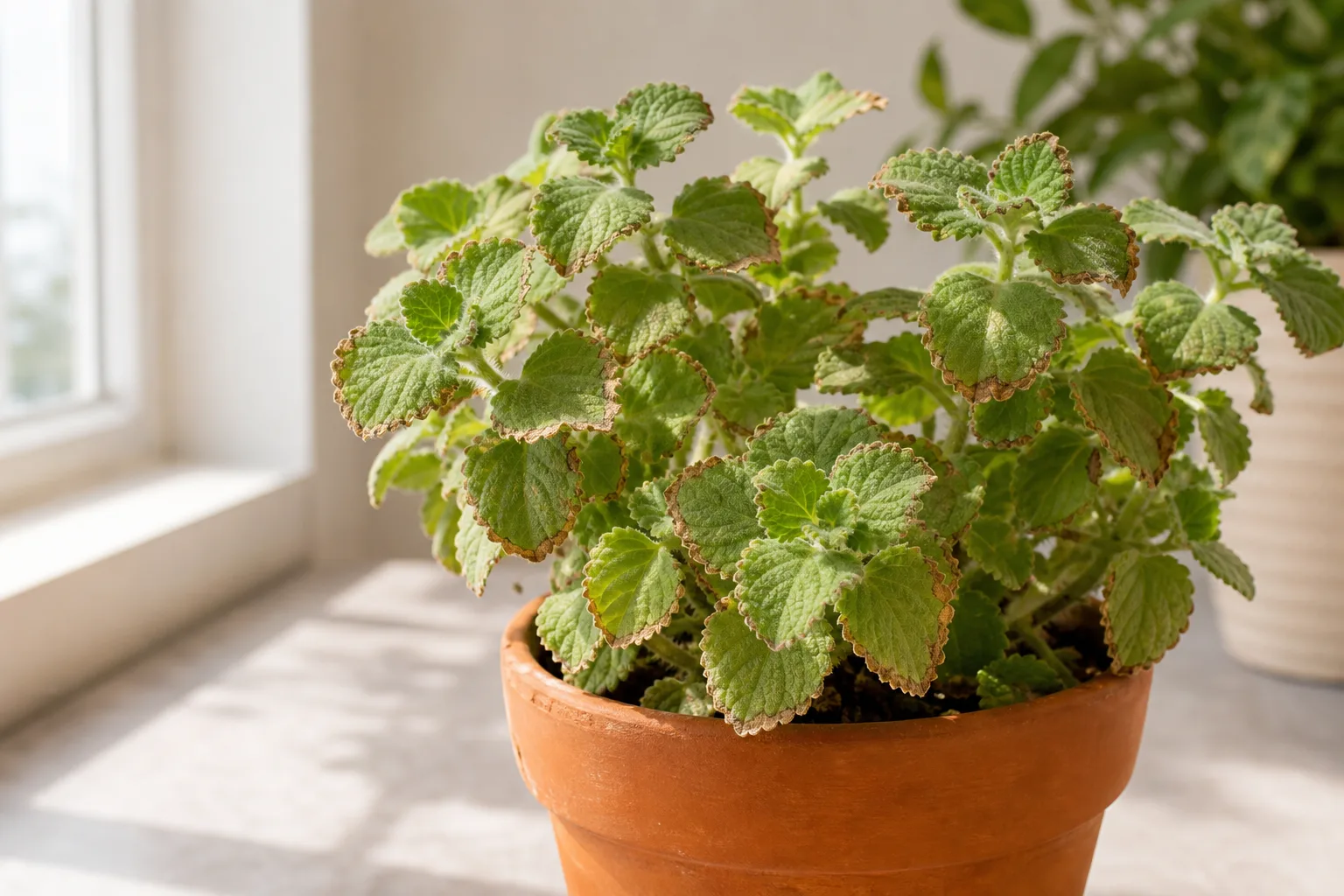
Low Humidity on Ajwain Plant: Causes, Checks & Fixes
This guide covers low humidity on Ajwain Plant. See also the general Low Humidity guide, watering, and light pages for this plant.
Low Humidity on Ajwain Plant: Causes, Checks & Fixes
Quick answer
Ajwain plant (Plectranthus amboinicus, also sold as Cuban oregano or Indian borage) is a semi-succulent mint-family herb with thick, fuzzy, water-storing leaves-not a rainforest foliage plant. NC Extension notes it prefers a hot, dry location for best performance, which means average home humidity of 40–60% is usually adequate and a humidifier is often unnecessary. Low humidity becomes a real problem mainly when winter furnace air drops below 30% RH, or when the pot sits directly in the path of a radiator, heat register, or fireplace that strips moisture from leaf edges faster than the thick foliage can replace it.
First step: move the plant away from heat vents, radiators, and drafty window glass-then place a hygrometer beside the canopy at leaf height. If RH is under 30% and margins are crisping on firm stems with normal soil moisture, add a pebble tray or small humidifier before you change watering. Do not soak the plant because edges look dry; semi-succulent ajwain rots far more easily from wet soil than it suffers from moderately dry air.
This page covers dry-air stress on Plectranthus amboinicus. For margin browning that follows salt buildup or hard tap water, see brown tips. For limp, soft leaves on bone-dry soil, see underwatering. For whole-plant collapse on wet mix, see wilting. For full species care, see the ajwain plant overview.
Does ajwain plant need high humidity?
Honest answer: usually not indoors. The ajwain plant overview targets 40–60% relative humidity as normal household range, and NC Extension describes Plectranthus amboinicus as preferring hot, dry conditions with fleshy, velvety leaves that store water like a semi-succulent. That biology is closer to a cactus-adapted herb than to a calathea or fern that wilts when RH dips.
Where growers go wrong is over-humidifying a plant that wants airflow and dry-down cycles-misting fuzzy leaves twice daily in a stuffy room can invite fungal leaf spot more readily than it prevents crisp edges. Airflow matters more than extra humidity for this species when the room already reads near 40% RH.
Low humidity does matter when:
- A hygrometer beside the canopy reads under 30% for days after the furnace starts
- Leaves show dry, papery brown margins on firm square stems while the top 2–3 cm of mix dries on your normal schedule
- The pot sits within three feet of a heat register, radiator, or fireplace that blasts dry air across the fuzzy canopy
- Spider mites follow a humidity crash-NC Extension lists spider mites and mealybugs among common problems on Plectranthus
If your ajwain looks fine at 45% RH beside the leaves, do not add a humidifier because a blog told you herbs need tropical moisture. Fix placement and watering first.
How low humidity shows up on fuzzy ajwain leaves
Dry-air damage on Plectranthus amboinicus is a margin-first pattern on firm stems-not the soft, limp collapse of severe underwatering or root rot on Ajwain Plant.
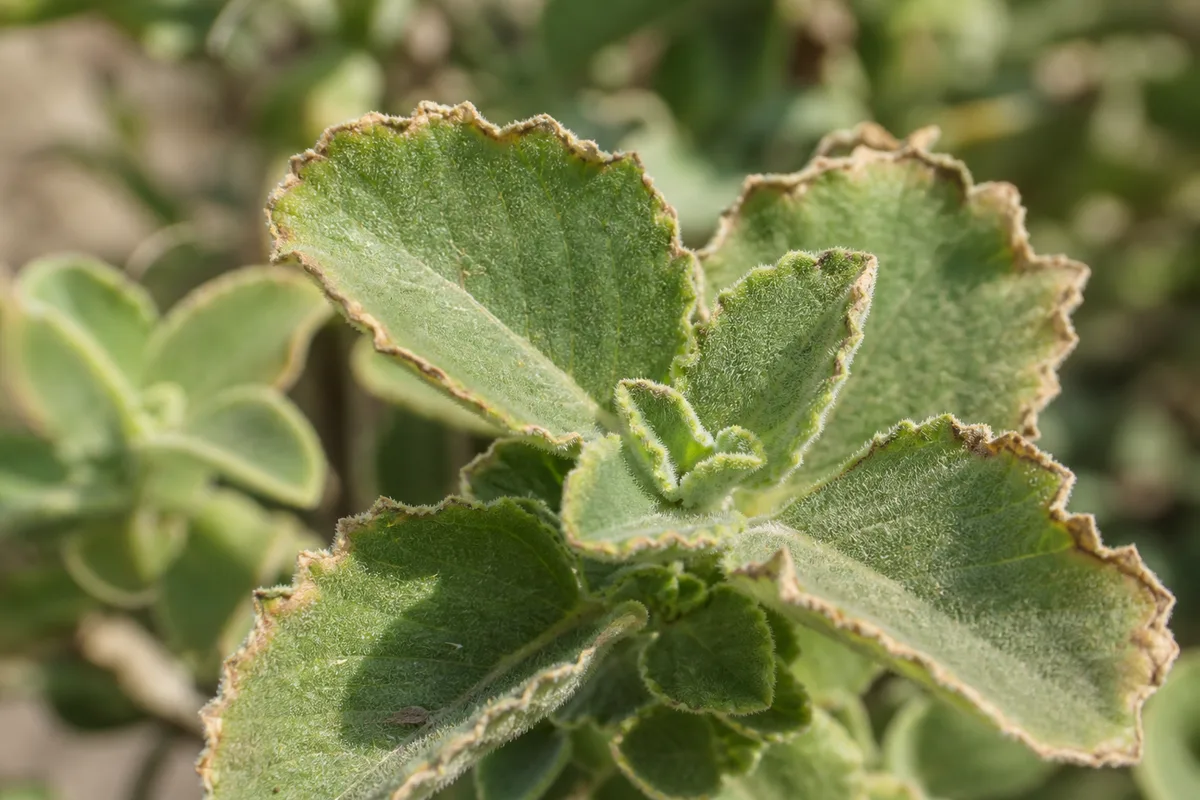
Low Humidity symptoms on Ajwain Plant - compare with healthy tissue on the same plant.
The signature sign is dry, light brown, papery edges on thick, velvety, scalloped leaves, often starting at the farthest tips and creeping inward slowly over weeks. Affected tissue feels crispy and thin, not soft or water-soaked. Square mint-family stems usually stay springy and upright unless a second problem is also present. Damage is often one-sided on foliage closest to a heating vent or south window with a radiator below.
Seasonal timing is a strong clue. Crisp edges that accelerate after the furnace starts, or on a windowsill above a heat register, fit dry microclimate stress more than a sudden root crisis. Multiple leaves browning at outer margins simultaneously-while inner leaf tissue stays green and plump-points to environmental moisture loss rather than thirst.
Variegated cultivars such as ‘Variegatus’ can show faded cream margins on stressed tissue before full necrosis. Pair that fade with an RH reading and placement audit before you move the plant to a brighter window.
Crisp edges in heated winter rooms
Central heating replaces moist air with dry heated air. Nebraska Extension notes that drying and browning around leaf edges or tips is a common symptom of low humidity, similar to marginal scorch on outdoor trees during hot, dry weather. Many homes that read near 40% RH in summer drop toward 20–30% once heat runs steadily. On ajwain, that gap can crisp fuzzy leaf edges within weeks even when your watering rhythm has not changed-because transpiration from thick leaves accelerates when furnace air is both warm and dry.
Heat blast vs. room-wide low humidity
A pot directly above a radiator or beside a forced-air vent can show crisp margins on one side of the plant while a hygrometer elsewhere in the room reads 45%. UNH Extension recommends keeping plants away from heat vents and radiators because local desiccation outpaces what a whole-room RH reading suggests. Moving the pot three to six feet off the heat path is often the entire fix for ajwain-no humidifier required.
Kitchen-window ajwain is especially vulnerable: a pot on the sill directly above a floor register or beside a stove backsplash catches both dry forced-air blasts and intermittent cooking heat. Counter placement three to six feet from the register path, with leaves clear of the glass on cold nights, usually beats any humidity gadget.
Low humidity vs. other causes on ajwain
Work through these lookalikes before you buy a humidifier:
| Pattern | What you see on P. amboinicus | Stem / pot clues | RH clue |
|---|---|---|---|
| Low humidity / heat blast (this page) | Dry papery leaf margins; tips crisp first; slow spread | Firm square stems; typical pot weight | Hygrometer under 30% near canopy, or vent within 3 ft |
| Underwatering | Crisp edges plus limp, soft leaves; dull gray-green tone | Very light pot; dry mix 5+ cm down | RH may be normal; soil is dry throughout |
| Heat scorch | Bleached or tan patches on sun-facing leaves | Pot on hot windowsill or above radiator | Local hot dry blast, not necessarily low whole-room RH |
| Overwatering | Yellow, soft lower leaves; limp stems on wet mix | Heavy pot; mix wet 7+ days | RH irrelevant; soil is saturated |
| Spider mites | Fine stippling on fuzzy undersides; webbing at nodes | Warm dry microclimate | Low RH plus pest signs weeks after air dried |
Low humidity is confirmed when RH is low at the canopy (or a heat vent blasts the leaves), stems are firm, soil moisture matches your normal dry-down, and damage is dry margin browning without stippling or mushy tissue.
How to confirm low humidity is the cause
Work through these checks in order:
- Heat-path scan - Note distance to radiators, floor registers, portable heaters, and fireplace mantels. Fuzzy leaves within three feet of a winter heat blast often crisp at margins first-even when whole-room RH looks fine.
- Hygrometer beside the canopy - Place a digital hygrometer at leaf height, not on the floor. Readings under 30% support low humidity as a stressor; 40–60% with crisp edges suggests heat scorch or underwatering first.
- Soil moisture fork - Press into the top 2–3 cm of mix. Normal dry-down with firm stems and edge-only browning fits dry air. Bone-dry throughout with a light pot and limp leaves points to underwatering overlap-fix both if present.
- Damage pattern - Margin-first, slow, winter-linked browning on thick fuzzy leaves fits humidity or heat blast. Uniform wilt on wet soil fits overwatering. Stippling and webbing fit mites-open the spider mites page before humidity fixes only.
- Leaf undersides - Fine pale dots or silk threads mean pests, not humidity alone.
- Recent watering history - If you watered on schedule and only edges crisped, dry air is more likely than thirst. If you skipped two cycles and the whole plant softened, water correctly first.
Hygrometer check and seasonal context
A $10 digital hygrometer removes guesswork. Log readings morning and evening for three days after the furnace starts. If RH stays under 30% beside the leaves while edges brown-and stems stay firm-humidity is confirmed as a primary stressor even when watering is correct. In a typical heated living room, canopy-level RH can read 22% while a hygrometer on the opposite wall still shows 42%-always measure where the leaves actually sit.
Firm-stem vs. limp-leaf decision table
Use this table when crisp margins could be dry air, thirst, or both:
| What you feel / see | Stem | Leaf texture | Pot weight | Top 2–3 cm soil | Urgency | First action |
|---|---|---|---|---|---|---|
| Dry papery margins only | Firm, square | Thick, plump except edges | Normal | Dry on your schedule | Routine | Move off heat path; check RH at canopy |
| Margins plus limp leaves | Softening | Dull, floppy | Light | Dry 5+ cm down | Moderate | Water thoroughly once; then reassess RH |
| One-sided crisping near vent | Firm | Crisp on vent-facing side | Normal | Normal | Routine | Relocate 3–6 ft from register |
| Stippling + fine webbing | Firm | Pale dots on undersides | Normal | Normal | Same week | Open spider mites guide before humidifying |
| Yellow lower leaves, limp | Soft | Mushy base possible | Heavy | Wet 7+ days | Urgent | Stop watering; check overwatering |
| Rapid browning into leaf centers on wet soil | Soft | Water-soaked patches | Heavy | Saturated | Urgent | Rule out rot-not humidity alone |
First fix for ajwain plant
Move the pot off the heat-register and radiator path-as one placement correction-before you mist, water extra, or buy a humidifier.
Slide the ajwain at least three to six feet from forced-air vents, radiators, and fireplace mantels. Keep it out of the direct blast above a floor register-a common spot for kitchen-window herbs. UNH Extension notes that plants near heat sources lose moisture faster and that relocation is part of raising effective humidity.
If a hygrometer beside the canopy still reads under 30% after placement improves:
- Add a pebble tray with the pot elevated above the water line so roots never sit in standing water-PlantTalk Colorado warns that containers in pebble trays must stand above the water so roots do not become waterlogged
- Run a small cool-mist or evaporative humidifier within a few feet of the plant until RH reaches 40–50% beside the leaves-UNH Extension recommends portable humidifiers for consistent winter humidity control
- Group pots slightly to share transpired moisture, but maintain good airflow-still, humid air against fuzzy stems invites fungal issues in a stuffy corner
Do not increase watering because edges look dry. Soggy roots on stressed ajwain trigger yellowing and rot faster than dry margins. Confirm the top 2–3 cm of mix is dry before the next drink per the watering guide.
Misting: optional limits on fuzzy, toxic foliage
Light misting does not sustain room RH for more than minutes-Nebraska Extension notes misting is not an effective humidity solution and that wet foliage in stagnant air can invite fungal disease. On ajwain, thick hairy leaves hold surface water longer than smooth foliage. If you mist, do it morning only with airflow.
Keep misting and humidifier runoff away from pets-the ASPCA lists Coleus amboinicus (Spanish thyme) as toxic to cats, dogs, and horses, and ingestion can cause vomiting and diarrhea. A hanging basket or elevated shelf protects both the plant and curious animals. If your pet eats any part of the plant or licks mist runoff, contact your veterinarian or the ASPCA Animal Poison Control hotline (888-426-4435) immediately and have the botanical name Plectranthus amboinicus ready.
Recovery timeline
Margin spread should slow within one to two weeks once heat paths are removed and RH rises above 30% beside the canopy. Existing brown tissue does not turn green-judge progress by new growth at stem nodes with clean fuzzy leaves, not by old damaged tissue.
Expect the first healthy new leaf pairs within three to six weeks during spring or summer active growth if humidity, light, and airflow align. Winter corrections may stall until longer days return-keep the humidifier running rather than moving the pot repeatedly across the house.
Worsening signs: browning marching rapidly into leaf centers on multiple leaves while soil stays wet (rule out overwatering); stippling with webbing (mites-see spider mites); soft stems at the base on saturated mix (root failure-not humidity alone).
What not to do
Do not soak the plant because edges look dry-confirm the top 2–3 cm of mix is dry before watering. Semi-succulent ajwain rots in wet soil far more readily than it suffers from 40% RH.
Do not mist heavily twice daily as a humidity strategy-brief surface moisture does not fix 25% room RH and can leave wet fuzzy leaves that spot in dim winter light.
Do not run a humidifier at 70%+ in a closed, stagnant corner-ajwain prefers hot, dry performance conditions outdoors; excessive humidity with poor airflow invites fungal problems on thick foliage.
Do not fertilize to “heal” brown edges-salts on stressed roots burn tips further. Wait until new growth looks normal for two weeks.
Do not stack Ajwain Plant repotting guide, pruning, and pesticide on the same day you add a humidifier. Make one care correction at a time so you can read the plant’s response over the next week.
Do not mist near pets or leave runoff where cats and dogs can lick it-the plant is toxic if ingested.
How to prevent dry-air damage next winter
Keep ajwain away from heat registers, radiators, fireplaces, and AC vents when you choose a long-term windowsill or counter spot. A hygrometer beside the leaves removes guesswork-intervene only when RH drops under 30% for days, not because generic houseplant advice demands tropical moisture.
Run a humidifier from first furnace use through late winter only in genuinely dry homes; otherwise placement and normal 40–60% RH are enough for this species. Group plants slightly to share transpired moisture, but maintain air circulation so fuzzy leaves do not sit in still, saturated air.
Scout leaf undersides weekly in heating season-Iowa State Extension notes dry indoor air favors spider mites on houseplants in winter, and spider mites often follow humidity crashes on stressed herbs.
Match watering to season-winter dry air pulls moisture from leaves faster, but the semi-succulent mix still dries slowly; do not compensate with extra drinks unless the top 2–3 cm is actually dry.
For complete species care-light, soil, toxicity, and propagation-see the ajwain plant overview.
When to worry
Low humidity alone rarely kills ajwain quickly, but wrong fixes on a dry-tolerant herb can. Escalate within the same week if:
- Fine stippling and webbing appear on leaf undersides after a humidity crash-open the spider mites guide before adding more moisture
- Browning races into leaf centers on multiple leaves while the mix stays wet-treat as overwatering or rot risk, not dry air
- Stems soften at the base on saturated soil-root failure needs drainage correction, not a humidifier
- A pet ingests leaves or licks mist runoff-call your veterinarian or ASPCA Animal Poison Control (888-426-4435) immediately
Routine margin crisping on firm stems with sub-30% RH or a vent blast is a placement-and-humidity fix, not an emergency-unless you are about to soak the pot because the edges look dry.
Related ajwain problems
Open these in this order when symptoms overlap:
- Underwatering - if the pot feels light, mix is dry 5+ cm down, and leaves are limp as well as crisp
- Brown tips - if margins brown despite normal RH and watering; salt or water quality may be the driver
- Spider mites - if stippling or webbing appears on fuzzy undersides in a warm dry corner
- Wilting - if whole stems collapse on wet or bone-dry soil
- Ajwain plant overview - semi-succulent biology, 40–60% RH baseline, toxicity, and full care hub
FAQs
Does ajwain plant need high humidity indoors?
Usually no. Plectranthus amboinicus tolerates typical indoor humidity in the 40–60% range and NC Extension notes it prefers a hot, dry location for best performance. You only need to raise humidity when a hygrometer beside the leaves reads under 30% for days, or when crisp edges appear on firm stems while soil moisture is normal. Do not treat ajwain like a calathea or fern-it is a semi-succulent mint-family herb with thick, water-storing leaves.
Should I mist ajwain plant for humidity?
Light misting is optional and rarely fixes room-level dry air. UNH Extension notes misting raises surface moisture for minutes, not sustained RH, and wet fuzzy foliage in stagnant air can invite fungal spotting on thick leaves. If you mist, do it in the morning with airflow-and keep the plant out of pet reach, because the ASPCA lists Plectranthus amboinicus as toxic to cats and dogs. A small humidifier or pebble tray is more practical when RH stays under 30%.
Are brown crispy edges on ajwain from low humidity or underwatering?
Low humidity browns dry, papery margins on firm square stems while the top 2–3 cm of mix follows your normal dry-down rhythm and the pot feels typical in weight. Underwatering adds a very light pot, dry mix throughout, and limp, soft leaves-not just edge crisping. Heat scorch from a radiator directly below the pot can mimic humidity damage on one side of the canopy. Confirm with a hygrometer under 30% plus firm stems before you soak a plant that may already be watered correctly.
Is low humidity ever a red herring on ajwain?
Yes-often. Plectranthus amboinicus is built for hot, dry outdoor performance with thick water-storing leaves, so 40–60% indoor RH is usually fine. Crisp margins more often trace to a heat register, radiator, or kitchen stove blast than to whole-room dryness. Move the pot off the heat path and read a hygrometer at leaf height before you buy a humidifier or soak the soil because edges look dry.
Will ajwain plant leaves turn green again after raising humidity?
Necrotic brown or papery tissue on fuzzy ajwain leaves does not re-green. Once margins crisp, that edge is permanent until you trim it or the leaf is replaced. Judge success by new pairs of leaves emerging from stem nodes with clean edges and existing damage not spreading farther inward over two to four weeks after placement and humidity improve.
Conclusion
When ajwain margins crisp in winter, run a short escalation path instead of defaulting to mist or extra water. Firm stems + dry papery edges + RH under 30% or a vent blast → relocate and add pebble tray or humidifier. Limp leaves + light pot + dry mix throughout → water once per the watering guide, then recheck RH. Stippling or webbing on undersides → open spider mites this week before raising humidity further. Yellow soft leaves on wet soil → stop watering and rule out overwatering. Brown edges already necrotic will not re-green; firm new leaf pairs at stem nodes are your proof the fix is working.
When to use this page vs other Ajwain Plant guides
- Ajwain Plant watering guide - Use for routine moisture checks before assuming low humidity is the main issue.
- Ajwain Plant problems hub - Browse all 16 common issues on this species.
- Brown Tips on Ajwain Plant - Different entry point when symptoms overlap with low humidity.