Spider Mites on Ajwain Plant (Plectranthus amboinicus)
Quick answer
You flipped a fuzzy ajwain leaf before harvest and found pale speckling-not sure if it is mites, sun, or dust? Spider mites on Ajwain Plant (Plectranthus amboinicus / Indian borage) show as fine yellow stippling and webbing on thick fuzzy leaves in warm, dry indoor air. First step: isolate the pot and rinse leaf undersides with lukewarm water in the morning so velvety foliage dries before night.
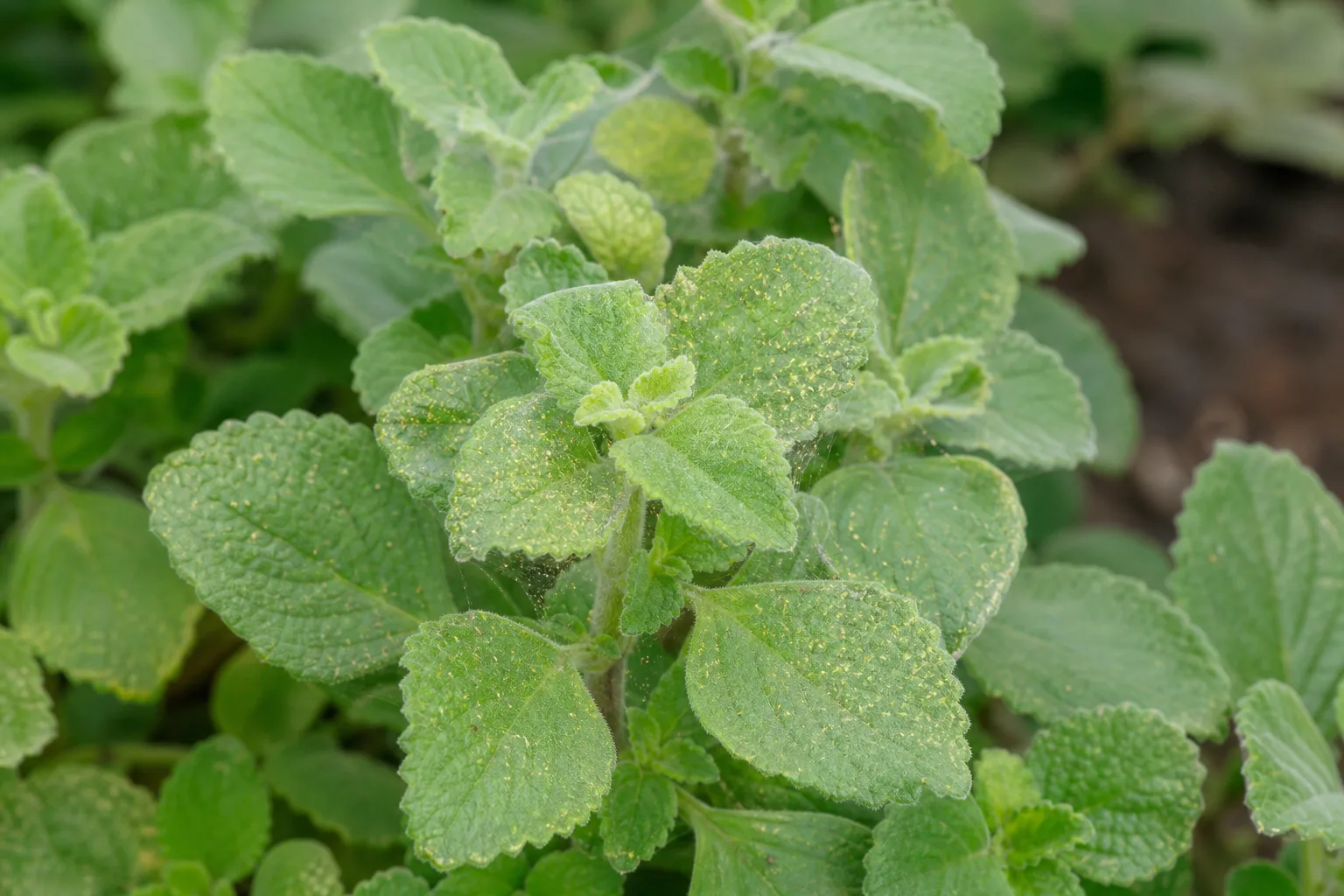
Spider Mites on Ajwain Plant (Plectranthus amboinicus): Causes, Checks & Fixes
This guide covers spider mites on Ajwain Plant. See also the general Spider Mites guide, watering, and light pages for this plant.
Spider Mites on Ajwain Plant (Plectranthus amboinicus): Causes, Checks & Fixes
Quick answer
You reached for ajwain leaves before dinner, flipped a thick fuzzy blade, and found pale speckling tucked along the square stem-not sure whether it is mites, mineral dust, or sun bleach on velvety tissue. That harvest-day confusion is common on Plectranthus amboinicus (Indian borage, Cuban oregano), not the seed spice Trachyspermum ammi.
Spider mites here are tiny sap-feeding arachnids-not insects-that multiply fast in warm, dry indoor air. Damage starts as fine yellow or white stippling on thick fuzzy leaves and delicate webbing where opposite leaf pairs meet square stems. The velvety cuticle that stores aroma compounds also hides early stippling until colonies spread across several leaf pairs.
First step: isolate the pot and rinse leaf undersides with lukewarm water in the morning. Move ajwain away from mint, curry leaf, and other kitchen herbs before you spray anything. Aim water at undersides where mites feed, let fuzzy foliage dry in bright indirect light with airflow before evening, then confirm live mites with the white-paper tap test before adding soap or oil.
For full species care, see the ajwain plant overview.
What spider mites look like on Ajwain Plant
On Indian borage, spider mites colonize leaf undersides and sheltered stem joints-not random spots across the velvety blade surface where you might notice damage last.
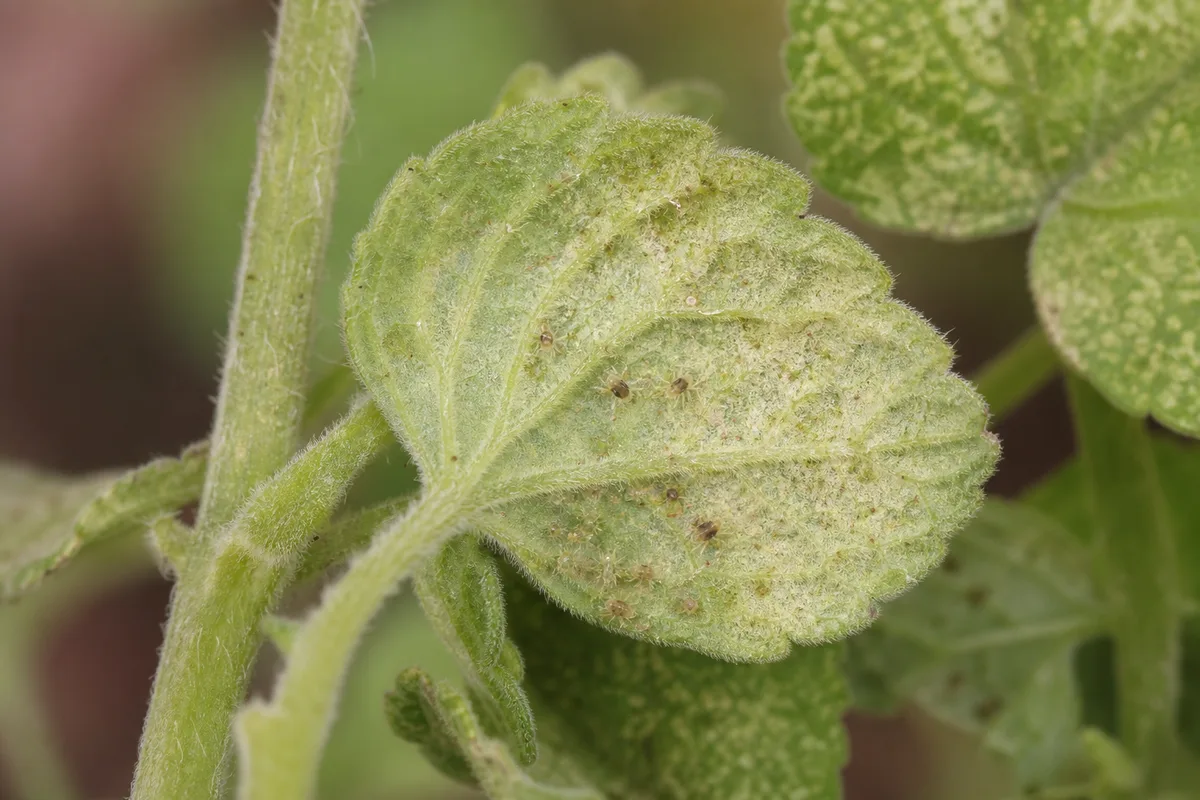
Spider Mites symptoms on Ajwain Plant - compare with healthy tissue on the same plant.
Typical signs:
- Fine yellow or white stippling on thick fuzzy leaves-individual feeding punctures that bleach chlorophyll
- Bronzing or dulling of mature aromatic leaves while square stems stay firm
- Delicate silk webbing at leaf bases, petiole crotches, and between opposite leaf pairs
- Crisp, curled older leaves on heavily infested sections while soft harvest regrowth still looks clean from across the kitchen
- Slow-moving specks on white paper after tapping a suspect leaf-mites are arachnids, not insects
Ajwain leaves are thick, fleshy, and evenly velvety when healthy. Stippling on this texture can look like mineral dust, sun bleach, or edema until you flip a leaf and find webbing. The square succulent stems and opposite leaf pairs give mites dozens of sheltered feeding zones along one sprawling pot while upper harvest shoots still appear fine.
Why fuzzy leaves delay diagnosis: Unlike smooth-leaved houseplants where stippling shows immediately, the dense leaf hairs on P. amboinicus scatter light and mask pale feeding marks until numbers build. By the time webbing is obvious on a kitchen windowsill, several leaf pairs may already be bronzed.
Square stems vs. smooth basil: On kitchen-window basil, stippling often appears across the flat leaf underside where mites feed in the open. Ajwain’s opposite leaf pairs clasp a four-sided stem, creating a pocket at every node where webbing can start before you see damage on the velvety top surface. That architecture means you must lift each leaf pair along the stem-not just scan the canopy from above.
Aromatic foliage does not repel mites: Leaves rich in carvacrol and thymol smell strongly of oregano when crushed, but spider mites still feed on many herb species including oregano and mints in greenhouse settings. Do not assume the plant’s essential oils protect it from colonization.
What to photograph for your own records
If you want a before-and-after log, capture three views: stippling on a flipped fuzzy underside, silk at an opposite leaf-pair crotch on a square stem, and slow-moving specks on white paper after the tap test. Original diagnostic photos for this guide are pending a future update; use your phone shots to compare week to week while you treat.
Why Ajwain Plant gets spider mites
Spider mites are not proof you failed as a grower. They arrive on nursery stock, drift from infested neighbors, or explode when dry air meets warm light on a kitchen herb shelf. Ajwain has traits that make outbreaks common once mites are in the room.
Winter heating plus sunny kitchen windows. Spider mites thrive in warm, dry conditions and multiply quickly when relative humidity drops. A pot on a south-facing sill above a radiator combines direct sun stress with furnace-dry air-exactly the microclimate NC Extension notes P. amboinicus prefers outdoors but that becomes mite-friendly indoors when natural enemies are absent.
Semi-succulent watering rhythm under stress. Ajwain stores water in thick leaves and tolerates dry-down cycles per the watering guide. When winter light is weak and you stretch watering intervals, transpiration stress on foliage already losing moisture to dry air can coincide with mite outbreaks-not because you underwatering on Ajwain Plant, but because leaf moisture balance tipped toward desiccation.
Harvest regrowth is soft feeding tissue. Frequent pinching for cooking sends out tender shoots with thin new leaves. Mites gather on unopened leaf pairs and soft tips where sap is easiest to reach-the same tissue you want for the next harvest.
Crowded herb shelves. Spider mites crawl between pots that touch on a windowsill. Skipping quarantine on a new ajwain purchase is the most common entry route onto a shared kitchen shelf with mint and curry leaf.
Low-humidity crash overlap. If your room RH dropped below 30% beside the canopy, see the low-humidity guide for placement fixes-but do not assume crisp edges alone mean mites. Confirm with stippling plus webbing or the tap test.
NC State Extension lists spider mites and mealybugs among problems that can damage P. amboinicus-the same pests that overlap on honeydew symptoms across our mealybugs guide.
How to confirm the cause
Work through these checks before you commit to sprays. The goal is to confirm live spider mites, not to treat sun scorch or thrips from one bronzed fuzzy leaf you were about to harvest.
- Isolate first - Move the pot away from other kitchen herbs before handling so crawlers do not walk to neighboring plants.
- Underside scan - Lift thick fuzzy leaves and inspect where each blade attaches and along square stems. Webbing appears in crotches before it spans open leaf surfaces.
- White-paper tap test - Hold white paper under a suspect leaf and tap sharply. Slow-moving specks confirm mites; static dust or perlite does not crawl.
- Webbing check - Fine silk at petiole bases distinguishes mites from thrips (no webbing) or mineral spray residue (chalky, wipes dry).
- Neighbor herbs - Inspect mint, basil, and curry leaf on the same shelf for stippling or webbing.
- Care cross-check - Firm square stems with normal dry-down rhythm point away from root rot on Ajwain Plant; see watering guide if soil moisture is unclear.
White-paper tap test on fuzzy leaves
This settles harvest-day panic faster than guessing from stippling alone. Tap one bronzed leaf over white paper. Slow-moving specks mean live mites. No movement, even velvety texture, no webbing points to sun scorch, edema, or low-humidity crisping-not a mite colony.
Confirmed diagnosis requires stippling plus webbing or live mites on the tap test. A single yellow lower leaf on an otherwise firm plant is not enough.
Lookalike symptoms
| What you see | Likely cause | Quick check |
|---|---|---|
| Fine yellow stippling plus silk webbing on leaf undersides | Spider mites | Tap test shows moving specks; webbing at petiole bases |
| Silvery streaks and black fecal specks, no webbing | Thrips | Elongated insects under magnification; no silk |
| Raised blister-like bumps on fuzzy leaf tops | Edema | Follows overwatering or cold wet nights; no crawl on tap test |
| Bleached papery patches on sun-facing leaf tops | Sun scorch | Matches hot window exposure per light guide; no webbing |
| Dry brown leaf margins, firm stems, RH under 30% | Low humidity | Hygrometer reading; no stippling pattern; see low-humidity guide |
| White cottony tufts in leaf pairs at stems | Mealybugs | Smears pink when crushed; see mealybugs guide |
| Yellow leaves, wet heavy soil, soft stems | Overwatering | Soggy mix; no webbing; see overwatering guide |
First fix for Ajwain Plant
Isolate the pot and rinse leaf undersides with lukewarm water in the morning.
That single action knocks down adult mites you can reach, improves local humidity briefly, and confirms the pest is active before you add sprays. CSU Extension recommends washing small houseplants with a forceful spray of water as one of the most effective spider mite controls when repeated over several weeks. On ajwain’s fuzzy semi-succulent leaves, rinse in the morning so foliage dries in bright indirect light with airflow before evening-overnight wetness on velvety foliage can leave permanent pale water spots.
Once isolated and rinsed:
- Aim water at undersides where mites feed on leaf tissue, not just the visible stippling on top
- Support sprawling square stems gently in a sink or shower; avoid crushing brittle woody sections
- Repeat the rinse every three to five days for two weeks if the tap test still shows specks
- Check neighboring kitchen herbs you have not yet isolated
Do not reach for miticides or repot on day one. Do not fertilize a mite-hit ajwain hoping to push harvest regrowth-that produces tender tissue mites prefer.
Pet and kitchen safety note: Indian borage is toxic to cats and dogs if chewed, with essential oils that can cause vomiting and diarrhea. Wear gloves when rinsing heavily infested foliage, keep pets away from runoff in the sink until it drains, and do not harvest leaves for cooking until rinsed foliage is fully dry and any later spray re-entry interval has passed.
Step-by-step recovery
After the initial rinse, follow this sequence based on severity:
Light infestation (stippling on a few leaves, minimal webbing):
- Morning rinse every three to five days for two weeks.
- Recheck with the white-paper tap test after each cycle.
- Raise local humidity slightly with a pebble tray if RH beside the canopy stays under 30%-see low-humidity guide.
Moderate infestation (webbing across multiple leaf pairs, bronzing spreading):
- Continue rinsing, then add insecticidal soap or horticultural oil labeled for mites if specks persist after two rinse cycles. UF/IFAS notes these are among the least toxic effective options for spider mites.
- Cover leaf undersides and stem joints thoroughly; contact sprays only kill mites they touch. Repeat every five to seven days in winter or five days in warm summer conditions for at least three cycles to catch newly hatched mites-most miticides do not kill eggs.
- Spot-test one hidden fuzzy leaf with soap or oil and wait 24 hours before treating the whole plant. Plants with hairy leaves may be more sensitive to soaps.
- Keep the plant isolated until two weekly tap tests show zero moving specks.
Heavy infestation (webbing mats across most stems, leaves crisping and dropping):
- Rinse aggressively, then begin labeled soap or oil sprays immediately on areas water cannot reach.
- Pinch off heavily webbed stem sections if spray cannot penetrate dense sprawling growth. Ajwain roots easily from cuttings-follow the propagation guide and sacrifice coated shoots rather than nursing a colony deep inside a mat of stems.
- Inspect every herb on the same kitchen shelf and treat any that show stippling.
- Consider discarding only if four weekly treatment cycles still show live mites on every new regrowth tip and neighboring pots are at risk.
Throughout recovery, maintain normal ajwain care: bright light per the light guide, let the top inch of mix dry before watering per the watering guide, and avoid fertilizing until new harvest shoots emerge clean.
Recovery timeline for fast-regrowing Ajwain
Expect visible improvement within one to two treatment cycles if you are consistent. Ajwain regrows faster than most houseplants in warm weather-recovery is measured in clean new shoots, not repaired old leaves.
- Days 1–3: Many adult mites knocked down after a thorough morning rinse; stippling on existing leaves remains.
- Week 1: Eggs hatch on a staggered schedule-this is normal and why one rinse is rarely enough.
- Weeks 2–3: With repeated rinses or soap/oil every five to seven days, webbing should stop spreading and tap tests show fewer specks.
- Week 4+: Call the plant clear when two weekly tap tests find zero moving mites.
What can recover: New leaf pairs that emerge after treatment should open clean and usable for harvest within two to four weeks during active warm-season growth.
What may not recover: Leaves that already bronzed, stippled heavily, or crisped while infested often stay cosmetically damaged. They still photosynthesize, but they will not fully green up. Remove them only if they are mostly destroyed-otherwise let the plant shed them naturally.
Signs treatment is working: No fresh webbing at each check, tap tests show fewer specks, and clean fuzzy regrowth at pinched stem tips.
Signs the problem is worsening: Webbing spreading to additional leaf pairs, bronzing moving inward on most fuzzy foliage despite treatment, or new stippling on upper harvest shoots after four weekly cycles.
Editorial case note - kitchen windowsill rinse cycle
Editorial case note reviewed by LeafyPixels Review Board - composite of common keeper reports on indoor P. amboinicus.
A 25 cm ajwain pot on a south-facing kitchen sill above a radiator showed bronzed lower leaf pairs in late January-RH beside the canopy read 22% on a hygrometer. Day 1 (Jan 14): isolated pot, morning sink rinse of undersides; white-paper tap test counted roughly 15–20 slow-moving specks from one bronzed leaf. Day 4: second rinse; speck count dropped to about 6–8 on the same leaf. Day 11: fine webbing still visible at two stem joints; insecticidal soap spot-test on one hidden leaf showed no burn after 24 hours. Days 12, 17, 24: three soap applications five days apart, undersides and crotches coated. Day 31: tap test found zero moving specks; Day 38: second weekly tap test still clean. New harvest shoots at pinched tips opened stipple-free by mid-February. Lower bronzed leaves never fully re-greened but remained usable after a cool rinse before cooking.
Harvest and kitchen safety after treatment
Because ajwain leaves are edible, treatment timing matters as much as pest removal.
- After water rinses alone: Harvest once foliage is fully dry-typically the same day if you rinsed in the morning. Rinse harvest leaves under cool running water before cooking.
- After insecticidal soap: Clemson HGIC notes insecticidal soaps can be used on vegetables up to harvest when the label allows, but always follow the product label pre-harvest interval. When in doubt, wait until the spray has fully dried and wash leaves before use-do not cook with leaves sprayed the same day.
- After horticultural oil or neem oil: Follow label re-entry intervals. Oils can affect flavor on aromatic herbs; harvest from upper stems never coated when possible.
- Pinch strategy: When in doubt, harvest only from clean regrowth that was never webbed or sprayed, and pinch away infested sections for propagation rather than trying to salvage every fuzzy leaf before dinner.
Mississippi State Extension notes that systemics like imidacloprid do not control spider mites-on a kitchen herb, stick to contact treatments (rinse, insecticidal soap, horticultural oil) rather than soil-applied systemics you might use on ornamental houseplants.
Treatment options on edible ajwain foliage
| Method | Best for | Edible-leaf notes | Repeat interval |
|---|---|---|---|
| Morning water rinse | Light infestation; first response always | Safe to harvest same day once foliage is fully dry; rinse before cooking | Every 3–5 days for 2+ weeks |
| Insecticidal soap | Moderate infestation after rinses fail | Follow label pre-harvest interval; spot-test hairy leaves first | Every 5–7 days, 3+ cycles |
| Horticultural oil | Moderate–heavy; reaches sheltered crotches | Stronger flavor risk on aromatic leaves; harvest from unsprayed upper shoots | Every 5–7 days, 3+ cycles |
| Predatory mites (Phytoseiulus) | Isolated indoor pot; you can skip sprays | No spray residue on harvest tissue; mites need prey present and moderate humidity | Release per supplier; avoid soaps/oils for 2–4 weeks before |
For predatory mites on a single kitchen pot, MU Extension lists commercially available Phytoseiulus persimilis as a least-toxic option-but they need spider mites present as food and struggle in the same furnace-dry winter air that favors pest outbreaks. Most ajwain keepers succeed with rinse-plus-soap before ordering biocontrol.
Mistakes to avoid
- One-and-done rinse. Mite eggs hatch on a staggered schedule indoors. A single wash leaves survivors that rebuild within a week.
- Soaking fuzzy leaves overnight after rinsing. Wet velvety foliage in a stuffy room causes permanent water spots and can invite fungal spotting-rinse in the morning and let stems dry before night.
- Using dish soap instead of labeled insecticidal soap. Do not mix homemade soap products-household detergents can burn fuzzy Lamiaceae foliage.
- Assuming insecticides labeled for aphids will kill mites. Mites are arachnids; choose products labeled for mites or use horticultural oil and insecticidal soap.
- Harvesting the same day you spray soap or oil. Edible-leaf re-entry intervals exist for a reason.
- Returning the plant to the herb shelf too soon. Two clean weekly tap tests beat guessing.
- Misting instead of rinsing undersides. Surface mist raises humidity briefly but rarely dislodges mites feeding on sheltered undersides.
- Ignoring the tap test. Stippling alone is not enough-confirm live mites before escalating to sprays.
Ajwain care cross-check during treatment
While treating spider mites, keep baseline care steady-swinging watering or light in multiple directions makes it harder to judge recovery.
- Water and light: Let the top inch of mix dry between waterings and maintain bright indirect to partial sun so harvest regrowth stays firm. Extreme drought stress beside dry furnace air can worsen leaf desiccation alongside mite feeding.
- Humidity: If RH beside the canopy stays under 30%, see the low-humidity guide for placement fixes-brief morning rinses help more than soaking fuzzy crowns nightly.
- Overlap pests: White cottony tufts in leaf pairs point to mealybugs, not mites-see the mealybugs guide if the tap test shows no crawlers.
- Species context: For naming clarity and baseline care, see the ajwain plant overview.
Hold fertilizer until two weeks after the last live mite on a tap test.
How to prevent spider mites on Ajwain Plant
Prevention is mostly about early detection on fuzzy undersides and avoiding dry-hot microclimates, not routine pesticides.
- Quarantine every new ajwain pot for two weeks before it joins your kitchen herb collection.
- Inspect leaf undersides and stem joints weekly-especially during winter heating season when furnace air drops RH.
- Keep pots off radiator ledges and away from heat-register blasts that desiccate fuzzy foliage.
- Rinse foliage lightly in the morning monthly during dry winter months if RH beside the canopy reads under 35%.
- UMN Extension recommends examining plants regularly for insects when watering-thirty seconds per square stem joint beats three weeks of treatment.
- Maintain bright light and proper dry-down watering so semi-succulent leaves stay resilient without sitting in soggy mix.
A healthy ajwain plant in strong light will still get spider mites if they are introduced-but you will catch them at one leaf pair instead of a webbed mat across the entire harvest canopy.
When to worry
Most spider mite problems on ajwain are manageable with isolation, repeated rinsing, and contact sprays. Escalate your response if:
- Webbing coats most leaf pairs along multiple square stems before a harvest flush
- Tap tests still show moving specks after four weekly treatment cycles
- Bronzing spreads to upper harvest shoots despite consistent rinsing and labeled soap/oil
- Neighboring mint, curry leaf, and basil on the same shelf show stippling at the same time
- The plant was already weak from severe stress before mites arrived
Heavy infestations may require discarding the plant to protect a kitchen herb collection-reserve that option for specimens so webbed that treatment cannot reach every fuzzy crotch along sprawling stems, and only after you have protected neighboring pots. For chronic repeated infestations after three failed treatment cycles, contact your local extension office for identification help before reaching for stronger miticides on an edible windowsill herb.
When to escalate - rinse, soap, propagate, or discard
Use this decision block instead of guessing after treatment:
| Your situation | Next move |
|---|---|
| Stippling on a few leaves, tap test shows specks, minimal webbing | Rinse only every 3–5 days for two weeks; recheck neighbors |
| Webbing at multiple stem joints after two rinse cycles | Add labeled soap or oil; spot-test one fuzzy leaf first |
| Webbing mats on sprawling stems spray cannot reach | Pinch and propagate clean tips; sacrifice coated sections per propagation guide |
| Two weekly tap tests with zero specks | Return to herb shelf; inspect undersides weekly through winter |
| Live specks after four weekly treatment cycles | Discard or quarantine indefinitely; protect mint, curry leaf, basil on the same shelf |
| Chronic outbreaks every winter on the same sill | Fix RH and placement per low-humidity guide; consider predatory mites on an isolated pot |
One takeaway before you close this tab: harvest-day panic on fuzzy ajwain leaves is usually solved by flip, tap, rinse-not by Ajwain Plant repotting guide, fertilizing, or dish soap on day one. Confirm live mites before you spray anything edible.
Related Ajwain Plant problems
- Mealybugs - cottony wax in leaf pairs, not stippling and silk
- Low humidity - dry-air context and winter placement
- Ajwain Plant overview - species hub, naming, and baseline care
When to use this page vs other Ajwain Plant guides
- Ajwain Plant watering guide - Use for routine moisture checks before assuming spider mites is the main issue.
- Ajwain Plant problems hub - Browse all 16 common issues on this species.
- Low Humidity on Ajwain Plant - Different entry point when symptoms overlap with spider mites.
- Slow Growth on Ajwain Plant - Different entry point when symptoms overlap with spider mites.