Drooping Leaves on Ajwain Plant: Causes, Checks & Fixes
Quick answer
Drooping leaves on ajwain (Plectranthus amboinicus) usually mean overwatered roots, dry wilt, low light, or cold draft-not a leaf disease. First step: stick your finger into the top 2–3 cm of mix and squeeze the square stem at soil level-wet soil plus soft stem means stop watering; dry soil plus limp leaves means soak deeply.
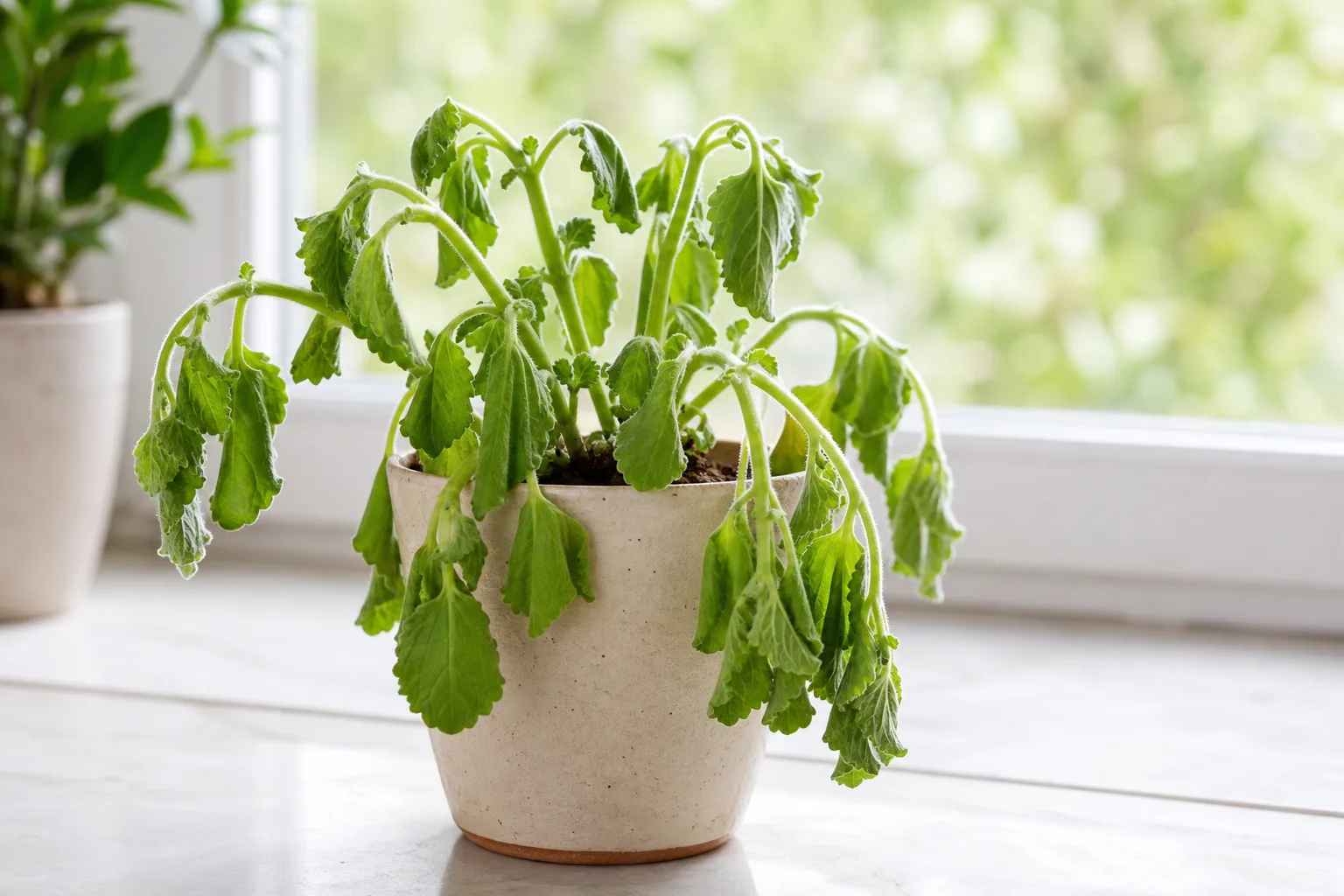
Drooping Leaves on Ajwain Plant: Causes, Checks & Fixes
This guide covers drooping leaves on Ajwain Plant. See also the general Drooping Leaves guide, watering, and light pages for this plant.
Drooping Leaves on Ajwain Plant: Causes, Checks & Fixes
Quick answer
Drooping leaves on ajwain (Plectranthus amboinicus - Indian borage, Cuban oregano, Mexican mint) mean the thick fuzzy leaves have lost turgor and hang downward instead of standing at their usual angle. On this semi-succulent mint-family herb, droop is almost always a care signal, not a fungus on the leaf surface.
First step: check soil moisture at 2–3 cm depth and squeeze the square stem at soil level. Wet mix plus a soft, spongy stem means stop watering and inspect roots. Dry mix plus a light pot and slightly thinner leaves means one deep soak until water runs from the drainage holes. Do not fertilize, repot, and prune on the same day.
What drooping looks like on Ajwain Plant
Healthy ajwain holds its thick, velvety leaves at a slight upward angle on firm square stems that feel almost waxy when hydrated. Drooping changes that posture-not always the leaf color.
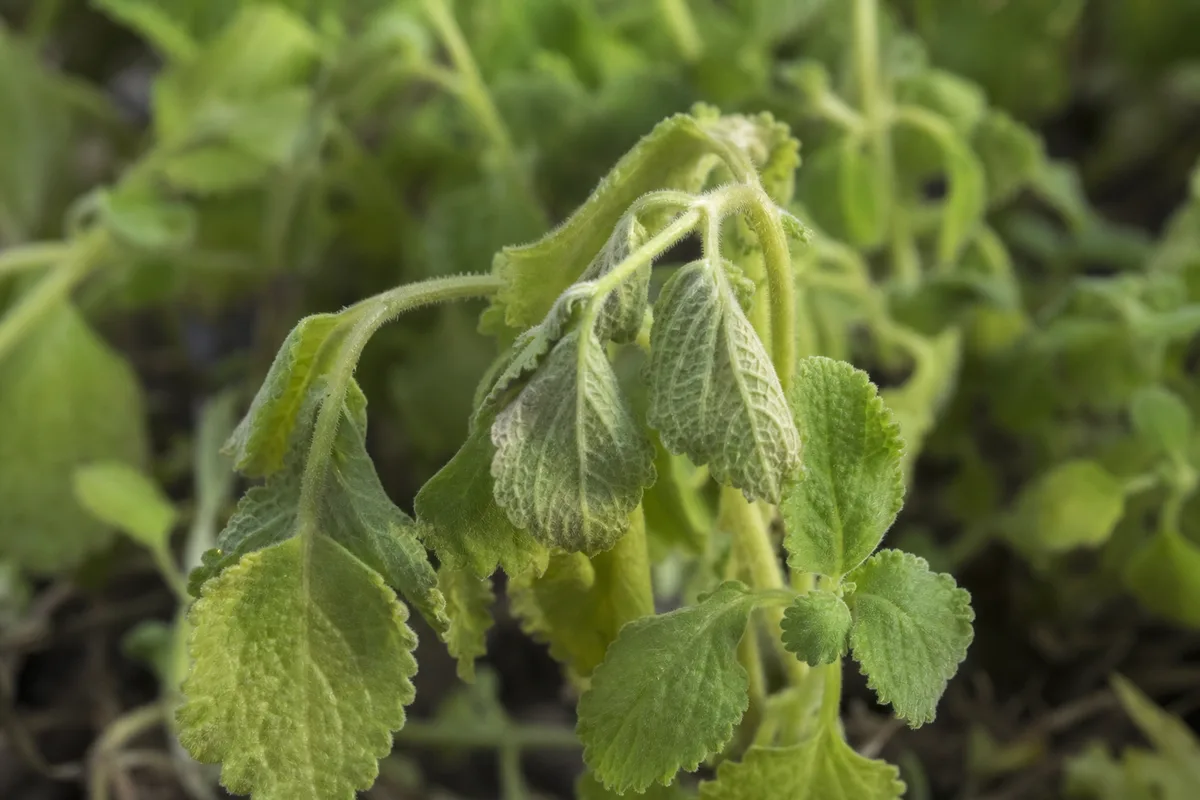
Drooping Leaves symptoms on Ajwain Plant - compare with healthy tissue on the same plant.
Whole-plant slump - every stem arcs downward from the center, often with lower leaves touching the pot rim. Common when roots are failing from chronic wet soil or after a cold shock.
Tip droop on otherwise green leaves - upper leaves hang while color stays gray-green. Often underwatering in hot bright light, or temporary heat stress on a sunny windowsill.
One-sided lean and droop - stems stretch and flop toward the brightest window. Usually low light plus weak stem structure, not root rot.
Basal droop with yellow lower leaves - bottom leaves hang and yellow while the top still looks green for a few days. Classic progression of overwatering on ajwain: roots suffocate before the whole canopy collapses.
Post-repot or cutting droop - cuttings and freshly repotted plants may sag for several days while fine roots re-establish. Stems stay firm; soil moisture is moderate-not soggy.
Ajwain’s thick, fleshy leaves store water longer than thin herbs like basil. That means sudden, dramatic droop often arrives late-after roots are already compromised-while gradual sag over a week more often tracks light or watering rhythm.
Drooping vs. wilting on ajwain: Drooping is usually a posture change-leaves hang at a sharper angle, stems may still feel firm in early dry wilt. Wilting is acute collapse-the whole plant looks limp and flaccid, often within hours of stress. Use this page for chronic or angled sag; use the wilting page if the plant collapsed suddenly and you need to separate heat-stress rebound from root failure.
Why ajwain leaves droop - ranked causes
Overwatering and root rot (most common)
Ajwain is a succulent-leaved herb that prefers a hot, dry location with good drainage - not the constantly damp routine used for basil. When mix stays wet, roots lose oxygen, turn soft and brown, and stop supplying water to leaves. The leaves droop despite wet soil - the classic confused signal that sends growers to the watering can again.
Square stems at the soil line go mushy before every leaf yellows. Sour smell, fungus gnats, and a pot that stays heavy for days confirm root rot overlap.
Underwatering dry wilt
Deep drought empties the leaf reservoirs. Leaves feel thinner, slightly wrinkled, and hang straight down. Pot feels light; top 2–3 cm of mix is dry. Unlike rot, stems stay firm when you squeeze them. A thorough soak usually restores turgor within hours if roots are still healthy.
Low light leggy flop
In dim corners, ajwain stretches-long gaps between leaf pairs-and weak stems cannot support the weight of thick leaves. The plant droops outward rather than collapsing uniformly. Aroma weakens. This overlaps with not enough light; fix placement before assuming thirst.
Cold draft or AC blast
Ajwain is frost-tender and prefers warm tropical conditions. A cold window draft or direct AC airflow in winter slows root function abruptly. Leaves droop even when soil moisture looked fine yesterday. Damage often hits the side facing the cold source first.
Recent repot or propagation stress
Stem cuttings and newly repotted plants droop while fine roots regrow. Stems remain firm; soil is neither bone-dry nor waterlogged. Temporary sag for three to seven days is normal if drainage is good and light is bright.
Heat-stress midday droop (temporary)
On a hot south or west windowsill, ajwain may sag during peak afternoon sun and recover by evening-temporary heat wilt, not drought. Soil is moist 2–3 cm down; stems feel warm but firm. Wait until morning before watering again.
How to confirm the cause
Work through these checks in order:
- Soil moisture at depth - Push a finger or chopstick into the top 2–3 cm. Cool damp soil means do not water yet. Dry, warm soil means drought is plausible.
- Pot weight - Lift the pot. Heavy and wet for many days after the last watering supports overwatering. Light and dry supports underwatering.
- Stem firmness test - Gently squeeze the square stem at soil level between thumb and finger. Firm tissue with dry soil → soak deeply. Soft, spongy tissue with wet soil → pause water and inspect roots.
- Smell and drainage - Sour odor, water sitting in the saucer, or no drainage holes strongly favor rot over thirst.
- Light and direction - One-sided droop toward a window with long internodes suggests low light. Check your light placement before soaking a dim plant.
- Recent events - Repot, cutting, move to a cold sill, or heat wave in the last two weeks? Match timeline to repot shock, draft, or temporary heat droop.
- Newest growth - Pale, small new leaves with stretch point to light. Yellow lower leaves with wet soil point to roots.
Wet vs. dry decision at a glance
| Signal | Wet-soil droop (rot risk) | Dry-soil droop (thirst) |
|---|---|---|
| Top 2–3 cm moisture | Cool, damp | Dry, warm |
| Pot weight | Heavy days after watering | Light |
| Stem at soil line | Soft, may darken | Firm, square |
| Leaf texture | Limp, may yellow at base | Thin, slightly wrinkled |
| First action | Stop watering; inspect roots | Deep soak; drain saucer |
Symptom lookalike table
| What you see | More likely cause | Quick check | Read next |
|---|---|---|---|
| Limp leaves, wet soil, soft stem base | Overwatering / root rot | Sour smell; gnats | Overwatering, root rot |
| Limp leaves, dry soil, firm stems | Underwatering | Pot light; rebound after soak | Underwatering |
| Flop toward window, long stems | Low light | Weak scent; etiolation | Not enough light |
| Midday sag, firm by evening | Heat stress | Moist soil; hot window | Wilting |
| Sag after repot or cutting | Transplant stress | Firm stems; moderate moisture | Wait 1–2 weeks |
| Sudden full collapse | Acute wilt | Hours, not days | Wilting |
First fix for ajwain drooping
If soil is wet and the square stem feels soft: stop watering immediately.
Move the pot to bright indirect light with good airflow-not a dark corner. Empty any saucer water. Do not fertilize. After five to seven days, if leaves keep declining, unpot and trim mushy roots into firm white tissue, then repot into fresh gritty mix in a clean pot with drainage holes. Full rescue steps live on the root rot page.
If soil is dry and stems are firm: water deeply once.
Soak until water runs from drainage holes, wait ten minutes, then empty the saucer. Recheck in four to twelve hours-leaves should feel thicker and hang less. If they do not perk after a proper soak, roots may already be damaged from past overwatering; switch to the wet-soil protocol above.
If the plant flops toward a window on firm stems: improve light first.
Move to an east-facing sill or within one to three feet of your brightest window. Do not increase watering to “support” a dim plant-that invites rot. See the not enough light guide for placement detail.
Make one correction at a time so you can read the plant’s response over the next week.
Step-by-step recovery
After the first fix matched to wet vs. dry:
- Days 1–3 - Hold the corrected watering rhythm. Rotate the pot a quarter turn if growth leans one way. Keep leaves dry; do not mist fuzzy foliage during stress.
- Days 4–7 - Re-test stem firmness at the base. Softening that spreads upward means unpot and inspect roots-do not wait for full collapse.
- Week 2 - Pinch or remove fully limp lower leaves only after new growth looks stable. Plectranthus amboinicus is listed as toxic to cats and dogs by the ASPCA - pick up trimmed leaves if pets share the room.
- Week 3+ - Light pruning of recovered plants encourages bushier regrowth. Ajwain rebounds quickly from tip cuttings if the main stem is too far gone.
If rot was severe, restarting from healthy upper stem cuttings in moist gritty mix is often faster than nursing a hollow stem base.
Recovery timeline
- Dry wilt: Leaves often re-firm within four to twelve hours after a thorough soak if roots are intact.
- Overwatering (early): One to two weeks of dry-down with bright airflow; judge by firm new growth, not old limp leaves.
- Root rot (moderate): Two to four weeks after trim-and-repot; some lower leaves may drop permanently.
- Low light flop: Two to four weeks after brighter placement plus light pruning of stretched stems.
- Repot or cutting droop: Three to ten days if moisture and light are correct.
Damaged leaves may not fully re-stand; watch whether new leaves hold their angle and stems stay firm at the base.
What not to do
- Do not water wet soil because leaves look tired. Root rot fungi thrive in waterlogged soil; ajwain wilts with wet roots precisely because it cannot drink.
- Do not mist heavily on fuzzy leaves during fungal stress-surface moisture invites leaf spot.
- Do not fertilize a drooping plant before confirming moisture, light, and root health.
- Do not repot into a larger pot to “help drying”-more wet mass worsens rot.
- Do not stack repot, prune, and pesticide on the same day.
- Do not confuse midday heat droop with drought on a hot windowsill-check soil before soaking.
Ajwain Plant care cross-check
Drooping connects to the core care rhythm on this species:
- Watering: Let the top 2–3 cm dry between drinks - see the watering guide for season-by-season intervals. Winter in low light often means every two to three weeks, not summer’s weekly soak.
- Soil: Well-drained sandy or gritty mix - UF/IFAS notes Cuban oregano needs drainage and only occasional irrigation outdoors; indoors, that translates to dry-down between waterings.
- Light: Bright indirect with morning sun keeps stems stout. Dim rooms produce weak flop-prone growth.
- Overview: If naming or biology is unclear, start with the ajwain care overview for species ID (Plectranthus vs. seed ajwain).
How to prevent drooping next time
- Test before every watering - finger or chopstick at 2–3 cm depth, not calendar dates.
- Use pots with drainage holes and empty saucers within thirty minutes of watering.
- Match winter watering to slower growth - less light means less water use; soggy winter soil is the most common repeat mistake.
- Keep away from cold AC vents and frost-touching glass in winter.
- Harvest or pinch tips regularly so long stems do not overload small pots.
- Move gradually when shifting from dim indoors to full outdoor sun - hardening off prevents scorch and shock droop.
When to worry
Escalate quickly if:
- Square stems turn mushy or black at the soil line while mix stays wet
- Droop spreads upward over three to five days despite dry-down
- Sour smell or black mushy roots when you unpot
- Plant stays limp morning after morning on moist soil - not temporary heat wilt
Lower urgency: gradual one-sided flop on firm stems in a dim room; midday sag that recovers by evening on a hot sill; three-day sag after taking cuttings with firm tissue.
Conclusion
Drooping leaves on ajwain are a diagnostic puzzle solved by soil moisture plus stem firmness, not by guessing. Wet soil and a soft square stem mean roots are failing-stop watering and inspect. Dry soil and firm stems mean soak once and wait half a day. Window-ward flop on firm stems means light, not water. Use the lookalike table to route overlap to wilting, overwatering, or low light before stacking fixes. Judge recovery by firm new growth at the tips-not by whether yesterday’s limp leaves ever stand perfectly straight again.
When to use this page vs other Ajwain Plant guides
- Ajwain Plant watering guide - Use for routine moisture checks before assuming drooping leaves is the main issue.
- Ajwain Plant problems hub - Browse all 16 common issues on this species.
- Underwatering on Ajwain Plant - Different entry point when symptoms overlap with drooping leaves.
- Overwatering on Ajwain Plant - Different entry point when symptoms overlap with drooping leaves.
- Root Rot on Ajwain Plant - Different entry point when symptoms overlap with drooping leaves.