Leaf Drop on Song of India: Causes, Checks & Fixes
Quick answer
Leaf drop on Song of India may be normal lower-leaf aging on upright stems or a stress signal from cold drafts, low light, overwatering, repot shock, or sudden light change. Check temperature, light, and soil moisture 3–5 cm deep before changing care.
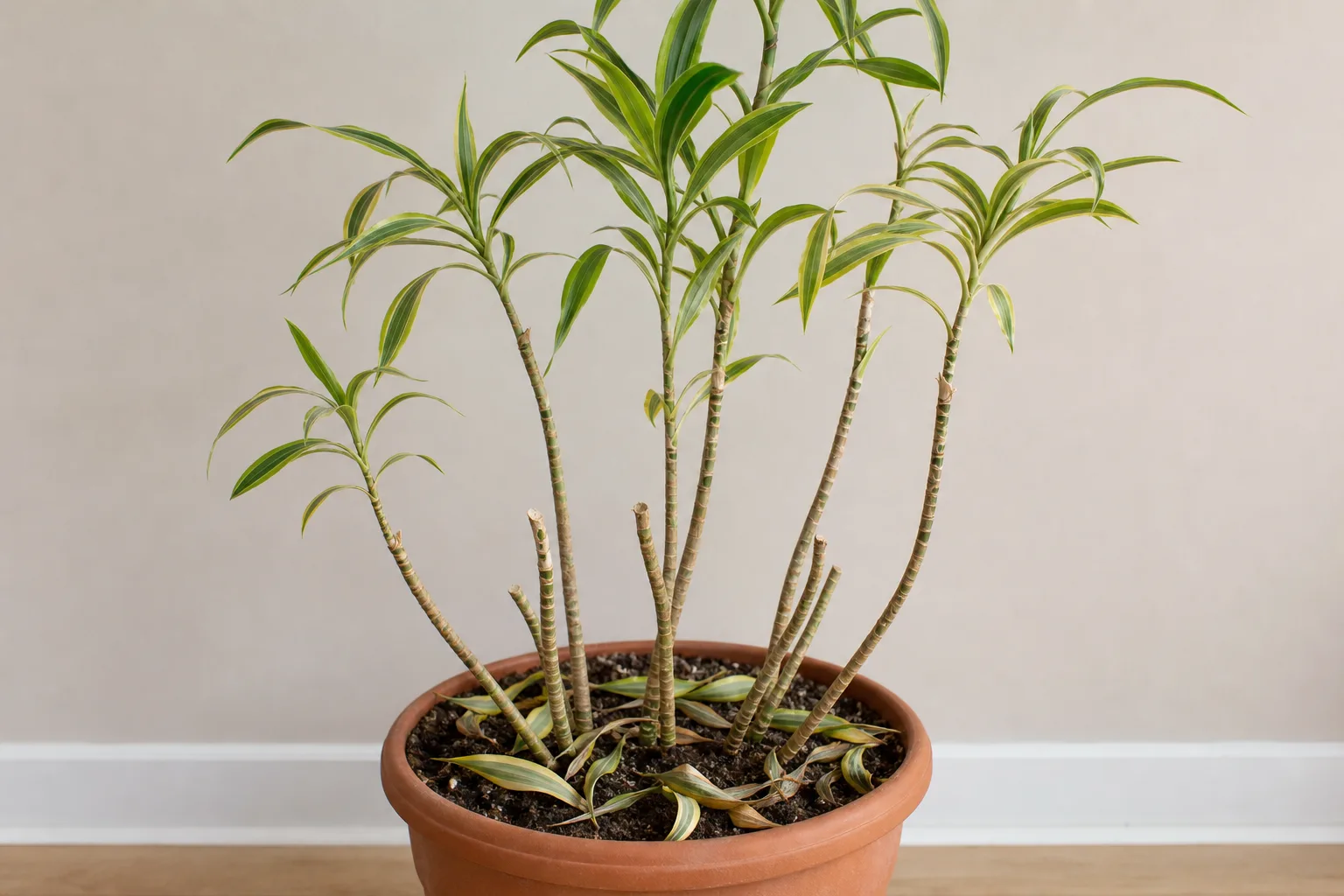
Leaf Drop on Song of India: Causes, Checks & Fixes
This guide covers leaf drop on Song of India. See also the general Leaf Drop guide, watering, and light pages for this plant.
Leaf Drop on Song of India: Causes, Checks & Fixes
Quick answer
Leaf drop on Dracaena reflexa ‘Variegata’-the variegated cultivar sold as Song of India-can be normal lower-leaf aging or a stress signal. Lower leaves will die off over time on upright stems, revealing the cane-like architecture that makes this plant distinctive. Sudden shedding of many leaves usually means temperature shock, insufficient light, wet roots, repot or move shock, or an abrupt light change-not mysterious disease.
Transient drop after a move, repot, or cold night is often shock rather than rot. Hold watering steady, keep bright indirect light, and wait three to four weeks before stacking more changes. Persistent drop with wet heavy soil points to overwatering or root rot; drop with dry soil and pale new growth points to thirst or chronic not enough light.
First step: note the drop pattern, then check room temperature, light level, and soil moisture 3–5 cm deep. One lower leaf fading at a time on firm stems is usually aging. Many leaves falling within days-with a heavy wet pot, a recent window chill, or a fresh repot-needs a matched fix, not more water. For full care context, see the Song of India overview.
Why Song of India drops leaves
Song of India drops leaves for different reasons than a vining pothos or a ficus. Its upright whorled rosettes senesce from the bottom up, and variegation reduces how efficiently the plant uses light and water in dim corners. Work through these causes in order of how often they appear indoors.
Normal lower-leaf senescence on upright stems
As stems elongate, the lowest rosette leaves age out. One or two bottom blades yellow, dry, and fall while upper whorls stay variegated and firm. That pattern on an otherwise healthy plant with steady new tip growth is normal architecture-not a watering emergency. Bare lower cane sections are expected on mature specimens; new growth appears at stem tips, not along old bare wood.
Cold drafts and temperature shock
Song of India prefers stable room temperatures of 65 to 75 degrees Fahrenheit and does not tolerate cold drafts and sudden temperature changes. MOBOT recommends room temperatures should not dip lower than 65°F for best growth. Brief exposure below about 55°F (13°C)-from a winter window ledge, AC vent, or open door-can trigger rapid leaf drop even when watering was correct. UF/IFAS notes that chilling injury on Dracaena can cause mass leaf drop when plants are kept below about 60°F, including during shipping or showcase placement.
Cold drop often hits leaves facing the chill source first while inner rosettes stay green briefly. Stems usually remain firm unless rot is also present.
Low light and accelerated aging
In too much shade, plants grow spindly and variegated leaves lose their variegation. Variegated D. reflexa has less photosynthetic tissue than all-green dracaenas, so dim corners produce stretched stems, muddy margins, and accelerated lower-rosette drop that can look like normal aging happening too fast.
The low-light overwatering trap
This is a primary Song of India failure mode for leaf drop. In sub-bright placements the plant transpires slowly, so mix stays damp for days while you keep watering on a bright-window schedule. Chronic sogginess damages roots; lower leaves drop while soil stays wet and the pot feels heavy. The trap is common after a move to a dim office without reducing water-see not enough light and overwatering when chartreuse margins faded before drop accelerated.
Overwatering and root stress
Wet soil suffocates roots. Overwatering can cause root rot, and damaged roots cannot support foliage-often starting with lower rosettes. Clemson HGIC notes that a sudden loss of many leaves can be caused by too much water or poor drainage. Mass drop on a heavy pot with sour smell or soft stem base requires root inspection before any other fix-escalate to root rot when mushy tissue is confirmed.
Underwatering after dry cycles
Extended dryness drops lower leaves with crispy margins while the pot feels very light. Song of India is less drought-tolerant than a corn plant-repeated drought cycles shed foliage even when the plant survives. Drop from thirst often pairs with limp tissue; see wilting when leaves hang limp rather than falling crisp. See underwatering when depth checks read bone dry throughout.
Repot and move shock
Song of India repotting guide and relocation disturb fine roots and change moisture dynamics. Even careful repots trigger transient leaf drop on dracaenas. UF/IFAS advises not to repot or fertilize for about four weeks after plants are placed indoors because they do not need additional stress. Hold watering steady, keep bright indirect light, and wait three to four weeks before judging failure. Do not repot, move, and change watering on the same day while diagnosing drop.
Sudden light change
Moving from deep shade to harsh unfiltered afternoon sun-or the reverse without acclimation-stresses variegated foliage. A brighter move can drop lower leaves while upper whorls stay firm; a darker move accelerates senescence and extends wet-soil time. Acclimate over seven to fourteen days when increasing exposure, per the Song of India light guide. Leaf drop from temperature shock or light change often occurs without limp tissue-distinct from wilting where leaves hang limp before or instead of falling.
Pests on stressed plants
Heavy aphid or spider mite pressure on an already stressed plant can contribute to sudden leaf loss when combined with other stressors. Monitor for spider mites on plants weakened by dry winter air or low light. Inspect for stippling, webbing, or honeydew before assuming environment alone caused the drop-see spider mites or aphids when pests are confirmed.
What leaf drop looks like on Song of India
Leaf drop on variegated reflexa follows recognizable patterns:
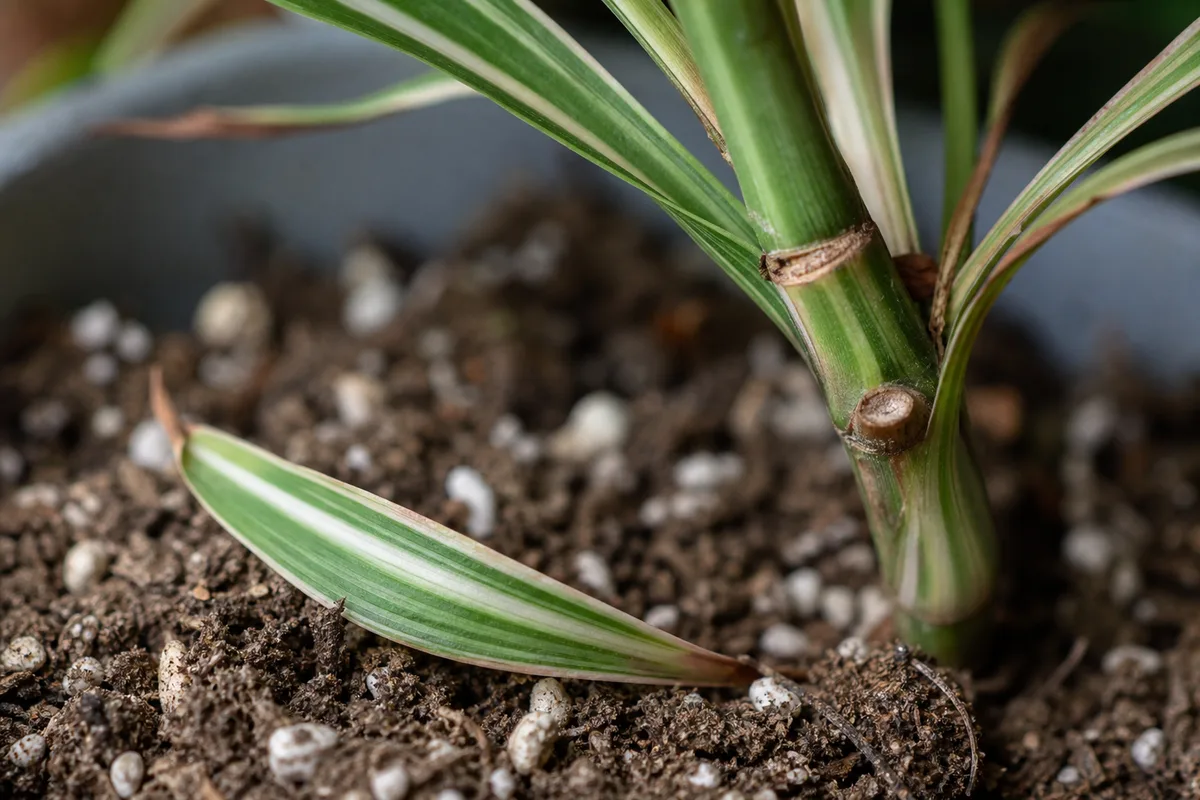
Leaf Drop symptoms on Song of India - compare with healthy tissue on the same plant.
Normal senescence - One oldest leaf per rosette yellows and falls while stems stay firm, soil follows a normal dry-down, and new tip growth keeps crisp chartreuse margins. Bare lower cane is visible; upper whorls look healthy.
Cold-draft drop - Multiple leaves fall within days after a chill event near a window or vent. Leaves may show darkened or water-soaked patches on outer rosettes. Stems usually stay firm; soil moisture may be normal.
Low-light accelerated drop - Lower leaves yellow and fall faster than tip growth replaces them. Chartreuse margins fade to muddy green; long bare stem sections appear. Soil often stays wet for two weeks or more in the same dim corner.
Overwatering drop - Cluster drop on a heavy pot that stays damp for days. Yellow lower foliage may precede fall. Sour smell, fungus gnats, or soft stem base signal escalation toward root rot.
Underwatering drop - Crispy fallen leaves, very light pot, dry mix several centimeters down. Often overlaps with limp foliage-see wilting for the dry-vs-wet distinction.
Repot or move shock - Drop begins within days of repotting or relocation while stems remain firm and soil follows your normal rhythm. Usually slows within three to four weeks if you stop stacking changes.
Light-change drop - Timing matches a recent window move. Drop without widespread limp tissue on firm stems; new growth may look pale or scorched depending on whether light increased or decreased.
How to confirm the cause
Work through this checklist before fertilizing, repotting again, or moving the plant:
- Drop pattern - One lower leaf at a time on firm stems points to senescence. Many leaves within days points to shock or watering stress.
- Temperature - Note AC vents, winter window ledges, or nights below about 55°F (13°C). Cold drafts and sudden temperature changes are common drop triggers.
- Depth moisture - Push your finger or a skewer 3–5 cm into the mix. Record wet, evenly damp, or dry-not surface color alone.
- Pot weight - Lift the container. Heavy days after watering with cluster drop suggests overwatering; very light with crispy fallen leaves suggests drought.
- Light quality - Faded chartreuse margins, stretch, or a dim corner plus wet soil suggests the low-light overwatering trap-check the light guide.
- Recent care events - Repot, move, or light change within the past month? Allow three to four weeks stabilization before declaring failure.
- Stem firmness - Pinch stems at the soil line. Firm stems with wet soil may mean pause watering; soft or denting stems mean inspect roots before dry-down alone.
- Tissue texture - Leaves falling crisp and dry with firm stems often mean cold or light shock. Limp leaves that then drop point to water-pathway failure-see wilting.
- Pest scan - Inspect undersides and stem joints for webbing, stippling, or cottony masses on stressed plants.
Lookalike symptom comparison
| Pattern | Soil / pot | Stem | Leaf / drop pattern | Likely cause |
|---|---|---|---|---|
| One lower leaf fading | Normal dry-down | Firm | Oldest rosette only; tips variegated | Normal senescence |
| Mass drop after chill | Often moist, normal weight | Firm | Outer leaves first; may look water-soaked | Cold draft / temperature shock |
| Steady lower drop in dim room | Stays wet 2+ weeks | Firm | Fade before fall; muddy margins | Low light + wet soil |
| Cluster drop, heavy pot | Wet, slow to dry | Firm or soft at base | Yellow lower leaves, no limp phase | Overwatering / root stress |
| Crispy fallen leaves | Dry, light pot | Firm | Dry edges; may have been limp first | Underwatering |
| Drop days after repot | Variable | Firm | Scattered leaves; care was recent | Repot / move shock |
| Drop after window move | Variable | Firm | Drop without widespread limp tissue | Sudden light change |
| Stippling + webbing | Variable | Firm | Speckled dull foliage before drop | Spider mites / aphids |
If several patterns overlap-wet soil plus cold window-address the most urgent risk first (stop watering when sour and soft, move off the cold ledge) before secondary fixes.
First fix for Song of India
Match your first action to what the checklist confirmed-one change at a time.
- Normal lower-leaf senescence: Let yellow leaves drop naturally; remove fully dry spent blades. No watering or repot change needed.
- Cold draft: Relocate away from vents and cold glass; hold watering steady while the plant stabilizes in 65 to 75°F range.
- Low light + wet soil: Move to bright indirect light first, then adjust watering because transpiration will increase-see not enough light.
- Overwatering: Stop watering until the top 3–5 cm dries completely. If sour smell or mushy roots appear, follow the root rot protocol.
- Underwatering: Water thoroughly once until a small amount exits the drainage hole, then resume the dry-down rhythm.
- Repot or move shock: Hold steady-bright indirect light, consistent watering checks, no second repot or fertilizer for three to four weeks.
- Sudden light change: Acclimate over seven to fourteen days if moving to much brighter exposure; adjust watering to match the new transpiration rate.
Do not fertilize, mist heavily, or repot on day one while diagnosing drop. Do not increase watering because leaves are falling when the pot is already wet.
Recovery timeline
Judge recovery by new rosette growth at stem tips, not by leaves reappearing on bare lower cane.
- Normal senescence only: Next whorl continues normally; bare lower stem is permanent architecture, not failure.
- Cold shock on firm stems: Drop should slow within one to two weeks after temperature stabilizes. First new firm whorl often appears in two to four weeks during warm bright conditions.
- Mild overwatering caught early: Once soil dries and stems stay firm, cluster drop should stop within one to two weeks. Expect new tip growth in two to four weeks.
- Repot or move shock: Allow the full three-to-four-week stabilization window before repotting again or changing light dramatically. Gradual reduction in drop is the early win.
- Light correction: New whorls with restored chartreuse margins often appear in four to six weeks after adequate bright indirect light and matched watering.
- Severe root damage: Recovery can take six to eight weeks after trim-and-repot, or require stem cuttings if the base collapses-see root rot.
Worsening signs-continued mass drop on wet soil, soft stem at soil line, or no new growth eight weeks after corrections-mean escalate inspection, not more fertilizer.
What not to do
Do not pull partially yellow leaves-let them drop naturally so the plant does not tear living tissue. Do not increase watering when leaves are falling and the pot is already wet. Do not place Song of India in direct midday sun to “fix” low light without seven-to-fourteen-day acclimation. Do not repot, move, prune heavily, and fertilize on the same day while diagnosing drop.
When cleaning fallen leaves, keep pets away-Song of India is toxic to cats and dogs if ingested. Ingestion can cause vomiting, hypersalivation, loss of appetite, and depression in dogs; cats may show dilated pupils. Contact your veterinarian or the ASPCA Animal Poison Control Center at (888) 426-4435 if ingestion is suspected.
How to prevent leaf drop next time
Site in bright indirect sunlight with protection from harsh direct sun and drafts. Water when the top 3–5 cm dries-not on a calendar alone-using moist, well-drained potting mix with perlite. Dim corners require longer dry-down intervals than east-window summer growth; review the watering guide for seasonal rhythm.
Acclimate light changes over seven to fourteen days when moving to a brighter spot. After repotting, wait three to four weeks before stacking fertilizer or another relocation. Accept occasional lower-rosette senescence on mature stems as normal. Learn your pot’s weight when correctly watered so heavy-vs-light checks become quick habit.
Avoid cold exposure below about 55°F (13°C) and sudden care overhauls the week you bring a new plant home-stabilize light first, then fine-tune water.
When to worry
Treat as urgent when mass drop pairs with wet sour soil, stems soften at the base, or chill exposure was severe-those patterns can precede advanced root rot or cold injury. Lower urgency when a single bottom leaf yellows on a firm plant with crisp new variegation-that is usually aging.
If drop comes with limp hanging leaves rather than crisp fallen blades, work through wilting first-the water-pathway diagnosis differs. If lower leaves yellow before they fall, see yellow leaves for the overlap between yellowing and drop.
Contact a veterinarian or APCC if a pet chews leaves while you are cleaning up dropped foliage.
Related guides: Song of India overview · Watering · Light · Wilting · Overwatering · Underwatering · Root rot · Not enough light · Yellow leaves · Spider mites · Aphids
When to use this page vs other Song of India guides
- Song of India watering guide - Use for routine moisture checks before assuming leaf drop is the main issue.
- Song of India problems hub - Browse all 17 common issues on this species.
- Yellow Leaves on Song of India - Different entry point when symptoms overlap with leaf drop.
- Drooping Leaves on Song of India - Different entry point when symptoms overlap with leaf drop.
- Root Rot on Song of India - Different entry point when symptoms overlap with leaf drop.