Drooping Leaves on Song of India: Causes, Checks & Fixes
Quick answer
Drooping leaves on Song of India mean the whorled foliage has lost turgor-most often from dry soil or from roots damaged by overwatering. First step: lift the pot and check moisture 3–5 cm deep before you water or withhold water.
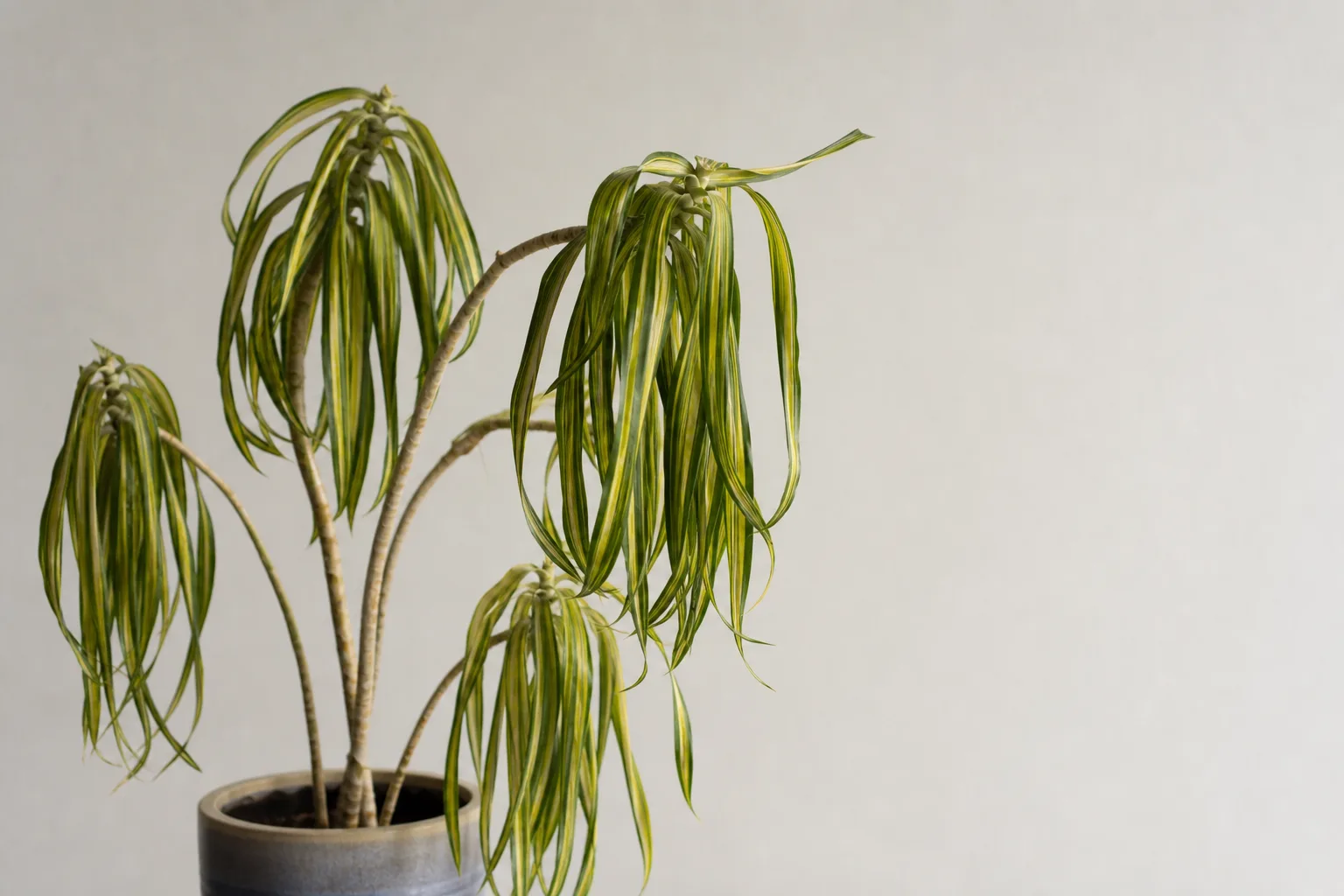
Drooping Leaves on Song of India: Causes, Checks & Fixes
This guide covers drooping leaves on Song of India. See also the general Drooping Leaves guide, watering, and light pages for this plant.
Drooping Leaves on Song of India: Causes, Checks & Fixes
Quick answer
Drooping leaves on Song of India (Dracaena reflexa ‘Variegata’) look like whorls of narrow, variegated foliage hanging limply from flexible stems instead of standing at their usual angle. The plant is losing turgor-internal water pressure-so leaves cannot stay rigid. That can happen when the mix is too dry, when roots in soggy soil can no longer absorb water, or when a sudden light or temperature shift outpaces what the root system can supply.
First step: lift the pot and check soil moisture 3–5 cm deep before you change anything. A light, dry pot with firm stems usually needs water. A heavy, wet pot with soft tissue at the base needs less water and a root inspection-not another drink. Guessing wrong is the fastest way to turn a recoverable droop into rot.
What drooping leaves look like on Song of India
Song of India carries spirally arranged, sword-shaped leaves in whorls along upright but flexible stems. Healthy foliage feels glossy and springy; each whorl holds its shape with a slight outward arch. When turgor drops, the pattern changes in recognizable ways:
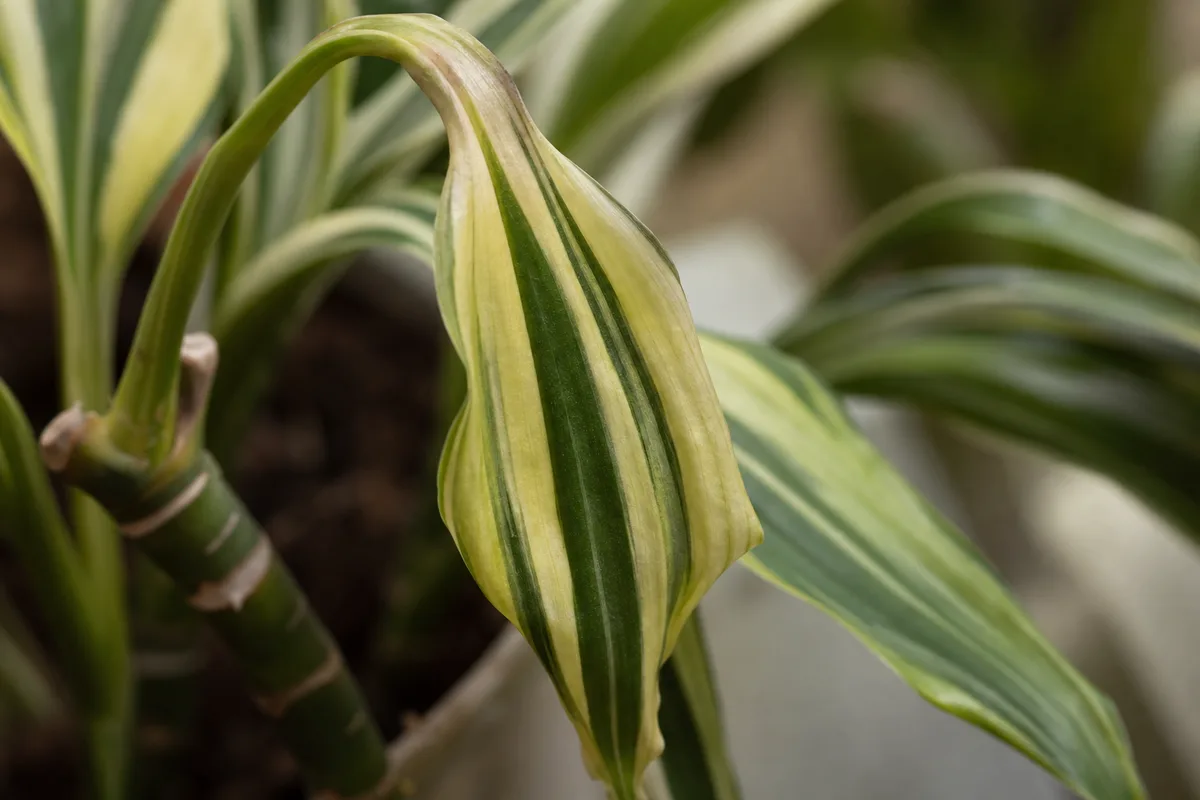
Drooping Leaves symptoms on Song of India - compare with healthy tissue on the same plant.
Typical droop from thirst or mild stress:
- Individual leaves hang downward instead of angling away from the stem
- Whole whorls sag so stem tips look heavier than the base
- Leaf color often stays green or variegated early on-droop comes before widespread yellowing
- Pot feels light; mix is dry several centimeters down
- Stems feel firm when you pinch the base
Droop tied to root failure or chronic wet soil:
- Leaves droop even though the surface or deeper mix feels damp
- Lower whorls go limp first while the pot stays heavy for days after watering
- New tips may look pale, stalled, or smaller than usual
- A sour or swampy smell from the drainage hole suggests decay
- Stem tissue near the soil line feels soft or yields when pressed
Environmental droop:
- One side of the plant hangs more after a move to a hotter or brighter spot
- Temporary sag after Song of India repotting guide, with firm stems and evenly moist-not soggy-mix
- Limp foliage after a cold night near a drafty window, sometimes with crisped margins later
Drooping is not the same as normal lower-leaf aging. Song of India slowly sheds oldest leaves at the base over time, revealing bare stem sections-that is expected architecture, not an acute droop event. Acute droop affects attached, living whorls across the active part of the stem.
Why Song of India leaves droop
Song of India overview sits in a narrow band between too dry and too wet. Its narrow leaves lose water steadily in bright rooms, but the root system cannot tolerate long periods of saturation.
underwatering on Song of India and dry pockets
Song of India should be watered when the top 3–5 cm of mix dries, not on a fixed weekly schedule. In strong indirect light, a small pot can go from adequately moist to too dry within a few days-especially in winter when indoor heating lowers humidity. When roots cannot replace what narrow leaves transpire, whorls lose rigidity and hang.
Peat-based mix that has dried completely can also repel water, leaving dry pockets around roots even after you think you watered. The pot may feel heavy on top while roots stay thirsty below.
overwatering on Song of India and root damage
Dracaena reflexa is susceptible to root rot when soil stays wet too long or drainage is poor. Damaged roots cannot move water upward, so leaves droop despite wet mix-the same confusing pattern as underwatering, but with opposite soil conditions. Oversized pots, blocked drainage holes, and saucers that hold standing water are common indoor triggers.
Clemson HGIC notes that too much water, poor drainage, and root rot from slow-draining mix are central problems on dracaenas. Song of India’s flexible stems hide early root stress; drooping whorls are often the first obvious sign before stems soften.
Light and heat stress
The variegated Song of India needs bright indirect light to keep dense foliage and strong leaf color. In too much shade, growth weakens and whorls may hang from lack of vigor rather than a single dry spell. Conversely, a sudden move to harsh direct sun-especially midday sun through glass-can increase water loss faster than roots supply, causing temporary droop on the exposed side.
Cold drafts and temperature swings
Song of India is sensitive to cold and should not sit where room temperatures dip below about 65°F (18°C). Cold slows root activity abruptly. Leaves can droop even when moisture looks adequate because roots are not functioning at full capacity. Air-conditioning vents, winter window sills, and frequently opened exterior doors are frequent culprits.
Recent repotting or relocation
Transplant shock disturbs fine roots. Temporary droop for several days after repotting is common if stems stay firm and mix is evenly moist but not waterlogged. Major light or room changes without acclimation produce a similar short-term sag while the plant adjusts.
How to confirm the cause
Work through these checks in order. Each step narrows the cause before you treat.
- Pot weight - Lift the container. Light and dry suggests thirst; heavy and wet suggests root stress.
- Moisture at depth - Push a finger or bamboo skewer 3–5 cm into the mix. Surface dryness with damp depth means wait before watering; dry all the way down with limp whorls means rehydrate.
- Stem firmness - Pinch the lowest inch of stem above the soil. Firm tissue supports underwatering or environmental droop; soft or hollow tissue with wet mix means inspect roots.
- Smell and drainage - Sour odor or water sitting in the saucer hours after watering points to saturation problems.
- Recent changes - Repotting, new window, heater season, or vacation drought? Timeline often matches the trigger.
- New growth - Healthy firm tips with only lower whorls drooping may be normal aging plus mild thirst. Stalled pale tips with wet soil suggests root trouble.
- Light level - Is the plant in bright indirect light, dim shade, or direct hot sun? Match droop pattern to placement.
If the pot is light, mix is dry throughout, and stems are firm, underwatering is the most likely cause. If the pot is heavy, mix stays wet, and stems are softening, treat as root failure until inspection proves otherwise.
First fix for Song of India
Lift the pot, check moisture 3–5 cm deep, and act on what you find-do not water by reflex.
- If dry with firm stems: water thoroughly until excess drains from the bottom, empty the saucer, and recheck whorl firmness in a few hours.
- If wet with firm stems: stop watering until the top half of the mix dries; improve drainage and airflow; do not repot on day one.
- If wet with soft stems or sour smell: withhold water, unpot, and inspect roots before any other fix.
This single diagnostic step prevents the two most costly mistakes-soaking a plant that is already drowning, or letting a dry Song of India wilt further while you wait.
Do not fertilize, mist heavily, or prune large sections during acute droop. Extra inputs stress a plant that needs stable root-zone conditions first.
Step-by-step recovery
After the first moisture check, follow the path that matches your diagnosis.
If underwatering caused the droop
- Water slowly until water runs from drainage holes-dry peat may need two passes spaced minutes apart.
- For severely dry mix, bottom-water by placing the pot in a basin of room-temperature water for 20–30 minutes, then let excess drain fully.
- Move the plant out of hot direct sun until whorls firm again.
- Recheck in 6–24 hours. Most thirst droop improves within that window.
- Resume your normal rhythm: water when the top 3–5 cm dries, not on a calendar.
If overwatering or root rot caused the droop
- Stop watering immediately. Let the top half of the mix dry before any next drink.
- If stems are soft or smell is sour, unpot and rinse roots. Trim brown, mushy tissue with clean scissors; keep only firm pale roots.
- Repot into fresh, well-draining mix with perlite in a pot with open drainage holes-same size or slightly smaller, not oversized.
- Wait several days before the first light watering on the new mix.
- Place in bright indirect light with stable temperatures above 65°F.
- Hold fertilizer until new growth looks healthy for two weeks.
If environmental shock caused the droop
- Move away from cold drafts, AC blasts, and hot window glass.
- For light shock, acclimate gradually-filter harsh sun with a sheer curtain or pull the pot back from the pane.
- Keep soil moisture steady-not wet-while the plant adjusts over one to two weeks.
- Avoid repotting and heavy pruning during recovery.
Recovery timeline
Simple underwatering: Whorls often firm within 6–24 hours after proper rehydration. Lower leaves that bent sharply may stay slightly angled but should not continue worsening.
Overwatering without advanced rot: After you dry the mix and fix drainage, expect gradual improvement over one to three weeks as roots recover. Judge progress by firm new tips, not old limp whorls.
Root rot with trimming and repot: Recovery takes several weeks to a few months, depending on how much healthy root and stem tissue remains. New leaf whorls opening with normal variegation are the best sign.
Repotting or relocation shock: Temporary droop usually resolves within 3–10 days if stems stay firm and moisture is balanced.
Persistent droop beyond 48 hours after you corrected moisture for the diagnosed cause warrants a root inspection.
Lookalike symptoms to rule out
Wilting vs drooping: On Song of India the terms overlap, but drooping emphasizes hanging whorls with reduced spring rather than sudden collapse. The diagnostic path is the same-check pot weight and stem firmness first.
Leaf drop without droop: Mass yellowing and falling leaves with wet soil may be advancing root failure or cold shock. See leaf-drop patterns if whorls shed before they hang.
Brown tips only: Fluoride or low humidity often scorch margins while whorls stay fairly firm. Switch to filtered water and raise humidity if tips brown but the plant is not limp.
Leggy sparse growth: Too little light produces stretched stems and weak whorls that hang from poor vigor. Improving light fixes structure over weeks, not hours.
Pest damage: Spider mites, mealybugs, and scale can stress Song of India, but droop from pests usually comes with stippling, webbing, or visible colonies-not uniform limp whorls alone.
Mistakes to avoid
Do not water automatically because leaves hang-wet-soil droop gets worse with more water.
Do not place a drooping plant in direct midday sun to “perk it up.” Heat increases water loss on already stressed roots.
Do not repot, prune heavily, and fertilize the same week. Stack one correction at a time.
Do not assume droop always means thirst. Heavy pots with damp mix need drying and root checks, not a deep soak.
Do not use cold tap water on fluoride-sensitive dracaenas when tips are already browning-room-temperature filtered or distilled water reduces further margin damage during recovery.
How to prevent drooping next time
Site Song of India in bright indirect light, protected from direct sun except limited early morning rays and from cold drafts. Keep room temperatures above 65°F and humidity moderate.
Keep soils uniformly moist but not wet, watering when the top 3–5 cm of mix dries, using well-draining potting mix with perlite. Empty saucers after watering. Reduce frequency in winter when growth slows.
Choose a pot sized to the root ball-not dramatically larger-and confirm drainage holes stay open.
Learn your plant’s dry weight by lifting the pot when mix is properly moist versus due for water. That habit catches drought before whorls hang.
Avoid changing light, pot size, and Song of India watering guide all at once after bringing a new plant home.
When to worry
Act quickly when drooping pairs with wet soil for more than a few days, soft stems at the base, blackening tissue climbing from the soil line, or a sour root-zone smell. That pattern can progress to stem rot that is hard to reverse.
Also escalate if droop persists more than 48 hours after you corrected moisture for the likely cause, or if new tips stay pale and stalled while lower whorls collapse.
Mild droop on a light pot with dry soil and firm stems is lower urgency-rehydrate and monitor. Not every sagging whorl means the plant is dying.
If most of the root system is mushy and the stem base is hollow, take healthy stem cuttings as backup before the last firm tissue fails. Song of India can be propagated from cuttings once wounds callus.
Conclusion
Drooping Song of India leaves are a water-balance signal on a plant with narrow whorled foliage and flexible stems. Lift the pot, read moisture at depth, and feel stem firmness before you water or withhold water. Thirst droop rebounds quickly when rehydrated; wet-soil droop needs drying, root inspection, and patience. Match watering to how fast your pot dries in its actual light-not to a generic schedule-and whorls should stay springy through the seasons.
When to use this page vs other Song of India guides
- Song of India watering guide - Use for routine moisture checks before assuming drooping leaves is the main issue.
- Song of India problems hub - Browse all 17 common issues on this species.
- Underwatering on Song of India - Different entry point when symptoms overlap with drooping leaves.
- Overwatering on Song of India - Different entry point when symptoms overlap with drooping leaves.
- Root Rot on Song of India - Different entry point when symptoms overlap with drooping leaves.