Wilting on Song of India: Causes, Checks & Fixes
Quick answer
Wilting on Song of India is misleading-the same limp leaves can mean underwatering or root failure from overwatering. First step: lift the pot and check whether the top 3–5 cm of mix is dry or soggy before you add water.
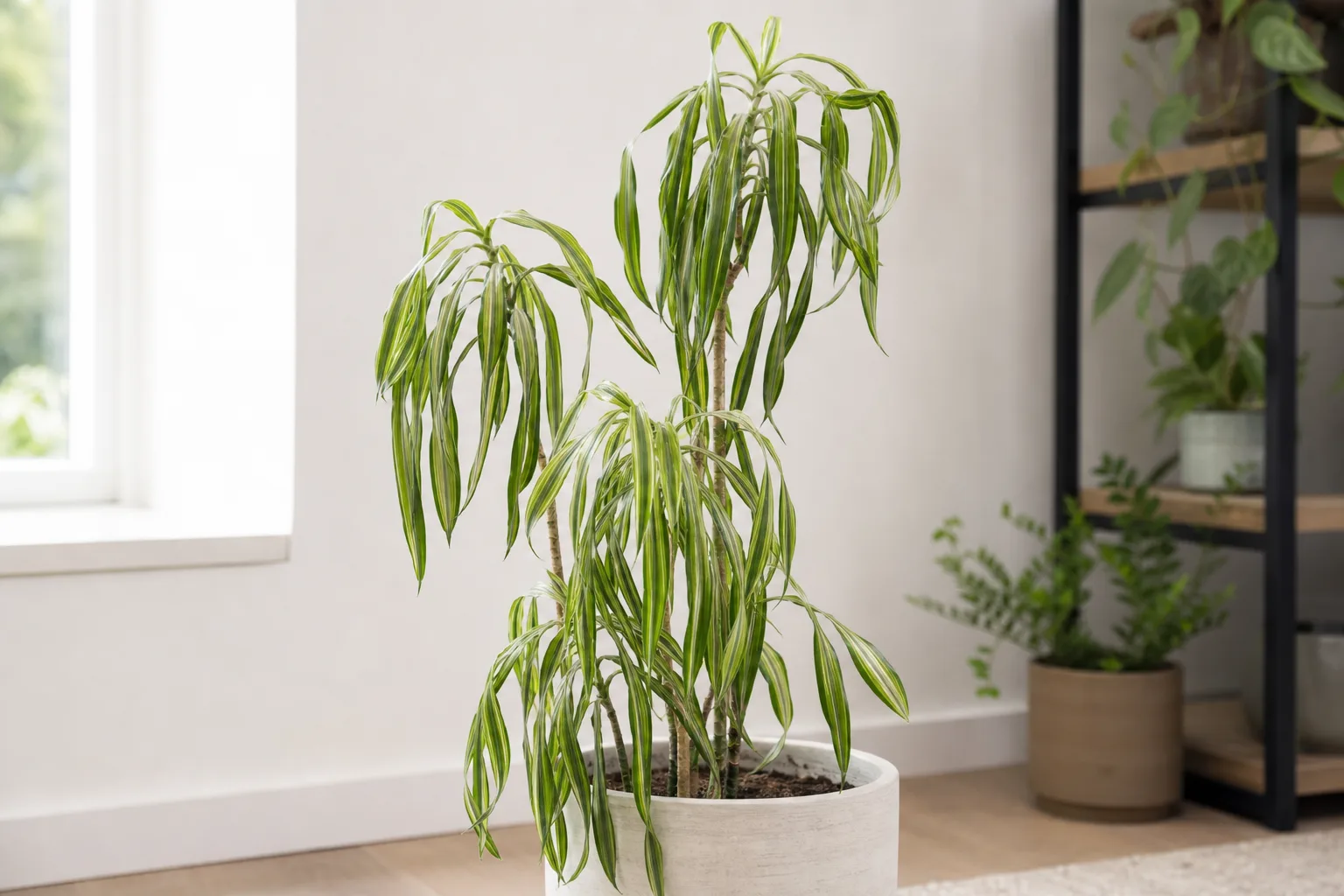
Wilting on Song of India: Causes, Checks & Fixes
This guide covers wilting on Song of India. See also the general Wilting guide, watering, and light pages for this plant.
Wilting on Song of India: Causes, Checks & Fixes
Quick answer
Use this page for acute collapse - when spiral whorls of variegated foliage on Song of India (Dracaena reflexa ‘Variegata’) lose firmness across the active stem at once. For softer sectional sag that develops slowly, see drooping leaves on Song of India. For daily dry-down rhythm, see the Song of India watering guide.
Wilting on Song of India is one of the most confusing symptoms in houseplant care because opposite problems look identical. Narrow, variegated leaves lose turgor and hang limp whether the roots are starved for water or drowning in saturated mix. Wilted leaves may indicate the soil is too dry or too wet-rotting roots cannot take up water, so the plant collapses even when water is abundant.
First step: lift the pot and check soil moisture 3–5 cm deep before you reach for the watering can. A light, dry pot with firm stems usually means underwatering. A heavy, wet pot with soft stems at the base usually means root failure from overwatering-not thirst. Getting that distinction right on day one prevents the classic mistake of drowning an already rotting dracaena.
Dry-wilt vs wet-wilt at a glance
| Soil at 3–5 cm | Pot weight | Stem base | First move |
|---|---|---|---|
| Dry, dusty | Light | Firm | One thorough soak; drain saucer |
| Wet for days | Heavy | Firm | Stop watering; improve airflow |
| Wet, sour smell | Heavy | Soft | Unpot; inspect roots - see root rot |
| Even moisture, afternoon only | Normal | Firm | Move from hot glass; no water change |
| Dry surface, damp mid-pot | Misleading | Firm | Probe mid-depth; avoid surface-only watering |
Wilting vs drooping on this plant
Both describe limp foliage from failed turgor, but intent differs:
- Wilting (this page) - Sudden, often plant-wide collapse of attached whorls. Common after a missed watering in a bright east window, a heat spike through glass, or advanced root failure on wet soil.
- Drooping - Softer sag along lower whorls or one side of the plant, sometimes chronic in dim corners. May develop over days without full stem-wide crash. See drooping leaves on Song of India for that pattern.
The diagnostic path is the same: probe moisture depth and pot weight first. If you are unsure which URL fits, start here when collapse felt fast and widespread; switch to the drooping guide when sag is sectional and gradual.
When to read sibling guides instead
| What you see | Start here | Read next |
|---|---|---|
| Acute limp whorls, dry or wet soil unclear | This page | - |
| Gradual lower-whorl sag, no sudden crash | Drooping leaves | Watering |
| Confirmed dry soil, light pot, firm stems | Underwatering | Watering |
| Wet soil, yellow lower leaves, heavy pot | Overwatering | Root rot |
| Mushy roots, sour smell, soft cane base | Root rot | Repotting |
| Brown tips only, no full wilt | Brown tips | Watering |
What wilting looks like on Song of India
Song of India carries spirally arranged leaf whorls of glossy green leaves edged in chartreuse or cream on upright cane-like stems. When turgor drops, those narrow leaves fold, curl, or hang from the stem instead of standing at their usual stiff angle. The whole rosette may lean toward the window. Lower leaves often show the stress first, though severe drought or rot can affect the entire plant at once.
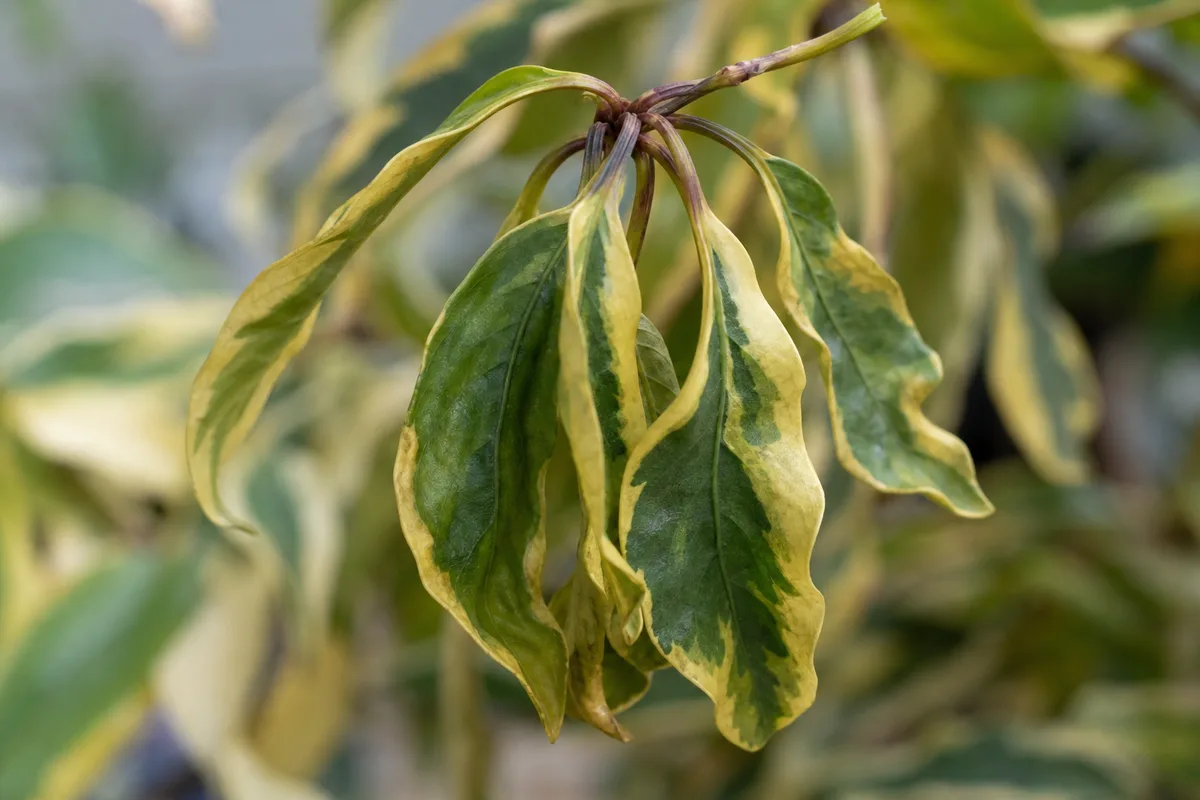
Wilting symptoms on Song of India - compare with healthy tissue on the same plant.
Dry-wilt pattern - Mix is light, top 3–5 cm feels dusty, and soil may pull away from pot walls. Leaf margins may crisp or tan at the tips. Stems feel firm when you pinch them at the base. The plant often perks noticeably within hours after a confirmed deep watering.
Wet-wilt pattern - Pot stays heavy for days after the last drink. Mix smells sour or musty near the drainage hole. Leaves yellow-often lower foliage first-while staying limp. A sudden loss of many leaves can be caused by too much water or poor drainage. Stems at the soil line feel soft or spongy when pressed. Wilt worsens or persists despite wet soil. Fungus gnats at the surface often signal chronic sogginess.
Temporary wilt - Slight afternoon droop on a warm day with otherwise moist, firm soil often reflects normal transpiration in bright indirect light. Leaves typically firm up by evening if roots are healthy. Cold drafts below about 65°F can cause similar short-lived collapse on this tropical species.
Do not confuse wilting with leggy sparse growth from chronic low light-that is a slow fade, not acute limp tissue. Wilting is a same-day or same-week collapse of leaf firmness.
Why Song of India wilts
Song of India evolved as a tropical shrub in warm, humid islands of the western Indian Ocean. Indoors it wants moist, well-drained potting mix and steady brightness-not desert dryness and not peat soup. Wilting happens when the water pathway between roots and leaves breaks, regardless of how much water sits in the pot.
Underwatering and hydrophobic dry pockets
Underwatering is the honest cause. Clemson HGIC recommends allowing dracaenas to dry slightly between waterings, then watering thoroughly. Miss enough dry-down cycles-especially in bright east-window light where the plant transpires actively-and fine roots die back. The mix becomes hydrophobic: water runs down the sides without wetting the root ball, and wilt persists even after you pour. See underwatering on Song of India when dry soil is confirmed.
Chronic drought damages fine roots before the whorls look dramatically limp. Recovery after repeated dry spells takes longer than after one missed watering-expect days to weeks, not hours, even after a good soak.
Overwatering, cachepots, and root rot
Overwatering and root rot produce the deceptive opposite. Overwatering deprives roots of oxygen; damaged roots cannot transport water upward. Song of India in a dim corner uses water slowly, so the same summer schedule keeps mix saturated for weeks. Oversized pots, cachepots without drainage, and heavy peat mix accelerate the pattern-runoff collects at the bottom and re-wets roots every day even when the surface looks dry. Root rot may occur if soils are poorly drained or over watered.
Light and water mismatch (variegated trap)
Variegated Dracaena reflexa needs bright indirect light to keep dense foliage and strong leaf color-more than many solid-green dracaena forms. In low light the plant transpires less, soil stays wet longer, and chronic sogginess rots roots-then the plant wilts looking “thirsty.” Moving to brighter light without adjusting frequency can also shock leaves into temporary wilt until the plant acclimates. Full placement guidance is in the light guide.
The post-rot fear loop
Many growers who saved a Song of India from rot start under-watering out of caution. The pot stays light, fine roots desiccate, and the plant wilts again-this time from drought. After a root-trim rescue, return to the dry-down rule in the watering guide once stems are firm and mix is dry at depth-not perpetual drought.
Cold exposure, repotting shock, and heat spikes
Song of India is sensitive to cold and grows best between roughly 65–80°F. A plant beside a winter window or air-conditioning vent may wilt on wet soil because cold roots cannot uptake water efficiently.
Repotting shock and afternoon heat near unfiltered glass cause shorter wilt episodes. Disturbed roots underperform for days. Heat can exceed root supply temporarily-distinct from rot because stems stay firm and soil moisture is even. Follow the repotting guide for timing after root work.
How to confirm the cause
Work through these checks in order before changing anything:
- Pot weight - Lift the nursery pot. Light compared to right after watering means dry; heavy and cold means wet.
- Soil probe - Push a finger or bamboo skewer 3–5 cm deep. Dry and clean = drought pattern. Cool, clinging mix = saturation pattern. Dry surface with damp mid-pot means probe deeper before you pour.
- Stem firmness - Pinch stems at the soil line. Firm = safer to soak if dry. Soft or denting = suspect rot even if surface looks dry.
- Smell and drainage - Sour odor from the hole, fungus gnats at the surface, or water pooling in a saucer support wet-wilt diagnosis.
- Light and placement - Is the plant in bright indirect light or a dim corner? Did you recently move it to a sunnier window or a cold draft?
- Recent care - Calendar watering without checks, repotting within two weeks, or winter watering on a summer schedule all narrow the cause.
If the pot is dry throughout, stems are firm, and wilt appeared after a missed watering week, underwatering is likely. If soil is wet deep down, stems are soft, and yellow leaves accompany wilt, root failure is likely until inspection proves otherwise.
Unpot only when wet-wilt signs are strong-mushy roots confirm rot; firm white or tan roots on wet soil may mean poor drainage without advanced decay yet.
First fix for Song of India
Lift the pot, probe the mix 3–5 cm deep, and record whether it is dry or wet before you add or withhold water.
That single check prevents the two most common kill moves: soaking a rotting plant or letting a dry plant sit another day because wilt “might be rot.” Do not fertilize, mist heavily, or repot on day one unless stems are already soft and soil is sour.
If dry: one thorough soak until water exits the drainage hole, then empty the saucer within thirty minutes. If wet with firm stems: stop watering and improve airflow until the top half of the mix dries. If wet with soft stems: stop watering, unpot, and inspect roots before any other step.
Step-by-step recovery
When the mix is dry and stems are firm
- Water slowly at the soil surface until excess runs from the hole-one session, not small daily sips.
- If water races through without soaking the ball, bottom-water for twenty to thirty minutes, then drain fully.
- Place in stable bright indirect light-not harsh unfiltered south sun on a stressed plant.
- Recheck weight after twenty-four hours. Turgor should improve within a day if roots are healthy.
- Resume normal dry-down watering when the top 3–5 cm dries again per the watering guide.
When the mix is wet but stems are still firm
- Stop all watering until the top 3–5 cm and mid-pot feel dry on a skewer.
- Remove the pot from any cachepot that traps runoff. Confirm the drainage hole is open.
- Move to brighter indirect light if the plant was in a dim spot-light helps the mix dry and roots recover oxygen.
- When dry-down checks say ready, water once thoroughly with room-temperature water and drain completely.
- Hold fertilizer for at least four weeks.
When stems are soft and roots are mushy
- Unpot gently and rinse roots. Healthy dracaena roots are firm and pale; rot is brown, slimy, and smells sour.
- Trim all mushy tissue with clean scissors back to firm material. Sterilize blades between cuts.
- Let the plant air on newspaper in bright indirect light for several hours so cut surfaces dry.
- Repot into fresh loamy, peaty, well-drained potting soil with extra perlite. Use the same or slightly smaller pot-never upsize into wet territory. Full steps: repotting guide.
- Wait five to seven days before the first light watering unless the plant was only lightly trimmed.
- Skip fertilizer until new leaf whorls look firm and green for two weeks.
If upper stems remain firm, the plant can survive losing much of the root mass. If rot has climbed into the cane, cut healthy stem sections for propagation before tissue fails completely.
Annotated recovery example
A variegated Song of India in a 15 cm nursery pot wilted plant-wide after ten summer days beside an east window. The grower lifted the pot-it felt feather-light; soil at 3–5 cm was dusty; stems at the base were firm. One slow top-water until runoff, saucer emptied, and the whorls firmed within fourteen hours. A different plant in a decorative cachepot wilted on wet soil with yellow lower leaves and a sour drainage smell. Stems dented at the soil line. After unpotting, roughly one-third of roots were brown and mushy. Trim, air-dry, and repot into perlite-amended mix one size down produced firm new whorls at the tips in about five weeks-old limp leaves were removed, not revived.
Recovery timeline
Underwatering - Noticeable perk within 12–48 hours after a confirmed full soak. Crispy tip damage on old leaves will not reverse; new whorls should look firm within a week.
Mild overwatering without rot - Stabilization takes one to two weeks of dry-down discipline. Yellow lower leaves may drop; stopping further yellowing is the early win.
Root rot after trimming - Expect two to four weeks before wilt stops worsening. New growth at stem tips is the best success signal-often four to eight weeks in warm bright conditions, longer if recovery starts in winter.
Chronic drought root damage - May take one to two weeks after rehydration before turgor returns, even when a single soak would fix a simple dry spell.
Temporary heat or cold wilt - Should resolve within 24–72 hours once temperature stabilizes and soil moisture is appropriate.
Old wilted leaves rarely become glossy again. Judge recovery by firm new foliage, stable stem bases, and pot weight that cycles predictably between light and saturated.
Worsening signs - Stems continue softening after dry treatment, wilt spreads while soil stays wet, or no new growth appears by mid-spring after corrective care.
Lookalike symptoms
| What you see | Likely cause | Key difference |
|---|---|---|
| Limp whorls, dry light pot | Underwatering | Perks after one deep soak |
| Limp whorls, wet heavy pot | Root rot / overwatering | Stays wilted after watering |
| Afternoon limpness, firm by evening | Heat stress | Soil moisture stable |
| Dry surface, wilt persists | Hydrophobic dry pocket | Mid-pot dry; water runs down sides |
| Brown tips only, firm whorls | Fluoride / low humidity | See brown tips |
| Fine stippling, webbing | Spider mites | Spider mites guide |
| Long bare stems, faded margins | Low light (leggy) | Slow stretch, not acute collapse |
Drooping without full wilt - Often the same water-pathway issue; check soil the same way. Chronic low-light droop develops slowly over months with fading variegation, not sudden collapse.
Leaf drop without limp tissue - Temperature shock or sudden light change can drop lower leaves while upper whorls stay firm. Fix environment before assuming rot.
Normal afternoon droop - Firm stems, even soil moisture, recovery by evening. No intervention beyond consistent care.
What not to do
Do not water automatically because leaves look limp-confirm soil first. Wet-wilt plus extra water accelerates rot.
Do not move a wilted plant into harsh direct sun hoping light will revive it. Stressed dracaena leaves scorch; use bright filtered light.
Do not fertilize a wilted Song of India. Salt stress on damaged roots worsens uptake failure.
Do not repot into a larger container while soil is wet and stems are soft-extra wet volume slows drying.
Do not mist as a substitute for watering-surface moisture does not rehydrate roots and can encourage foliar problems in stagnant air.
When handling trimmed roots or cut stems, wear gloves if sap irritates your skin. Dracaena is toxic to cats and dogs-keep cuttings and tools away from pets. If a pet chews leaves or stems, contact your veterinarian or the ASPCA Animal Poison Control Center promptly-do not wait for symptoms to worsen.
How to prevent wilting next time
Match watering to the dry-down rule: water when the top 3–5 cm dries, then soak and drain completely. Keep soils uniformly moist but not wet-the goal is moisture with aeration between drinks, not constant dampness. Full rhythm: Song of India watering guide.
Place Song of India where it receives bright indirect light for several hours daily so transpiration and watering stay in sync. Adjust frequency when seasons change-winter dim corners need longer intervals than summer east windows.
Use well-draining mix with perlite, pots with open drainage holes, and empty saucers after every session. Avoid calendar watering without lifting the pot.
Learn each pot’s saturated weight during the first month-that baseline makes dry versus wet wilt obvious before leaves collapse. Each morning, pinch the newest whorl at the stem tip: firm, glossy tissue means the water pathway is working.
Keep temperatures above 65°F and away from cold drafts. When moving to brighter light, acclimate over seven to fourteen days to prevent shock wilt.
Quarantine new plants and never let nursery pots sit in full saucers inside cachepots.
When to worry
Escalate immediately if stems dent at the base, soil smells sour while wilt worsens, or inspection shows mostly mushy roots. Those patterns rarely self-correct without trimming and repotting.
Mild wilt on dry soil with a light pot can wait for a proper soak-urgency is low if stems are firm.
If more than half the root mass is mushy after trimming, or rot has entered the lower cane, survival odds drop. Propagate firm upper stem cuttings via the propagation guide while tissue is still healthy.
If wilt cycles repeat despite correct dry-down checks, contact your local cooperative extension office or master gardener helpline for hands-on diagnosis-photos of roots and pot setup help.
Related Song of India guides
- Song of India overview
- Song of India watering
- Song of India light
- Song of India repotting
- Song of India propagation
- Drooping leaves on Song of India
- Underwatering on Song of India
- Overwatering on Song of India
- Root rot on Song of India
- Brown tips on Song of India
- Fungus gnats on Song of India
- All Song of India problems
Conclusion
Wilting on Song of India is a diagnostic puzzle, not a single disease. The same limp variegated leaves can mean dry roots or dying roots on wet soil. Lift the pot, probe 3–5 cm deep, and feel stem firmness before you water. Soak and drain when dry; stop and inspect when wet. When sag is gradual rather than acute, start with drooping leaves; when culture is the question, anchor on the watering guide. Prevent recurrence with dry-down watering, bright indirect light, drainage discipline, and seasonal adjustments-Song of India forgives a late drink far more willingly than it forgives roots sitting in stale moisture week after week.