Fungus Gnats on Song of India: Causes, Checks & Fixes
Quick answer
Fungus gnats on Song of India almost always mean the top of the potting mix stays wet too long-ideal breeding ground for larvae that stress dracaena roots. First step: stop watering until the top 3–5 cm of mix is dry, then adjust your rhythm from there.
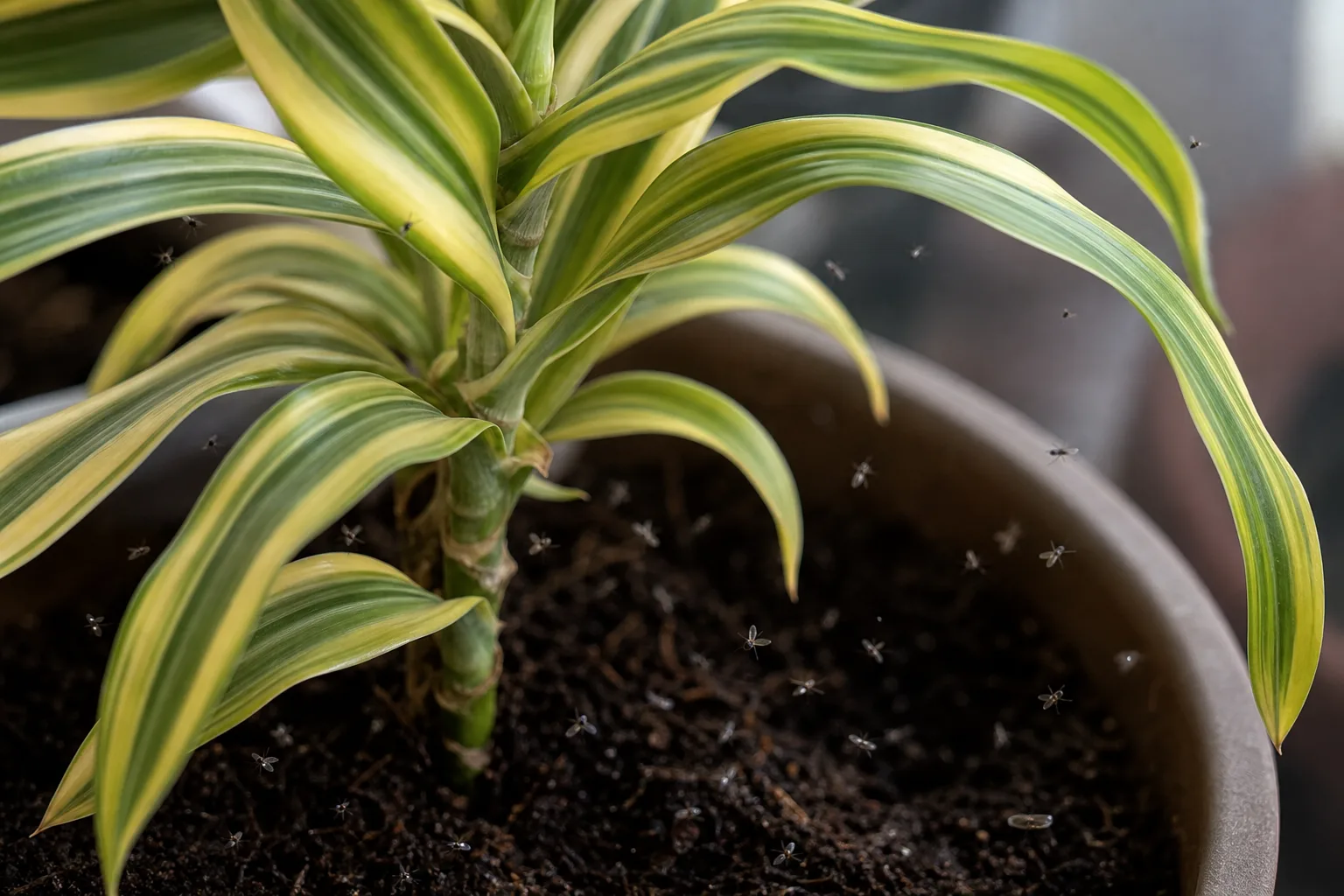
Fungus Gnats on Song of India: Causes, Checks & Fixes
This guide covers fungus gnats on Song of India. See also the general Fungus Gnats guide, watering, and light pages for this plant.
Fungus Gnats on Song of India: Causes, Checks & Fixes
Quick answer
Fungus gnats on Song of India (Dracaena reflexa) are a moisture alarm, not a random pest invasion. The flies themselves are mostly a nuisance, but they breed in damp potting soil-especially mix with a high percentage of peat-that puts dracaena roots at risk.
First step: stop watering until the top 3–5 cm of mix is completely dry. Song of India wants evenly moist roots-not a constantly wet surface. Letting that upper layer dry breaks the gnat life cycle and aligns watering with what Song of India overview actually needs. Do not reach for sprays, Song of India repotting guide, or systemic treatments until you have corrected the wet-soil habit that invited the gnats in the first place.
What fungus gnats look like on Song of India
Adult fungus gnats are tiny, delicate, dark gray or black flies roughly 1/8 inch long. They flutter around the pot-not high across the room like some other insects-and rise in a small cloud when you water or disturb the soil surface. You may notice them resting on the rim of the container, on nearby windows, or on the variegated leaves near the soil line.
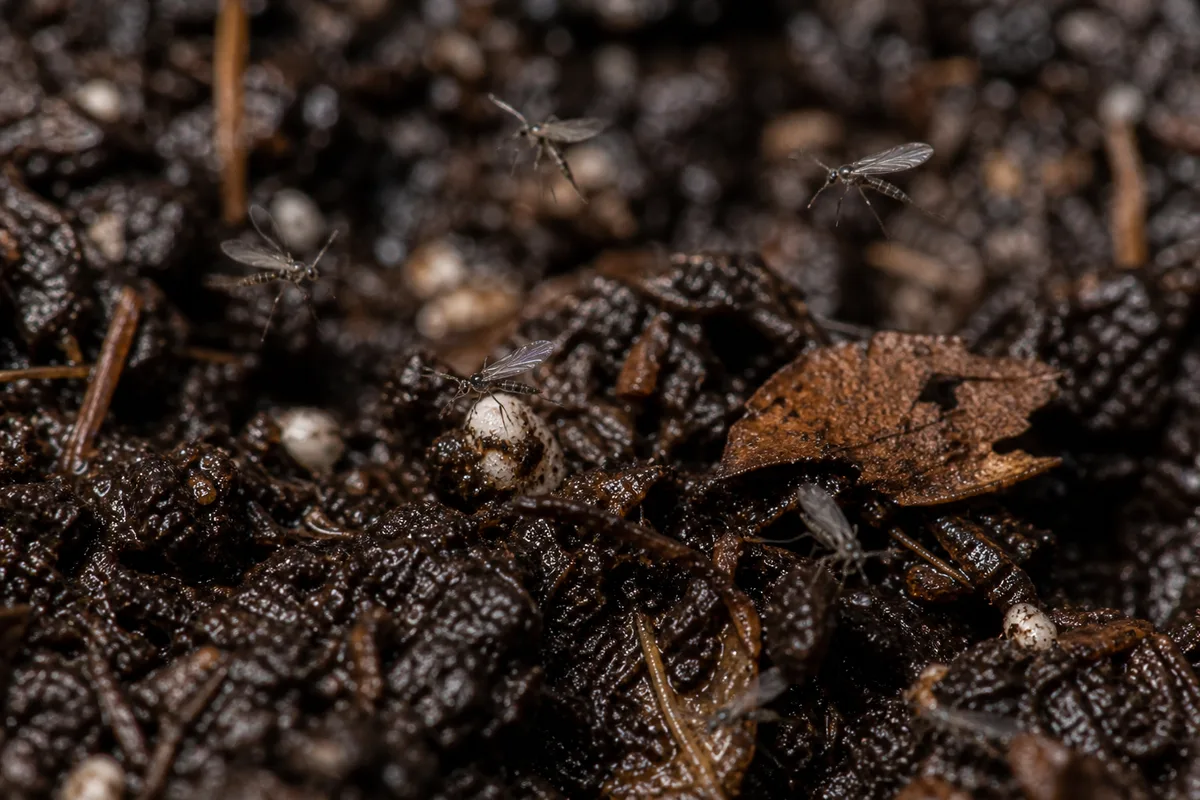
Fungus Gnats symptoms on Song of India - compare with healthy tissue on the same plant.
The larvae matter more for plant health. Immature gnats live in the top 2–3 inches of moist potting mix, feeding on fungi, decaying organic matter, and tender feeder roots. On a mature Song of India with a woody stem and established root ball, larval damage is often mild at first. The real danger is the wet conditions that sustain both gnats and root decay-not the flies alone.
Watch for these paired signals:
- Tiny flies concentrated at soil level when the pot is watered
- Topsoil that stays dark and cool to the touch for many days after a drink
- Fine white worm-like larvae visible when you scrape the surface lightly
- Yellow sticky traps catching dozens of small gnat-shaped adults within a week
- Lower leaf yellowing or drooping that does not match a simple dry-out
Song of India rarely shows leaf chewing or stippling from gnats-the damage is underground and indirect. If leaves look pierced, sticky, or webbed, you are likely dealing with a different pest.
Why Song of India gets fungus gnats
Dracaena reflexa is grown in a loamy, peaty, well-drained indoor mix that holds some moisture around the roots. That structure works when you water on a pot-dryness schedule. It becomes gnat habitat when the surface never dries between drinks.
overwatering on Song of India on a calendar is the most common trigger. Song of India should be watered when the top 3–5 cm of mix dries-not every Tuesday because the app says so. Watering while the upper layer is still damp keeps the organic top layer wet long enough for female gnats to lay eggs and for larvae to survive.
Low light slows drying. This plant needs Song of India light guide to maintain variegation and steady growth. In a dim corner, the same volume of water sits in the mix far longer. A pot that would dry in four days under good light may stay surface-wet for ten in shade-long enough for a full gnat generation.
Dense or aged peat compacts over time, holding water at the surface while lower mix may still feel acceptable. Decorative cache pots without drainage, saucers left full, and oversized containers where a small root ball swims in wet mix all extend surface moisture.
Fresh nursery soil can introduce eggs. New Song of India plants quarantined in a warm room with other overwatered dracaena spread the problem quickly because adults are weak fliers but walk and hop between nearby wet pots.
The connection to root health is direct. Song of India is sensitive to root rot from poorly drained or overwatered soil-the same cultural mistake that breeds gnats also starves roots of oxygen and invites decay. Gnats are often the visible tip of an invisible moisture problem.
How to confirm the cause
Work through these checks before adding traps or soil treatments:
- Fly behavior - Do insects rise from the soil when watered and stay near the pot? That pattern fits fungus gnats. Fruit flies cluster around kitchens; shore flies prefer algae on saucers.
- Surface moisture - Insert a finger to the second knuckle (about 3–5 cm). If it feels cool and damp several days after watering, the surface is too wet for gnat control and for safe dracaena watering.
- Pot weight - Lift the container. A heavy pot days after a drink suggests slow drainage or excess water relative to what the plant is using.
- Larva check - Scrape aside the top centimeter of mix with a spoon and look for translucent, legless larvae with dark heads. Even a few confirm active breeding in the soil-not just stray adults from elsewhere.
- Plant stress signs - Firm stem, stable variegation, and only cosmetic lower leaf loss suggest gnats arrived early. Wilting with wet mix, soft tissue at the soil line, or climbing yellowing suggests moisture damage beyond flies.
- Light and placement - Confirm the plant receives bright indirect light most of the day. Chronic shade plus gnats usually means the pot is not cycling water fast enough.
- Drainage - Drainage holes open? Saucer empty within an hour of watering? Cache pot holding standing water?
If flies appear but the top 3–5 cm dries within a few days and you find no larvae, adults may be wandering from a neighboring infested pot-still worth sticky traps, but fix the wettest plant in the group first.
First fix for Song of India
Stop watering until the top 3–5 cm of mix is fully dry.
That single change does two jobs: it removes the moist egg-laying site adult gnats need, and it stops the overwatering pattern that stresses dracaena roots. Check daily with your finger rather than guessing from leaf droop-Song of India can look slightly limp when adjusting to drier surface conditions without being in crisis.
Do not soak the plant to “flush” gnats. Do not repot on day one unless the mix smells sour or roots are mushy on inspection. Do not cut back healthy foliage. Correct moisture first; everything else follows from how the root zone responds.
Step-by-step recovery
Once the surface-dry rule is in place, add these steps in order based on severity:
- Set one yellow sticky trap near the soil surface-not as your primary fix, but to monitor and capture adult fungus gnats as the mix dries properly between drinks.
- Empty saucers and improve airflow - Pour out standing water after each watering. A small fan in the room helps surface mix dry without blasting cold drafts on tropical dracaena.
- Apply BTI if larvae persist - For heavy infestations where larvae remain visible after two weeks of corrected watering, soak a piece of mosquito dunk (Bacillus thuringiensis israelensis) in your watering can and drench the top layer. Repeat every five to seven days for three to four applications to catch newly hatched larvae. BTI targets larvae in soil and is safe for houseplants when used as labeled.
- Consider bottom watering temporarily - Water from the bottom so roots absorb moisture while the surface stays drier. Place the pot in a tray for 15–30 minutes, useful if you tend to pour too heavily from the top. Remove excess water afterward.
- Top-dress or scrape the surface - A half-inch layer of coarse sand or fine gravel, or gently loosening the top centimeter to expose eggs to air, can reduce egg-laying when combined with drying cycles. This supports drying-it does not replace it.
- Inspect roots only if stems soften - If the base feels mushy or the mix smells sour, unpot and trim brown mushy roots, then repot into fresh well-draining mix with perlite. That is a rot response, not a routine gnat treatment.
- Quarantine new plants - Keep fresh arrivals separate for two to three weeks with their own trap so nursery eggs do not reinfest your corrected Song of India.
Avoid spraying pyrethrin aerosols into the air-they miss larvae in soil and add unnecessary chemical exposure indoors. Neem drenches and hydrogen peroxide can knock down larvae briefly but do not fix chronically wet peat; drying and BTI are more reliable for sustained control.
Recovery timeline
Expect two to four weeks of consistent surface drying before adult counts drop noticeably. Gnat life stages overlap-eggs, larvae, pupae, and adults emerge in waves-so a good week can be followed by a small rebound until the soil habitat stays unfavorable long enough.
Signs you are winning:
- Fewer flies when you water
- Top 3–5 cm dry on schedule before each drink
- Sticky trap catches declining over successive weeks
- Firm stem and new variegated growth at the tip
- No sour smell from the mix
Signs the problem is deepening:
- Wilting with wet soil
- Yellow leaves spreading up the cane
- Soft, discolored tissue at soil line
- Larvae still abundant after a month of corrected watering
- Gnat swarms increasing despite dry surface-check neighboring pots
Damaged lower leaves on Song of India do not green up again-they can be trimmed once new top growth looks stable. Roots stressed by long wet periods recover slowly; judge success by firm stem tissue and fresh whorled leaves, not instant fullness.
Lookalike symptoms
Fruit flies hover around ripening produce and trash, not consistently at a single houseplant soil line. Remove kitchen sources and see if flies remain at the dracaena pot.
Shore flies breed in algae on wet saucers and greenhouse floors. Cleaning standing water and algae breaks their cycle; soil drying alone may not.
Mold on soil surface often shares the same overwatering cause as gnats. White or fuzzy growth on peat is fungal, not larval-still a sign the top layer stays too wet.
Leaf-drop from cold or low light can coincide with winter overwatering but lacks the flying adults. Check temperature stays above 18°C and light is adequate before blaming gnats alone.
Mistakes to avoid
- Watering on schedule while gnats are active - Calendar watering keeps the surface wet. Switch to finger-depth checks until the infestation clears.
- Drenching to kill flies - Extra water worsens breeding conditions and root stress on dracaena.
- Repotting every gnaty plant immediately - Fresh peat that is then overwatered reinfects quickly. Fix the habit first; repot only when mix structure has failed or rot is confirmed.
- Relying on traps alone - Sticky cards catch adults but ignore larvae in moist soil.
- Keeping Song of India in low light to “reduce evaporation” - Shade slows growth and drying, making both gnats and rot more likely. Improve light within safe indirect range.
- Ignoring saucer water - Roots wick standing water back into the mix, keeping the surface damp overnight.
Song of India care cross-check
Align gnat recovery with normal care for this species:
- Light: Bright indirect exposure so the plant uses water at a steady rate
- Water: Top 3–5 cm dry between drinks; uniform moisture below, not soggy surface
- Soil: Well-draining potting mix with perlite; refresh when peat compacts
- Humidity: Average room levels (40–60%) are fine-do not mist heavily onto soil surface while fighting gnats
- Temperature: Avoid cold drafts below 18°C; chill slows uptake and leaves water sitting longer
If brown tips appear during recovery, fluoride-heavy tap water or low humidity may be separate issues-address them after moisture and gnat pressure stabilize.
How to prevent fungus gnats next time
Prevention is habitat management:
- Water when the top 3–5 cm dries, every time-no exceptions during cool months when uptake slows
- Use pots with drainage holes and empty saucers promptly
- Choose airy mix with perlite rather than straight heavy peat for indoor dracaena
- Place a yellow sticky trap near the pot as an early-warning monitor, especially after bringing plants indoors in fall
- Quarantine new Song of India purchases before grouping with existing collections
- Remove fallen leaf debris from the soil surface so it does not hold extra moisture
One dry surface cycle between waterings is the most effective long-term control-and it matches how this plant stays healthiest.
When to worry
Treat fungus gnats as urgent when they arrive with root-zone failure signs: soft stem base, sour-smelling mix, wilting despite damp soil, or mushy roots on inspection. Those symptoms mean rot may already be advancing-not a scenario where you wait out another week of sticky traps.
A handful of gnats on an otherwise firm, variegated Song of India in good light is a correctable watering issue, not a death sentence. Adjust moisture, monitor for two to four weeks, and escalate to BTI or root inspection only if larvae or plant decline persist.
If the cane above firm tissue stays healthy, the plant can outgrow minor root hair damage once soil conditions improve. If rot has climbed into the stem, propagation from a firm cutting may be the backup-but that is a rot decision, not a standard gnat response.
When to use this page vs other Song of India guides
- Song of India watering guide - Use for routine moisture checks before assuming fungus gnats is the main issue.
- Song of India problems hub - Browse all 17 common issues on this species.
- Overwatering on Song of India - Different entry point when symptoms overlap with fungus gnats.
- Mold on Soil on Song of India - Different entry point when symptoms overlap with fungus gnats.
- Root Rot on Song of India - Different entry point when symptoms overlap with fungus gnats.