Mold on Soil on Song of India: Causes, Checks & Fixes
Quick answer
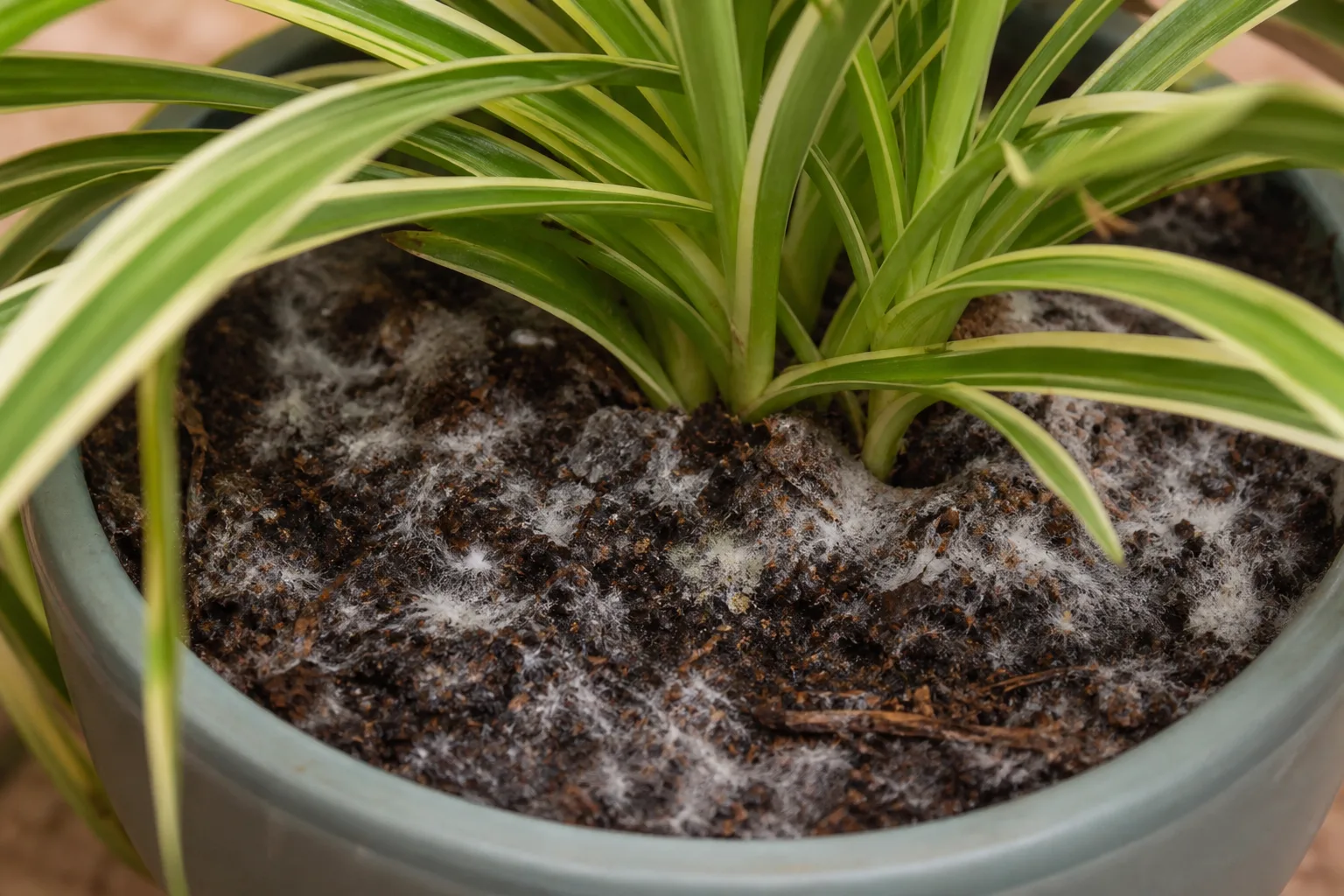
Fluffy white or gray mold on Song of India potting mix is usually harmless surface fungus feeding on damp organic matter-not a leaf disease. The real risk is the wet soil that grows it, which can stress Dracaena reflexa roots. First step: scrape the moldy top layer and do not water again until the top 3–5 cm of mix is dry.
Mold on Soil on Song of India: Causes, Checks & Fixes
This guide covers mold on soil on Song of India. See also the general Mold on Soil guide, watering, and light pages for this plant.
Mold on Soil on Song of India: Causes, Checks & Fixes
Quick answer
White or gray fuzzy growth on Song of India (Dracaena reflexa) potting mix is almost always saprophytic fungus-organisms feeding on organic matter in a persistently damp surface layer. The mold itself is rarely dangerous to firm, healthy stems. What matters is why the top of the mix never dries, because Song of India roots need oxygen and can [decline when soil stays wet too long](https://www.missouribotanicalgarden.org/gardens-gardening/your-garden/help-for-the-home-gardener/advice-tips-resources/insects-pests-and-problems/environmental/[overwatering on Song of India](/plants/song-of-india/overwatering/)).
First step: scrape off the top 1–2 cm of moldy soil, discard it, and do not water again until the top 3–5 cm of mix is completely dry. That removes active spores on the surface and breaks the overwatering pattern that keeps fungus growing. Do not reach for fungicide sprays, cinnamon dust, or Song of India repotting guide on day one until you have confirmed how wet the pot actually stays.
What mold on soil looks like on Song of India
Surface mold on indoor dracaena pots typically appears as:
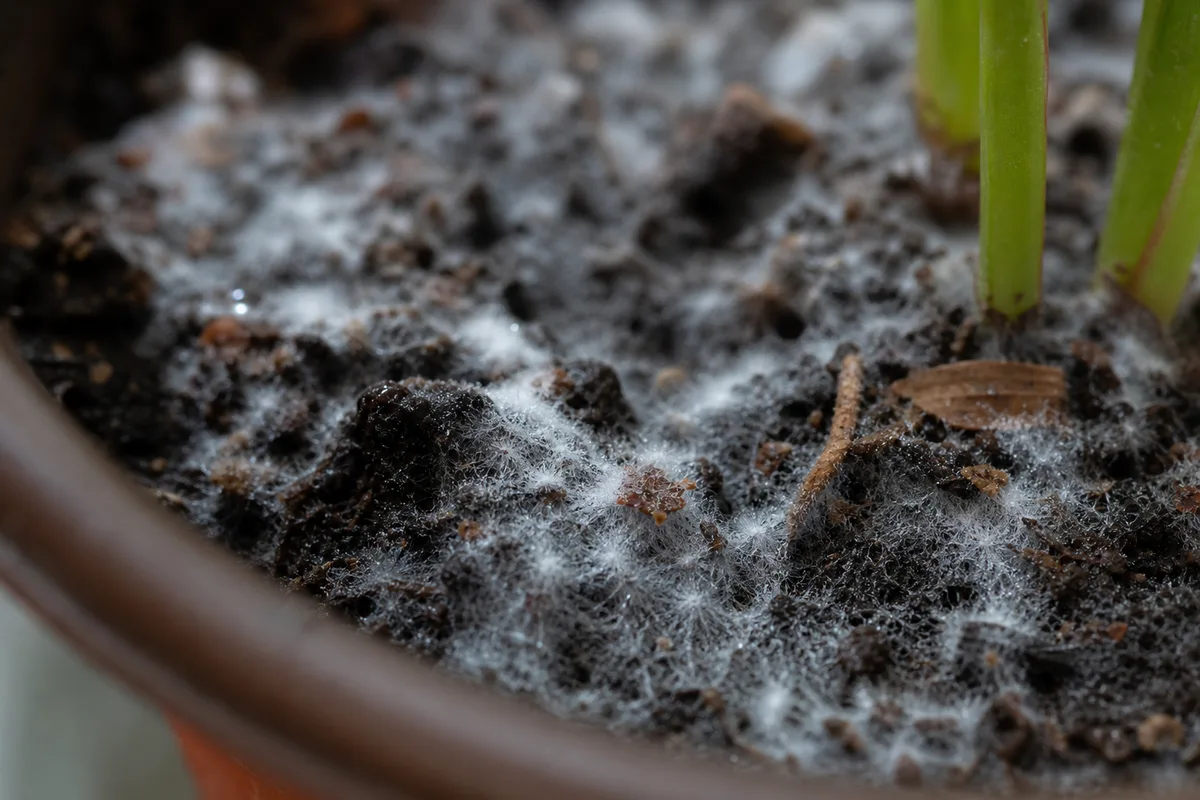
Mold on Soil symptoms on Song of India - compare with healthy tissue on the same plant.
- A fluffy white, gray, or sometimes yellowish film across the top of the mix
- Patches that spread outward from fallen leaf bits, bark fines, or peaty organic particles
- Growth concentrated after winter watering when lower light slows evaporation
- A musty smell when you scrape the surface, without sour rot odor from the root zone
- Soil that looks dark and cool at the top for many days after a drink
Song of India grows from a woody cane with whorled variegated leaves. Mold on the mix does not usually climb stems or spot leaves unless a separate issue is present. If you see powdery white patches on leaf surfaces, sticky residue, or webbing, you are likely dealing with a foliar pest or mildew-not the same as soil-surface fungus.
Healthy plants with cosmetic mold often look otherwise normal: firm stem, stable yellow-green variegation, and no wilting tied to the fuzzy soil. The warning sign is the dampness underneath, not the fuzz itself.
Why Song of India gets mold on soil
Dracaena reflexa is typically grown in a loamy, peaty, well-drained indoor mix. That structure holds moderate moisture around the roots-which works when you water on a dryness schedule. It becomes mold habitat when the surface stays wet between drinks.
Overwatering before the top dries is the most common trigger. Song of India should be watered when the top 3–5 cm of mix dries-not on a fixed calendar. Pouring while the upper layer is still damp keeps peat and bark fines wet long enough for saprophytic fungi to colonize the surface.
Low light slows drying. This plant needs Song of India light guide to maintain variegation and steady water use. In a dim corner, the same watering volume sits near the surface far longer. A pot that dries in four days under good light may stay surface-wet for ten in shade-enough for mold to appear and return after each scrape.
Dense or aged peat compacts over time, holding water at the top while lower mix feels acceptable. Oversized containers, cache pots without drainage, saucers left full, and decorative moss or stone toppers all trap humidity on the soil line where spores land from indoor air.
Cool winter rooms reduce uptake. When temperatures dip toward the lower end of Song of India overview’s comfort range and growth slows, water demand drops-but many growers keep the same watering frequency, leaving the surface chronically damp through the darker months.
Mold and fungus gnats often appear together. Both thrive in moist, organic-rich topsoil. Gnats are the flying signal; mold is the fungal mat signal-same underlying moisture mistake.
How to confirm the cause
Work through these checks before adding treatments beyond scraping and drying:
- Surface moisture timing - Insert a finger to the second knuckle (about 3–5 cm). If it feels cool and damp several days after watering, the surface is too wet for safe dracaena care-not just mold-friendly.
- Pot weight - Lift the container. Heavy weight days after a drink suggests slow drainage or excess water relative to what the plant is using in current light.
- Stem firmness - Pinch the cane at and just above the soil line. Firm tissue with only soil mold points to cosmetic fungus on a wet surface. Soft, discolored, or collapsing base tissue suggests root-zone damage underway.
- Smell test - Musty surface smell fits saprophytic mold. Sour, rotten, or fermented odor from deeper in the pot points to anaerobic root stress-urgent, not cosmetic.
- Light check - Confirm bright indirect exposure most of the day. Chronic shade plus mold usually means the pot is not cycling water fast enough for Song of India.
- Drainage - Are holes open? Is the saucer empty within an hour? Does a decorative outer pot hold standing water against the nursery pot?
- Companion pests - Do tiny flies rise when you water? Larvae in the top centimeter of mix confirm the shared wet-soil habitat mold indicates.
- Return rate - Scrape once and track how fast fuzz reappears. Mold back within three to five days means moisture habits-not spores alone-still favor growth.
If the top 3–5 cm dries on schedule, stems stay firm, and a small mold patch appeared once after overwatering, a single scrape plus corrected rhythm is usually enough. Recurring fuzz with damp topsoil every week means the environment-not bad luck-is the cause.
First fix for Song of India
Scrape off the top 1–2 cm of moldy mix with a spoon, discard it in the trash (not compost), and stop watering until the top 3–5 cm is fully dry.
That paired action removes the visible fungal mat and stops feeding new growth with fresh surface moisture. Check daily with your finger rather than guessing from leaf droop-Song of India can look slightly limp while the surface adjusts to a drier cycle without being in crisis.
Do not mist the soil surface. Do not pour hydrogen peroxide or cinnamon as a substitute for drying. Do not repot on day one unless the mix smells sour or stems feel mushy on inspection. Fix the wet surface habit first; secondary steps follow only if mold or plant decline persists.
Step-by-step recovery
After the initial scrape and watering pause:
- Resume watering only at dry depth - When the top 3–5 cm is dry, water thoroughly until a little drains from the bottom, then empty the saucer. Never add a drink while the upper layer still feels cool and damp.
- Improve airflow around the pot - Good air circulation and spacing plants slightly apart helps the surface dry without cold drafts directly on tropical dracaena foliage.
- Brighten placement within safe range - Move toward brighter indirect light if the plant has been in shade. Better light increases water use and shortens surface wetness windows.
- Remove surface debris - Pick off fallen Song of India leaves and organic litter on the mix. Decaying material feeds saprophytic fungi and holds moisture.
- Refresh the top layer if needed - After scraping, add a thin layer of dry, well-draining potting mix with perlite-not fresh wet peat piled on top-to replace removed material without sealing in dampness.
- Set a yellow sticky trap if small flies appear-monitor only; drying the surface is the primary control for both gnats and mold habitat.
- Inspect roots only if stems soften - Unpot, trim brown mushy roots, and repot into fresh airy mix if the base feels soft or the mix smells rotten. That is a rot response-overwatering and poor drainage are the usual root causes-not routine mold treatment.
- Repot chronic cases - If mold returns weekly despite corrected watering and good light, the peat may be compacted or the pot oversized. Repot in spring or early active growth into well-draining mix with perlite and a right-sized container.
Avoid fungicide sprays on indoor soil as a first response-they do not fix overwatering and add unnecessary chemical exposure in living spaces.
Recovery timeline
Expect one to two weeks of proper surface drying before mold stops reappearing after a scrape. Peaty mix releases moisture slowly; one dry cycle is not always enough if the pot was heavily overwatered for months.
Signs you are winning:
- No new fuzzy growth after the top 3–5 cm dries between drinks
- Surface lightens in color within a few days of watering
- Firm stem and new variegated whorls at the tip
- Fewer fungus gnats when you water
- No sour smell from the mix
Signs the problem is deepening:
- Mold returns within days despite scraping
- Yellow leaves spreading up the cane
- Wilting with wet soil
- Soft tissue at the soil line
- Top stays damp for a week or more after a single drink in adequate light
Cosmetic mold on the old surface does not “heal”-you remove it once and prevent new growth by drying. Lower leaves that yellowed from chronic wet roots do not green again; judge recovery by firm cane tissue and fresh top growth, not instant fullness.
Lookalike symptoms
Green algae on soil forms a slick green film in constant surface moisture and low light-not fuzzy white gray mold. Same moisture fix applies; algae often shares pots with overwatered dracaena in dim corners.
White mineral crust from hard water or fertilizer salts looks chalky and crusty, not fluffy. It does not spread as a mat overnight and often rings the pot rim. Flush or top-dress only after confirming it is not fungal.
Powdery mildew on leaves appears as dry white patches on foliage, not the pot surface. Song of India soil mold rarely jumps to leaves; foliar white growth needs a different diagnosis.
Fungus gnats without visible mold still mean wet topsoil. Treat the moisture pattern; flies and mold are companion signals, not mutually exclusive.
Mycelium in a new bag of potting mix can look alarming when you open fresh media. Saprophytic fungi are common in organic blends and are not the same as an established mold problem on a chronically wet potted plant.
Mistakes to avoid
- Scraping mold repeatedly without drying the surface - Spores return within days if the top stays wet. Scraping is cleanup, not cure.
- Watering on a calendar while mold is active - Fixed schedules keep peat damp. Switch to finger-depth checks until the surface stays dry between drinks.
- Drenching to “flush” fungus - Extra water worsens the condition that grows mold and stresses dracaena roots.
- Repotting every moldy plant immediately - Fresh peat that is then overwatered molds again within weeks. Fix the habit first; repot only when structure has failed or rot is confirmed.
- Keeping Song of India in low light to reduce evaporation - Shade slows growth and drying, making both mold and root stress more likely. Improve light within safe indirect range.
- Decorative moss or pot covers on the soil line - They trap humidity on exactly the layer where mold colonizes.
- Misting the soil or crown while fighting surface mold - Adds moisture where you need drying.
Song of India care cross-check
Align mold recovery with normal care for this species:
- Light: Bright indirect exposure so the plant uses water steadily and variegation stays crisp
- Water: Top 3–5 cm dry between drinks; uniform moisture below, not a constantly soggy surface
- Soil: Well-draining potting mix with perlite; refresh when peat compacts and surface stays dark
- Humidity: Average room levels (40–60%) are fine-avoid heavy misting onto the soil surface during recovery
- Temperature: Keep above 18°C; cold slows uptake and leaves water sitting longer in winter
If brown tips appear during recovery, fluoride in tap water or low humidity may be separate issues-address them after surface moisture stabilizes.
How to prevent mold on Song of India next time
Prevention is keeping the top layer dry enough between waterings that fungi cannot establish:
- Water when the top 3–5 cm dries, every time-especially in cool months when uptake slows
- Use pots with drainage holes and empty saucers promptly after each drink
- Choose airy mix with perlite rather than straight heavy peat for indoor dracaena
- Place plants where bright indirect light is realistic most of the day, not only where the pot looks best
- Remove fallen leaf debris from the soil surface promptly
- Skip decorative toppers that hold humidity against peaty mix
- Quarantine new purchases and watch their soil surfaces for early mold or gnats before grouping pots tightly
One reliable dry surface cycle between waterings prevents most recurring mold-and matches how Song of India stays healthiest.
When to worry
Treat surface mold as urgent when it arrives with root-zone failure signs: soft stem base, sour-smelling mix, wilting despite damp soil, yellowing climbing the cane, or mushy roots on inspection. Those symptoms mean rot may be advancing-not a scenario where you scrape and wait another week.
A small fuzzy patch on an otherwise firm, variegated Song of India in good light is a correctable watering issue, not a death sentence. Scrape, dry the surface properly, and monitor for two to three weeks before escalating to repotting or root surgery.
If the cane above firm tissue stays healthy, the plant can outgrow minor root hair stress once soil conditions improve. If rot has entered the stem, propagation from a firm cutting may be the backup-but that is a rot decision, not standard mold cleanup.
Conclusion
Mold on Song of India soil looks alarming but is usually harmless saprophytic fungus on a too-wet surface. The useful diagnosis is moisture, not mold species. Scrape the top layer, let the upper 3–5 cm dry before every drink, and improve light and airflow so the pot cycles water the way this dracaena expects. That path clears cosmetic fuzz, reduces gnat pressure, and protects roots from the overwatering that causes real damage.
When to use this page vs other Song of India guides
- Song of India watering guide - Use for routine moisture checks before assuming mold on soil is the main issue.
- Song of India problems hub - Browse all 17 common issues on this species.
- Fungus Gnats on Song of India - Different entry point when symptoms overlap with mold on soil.
- Overwatering on Song of India - Different entry point when symptoms overlap with mold on soil.
- Root Rot on Song of India - Different entry point when symptoms overlap with mold on soil.