Song of India Light: Best Window & Warning Signs
Song of India Light: Best Window & Warning Signs
Song of India Light: Best Window & Warning Signs
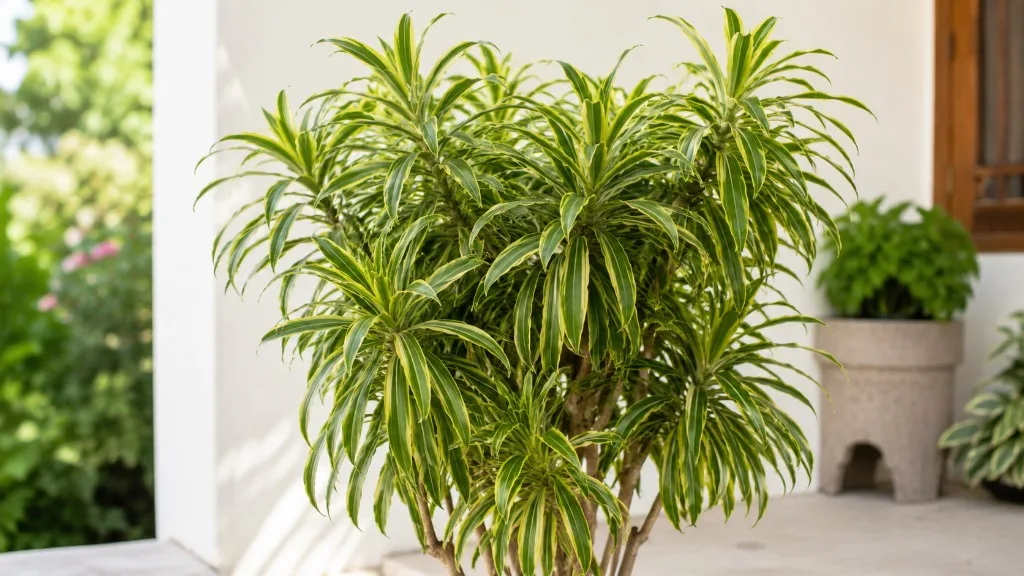
Song of India looks like the easiest statement plant in the shop - upright stems, glossy green leaves edged in chartreuse, no drama. Then you put it in a dim corner because someone said “dracaenas tolerate low light,” and within a few months the yellow margins fade to muddy green, lower leaves yellow and drop, and the whole plant starts to look sparse and leggy. The frustrating part is that Dracaena reflexa will survive in mediocre light long enough to make you think the placement is fine. It is not a pothos and not a Janet Craig dracaena. It is a variegated tropical shrub that needs real brightness behind window glass, and it will eventually tell you - through faded stripes, stretched internodes, or scorched leaf tips - whether it agrees with your window choice.
This guide covers the full indoor light picture for Song of India: how much brightness it actually needs, which window works best, how much direct sun is safe, what too much and too little light look like on the plant, when to add a grow light, how it compares to other dracaenas, and how to move the pot without burning foliage that spent months adapting to a dimmer spot.
The Short Answer: How Much Light Song of India Needs
Song of India grows best with bright, indirect light for most of the day - strong ambient light where the plant can “see” the sky without sitting in harsh midday sun on unfiltered south or west glass. NC State Extension lists bright, indirect sunlight indoors and partial shade outdoors - direct sunlight for part of the day, typically 2 to 6 hours. In indoor terms, that means placing the plant near an east-facing window, or two to four feet back from a south- or west-facing window with a sheer curtain if afternoon rays are intense.
A north-facing room without supplemental lighting is a poor long-term home. A plant more than four feet from any window is almost certainly under-lit for variegation, even if the room looks bright to your eyes. If your home cannot deliver that naturally, a full-spectrum LED grow light run 10 to 12 hours daily is the practical substitute. Judge success by firm new leaves with crisp chartreuse margins and compact spacing between leaf whorls, not by how decorative the pot looks in a dim hallway.
Why Song of India Needs More Light Than Most Dracaenas
Light is not a background detail for Song of India. It is the main driver of leaf color, stem density, growth speed, and whether the plant keeps the variegation you bought it for. A Dracaena reflexa in strong, appropriate light will use water at a steady pace, push new leaf whorls on stiff upright stems, and maintain the striped silhouette that makes it worth the floor space. A plant in dim light will drink slowly, stay wet longer, produce smaller all-green leaves on elongated stems, and often look acceptable for months while its lower foliage quietly drops away.
That matters because Song of India is frequently grouped with generic dracaenas that tolerate bright indirect light or even moderate shade. Dracaena fragrans ‘Janet Craig’ and Dracaena deremensis ‘Warneckii’ can look fine several feet from a window; Song of India cannot if you want the plant it was bred to be. Its variegated leaves need higher light intensity to produce and maintain the yellow-to-cream margins. Get the light wrong and you get leggy growth, fading variegation, accelerated lower-leaf drop, and root stress from slow metabolism in soggy soil.
What the Native Habitat Tells Us About Indoor Placement
In its native range across Madagascar, Mauritius, and other Indian Ocean islands, Dracaena reflexa grows as a tropical shrub in warm, humid environments with filtered to bright light - not deep forest shade. NC State Extension describes it as a slow-growing evergreen that reaches considerable height in the wild but stays manageable indoors. The plant did not evolve under dense canopy like a true understory species. It evolved where steady warmth and consistent bright light fuel the spiral whorls of variegated foliage.
That habitat maps to a bright indoor position with filtered direct sun, not a dark corner or a sheer-curtained reading nook alone. You are not trying to recreate a hallway with no windows. You are trying to give the plant as much usable light as window glass allows without scorching the variegated tissue - then supplementing in winter or in rooms where architecture blocks the sky. An east windowsill, or a filtered south or west exposure two to three feet from the glass, is the closest indoor analogue most homes can provide.
What Bright Indirect Light Means for Song of India
“Bright indirect light” is the phrase every houseplant guide repeats, but it means something specific for Song of India. The plant should receive strong, diffused light for most of the day - enough that you could read comfortably near the foliage without turning on a lamp, but without a hard sunbeam landing directly on the leaves for hours at a time. Outdoors, partial shade describes the same zone: brighter than deep shade, softer than open midday sun.
For Song of India, the better question is not “direct or indirect?” in the abstract. It is: Does enough light actually reach the leaves for multiple hours, and is the plant close enough to the window to receive it? Intensity drops sharply with distance. A plant on a bookshelf across the room from an east window is getting medium indirect light at best, regardless of how sunny the window looks. Song of India needs the light on the plant, not near the plant.
Human eyes adapt to indoor dimness faster than you notice. A simple test: hold your hand between the plant and the window around midday. A soft but visible shadow with defined edges means bright indirect light - usually ideal. A sharp, dark shadow means direct sun is hitting the plant - fine for short morning periods on an east window, risky on unfiltered south or west glass in summer. Almost no shadow means the spot is too dim for long-term variegation.
Why Variegation Depends on Light Intensity
The chartreuse and cream margins on Song of India are not decorative paint - they are areas with reduced chlorophyll that depend on the green portions of the leaf to photosynthesize efficiently. Producing and maintaining those lighter pigments requires higher light energy than an all-green dracaena needs. In low light, the plant reverts toward solid green because that maximizes photosynthetic surface area. The yellow stripes fade first, then lower leaves drop as the plant sheds tissue it cannot afford to maintain.
This is why two Song of India plants in the same home can look like different species. The one on an east sill keeps crisp contrast between dark green centers and bright margins. The one in a north-facing office loses its stripes within a season and develops bare lower stems. Both may technically be alive. Only one matches the plant on the nursery tag. If variegation is your reason for owning Song of India, treat light as non-negotiable - not something to optimize after you find the perfect decorative spot.
Best Window Placement for Song of India Indoors
The best window for Song of India is the one that delivers bright indirect light for the longest period without scorching the variegated margins. Distance matters as much as direction. Place the pot on or within one to three feet of the glass, not on a side table six feet into the room. Rotate the pot a quarter turn every week or two so the spiral growth does not lean permanently toward the light source. Wipe dust from the glossy leaves monthly with a damp cloth; clean foliage absorbs more usable light than dusty matte surfaces.
If the pot rim is hot to the touch at midday on a south or west window, pull the plant back slightly or add a sheer curtain during peak hours while keeping bright exposure for the rest of the day.
East and North Windows: The Sweet Spot for Variegated Foliage
An east-facing window is the default recommendation for Song of India in most homes. East light delivers gentle direct morning sun for one to three hours, then bright indirect light for the rest of the day. That combination fuels variegation without the heat stress of afternoon rays. Place the plant directly on an east sill or within a foot of the glass unless you see active scorching on morning sun - uncommon but possible on very exposed sills in hot climates.
A north-facing window can work in bright rooms where the window is large and unobstructed, but it is marginal for variegation in most homes. North exposure provides consistent bright indirect light without direct sun - enough to keep Song of India alive and slowly growing, but often not enough to maintain vivid chartreuse margins long term. If your plant sits on a north sill and stripes are fading, treat a grow light as required, not optional. North windows are better than interior shelves, but they are not the ideal permanent home for a variegated Dracaena reflexa.
South and West Windows: When to Filter and How Far Back to Sit
A south-facing window in the Northern Hemisphere delivers the strongest light path. Song of India can thrive two to four feet back from south glass, or directly on the sill behind a sheer curtain that softens midday intensity. Unfiltered south sun at close range will scorch variegated margins, especially in summer when glass concentrates heat. NC State Extension notes that leaf scorch or faded leaves can occur from direct sunlight on Song of India overview.
A west-facing window is the second-strongest option and the most likely to cause scorch if you skip acclimation. West light is warm and intense in late afternoon. New nursery purchases should sit three to four feet back or behind filtering for the first few weeks, then move closer if new growth looks healthy. West windows are particularly useful in winter when the afternoon boost helps maintain growth and variegation through short days.
| Window direction | Typical light profile | Suitability for Song of India |
|---|---|---|
| East | Morning direct sun, then bright indirect | Best default for variegation and compact growth |
| North | Bright indirect at best, no direct sun | Marginal for variegation; add grow lights |
| South | Strong direct sun most of the day | Excellent with distance or sheer curtain |
| West | Warm afternoon direct sun, intense in summer | Good with filtering and acclimation |
Can Song of India Take Direct Sun?
Song of India can handle some direct sun when acclimated, but it is not a full-sun plant like bird of paradise or a succulent. Morning direct sun on an east window is generally safe and can even deepen variegation color. Unfiltered midday or afternoon sun on south or west glass will scorch the chartreuse margins, producing bleached white patches that turn crispy brown. The mistake most growers make is not giving too much light overall but exposing unacclimated leaves to harsh direct beams after the plant spent weeks in a dim nursery or interior spot.
The distinction that saves most plants is acclimation and timing, not avoiding all direct sun. If margins bleach only on the window-facing side during peak hours, filter or pull back slightly rather than relocating to a dim room - you likely need softer direct sun, not less total light. Never move a plant from a dim interior spot directly into unfiltered south or west sun at midsummer. Increase exposure gradually over seven to fourteen days.
Outdoors in USDA zones 11 and 12, Song of India grows in partial shade - dappled light or bright shade with protection from harsh afternoon sun. That outdoor standard confirms the indoor rule: bright, yes; baking, no.
Warning Signs Song of India Is Getting Too Much Light
Too much light - or more accurately, too much direct sun too fast - shows up on Song of India as tissue damage on the variegated portions first. The most common signs include bleached or white patches on sun-facing leaf margins; brown, crispy edges or tips that feel dry and papery; curling or folding during the brightest hours even when soil is moist; sudden yellowing or browning after a move to a sunnier spot; and dry brown spots on the chartreuse stripes while the green centers remain intact. You may also see leaf drop concentrated on the sun-exposed side rather than evenly across the plant.
These symptoms are easy to confuse with underwatering on Song of India or fluoride damage - dracaenas are sensitive to fluoride in tap water - but timing and location tell the story. Sun stress usually follows a placement change, an outdoor move without acclimation, or a seasonal shift when June sun strengthens through the same window. Damage is often one-sided, concentrated on leaves facing the glass. Fluoride burn typically shows as brown tips on all leaves regardless of orientation, and underwatering stress builds more gradually across the whole plant.
How to Recover a Sun-Stressed Song of India
Move the plant immediately to a spot with bright light but no harsh direct beam on damaged tissue - two feet back from the window, behind a sheer curtain, or to an east exposure temporarily. Do not compensate by overwatering on Song of India; stressed leaves do not recover faster in wet soil, and soggy roots add a second problem on a plant that already transpires less when damaged. Leave partially scorched leaves in place unless they are fully brown and brittle; the plant may still photosynthesize with them while pushing new growth from the stem tips.
Give the plant two to four weeks in stable, slightly softer light before judging recovery. Old bleached or crispy tissue will not turn green or yellow again. Your success metric is new leaf whorls: firm, correctly variegated foliage emerging from the top of each stem. Once new growth looks healthy, acclimate back toward your target bright window using the schedule below - slowly this time. If the plant continues dropping leaves with no new growth and soil stays wet, reassess for root rot on Song of India, but keep it out of harsh direct sun while you troubleshoot.
Warning Signs Song of India Is Not Getting Enough Light
Insufficient light is the slower, quieter failure mode - and the more common one indoors. Song of India can survive in dim conditions longer than it can survive scorch, which is why so many plants linger in living rooms looking “fine” while gradually losing variegation and lower leaves. Warning signs include long, bare stems with wide spacing between leaf whorls; smaller new leaves compared to older growth; fading chartreuse margins that turn muddy green or lime; accelerated lower-leaf yellowing and drop; strong one-sided leaning toward the nearest window; slow or absent new growth for months, especially in spring and summer; and an overall sparse, top-heavy silhouette as the plant sheds foliage it cannot support.
Low light also changes how the plant uses water. A dim plant transpires less, so soil stays wet longer. That wetness invites root rot - a serious risk for dracaenas - and yellow leaves from root stress can look identical to overwatering damage. If your Song of India is yellowing in a dim corner with soil that never dries, fix light first, then adjust watering to match the slower metabolism. Leggy etiolation means the plant is stretching because brightness is below what it needs. Recovery requires more usable light, not just rotating the pot in the same dim room.
How Light Changes Watering, Feeding, and Growth Speed
Every light change changes how fast your Song of India drinks. A plant in strong east-window or filtered south-window light transpires actively and may need water every seven to ten days in a warm room during the growing season, always checking that the top three to five centimeters of mix are dry first. The same plant moved to a dim corner might need water every fourteen to twenty-one days - or less - because it is photosynthesizing and losing moisture more slowly. Water on soil dryness and plant metabolism, not on a fixed calendar that worked last month in a different spot.
Bright light also increases the plant’s appetite for nutrients during active growth. Clemson HGIC recommends liquid foliage plant fertilizer once a month during spring and summer for dracaenas, with feeding reduced in winter - but fertilizing a plant in dim light heavily will not replace missing photons. Light, water, and fertilizer move together. Changing light without adjusting water is the most common reason an otherwise healthy plant develops yellow lower leaves or root stress after a move.
Growth speed follows the same logic. In bright spring and summer light, Song of India pushes new leaf whorls every few weeks on a healthy stem. In low winter light, growth slows sharply - and that is normal. Do not fertilize aggressively or water heavily to “wake up” a winter plant in a dim spot; give it the best light you can, reduce water slightly, and wait for longer days to do the rest. A plant in good light but slow winter growth is healthy; a plant in dim light with no new growth for months is under-lit, not dormant.
Grow Lights for Song of India: Setup, Hours, and Distance
When natural light is insufficient - north rooms, interior offices, short winter days, or apartments blocked by neighboring buildings - a full-spectrum LED grow light is the most reliable fix. Song of India needs more intensity than pothos or snake plant, so a dim desk lamp will not substitute for a window. Aim for a fixture rated for vegetative or full-cycle growth, not a decorative warm-white bulb.
Start with 10 to 12 hours of light daily on a timer. Place the fixture 12 to 18 inches (30 to 45 cm) above the top of the tallest leaf for a standard household LED grow panel or bar light. Closer placement increases intensity but also heat; if variegated margins near the bulb look pale or slightly crisp, raise the fixture a few inches. Farther placement reduces intensity - if stems stretch toward the bulb, lower it slightly or extend daily duration by an hour rather than cramming the plant against the heat source.
Choose a full-spectrum LED in the 4000K to 6500K range and run it on a timer. Combine artificial light with the brightest natural window you have when possible. A working setup produces new leaves with restored chartreuse margins within four to six weeks. Grow lights maintain foliage health and variegation; they will not transform a struggling plant overnight if root damage from overwatering in low light is already present - fix light and watering together.
Song of India vs. Other Dracaena Species: Light Differences
Most dracaena care articles treat the genus as one light profile. That is misleading. Dracaena fragrans ‘Janet Craig’ and Dracaena deremensis ‘Warneckii’ tolerate moderate indirect light and are common choices for offices and dim corners. Song of India (Dracaena reflexa) sits at the brighter end of the genus - closer to Dracaena marginata in light appetite, but with variegation that fades faster than the red-edged marginata when under-lit.
If you own a Song of Jamaica (Dracaena reflexa variant with off-white stripes) or the standard ‘Variegata’ cultivar, the light rules are the same: bright indirect, not low light. Do not assume all dracaenas in the same genus share the same window. The chartreuse margins are your early warning system - when they fade, the plant is telling you it needs the window you would give a bright-room foliage plant, not a corner-office survivor.
How to Move Song of India Without Leaf Drop or Scorch
Song of India reacts badly to sudden light changes - especially moves from dim interiors or nursery shade into unfiltered south or west windows. You may see leaf drop, margin burn, or stalled growth within days even when the new spot is technically correct long term. The fix is gradual acclimation: increase brightness in small steps over seven to fourteen days so existing leaves adjust before exposure peaks.
When moving to brighter light, start by placing the plant in the new room but farther from the window than your final position, or filter the window with a sheer curtain. After four to five days with no bleaching or curl, move it closer or remove one layer of filtering. When moving outdoors for summer in warm zones, start in bright shade or dappled morning light for several days before shifting to partial shade. When moving back indoors in fall, reverse the process over a week so the plant is not shocked by the double hit of lower light and dry furnace air.
Make one change at a time. Do not simultaneously repot, fertilize, and move to a new window. Song of India already drops lower leaves when stressed; stacking changes makes it impossible to know which variable caused the reaction. Wait at least two weeks after a light move before adjusting watering frequency or pot size.
A Simple 7–14 Day Acclimation Schedule
For a plant moving from moderate indoor light to a brighter east sill or filtered south window, use this schedule. Slow down if you see bleaching - hold the current step for extra days rather than pushing through damage.
Days 1–4: Place the plant in the new room at double your intended final distance from the window, or behind a sheer curtain. Water normally when the top of the mix dries. Watch for bleaching, curl, or sudden leaf drop.
Days 5–9: Move halfway to the final position, or remove one curtain layer. Rotate the pot a quarter turn every few days if light is strongly directional.
Days 10–14: Move to the final placement on or near the sill. Keep monitoring new growth for three more weeks before treating the move as complete.
If margins bleach during acclimation, hold at the current step for several extra days rather than advancing. Firm new leaves with crisp variegation are the green light to continue. Ongoing bleaching with no healthy new growth means the target spot may still be too intense at peak hours - filter midday sun while keeping morning and late-afternoon brightness.
Seasonal Light Shifts and Winter Placement
Window light is not static. A spot that was perfect in March may scorch in July when the sun angle rises and days lengthen. A south window that delivered four hours of usable light in summer may drop to two in December. Song of India does not need you to chase the sun around the house every week, but it does need you to notice when seasonal shifts change intensity at the same physical location.
In winter, three adjustments help most indoor Song of India plants. First, move the pot closer to the glass if it sat back during summer to avoid scorch - winter sun is weaker and shorter. Second, add or extend grow light hours if variegation fades between November and February despite the same window. Third, reduce watering to match slower growth in lower light, even if the plant stays in the same spot. Overwatering in dim winter conditions is one of the fastest paths to root rot on dracaenas.
In summer, watch for the opposite problem: a plant that thrived on an east sill all winter may scorch when morning sun strengthens and the room heats up. A sheer curtain during peak months, or pulling the pot back six inches, often preserves variegation without abandoning the window entirely. The goal is steady brightness year-round, not maximum sun in summer and survival mode in winter.
Conclusion
Song of India light needs come down to one practical target: bright, indirect light for at least several hours daily, with filtered or morning direct sun and protection from harsh afternoon rays. An east window on or near the sill, a filtered south or west exposure two to four feet from the glass, supplemental grow lights in winter or dim rooms, and gradual acclimation when exposure increases give Dracaena reflexa the best shot at keeping the chartreuse margins that make the plant worth owning. North windows and interior shelves are survival placements, not thriving ones for variegated specimens.
Read the plant, not the room. Firm new leaves with crisp yellow-to-cream margins mean the placement works. Bleaching, one-sided crispy edges, and sudden curl after a move mean too much direct sun too fast. Long bare stems, muddy green leaves, and months without new growth mean too little. Change exposure gradually, adjust watering when light changes, and judge success by new leaf whorls at the stem tips - not by whether old faded tissue regains its stripes, because it usually will not. Get the window right and the rest of Song of India care becomes simpler; get it wrong and no amount of fertilizer or Song of India repotting guide will give you the plant you saw in the nursery photo.
When to use this page vs other Song of India guides
- Song of India overview - Start here for whole-plant context before deep-diving this topic.
- Song of India problems hub - Jump to symptom-specific fix guides when this care topic does not resolve the issue.
- Not Enough Light on Song of India - Escalate here when light adjustments are not enough.
- Leggy Growth on Song of India - Escalate here when light adjustments are not enough.
- Leaf Drop on Song of India - Escalate here when light adjustments are not enough.