Song of India Fertilizer: When, How, and Mistakes to Avoid
Song of India Fertilizer: When, How, and Mistakes to Avoid
Song of India Fertilizer: When, How, and Mistakes to Avoid
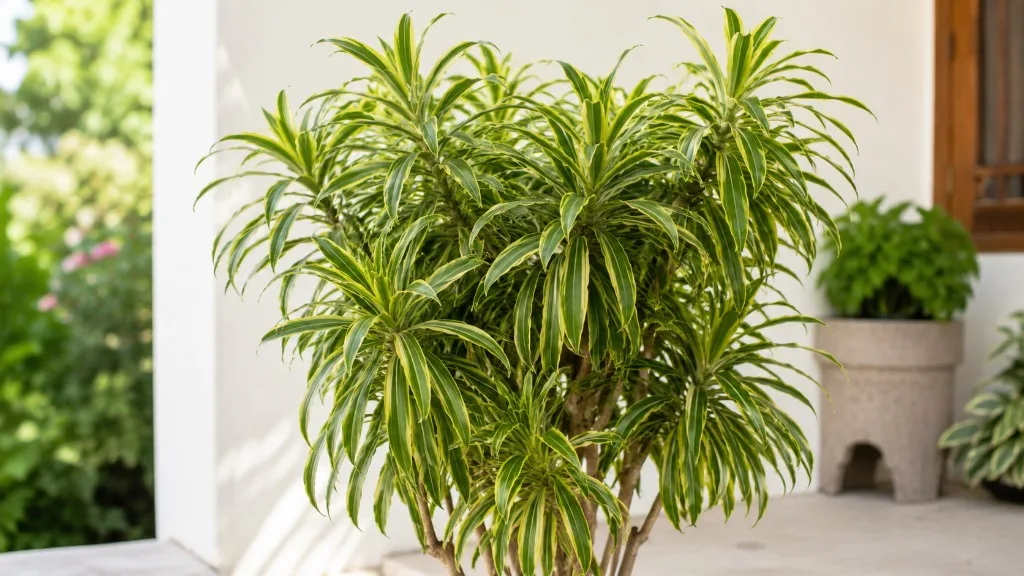
Song of India fertilizer decisions are simpler than the internet makes them sound - and more consequential than most growers realize. Dracaena reflexa, the plant sold as Song of India, is grown for its spiraling canes and glossy variegated leaves: dark green centers framed by chartreuse or creamy yellow margins that look architectural in a bright room. Fertilizer does not create that variegation from nothing, but light, appropriate feeding during active growth helps the plant push out firm new leaves on sturdy stems. Feed too much, too often, or with the wrong product, and you get the opposite: brown leaf tips, a white salt crust on the soil, sudden leaf drop, and variegation that washes out as the plant stresses.
The practical goal for most home growers is straightforward: use a balanced water-soluble fertilizer at half the label strength, apply it every four to six weeks from spring through early fall while the plant is actively growing, and pause entirely in late fall and winter. Water onto moist soil, never onto dry roots. Avoid fluoride-heavy products and superphosphate-based formulas - Dracaenas are notoriously sensitive to fluoride, and excess salts compound the problem fast. Container plants in small pots need conservative feeding; freshly repotted or stressed plants need none until they recover.
This guide covers when to fertilize, how much to use, which products work best, how to read deficiency versus burn, and the mistakes that cause more damage than skipping a month ever would.
Why Fertilizer Matters for Song of India
Song of India is a slow-growing tropical shrub in most indoor settings, typically reaching 2–6 feet tall in a container over several years rather than one season. That measured pace shapes how it handles nutrients. The plant continuously builds new leaves along its upright canes, extending roots into the potting mix and pulling nitrogen, phosphorus, potassium, and trace elements out of a limited soil volume. Watering leaches some of those nutrients over time. Root growth and microbial activity consume others. Fertilizer replaces what the plant uses - but only up to the point its roots can absorb without salt damage.
NC State Extension recommends fertilizing Dracaena reflexa monthly with a balanced liquid fertilizer during spring and summer months. That recommendation reflects a plant that grows steadily but not explosively. Unlike fast annuals that empty a pot of nitrogen in weeks, Song of India tolerates lean soil far better than it tolerates salty soil. The margin for error sits on the under-feeding side for most healthy specimens - not because the plant never needs food, but because over-feeding is the mistake you will actually see on the leaves.
Think of feeding as maintenance for a healthy, actively growing plant - not a rescue tool for a Song of India that is pale because it sits in too little light, dries out repeatedly, or struggles in waterlogged mix. Fix light and water first, then add nutrients on a conservative schedule. Half-strength liquid feeding and occasional salt flushing match how Dracaena reflexa handles nutrition in small containers far better than full label rates or slow-release pellets dropped into a 6-inch pot.
When to Fertilize Song of India: Active Growth vs Rest
Timing is the first decision, and it follows the plant’s metabolism more than the calendar on your wall. Feed when Song of India is actively producing new leaves along its canes, and stop when growth slows sharply. Indoors, that rhythm tracks warm weather and long days even when the thermostat stays constant year-round. Most specimens still push noticeably less new tissue from late fall through winter, especially in north-facing rooms or spaces without supplemental light.
A Song of India kept in a heated living room often retains its foliage through December and looks “fine,” which tricks growers into feeding on a summer schedule through the holidays. In practice, lower light and shorter days reduce new shoot production even when old leaves stay upright. Unused nutrients then accumulate as soluble salts while roots absorb water more slowly - a common path to brown tips and stunted spring growth that gets blamed on humidity or tap water when fertilizer timing is the real trigger.
Spring and Summer Feeding Window
Start feeding when you see fresh growth at cane tips - new leaves unfurling with crisp variegation, side shoots filling in after pruning, and roots visibly active if you gently check the drainage hole for white root tips. In temperate climates, that usually means mid-spring through late summer, roughly April through August depending on your light and whether the plant sits near an east window or under grow lights.
During this active window, a half-strength balanced liquid feed every four to six weeks works for most container plants. Specimens in bright light with strong new cane extension may sit at the four-week end; established plants in moderate light or larger pots with fresh, compost-rich mix may need only six-week intervals. Both are reasonable if leaves stay deeply colored for the cultivar, internodes stay compact rather than stretched, and the soil surface stays free of heavy salt crust.
| Month (temperate climate) | Growth phase | Feeding guidance |
|---|---|---|
| March–April | Waking up, new shoots | Start half-strength liquid if active growth visible |
| May–August | Peak foliage production | Every 4–6 weeks; bright-light plants on shorter end |
| September | Slowing slightly | Reduce to every 6–8 weeks or taper off |
| October | Wind-down | Final light feed if still growing, then pause |
| November–February | Low growth indoors | No fertilizer for typical setups |
The table is a framework, not a law. A Song of India in a bright office lobby in July may use nutrients faster than one in a shaded bedroom. Watch the plant: if it is building variegated new leaves steadily along the canes, the timing is right. If it is static, solve light and water before adding food.
Fall Taper and Winter Pause
Taper feeding in early to mid-fall as day length drops and indoor humidity often falls with heating systems. One practical approach: give a final half-strength feed in early fall if you still see new growth, then stop entirely from late fall through winter. Most indoor Song of India do fine with no fertilizer from November through February, especially in cooler rooms or lower-light placements.
Winter rest is not full dormancy like a deciduous tree, but metabolic demand drops. The Pacific Northwest Pest Management Handbooks note that excessive fertilization combined with fluoride in irrigation water contributes to tip burn on Dracaena species, with fluoride accumulating gradually in leaf margins over time (PNW Handbooks - Dracaena Tip Burn). Winter feeding on a plant that is not using nutrients is an easy way to create exactly that problem - especially if you also water with fluoridated tap water.
Exception: if you grow under strong supplemental grow lights and the plant keeps producing new shoots all winter, you can feed lightly - still at half strength - but extend the interval to eight to ten weeks and watch closely for salt crust. Even then, skipping winter feeds is safer than forcing growth with nutrients the roots cannot process.
Best Fertilizer Type for Song of India
The best Song of India fertilizer for most homes is a complete, water-soluble, balanced houseplant formula with equal or near-equal nitrogen, phosphorus, and potassium. You want nitrogen for green tissue and healthy variegation contrast, phosphorus for root function at modest levels, and potassium for overall vigor and stress tolerance. Micronutrients on the label - iron, magnesium, manganese - matter because pale new growth on otherwise well-watered plants sometimes traces to trace-element gaps rather than macronutrient hunger.
Avoid shopping by the word “Dracaena” on the bottle unless you already trust the brand’s dosing guidance. A standard balanced indoor formula used conservatively outperforms most specialty products applied at label strength.
Balanced Liquid Formulas and NPK Ratios
A 10-10-10 or 20-20-20 water-soluble fertilizer diluted to half strength is the default recommendation for Song of India and other Dracaena species. Equal ratios keep feeding simple when your main goal is steady foliage on slow-growing canes. Clemson HGIC recommends feeding dracaenas with liquid foliage plant fertilizer once a month during spring and summer - dilute to half the label rate for indoor Song of India.
Some growers prefer a slightly nitrogen-leaning ratio such as 3-1-2 because nitrogen supports leaf expansion and helps maintain the bold green-and-chartreuse contrast Song of India is famous for. That slight nitrogen emphasis is reasonable for a foliage crop. What is not reasonable is a high-phosphorus “bloom booster” - formulations heavy in the middle number, like 9-58-8 or 7-22-8. Song of India rarely flowers indoors, and excess phosphorus adds salts without benefit while increasing fluoride exposure risk from certain phosphate sources.
Liquid formulas win for control. You mix, dilute, and apply a known dose to moist soil. That matters in small pots where precision prevents localized hot spots of concentrated salts. For a typical container Song of India in an 8- to 12-inch pot, mix fertilizer at half the label’s recommended strength for houseplants, then apply until a little water drains from the bottom. Discard saucer water so roots are not sitting in concentrated runoff.
If you are deciding between two bottles on the shelf: pick balanced or foliage-weighted, water-soluble, with micronutrients listed. Skip anything marketed primarily for roses, tomatoes, or “more blooms.”
Organic, Slow-Release, and What to Skip
Organic options - diluted fish emulsion, compost tea, worm-casting tea, or seaweed extract - work for Song of India when applied at half the label rate or weaker. They release nutrients more gradually than synthetic liquids, which suits a light feeder. The trade-off is smell and less precise dosing; fish emulsion in a small apartment is a commitment. If you go organic, keep the same seasonal rhythm: active growth only, pause in winter, and never apply to dry soil.
Slow-release granules or fertilizer spikes are convenient for outdoor shrubs in large beds. Indoors, in a 6- to 10-inch pot, they are a common mistake. Pellets release unpredictably with temperature and moisture swings, creating pockets of concentrated salts that Dracaena roots cannot escape. If you forget a monthly liquid feed, the answer is not a spike pushed into the soil - it is a calendar reminder and half-strength liquid on moist mix.
What to skip outright:
- Superphosphate and high-fluoride phosphate fertilizers - Dracaenas accumulate fluoride in leaf margins, and the Pacific Northwest handbooks specifically recommend fertilizing sparingly and avoiding fluoridated water on sensitive species (PNW Handbooks - Dracaena Tip Burn).
- Foliar sprays - Song of India leaves are not efficient nutrient absorbers, and wet foliage overnight invites fungal spotting on some Dracaena cultivars.
- Combined fertilizer-pesticide products - you lose dosing control and add chemical exposure the plant does not need.
- Full-strength label rates - indoor Dracaenas consistently perform better at half strength or weaker.
How Much Fertilizer to Use on Song of India
Dilution is where most feeding plans succeed or fail. Manufacturer labels assume outdoor annuals in garden soil or fast-growing foliage crops in large containers. Song of India in a 10-inch pot is neither. Half strength means mixing at 50% of the label’s recommended concentration for houseplants - not using half the volume of a full-strength solution.
A practical example: if the label says 1 teaspoon per gallon of water for indoor plants, use ½ teaspoon per gallon for Song of India. If it says 1 tablespoon per gallon for outdoor use, do not apply that rate indoors at all - start at one-quarter to half strength and observe new growth for two to three weeks before adjusting.
Apply enough solution to moisten the full root ball and produce a small amount of drainage. For an 8-inch pot, that is often 1–2 cups of diluted fertilizer solution. For a 12-inch floor specimen, 3–4 cups. The goal is even distribution through the mix, not flooding the saucer. Sitting in fertilizer-laden runoff reverses the benefit and concentrates salts at the drainage layer.
If your plant shares a pot with other specimens, feed Song of India on its own schedule rather than doubling the dose for the group. Dracaenas are more salt-sensitive than many common companions like pothos or philodendron.
How Often to Fertilize Song of India
Frequency follows the same conservative logic as dilution. During active growth, every four to six weeks with half-strength balanced liquid is the sweet spot for most indoor Song of India. That translates to roughly four to five feeds per growing season - enough to support steady cane extension without pushing salt levels into burn territory.
Here is how to calibrate within that range:
- Every four weeks if the plant sits in Song of India light guide, produces visible new leaves monthly, and lives in a relatively small pot (6–8 inches) where nutrients deplete faster.
- Every six weeks if growth is moderate, the pot is larger (10–14 inches), or the mix was refreshed with compost at the last repot.
- Every eight weeks or skip if the plant was recently repotted into fresh soil with slow-release organic matter - wait until that initial nutrient reserve is used up, usually six to eight weeks.
Do not feed every watering. Constant low-dose fertilizer - sometimes called “weakly weekly” - builds salts faster than Song of India can use them, especially in small pots. A clear on/off schedule with plain water between feeds gives roots time to absorb nutrients and keeps electrical conductivity in the root zone stable.
Step-by-Step: How to Feed Song of India Safely
A repeatable routine prevents the two failures that dominate Dracaena fertilizer problems: feeding dry soil and feeding at full strength.
Step 1: Check the calendar and the plant. Confirm you are inside the spring-to-early-fall active window and that you have not fed within the last three weeks. Look for new leaf production along the canes - if growth has stalled for a month, investigate light and water before feeding.
Step 2: Water with plain water first if the mix is dry. The top inch should feel lightly moist before fertilizer touches the roots. If it is dry, water thoroughly with plain water, wait 30–60 minutes, then proceed. Applying fertilizer to dry roots is one of the fastest routes to burn on Dracaena species.
Step 3: Mix fertilizer at half strength. Measure carefully - a kitchen syringe or measuring spoon removes guesswork. Stir the solution and use it within the same session; concentrated stock sitting overnight can stratify.
Step 4: Pour slowly onto the soil surface. Keep liquid off the leaf bases and crown where water sitting in the spiral leaf arrangement can cause rot. Aim at the soil around each cane, not the foliage.
Step 5: Allow slight drainage and discard saucer water. Never let the plant reabsorb concentrated runoff from the bottom of the pot.
Step 6: Log the date. A phone note or pot sticker prevents accidental double-feeding two weeks later.
Pre-Feed Checks and the Moist-Soil Rule
Before every feed, run a quick three-point check:
Soil moisture: Top inch moist, not saturated. Soggy soil plus fertilizer stresses roots already struggling for oxygen.
Salt crust: White crystalline deposits on the soil surface or pot rim mean pause feeding and flush with plain water before the next scheduled dose.
Plant stress: No recent repot (wait four to six weeks), no active leaf drop from a cold draft or underwatering on Song of India episode, no pest treatment in the last week. Stressed Song of India cannot metabolize nutrients efficiently - feeding adds salt load without growth payoff.
The moist-soil rule is non-negotiable for Dracaenas. Horticultural sources consistently recommend watering before fertilizing on fluoride-sensitive foliage plants because dry roots take up ions rapidly and unevenly, concentrating damage at the root tips that show up weeks later as marginal necrosis on the oldest leaves.
Signs Your Song of India Needs More Nutrition
Under-fertilizing is less common than over-fertilizing on Song of India, but it happens - especially in the same small pot for three or more years without Song of India repotting guide or feeding. Look for these patterns during active growth season after you have ruled out low light and improper watering:
Slowed cane extension compared to the same plant’s performance last spring, with new leaves emerging smaller or farther apart on the stem.
Uniform pale green or washed-out yellow-green on new growth across the whole plant, not isolated spots that suggest sun bleach or pest damage.
Older leaves dropping faster than normal while the plant produces little replacement growth - a general lack of vigor rather than the single-leaf senescence Dracaenas naturally show at the bottom of each cane.
No response to improved light and water over four to six weeks - if you fixed placement and Song of India watering guide and the plant still looks anemic during peak season, a light half-strength feed is reasonable.
Important distinction: brown tips with green centers usually point to fluoride, salt burn, or dry air - not hunger. Uniform paleness on new leaves only during spring and summer more often points to nutrient depletion. Do not feed a plant with brown crispy margins hoping to fix them; flush salts and review water quality first.
Signs of Over-Fertilizing and Salt Buildup
Over-fertilizing is the dominant fertilizer mistake on Song of India, and the symptoms are distinctive once you know what to look for. Dracaenas telegraph salt stress on leaf margins before the whole plant collapses.
Brown or necrotic leaf tips and margins appearing within days to two weeks after feeding - especially on the newest leaves if the dose was strong, or on older leaves if salts have accumulated over months.
White or yellowish crust on the soil surface, pot rim, or drainage holes - crystallized soluble salts left behind as water evaporates.
Sudden leaf drop from the lower cane after a feed, sometimes accompanied by a slight wilt even though the soil is moist - osmotic stress pulling water out of root tissues.
Stunted new growth that emerges small and twisted, then browns at the tip before expanding - classic salt burn on slow-growing Dracaena.
Sour or musty smell from the pot combined with crust - indicates microbial imbalance from excess nutrients and poor flushing.
These signs overlap with fluoride toxicity from tap water, which is why Dracaena care requires looking at water source and fertilizer together. If you use city tap water with added fluoride and feed monthly at full strength, brown tips are almost inevitable - not because Song of India “does not like fertilizer,” but because two salt sources are stacking in the leaf margins.
How to Flush Song of India After Over-Feeding
If you recognize over-fertilization early, recovery is straightforward. If salts have built for months, recovery takes longer but is still likely for a healthy root system.
Step 1: Stop all fertilizer immediately. Mark a minimum four-week pause; six weeks is safer if symptoms are severe.
Step 2: Flush the soil with plain water. Use filtered, distilled, or rainwater if fluoride is a concern. Slowly pour water equal to three to four times the pot volume through the mix - for a 10-inch pot, that might be 3–4 gallons total poured in stages over 20–30 minutes. Let each pour drain fully before the next.
Step 3: Discard all drainage. Do not let the plant sit in the runoff.
Step 4: Improve airflow and hold feeding. Place the plant where it gets stable bright indirect light and normal watering - let the top inch dry between drinks, matching Song of India’s usual rhythm.
Step 5: Trim only fully dead tissue. Brown tips can be trimmed for aesthetics once the plant is stable; they will not green up again.
Step 6: Resume feeding at half strength only after new growth emerges clean - no fresh browning at margins - and at least four weeks have passed since the flush. Consider extending the interval to six to eight weeks for the first two feeds after recovery.
Badly burned leaves do not heal, but the cane usually pushes new healthy tissue once salt levels drop. Patience matters more than extra products during recovery.
Seasonal and Situational Adjustments
The four-to-six-week schedule is a baseline, not a contract. Adjust for these common situations:
Bright summer light: A plant moved closer to an east or south window during long days may grow faster and dry its pot quicker. You can shorten the interval to four weeks but never increase the concentration above half strength.
Air-conditioned or heated dry rooms: Faster soil drying does not always mean faster nutrient use. If growth rate is unchanged, keep the six-week interval - the risk in dry rooms is often fluoride concentration in less frequent watering, not hunger.
Recently pruned canes: After cutting back leggy stems, the plant redirects energy to new shoots. Light feeding four weeks after pruning supports branching, but wait until you see active bud break.
Outdoor summer vacation: A plant on a shaded patio may grow vigorously. Feed before and after the trip if the interval falls during absence, never at full strength “to make up for lost time.”
After Repotting, Stress, and Fluoride Sensitivity
After repotting: Fresh potting mix usually contains enough starter nutrients for six to eight weeks. Do not fertilize for at least four weeks after repotting - longer if the mix includes compost or worm castings. Roots are recovering from disturbance and take up ions unevenly; early feeding is a common cause of post-repot leaf drop on Dracaenas.
After stress events: Cold draft, root rot on Song of India recovery, underwatering wilt, or pest treatment - hold food until new growth resumes normally for two to three weeks. The ASPCA lists Song of India (Malaysian Dracaena) as toxic to cats and dogs due to saponins (ASPCA - Malaysian Dracaena); keep fertilizer products stored away from pets alongside the plant itself.
Fluoride sensitivity: This is the Dracaena-specific factor most generic fertilizer guides skip. Many municipal water supplies contain fluoride at 0.7–1.0 ppm, and fluoride accumulates in leaf margins over repeated watering. Clemson HGIC advises keeping soil pH between 6.0 and 6.5 and avoiding superphosphate fertilizers to reduce fluoride injury; Pacific Northwest extension guidance recommends keeping soil calcium levels adequate with pH 6.5–7.0, fertilizing sparingly, and using non-fluoridated water when possible (PNW Handbooks - Dracaena Tip Burn). Practically: use filtered or distilled water for both watering and fertilizer mixing, avoid superphosphate fertilizers, and keep feeding light. If brown tips persist despite conservative feeding, change the water source before increasing fertilizer.
Fertilizer only works when light, water, soil, and temperature are already in range. Song of India in bright indirect light uses nutrients efficiently and produces the compact cane spacing that shows feeding is appropriate. The same plant in a dim corner metabolizes slowly, uses less nitrogen, and accumulates salts faster relative to growth - making over-feeding more likely even at “correct” intervals.
Light: At least four hours of bright indirect light daily supports the growth that justifies feeding. Low-light plants need less food, sometimes none beyond fresh repot soil for an entire year.
Water: Consistent moisture without sogginess keeps roots functional enough to absorb nutrients. Erratic drought cycles damage root tips and mimic fertilizer burn on leaf margins.
Soil: Well-draining potting mix with perlite or bark lets you flush salts periodically. Heavy peat mixes that stay wet invite root rot - a problem no fertilizer fixes.
Temperature: Song of India prefers 65–80°F (18–27°C). Below 60°F, metabolic rate drops; feeding in a cold drafty window is wasted and risky.
Tune feeding to match the whole routine. A plant that looks hungry after you fixed light and watering usually responds to one conservative half-strength dose. A plant that looks burned after you fed on dry soil in December needs a flush and a calendar, not more nutrients.
Common Song of India Fertilizer Mistakes
These errors account for most fertilizer-related damage on Song of India. Each is preventable with a conservative default.
Feeding at full label strength. Indoor Dracaenas are light feeders. Full strength is designed for outdoor production beds, not a 10-inch decorative pot. Half strength is the baseline; quarter strength is not too cautious for a plant that has shown burn before.
Feeding on a calendar without checking growth. Monthly feeding in July makes sense; monthly feeding in January usually does not. Growth visibility beats the date.
Using slow-release spikes for convenience. Uneven nutrient release creates hot zones in small pots. Liquid at half strength gives you control.
Ignoring fluoride from tap water. Brown tips after “doing everything right” often mean fluoride plus fertilizer salts stacking in margins. Switch water before escalating feed.
Feeding to fix brown tips. Tips browned by salts or fluoride will not regreen. Flushing and pausing feed is the fix; more fertilizer deepens the burn.
Double-feeding after a growth slump. If the plant slowed in August, the answer is not two doses in September. Resume at half strength on the normal interval when spring growth returns.
Fertilizing immediately after repotting. Fresh mix plus liquid feed in week one is a reliable way to lose lower leaves. Wait four to six weeks.
Conclusion
Song of India rewards a light touch. Use a balanced 10-10-10 or 20-20-20 water-soluble fertilizer at half strength, feed every four to six weeks during spring and summer when new leaves are actively forming along the canes, and pause from late fall through winter. Always apply to moist soil, flush salts periodically with plain water, and mix fertilizer with low-fluoride water when possible. Watch new growth - not the calendar - as your primary signal.
When in doubt, skip a feed. A healthy Song of India tolerates a missed month far better than it tolerates a double dose or a winter application. Fix light and watering first, feed conservatively second, and reserve flushing and patience for the rare times salts get ahead of you. That rhythm keeps the variegation crisp, the canes sturdy, and the soil free of the white crust that tells you the roots have had enough.
When to use this page vs other Song of India guides
- Song of India overview - Start here for whole-plant context before deep-diving this topic.
- Song of India problems hub - Jump to symptom-specific fix guides when this care topic does not resolve the issue.