Song of India Watering: Schedule, Soil Checks, and Mistakes
Song of India Watering: Schedule, Soil Checks, and Mistakes
Song of India Watering: Schedule, Soil Checks, and Mistakes
Song of India watering is less about memorizing a weekly date and more about reading what the pot is actually doing. Dracaena reflexa - the upright tropical plant sold as Song of India, Pleomele, or Malaysian Dracaena depending on the nursery tag - comes from the humid islands and coastal forests of the western Indian Ocean, including Madagascar, Mauritius, and the Comoros. In those native habitats, rainfall is regular but the soil drains freely through sandy, organic layers. Roots get moisture, then air, then moisture again. Indoors, the plant still wants that rhythm, but most homes supply the moisture part far too generously and the drainage-and-air part far too rarely.
The practical rule that works for most indoor Song of India plants is straightforward: water when the top 3–5 cm (1–2 inches) of potting mix has dried, then water thoroughly until excess runs from the drainage hole and you empty the saucer. In brighter light during active growth, that might mean every 7–10 days. In a dim winter corner, it might mean every two to three weeks. The interval is a result of your conditions, not a commandment carved into a calendar. What matters is that the root zone gets a full drink followed by enough drying time for oxygen to return to the soil - not permanently damp mix sitting in a decorative pot that traps runoff.
This guide covers how often to water, how to check soil moisture reliably, which water to use (fluoride sensitivity is real on Song of India overview), seasonal adjustments, overwatering on Song of India and underwatering on Song of India symptoms, recovery steps, and the mistakes that cause more damage than an occasional missed watering ever would.
Why Watering Rhythm Matters for Song of India
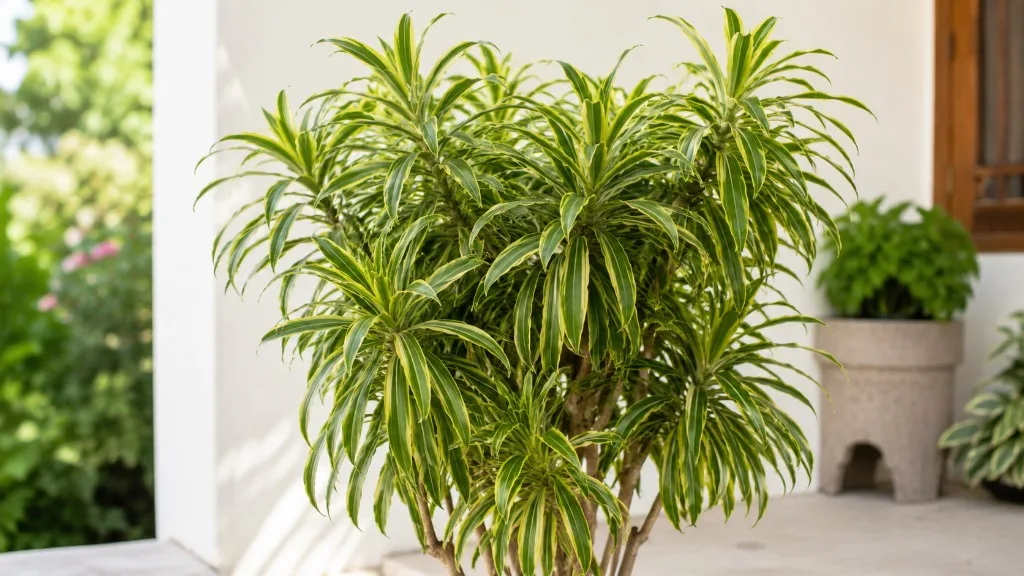
Song of India is often marketed as an easy, low-maintenance houseplant, and that label is partly true - but “low maintenance” is not the same as “water whenever you remember.” The plant’s upright, cane-like stems carry rosettes of narrow, glossy leaves edged in cream or yellow. Those leaves transpire steadily when light is good, pulling water up from the roots and releasing it through stomata. If the root zone stays wet too long, fine roots suffocate and Pythium-style root rot on Song of India becomes likely. If the root zone stays dry too long, those same fine roots die back, and the plant cannot absorb the next drink even when you finally offer one.
NC State Extension describes Dracaena reflexa as preferring moist, well-drained potting mix with bright, indirect light and room-temperature water (NC State Extension - Dracaena reflexa). Moist means the root zone has water without saturation; well-drained means the mix moves water through in seconds rather than pooling for days. Song of India is also sensitive to fluoride in tap water, which accumulates in leaf margins and causes brown tips that never heal (Clemson HGIC - Dracaena). Getting the dry-down right and choosing better water protects both roots and foliage.
How Often to Water Song of India
There is no honest universal schedule for how often to water Song of India. Clemson HGIC recommends allowing dracaenas to dry slightly between waterings - wait until the soil surface is dry to the touch, then water thoroughly. In a typical 15–20 cm (6–8 inch) nursery pot in bright, indirect light at room temperature, that often translates to roughly every 7–14 days during spring and summer and every 14–21 days in fall and winter. Your home will differ.
What you can rely on is the dry-down check, not the day of the week. A Song of India near a bright east or west window in an actively heated room may dry in five days. The same plant moved to a north-facing office with constant air conditioning may take eighteen days between drinks. A plant recently repotted into a pot one size larger will dry more slowly because extra mix holds extra moisture with fewer roots to pull it up. A root-bound plant in the same size pot may dry in three days because the root mass displaces soil and drinks aggressively. All of these are normal. The mistake is watering every Sunday because that is convenient for you, not because the pot is ready.
Use a weekly calendar reminder if it helps you remember to check the plant, but let the check - not the calendar - decide whether water flows. If the top 3–5 cm is dry and the pot feels noticeably lighter than it did right after the last watering, water. If the surface looks dry but a finger pushed to the second knuckle still hits cool, damp mix, wait. Surface color alone is unreliable; peat-heavy mixes can look pale and dusty on top while the root zone remains wet. Song of India tolerates slight drying between waterings better than it tolerates constant sogginess, which is why the dry-down rule leans toward caution on the side of waiting.
The Best Dry-Down Rule for Dracaena Reflexa
The dry-down rule for Song of India is simple to state and takes a few weeks to calibrate in your specific home. Let the top 3–5 cm of potting mix dry, then water deeply. In low light, let the mix dry further - NC State Extension advises keeping soil moist but avoiding overwatering, which matters most when a slow-metabolizing plant in dim conditions uses far less water and wet soil lingers dangerously long. In brighter active-growth conditions, allow the upper portion of the mix to dry before the next soak.
This is not a desert-dry rule. Song of India is a tropical foliage plant, not a succulent. The goal is not to bake the root ball into a hard brick, but to guarantee that the lower roots experience a period of aeration between drinks. When mix stays saturated, the air spaces that roots need collapse. Dracaena roots are relatively thick and tolerant compared to fern roots, but they still require oxygen. Constant wetness is how healthy white roots turn mushy and brown within a single season.
The dry-down rule also prevents the small-sip trap - watering a little every day because it feels gentle. Small sips moisten the surface without reaching the full root ball, leaving the center chronically wet or dry. One thorough watering to the drainage hole, followed by a real dry period, beats ten cautious tablespoons spread across a month.
Reading the Top Layer vs the Root Zone
The most common check error is trusting the surface and ignoring the root zone. Mix dries from the top down, so a dusty top centimeter can sit above still-moist mid-pot soil - watering then causes the yellow leaves that confuse so many dracaena growers. The reverse happens on compacted old mix: the surface looks moist while water runs down a gap beside the root ball without wetting it, and the plant wilts despite “wet” soil. Bottom-soak for twenty to thirty minutes or a slow two-pass top-water fixes hydrophobic mix better than another calendar pour. Use the top 3–5 cm as your trigger, then confirm at mid-depth with a finger or skewer before you pour.
How to Check If Your Song of India Needs Water
Reliable moisture checks turn watering into a two-minute habit. Run the same three tests before every watering decision until the rhythm becomes automatic.
Lift the pot. Note the weight right after a thorough watering - that is your saturated baseline. As the mix dries, the pot gets noticeably lighter. When a medium-sized pot feels less than half its saturated weight and the top layer is dry, watering is usually appropriate.
Probe the soil. Push a finger or bamboo skewer to the second knuckle or three inches deep. If it emerges clean and dry and the pot is light, water. If mix clings and feels cool, wait. Terracotta walls darken when moist and lighten when dry - a useful secondary signal on plastic-free pots.
Watch the plant, but distrust wilting alone. Slight afternoon droop is normal transpiration. Persistent wilting with dry soil and a light pot confirms underwatering. Wilting with heavy, cool soil confirms overwatering - stop pouring and let the mix dry.
Finger Test, Skewer, and Pot Weight
The finger test is free and immediate but only reaches about three inches. The skewer test goes deeper: insert at an angle, wait two minutes, then feel along the length. A dry tip with a moist base means wait; uniform dryness to the bottom means soak. Pot weight integrates the whole soil volume and catches cachepot runoff that probe tests miss - lift the inner pot and check whether the decorative sleeve is holding stale water.
The Right Way to Water Song of India
When the dry-down check says the plant is ready, water thoroughly in one session rather than dribbling small amounts. Use room-temperature water - cold tap water shocks tropical roots and can slow uptake - and pour slowly onto the soil surface, moving around the stem base until you see water exit the drainage hole. That exit is your confirmation that the full soil column got wet, not just the top dressing. A typical 17–20 cm (7–8 inch) pot might take 500–800 ml (about 2–3 cups); a large floor specimen might take several liters. Volume matters less than the drain signal.
Empty the saucer within thirty minutes. Never let Song of India sit in a puddle. Roots that soak in runoff for hours experience the same oxygen deprivation as if you had left the soil itself saturated. If the plant lives inside a decorative cachepot, lift the nursery pot out, water at the sink, let it drain completely, then return it to the sleeve. This single habit prevents more root rot than any fancy moisture gadget. If you notice a sour smell from the saucer or cachepot, you have already been leaving water too long.
Bottom watering works when top watering runs through compacted mix too fast. Set the nursery pot in a basin reaching one-third up the pot height for fifteen to twenty-five minutes, then drain fully.
Deep Watering, Drainage, and Saucer Rules
Deep watering wets the entire root zone, not just the top inch. Shallow sips train roots upward and leave the lower ball underdeveloped. NC State Extension recommends well-drained mix with perlite or sand for this species (NC State Extension - Dracaena reflexa). A drainage hole is non-negotiable for long-term indoor care - if your decorative pot has no hole, keep the plant in a nursery pot inside it. Saucer discipline is simple: water, wait, dump. Pebble trays for humidity should hold the pot above the water line, not in it.
Water Quality and Fluoride Sensitivity
Song of India is among the houseplants most affected by fluoride in tap water. Clemson HGIC notes that dracaenas are very sensitive to fluoride, with symptoms including yellowing tips and margins or dead scorched areas on leaves (Clemson HGIC - Dracaena). Michigan State University Extension explains that many municipalities add fluoride to drinking water at roughly 1 ppm, and that fluoride is an accumulative toxin in foliage - it moves through the transpiration stream and concentrates in leaf margins, causing necrotic brown tips that cannot be reversed once they form (MSU Extension - Fluoride Toxicity).
This matters because many watering guides tell you to “let tap water sit overnight” to make it safe. That removes chlorine, not fluoride. If your city’s water is fluoridated - and most US municipal supplies are - overnight resting does nothing for the compound that damages dracaenas. You will still see progressive tip burn over months even if your watering rhythm is otherwise perfect. Brown tips from fluoride are often blamed on underwatering or low humidity, which leads growers to water more heavily with the same tap water, compounding salt and fluoride concentration in the soil.
Better water options, ranked by practicality: collected rainwater is excellent and free where rainfall is clean; reverse osmosis or distilled water from a household unit is reliable; filtered water through an activated carbon or RO system works well; bottled distilled water is fine for one or two small plants but expensive at scale. If you must use tap water, flush the soil every four to six weeks by watering thoroughly with fluoride-free water several times in succession, letting excess drain each time, to leach accumulated salts from the root zone (Pacific Northwest Handbooks - Dracaena Tip Burn).
Clemson HGIC also notes that dracaenas are sensitive to superphosphate fertilizers, which can carry high fluorine levels, and suggests keeping soil pH between 6.0 and 6.5 to reduce fluoride availability (Clemson HGIC - Dracaena). MSU Extension adds that perlite in potting mix can contribute small fluoride amounts, which is a trade-off because Song of India also needs drainage. The practical balance: use a well-draining mix, avoid high-fluoride fertilizers, and prioritize better water rather than eliminating perlite entirely.
Tap Water, Filtered Water, and Flushing
Switch to filtered or rainwater for sixty days and compare new leaf tips to old growth. If tips stay clean on better water, fluoride was the culprit. Flushing protocol: water slowly with fluoride-free water at the sink until it runs clear, wait five minutes, repeat twice, drain fully. Old brown tissue will not green up - trim if desired. Heavy white crust on soil means hard-water salts; flush or repot into fresh mix at the next growing season.
Seasonal Watering Adjustments
Song of India does not go fully dormant indoors the way a deciduous outdoor tree does, but its metabolic rate shifts sharply with light and temperature. In spring and summer, longer days and warmer rooms drive new leaf production at the stem tips. Transpiration increases. The pot dries faster. Your dry-down check may call for water every seven to ten days. This is the active growth window - the plant can use a thorough drink and will recover quickly if you occasionally misjudge by a day.
In fall and winter, shorter photoperiods and cooler rooms - especially if the plant sits near a drafty window - slow growth noticeably. The same volume of soil that dried in a week in July may take three weeks in January. If you maintain a summer calendar through winter without adjusting, overwatering is almost guaranteed. Clemson HGIC notes that dracaenas grow more slowly in lower light and cooler conditions, so stretch your check interval and require more dryness at the top before you water. Pause fertilizer entirely during this slowdown - feeding a plant that is not using water aggressively adds salts to soil that is already lingering wet longer.
Summer Active Growth vs Winter Slowdown
During active growth, pair your watering rhythm with observation of new leaves. Healthy Song of India pushes bright, firm new foliage from the terminal rosettes. If new leaves are emerging and the dry-down check says water, water confidently. If new growth has paused for several weeks and the pot still feels heavy at mid-depth, you are in the slowdown phase regardless of what month the calendar shows.
| Season / condition | Typical dry-down speed | Watering approach |
|---|---|---|
| Spring–summer, Song of India light guide | Faster (7–12 days common) | Water when top 3–5 cm dries; 50–75% dry-down |
| Fall–winter, lower light | Slower (14–21+ days) | Require more dryness; verify mid-pot before watering |
| Low-light location year-round | Slow | Allow more complete dry-down between drinks |
| Recently repotted | Slower until roots fill pot | Check weight weekly; resist sympathy watering |
| Root-bound, same pot | Faster | Water when checks say so; plan repot in spring |
Temperature extremes outside the comfort range of 18–27°C (65–80°F) also change uptake. Below 15°C (59°F), root metabolism slows sharply - soil that would dry in ten days might take four weeks. Above 30°C (86°F) with strong light, the opposite happens. Adjust checks before adjusting volume. The volume per watering session stays the same - thorough until drain - only the frequency changes.
Signs of Overwatering
Overwatering is the leading cause of Song of India decline indoors, and it is insidious because the early signs look like other problems. Yellow leaves are the classic symptom - often starting on lower, older foliage while the plant still appears upright. The yellowing is not the crisp yellow of sun bleach; it is a soft, spreading chlorosis that may accompany brown mushy stems at the soil line if rot has advanced. Leaves may drop in clusters rather than one at a time.
Soft, dark brown roots visible if you gently slip the plant from its pot confirm the diagnosis. Healthy dracaena roots are firm and orange-tan to white. Rotting roots are slimy, smell sour, and fall apart when touched. Soil that stays dark and cold days after watering, fungus gnats hovering at the surface, and a sour or musty smell from the mix are supporting evidence. If you lift the pot and it never feels light, the soil is not drying - that is an overwatering setup even before leaves react.
Wilting on wet soil means damaged roots cannot transport water - stop watering and let the mix dry. Poor drainage from cachepots, oversized pots, or compacted mix mimics overwatering even when you pour rarely.
Signs of Underwatering
Underwatering on Song of India shows up more honestly than overwatering, which is almost a kindness to the grower. Leaf curl and droop develop when the plant cannot pull enough moisture to support turgor pressure. The variegated margins may crisp at the tips and edges, turning tan or brown in dry air. The pot feels lightweight, the soil pulls away from the pot walls, and a skewer pushed deep emerges dusty and clean. In advanced drought, lower leaves yellow and drop as the plant sheds tissue it cannot support.
Underwatering damage is usually recoverable if caught before roots desiccate completely. One thorough watering - or bottom soaking if the mix has gone hydrophobic - followed by proper drainage typically restores turgor within twenty-four to forty-eight hours. If the plant perks up, you are back on track. If it does not perk up after a confirmed full soak and the soil was genuinely dry, suspect root rot from prior overwatering rather than current drought.
Repeated drought cycles kill fine root hairs and leave a thin, sparse plant even when each episode seems recoverable. Dry air can brown leaf tips while soil stays moist - verify with a skewer before you increase watering. Moist soil with brown tips usually means fluoride or low humidity, not thirst.
Pot Size, Soil, and Light - How They Change the Schedule
Watering frequency is not a property of Song of India alone. It is a property of the whole system - pot, mix, roots, light, temperature, and air movement together. Change any variable and the calendar changes with it, even if the plant species stays the same.
Pot size relative to roots is the biggest hidden variable. A plant freshly moved from a 12 cm pot into a 20 cm pot has a small root mass sitting in a large volume of moist mix. The grower waters on the old schedule; the new soil stays wet for weeks; roots rot. After Song of India repotting guide, extend the interval and check weight weekly until roots colonize the new space - usually one to three months in active growth. Conversely, a root-bound plant in a too-small pot dries in days and may need water twice as often as a calendar guide suggests, plus a repot when growth season arrives.
Soil composition controls how fast water moves and how much air remains afterward. A chunky mix with perlite, bark, and peat drains in seconds and dries in days. A heavy peat mix with fine particles compacts over months, holds water longer, and eventually resists re-wetting. Song of India needs drainage, but as noted, perlite can contribute trace fluoride in fluoridated water systems. The practical answer is moderate perlite for drainage, good water, and occasional flushing rather than dense, drainage-free mix that guarantees rot.
Light intensity drives transpiration directly. Moving a plant to brighter light without adjusting checks is a common post-purchase mistake - the old dim-corner interval becomes too frequent and leaves yellow. Track your pot’s weight through one full seasonal cycle before trusting any calendar.
Recovering from Watering Mistakes
Recovery depends on which mistake you made and how far it progressed. For mild overwatering - yellowing lower leaves, heavy pot, no mushy stems yet - stop watering until the mix dries throughout the profile. This may take ten to fourteen days in a cool room. Ensure drainage is clear and no saucer water remains. Remove the plant from any cachepot so air reaches the bottom. When the dry-down check finally says ready, water once thoroughly with fluoride-free water and drain completely. Do not fertilize for at least four weeks. New growth without further yellowing confirms recovery.
For moderate root rot, unpot, rinse roots, trim mushy tissue, and repot into fresh mix in the same or slightly smaller pot. Water lightly once, then wait for normal dry-down. For underwatering, bottom-soak or two-pass top-water; the plant should perk within a day if roots are healthy. For fluoride tip burn, switch water and flush - new leaves should emerge clean within one to two growth cycles. Change one variable at a time during recovery.
First Month and New Plant Watering
A Song of India brought home from a nursery or garden center is adjusting to your light, humidity, and water chemistry simultaneously. Do not repot on day one unless the soil is clearly failing - sour smell, fungus gnat swarm, or standing water in the sleeve. The plant needs stability while it acclimates. Quarantine new plants from your main collection for two weeks if pests are a concern in your area, and use the quarantine period to learn how fast this specific pot dries in your home.
During the first month, check moisture every three to four days and learn the pot’s saturated weight before the first home watering. One or two lower yellow leaves from transplant shock is normal; widespread yellowing on wet soil is not. Remove decorative foil sleeves immediately - they trap runoff and cause first-month rot. Hold off on fertilizer for four to six weeks. Match watering to the light you actually provide, not the tag promise.
Common Song of India Watering Mistakes
Watering on a calendar instead of checking the pot tops the list. Life gets busy; Sunday watering becomes a habit; winter arrives and the plant rots while you remain diligent about the schedule. Replace the habit with a check habit.
Leaving runoff in saucers and cachepots is second. Every thorough watering should end with an empty saucer. No exceptions for “just this once.”
Using fluoridated tap water and blaming humidity for brown tips wastes months. Switch water or flush before buying a humidifier you may not need.
Watering small amounts frequently keeps roots shallow and the moisture profile uneven. Water deeply when the check says go.
Ignoring pot upsize after repotting leads to chronic wet soil. Fresh repot equals slower dry-down until roots grow in.
Treating wilting as thirst without checking soil kills overwatered plants. Wilting plus wet soil equals stop, not pour.
Misting as a watering substitute briefly wets leaf surfaces without reaching roots. Misting does not hydrate soil and can encourage foliar spotting in stagnant air.
Moving the plant to a brighter spot without adjusting frequency overdoses a plant that suddenly transpires faster while you water on the old dim-corner rhythm.
Each mistake is preventable with the dry-down check, saucer discipline, and better water where fluoride is present. Song of India rewards boring consistency more than clever tricks.
Conclusion
Song of India watering comes down to a small set of repeatable decisions rather than a secret schedule. Let the top 3–5 cm of mix dry, confirm with a skewer or pot weight, then water thoroughly until drainage runs clear and the saucer is empty. Adjust frequency for season, light, and pot size - not for guilt or calendar convenience. Use fluoride-free or filtered water if your tap supply is fluoridated, and flush accumulated salts every few months. Yellow leaves on wet soil mean stop watering and inspect roots; wilting on dry, light soil means soak and drain. The plant is tolerant enough to forgive a late drink but unforgiving of roots sitting in stale moisture week after week.
Track your specific pot through one full spring-to-winter cycle and you will know its rhythm better than any guide written for a generic home. Until then, check before you pour, drain before you return the pot to its spot, and let the soil - not the clock - tell you when Song of India is ready for its next drink.
When to use this page vs other Song of India guides
- Song of India overview - Start here for whole-plant context before deep-diving this topic.
- Song of India problems hub - Jump to symptom-specific fix guides when this care topic does not resolve the issue.
- Overwatering on Song of India - Escalate here when watering adjustments are not enough.
- Underwatering on Song of India - Escalate here when watering adjustments are not enough.
- Root Rot on Song of India - Escalate here when watering adjustments are not enough.
Related Song of India guides
- Song of India overview
- Song of India light
- Song of India soil
- Song of India propagation
- Song of India fertilizer
- Song of India repotting
- Overwatering on Song of India
- Underwatering on Song of India
- Root Rot on Song of India
- Wilting on Song of India
- Drooping Leaves on Song of India
- Mold on Soil on Song of India