Underwatering on Song of India: Causes, Checks & Fixes
Quick answer
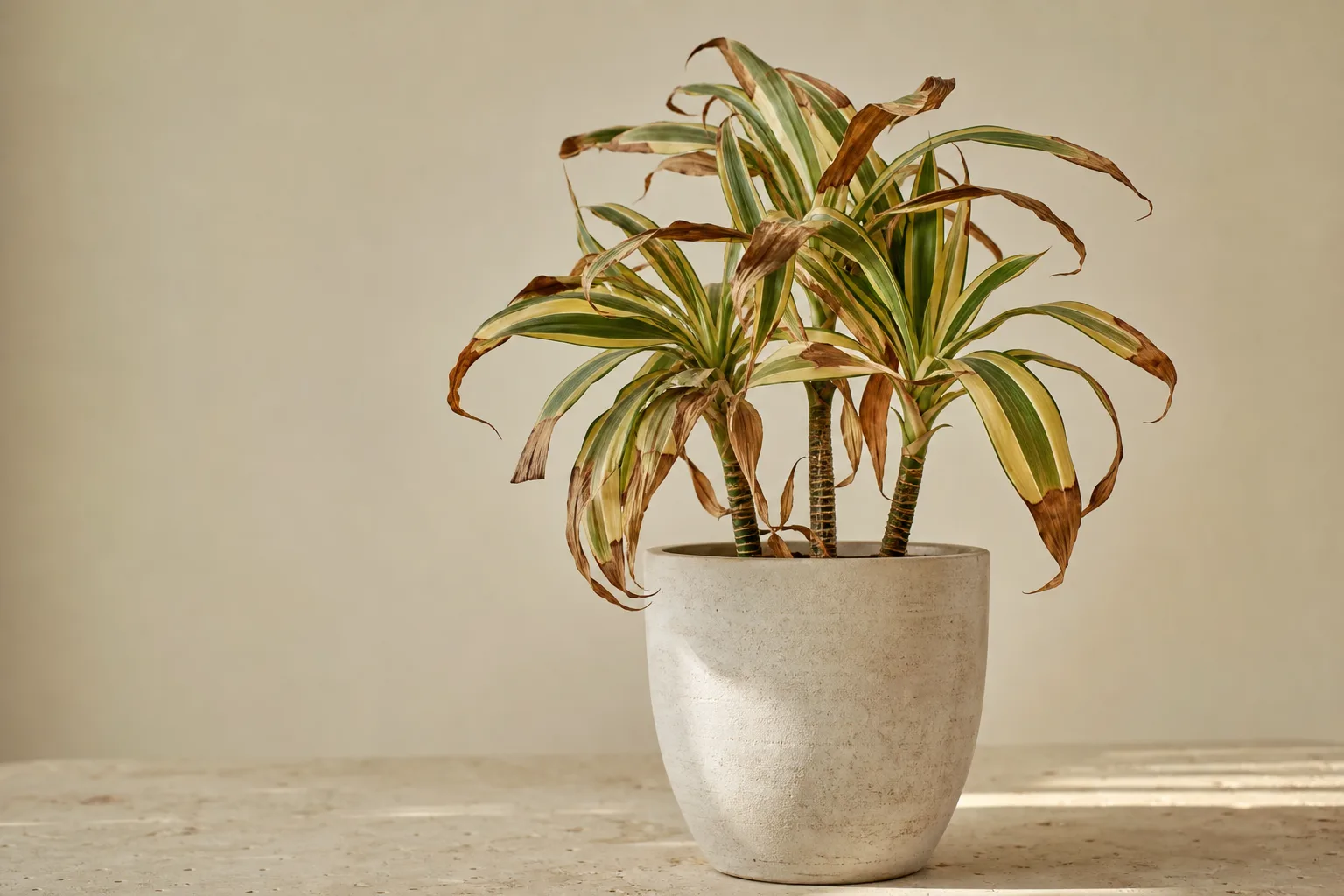
Underwatering on Song of India shows as limp, drooping leaves, dry crispy margins, and a light pot when the top 3–5 cm of mix has been dry too long. Water deeply once until excess drains, then resume watering when that top layer dries again-not on a fixed calendar.
Underwatering on Song of India: Causes, Checks & Fixes
This guide covers underwatering on Song of India. See also the general Underwatering guide, watering, and light pages for this plant.
Underwatering on Song of India: Causes, Checks & Fixes
Quick answer
Song of India tolerates brief dryness better than soggy soil, but extended drought still collapses its spiral leaf rosettes and dries margins on variegated foliage-leaf tips and margins may brown if soils become too wet or too dry. Underwatering looks like limp, drooping leaves, a light pot, and dry mix 3–5 cm down-not a heavy wet container with soft stems.
First fix: water deeply once until excess runs from the drainage hole, discard saucer water, and check whether leaves perk within 24 hours. Do not switch to daily shallow watering or keep soil constantly wet out of fear. That reaction causes the root rot that kills dracaenas when soils stay poorly drained or over watered indoors.
Why Song of India gets underwatered
Dracaena reflexa carries short, dense leaf rosettes on flexible stems-a structure that looks lush but loses turgor quickly when roots cannot pull moisture. The variegated cultivar sold as Song of India needs bright indirect light to hold its yellow-green striping, and brighter placement also means faster water use through those many narrow leaves.
The same drought tolerance that protects Song of India from rot makes underwatering easy to misread. Owners who have been warned about overwatering on Song of India-the main killer of dracaenas-may stretch intervals too far, especially after a rot scare or during cooler winter months when growth slows. A rhythm that worked in spring can leave a small pot bone dry by midsummer in a west-facing window.
Several home conditions accelerate dry-down without changing your calendar. Winter heating drops humidity and pulls moisture from leaf edges while the mix dries faster near radiators. Small pots in bright rooms can lose usable moisture in a few days. Travel, forgotten top shelves, and hydrophobic old peat mix that repels water on the surface while the root ball stays dry all produce chronic thirst without the sour smell of rot.
Song of India wants soils uniformly moist but not wet over time, not alternating floods and deserts. Long dry spells followed by heavy soaking stress margins and can trigger lower leaf drop even when the plant survives.
What underwatering looks like on Song of India
Leaf posture is the clearest early signal. Healthy Song of India holds its spiral rosettes upright along the stems. Underwatered plants lose turgor-the leaves hang limp or droop from the tips, and whole rosettes may sag rather than fan outward.
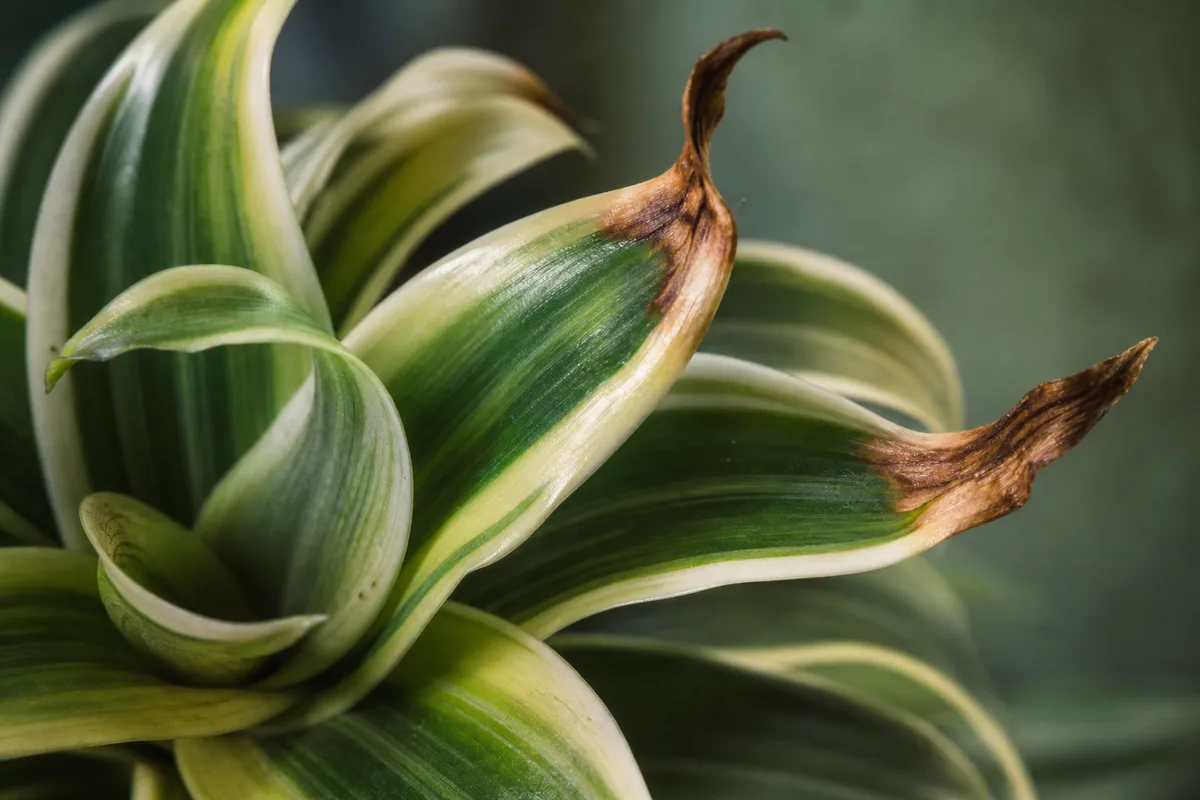
Underwatering symptoms on Song of India - compare with healthy tissue on the same plant.
Leaf texture and color change next. Margins and tips turn dry, papery, and tan to brown. Variegation may look dull or slightly faded on the most stressed rosettes. Unlike fluoride burn alone, underwatering usually pairs crisp edges with obvious soil dryness and a limp overall appearance-not firm leaves sitting in moist mix.
Pot and soil cues support the diagnosis. The container feels noticeably lighter than after a recent soak. Mix is dry well below the surface when you push a finger 3–5 cm down. In prolonged cases, soil may pull slightly away from the pot wall or shed water off the surface when you try to water-hydrophobic dry-down.
Leaf drop on the oldest lower rosettes can follow repeated dry cycles. A few yellowing leaves shedding from the base differs from sudden mass drop on a heavy wet pot, which points to overwatering or cold shock.
Early vs advanced underwatering
Early thirst shows on the most exposed rosettes first-usually those at the stem tips where transpiration is highest. Advanced dryness spreads limp foliage along multiple stems, margins brown more widely, and lower leaf drop increases. Even then, firm stems above the soil line and absence of black mush at the base suggest recovery is realistic after one proper soak.
How to confirm the cause
Work through these checks in order before you pour:
- Soil moisture at depth - Push a finger or wooden skewer 3–5 cm into the mix. Underwatering shows dry material throughout, not merely a dusty top crust over damp roots.
- Pot weight - Lift the container. A light pot plus limp leaves strongly suggests thirst. A heavy pot with limp leaves points to failing roots or overwatering, not dryness.
- Stem firmness at the base - Gently squeeze lower stems where they enter the soil. Firm tissue confirms the problem is likely thirst. Soft mushy stems with wet mix mean stop-assess rot instead of watering.
- Drainage hole check - Peek at the bottom opening. Dry mix visible there plus a light pot supports underwatering. Waterlogged smell or dark wet mix means look elsewhere.
- Season and light context - Active summer growth in a bright window dries pots faster than winter rest. Sparse lower foliage in a cool dim room may reflect seasonal slowdown, not chronic underwatering-especially if inner rosettes still look firm and soil is not bone dry throughout.
- The perk test - If checks point to thirst, water once deeply. Leaves that regain turgor within 12 to 24 hours confirm underwatering. No improvement with wet soil means roots need inspection.
First fix for Song of India
Water thoroughly once until excess runs from the drainage hole, then empty the saucer.
Use room-temperature water and direct flow onto the soil surface, not over the leaf rosettes. Let water flush through the full root zone. If mix has gone hydrophobic and water runs straight down the sides, bottom-water the pot in a basin for 30 to 45 minutes, then let it drain fully on a rack before returning it to its saucer.
After this single soak, stop. Do not water again until the top 3–5 cm of mix feels dry to the touch-Clemson Extension recommends to allow dracaenas to dry slightly between waterings and water thoroughly when the soil surface is dry. Resume the dry-down rhythm Song of India overview needs-not a daily schedule and not constant dampness.
If only a few tip rosettes were limp and the perk test works within a day, no further action is required beyond adjusting your timing.
Step-by-step recovery
When dryness has persisted for weeks or hydrophobic soil blocked uptake:
- Soak or bottom-water once as described above. Repeat bottom-watering only if the first pass left the center of the root ball obviously dry.
- Poke ventilation holes if peat-heavy mix has crusted and repels water. A chopstick through the surface helps rewet evenly without Song of India repotting guide on day one.
- Move to appropriate light if the plant sits in deep shade where it uses water slowly but also grows weakly-bright indirect light supports recovery without baking rosettes in harsh direct sun.
- Raise humidity modestly if heated air is crisping margins while you fix watering. Dry tips and edges are usually caused by too little humidity; a pebble tray or humidifier targeting 40–60% relative humidity reduces edge browning that can mimic ongoing drought.
- Trim only fully dead tissue-crisp margins that will not re-green. Leave limp but still green leaves in place; they usually recover turgor after a soak.
- Hold fertilizer until new rosettes look normal for at least two weeks. Stressed roots do not need feeding.
- Repot only if mix is years old, compacted, or repeatedly fails to absorb water after two soak attempts. Use fresh well-draining potting mix with perlite and wait seven to ten days before the next drink if roots were disturbed.
Recovery timeline
Mild underwatering often shows improvement within hours to 24 hours of a deep soak-rosettes visibly lift and stems stiffen slightly. Moderate stress may take three to seven days for outer leaves to look normal again.
Old leaves with fully crisped margins may stay marked permanently; judge recovery by new rosette growth along firm stems, not by old tissue reverting. If foliage stays limp, margins keep browning, or mix smells sour after your soak, roots may be damaged-inspect within a week rather than watering again on autopilot.
Lookalike symptoms
Overwatering and root rot also cause wilting, which confuses many dracaena owners. Rot shows a heavy wet pot, yellow leaves, soft stems at the base, and sometimes sour smell from drainage holes. Limp leaves with dry firm stems and light pot mean thirst-not rot.
Low humidity and fluoride burn produce brown tips and margins without always causing whole-rosette collapse. Dracaena is very sensitive to fluoride, and symptoms include scorched leaf tips or margins-often from municipal tap water rather than drought. If soil is moist 3–5 cm down and leaves feel firm except at the tips, suspect tap-water fluoride or dry air before assuming underwatering. Switching to filtered water and raising humidity helps; a deep soak when soil is already wet worsens rot risk.
Not enough light causes Song of India to shed lower leaves while upper rosettes look relatively normal-a bottom-up pattern unlike thirst, which often hits exposed tips first. Moving closer to bright indirect light stops progressive drop once watering is stable.
Cold drafts or temperatures below about 65°F (18°C) can yellow and drop leaves suddenly-room temperatures should not dip lower than 65°F for this species. Check placement near AC vents, winter windows, or entry doors-not only soil dryness.
Heat stress above roughly 85°F (29°C) near sunny glass can wilt rosettes even when soil is not fully dry, because transpiration outpaces uptake. Check temperature at the leaf level, not only the mix.
Mistakes to avoid
Do not water on a fixed weekly schedule regardless of soil dryness. Do not give shallow sips every few days; that wets the upper layer without flushing the root zone. Do not overcompensate after one dry spell by keeping soil constantly wet-that invites rot. Do not mist leaves instead of soaking dry roots; surface moisture does not rehydrate the root ball. Do not assume every drooping dracaena means overwatering-check soil and pot weight first. Do not fertilize a dry plant hoping to push growth. Do not repot on day one unless mix is clearly failing. Wear gloves when handling cut stems-Dracaena is toxic to cats and dogs if chewed.
How to prevent underwatering next time
Learn how fast your pot dries in your light. Track weight after watering and again when the top 3–5 cm feels dry. In bright summer growth, many indoor Song of India plants need a deep soak every 7 to 14 days; in cool winter rest, every two to four weeks is common-but intervals are starting points, not rules.
Use well-draining potting mix with perlite in a pot with open drainage. Refresh peat-heavy soil that has gone hydrophobic. Size the pot to the root mass; an oversized pot stays wet too long and encourages rot, while a small pot in hot sun may need water sooner than you expect.
Water when the top 3–5 cm dries-not on a calendar alone. One thorough soak beats three anxious splashes. Keep the plant in bright indirect light so it uses water steadily and maintains variegation, and maintain high humidity and consistent year-round temperatures during heating season so margins stay clean while roots stay evenly supplied.
When to use this page vs other Song of India guides
- Song of India watering guide - Use for routine moisture checks before assuming underwatering is the main issue.
- Song of India problems hub - Browse all 17 common issues on this species.
- Wilting on Song of India - Different entry point when symptoms overlap with underwatering.
- Brown Tips on Song of India - Different entry point when symptoms overlap with underwatering.
- Yellow Leaves on Song of India - Different entry point when symptoms overlap with underwatering.