Brown Tips on Song of India: Causes, Checks & Fixes
Quick answer
On Song of India, dry crispy tan-to-brown tips on yellow leaf margins usually trace to fluoride in tap water, low humidity, or uneven watering-not pests. First step: switch one plant to filtered or distilled water for four to six weeks while checking humidity at leaf level.
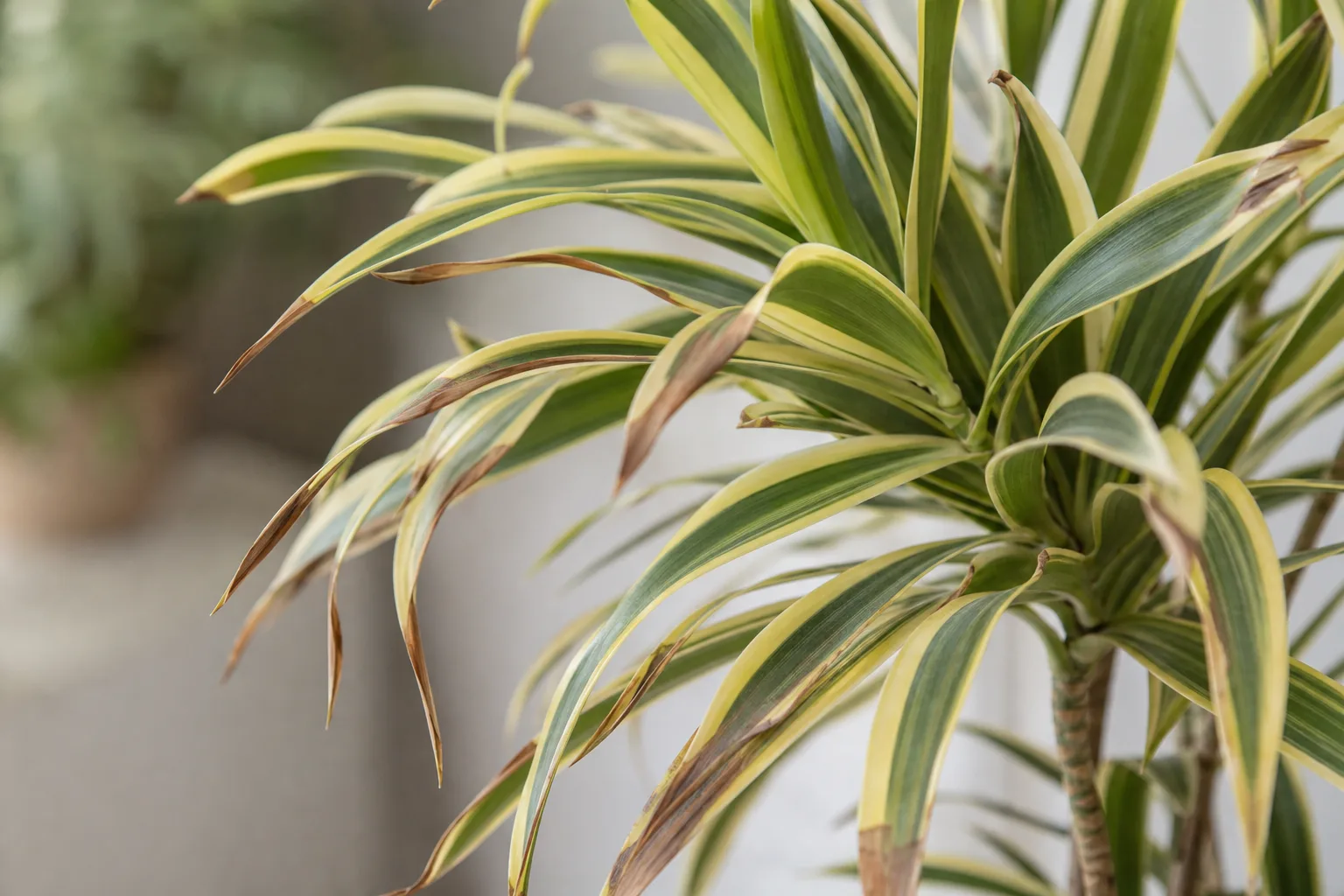
Brown Tips on Song of India: Causes, Checks & Fixes
This guide covers brown tips on Song of India. See also the general Brown Tips guide, watering, and light pages for this plant.
Brown Tips on Song of India: Causes, Checks & Fixes
Quick answer
Song of India (Dracaena reflexa ‘Variegata’) carries narrow leaves with broad yellow or chartreuse margins. Those exposed edges lose moisture first-and they also accumulate fluoride from tap water at the leaf tip. Either problem shows up as dry, papery brown tips long before the whole plant looks sick.
First step: switch one pot to filtered, distilled, rainwater, or reverse-osmosis water for four to six weeks. Hold everything else steady while you place a hygrometer among the leaves. If humidity reads below 40%, raise it with a humidifier-not extra watering. Brown tip tissue will not turn green again; judge success by whether new rosette leaves open with clean margins.
For long-term water quality and dry-down rhythm, see the Song of India watering guide. When dry winter air is the main suspect, use the low-humidity rescue path.
Why Song of India gets brown tips
Brown tips on this dracaena are rarely random. The variegated cultivar’s thin leaf tissue and dracaena-family fluoride sensitivity make tip burn one of the most common indoor complaints-and one that copies several other stress patterns.
Fluoride and chlorine in tap water
Dracaenas are very sensitive to fluoride in municipal water. Fluoride does not evaporate when water sits overnight the way chlorine may; it moves with transpiration and accumulates in leaf margins, producing scorched tips and edges. On D. reflexa, UF/IFAS notes that high fluoride causes chlorotic or necrotic leaf tips-damaged tissue is permanent.
NC State Extension recommends room-temperature filtered water because Song of India does not tolerate fluoride and chlorine in straight tap water. MSU Extension explains that many cities add fluoride at about 1 ppm for dental health-enough to injure sensitive foliage over repeated watering.
Clemson HGIC also advises keeping soil pH between 6.0 and 6.5 to help prevent fluoride injury. Do not use sodium-softened water-it adds salt stress on top of fluoride load.
Low humidity and variegated margin desiccation
Song of India evolved in humid island climates around the Indian Ocean. Indoors, winter heating routinely drops humidity into the 20–30% range. The yellow margins on variegated leaves desiccate before the green center, so dry-air stress shows as crisp brown tips and edges-often worst on leaves nearest vents, radiators, or sunny window glass.
Low humidity below 30 to 40 percent is common in heated rooms and contributes to dry tips on dracaena. A humidifier at foliage level fixes the microclimate more reliably than occasional misting, which evaporates within minutes. Fluoride burn and humidity stress look nearly identical on Song of India-treat them as parallel suspects, not either-or guesses. The low-humidity guide walks through that fork in depth.
Inconsistent watering and salt buildup
Song of India wants moist, well-drained potting mix-not bone-dry spells followed by heavy soaking. Long drought makes margins crisp; chronic wetness does not fix tips and can invite root problems. Leaf tips and margins may brown if soils become too wet or too dry.
Fertilizer salts concentrate at leaf extremities. White crust on the soil surface, tip burn that worsened right after feeding, or perlite-heavy mixes that release fluoride all point to salt injury layered on water-quality stress. Leaf tips may burn if plants are fertilized too heavily on dracaena.
Dry air also invites spider mites on stressed foliage. Webbing, stippling, and dusty undersides mean pests-not just environmental burn-need direct treatment.
What brown tips look like on Song of India
Typical tip-burn pattern:
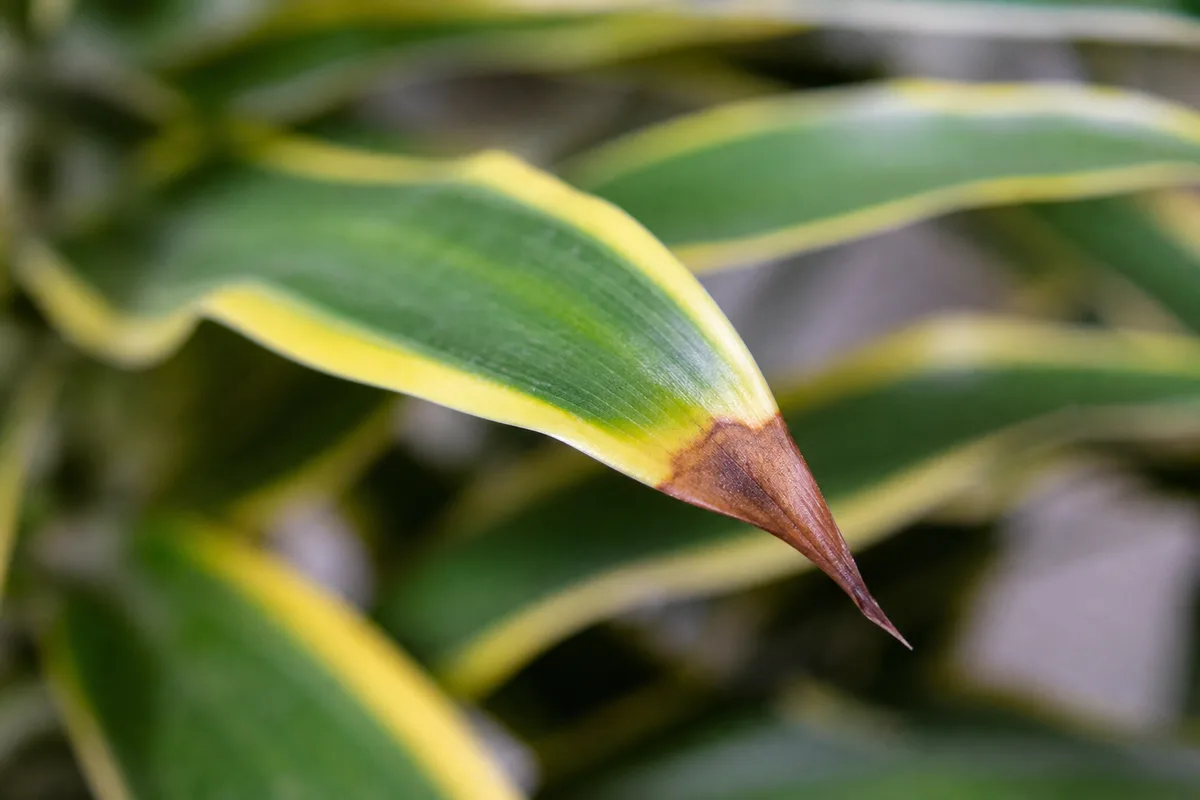
Brown Tips symptoms on Song of India - compare with healthy tissue on the same plant.
- Dry, papery tan-to-brown patches starting at the very tip or along the yellow margin
- Rest of the leaf stays green and firm-not soft or yellowing overall
- Older rosette leaves often show damage first; new leaves may burn too if tap water continues
- No webbing, cottony masses, sticky residue, or moving specks on inspection
Dry crispy tips vs. soft spreading margins
Dry crispy tips on firm leaves with reasonable soil moisture usually mean fluoride, humidity, salt, or drought at the leaf edge-not root failure.
Soft brown or yellow margins spreading down the leaf with limp foliage and a heavy, wet pot suggest overwatering or root stress-a different rescue path. Do not keep watering to “fix” brown tips when the mix stays soggy.
How to rule out pests
Hold a leaf over white paper and tap the stem. Fine moving specks plus webbing on undersides mean spider mites-common when humidity is low. Scale looks like brown bumps on stems; mealybugs leave cottony clusters. Environmental tip burn has none of these signs.
Already-brown tissue will not revert to green. Judge improvement by fresh growth, not old damage.
How to confirm the cause
Work through this checklist in order:
- Water source - Do you use straight tap water in a fluoridated area? Switch one plant to filtered or distilled water and hold the change for four to six weeks.
- Hygrometer at leaf level - Place the sensor among the foliage for 24 hours. Below 40% implicates dry air; above 45% with ongoing burn points harder at fluoride, salts, or watering rhythm.
- Pot weight and soil moisture - Press the top 3–5 cm of mix. A heavy, wet pot plus limp leaves means overwatering-not tip burn alone. A very light pot with thin, drooping leaves means drought contributed.
- Salt signals - White crust on the soil, recent heavy feeding, or burn that appeared right after fertilizer application suggest salt injury. Flush before feeding again.
- New growth pattern - Clean tips on fresh leaves after a water switch confirm fluoride was a driver. Continued burn on new rosettes means humidity, salts, or placement still need work.
- Location audit - Note heat vents, radiators, fireplace drafts, and leaves resting on cold winter glass. Local extremes brown margins even when room humidity looks acceptable on a distant shelf.
Fluoride vs. humidity vs. salt vs. overwatering
| Pattern | What you usually see | What to check first |
|---|---|---|
| Fluoride / tap water | Dry crispy tips on firm leaves; new and old foliage affected; reasonable watering schedule | Water source; 4–6 week filtered-water test |
| Low humidity | Crispy yellow margins; worst near vents, radiators, or sunny windows; often seasonal with heating | Hygrometer at plant; low-humidity guide |
| Salt burn | Tips worsen after feeding; white crust on soil surface | Flush mix; reduce fertilizer; check perlite-heavy media |
| Overwatering | Soft yellow leaves, limp rosettes, heavy wet pot; margins may brown as roots fail | Stop watering; see overwatering |
If humidity reads above 45%, placement is stable, and pests are absent, prioritize water quality and salt load before buying more humidity gear.
First fix for Song of India
Switch to distilled, rainwater, reverse-osmosis, or filtered water-and flush the pot once with that same clean water.
Pour slowly until roughly twice the pot volume runs from the drainage hole to leach accumulated salts. Empty the saucer. Do not repot, fertilize, or mist heavily on day one. Hold the new water source steady for four to six weeks so new growth can show whether fluoride was the main driver.
While the water change runs, place a hygrometer among the leaves. If readings stay below 40%, run a humidifier within a few feet of the foliage until the sensor holds 40–60% for a full day. Extra water in the pot does not humidify the air and can push Song of India toward root rot on Song of India.
Trim only fully dead tip tissue if it bothers you cosmetically-see the pruning guide for angled cuts on variegated leaves. Wear gloves when handling cut stems; dracaena is toxic to cats and dogs.
Step-by-step recovery
After the water switch and optional flush:
- Hold humidity at 40–60% with a humidifier at foliage level if the hygrometer reads low. A pebble tray beneath the pot can add local moisture, but keep the pot base above the water line-not sitting in it.
- Water when the top 3–5 cm dries, then soak thoroughly per the watering guide dry-down rule. Avoid small daily sips that keep the surface wet without aerating the root zone.
- Pause fertilizer until at least one new leaf opens clean. Stressed dracaena tissue burns easily when salts stack on fluoride injury.
- Move off vent paths while keeping Song of India light guide. Hot or cold drafts brown margins faster than whole-room humidity can compensate.
- Treat spider mites if inspection finds webbing or stippling-rinse undersides, then use insecticidal soap if colonies persist. Raising humidity alone does not remove established mites.
- Trim cosmetic burn at a slight angle into healthy tissue, or wait for new foliage to replace older leaves.
Hold off on Song of India repotting guide until the plant produces at least one clean new leaf under stable conditions.
Recovery timeline
Expect the tip-burn pattern to stop spreading within one to two weeks once fluoride-free water and adequate humidity are in place. New rosette leaves with clean margins are the real success signal-usually within four to eight weeks during active growth.
Old browned tips remain unless you trim them. If fresh growth still scorches after a month of filtered water and stable 40–60% humidity, reassess fertilizer, softened-water use, and placement near heat sources.
Leaf drop from prolonged stress may continue briefly after conditions improve. As long as stems stay firm and new growth pushes from the top, the plant is recovering.
What not to do
Do not assume a humidifier alone fixes fluoride burn when tap water keeps loading the soil and leaf margins.
Do not use sodium-softened water-it adds sodium toxicity on top of fluoride sensitivity.
Do not increase watering when tips turn brown. Song of India needs evenly moist soil, not constant saturation.
Do not fertilize a stressed plant hoping to push new growth-excess fertilizer burns leaf tips and margins.
Do not confuse dry crispy tips with wet-soil limpness and add more water- that worsens overwatering.
Do not mist once daily in a heated room and assume humidity is solved. Occasional mist evaporates quickly and can leave spots if leaves stay wet overnight without airflow.
How to prevent brown tips next time
Use fluoride-low water year-round-not only after damage appears. Fluoride injury is cumulative on dracaena.
Keep soils uniformly moist but not wet. Run the dry-down check before every drink per the watering guide.
Run a humidifier from early fall through heating season in rooms where Song of India lives. Check the hygrometer monthly-humidity drifts down gradually without obvious discomfort to people.
Feed lightly during active growth only. Flush the pot with clean water every few months in hard-water or heavy-feeding setups.
Position the plant away from heat vents and cold window glass before problems appear.
When to worry
Isolated crispy tips on lower, older leaves are usually cosmetic-manageable with water and humidity fixes.
Worry when browning spreads down whole margins on multiple leaves with limp foliage and heavy wet soil. That pattern suggests root stress, not environmental tip burn alone. Follow the overwatering rescue path before watering again.
Treat as urgent if spider mites web the rosettes, stems soften at the base, or the plant drops most foliage within days. Environmental stress may have weakened the plant, but mites or rot need immediate separate action.
Replace the plant only if the stem is mushy, roots are black and foul-smelling after inspection, or no new growth appears for two months under corrected water and humidity.
Conclusion
Brown tips on Song of India usually mean fluoride in tap water, dry winter air, or salt stress on variegated leaf margins-not a mystery disease. Switch water first, measure humidity at the plant, flush salts if needed, and watch new growth for proof the fix worked. When tips are dry and crispy on firm stems, resist the urge to water more; when leaves are limp on wet mix, resist the urge to treat it as tip burn alone. That fork keeps you from the two mistakes that damage this dracaena most: fluoride-loaded tap water and soggy roots.
When to use this page vs other Song of India guides
- Song of India watering guide - Use for routine moisture checks before assuming brown tips is the main issue.
- Song of India problems hub - Browse all 17 common issues on this species.
- Low Humidity on Song of India - Different entry point when symptoms overlap with brown tips.
- Underwatering on Song of India - Different entry point when symptoms overlap with brown tips.
- Overwatering on Song of India - Different entry point when symptoms overlap with brown tips.