Low Humidity on Song of India: Causes, Checks & Fixes
Quick answer
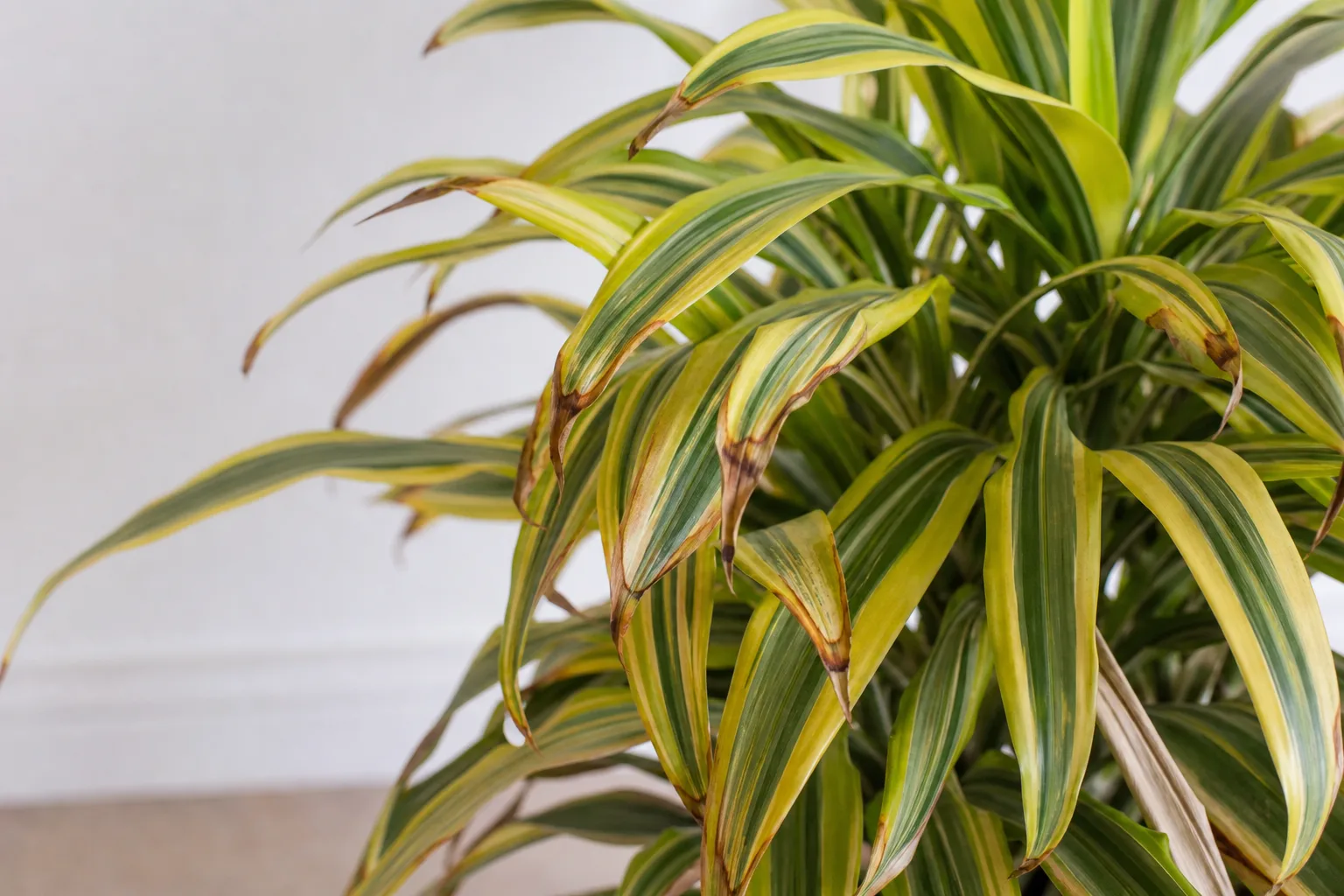
Song of India needs moderate to high humidity; dry heated air browns the narrow variegated leaf tips first. First step: place a hygrometer beside the plant-if readings stay below 40%, raise humidity with a humidifier or pebble tray while ruling out fluoride-heavy tap water.
Low Humidity on Song of India: Causes, Checks & Fixes
This guide covers low humidity on Song of India. See also the general Low Humidity guide, watering, and light pages for this plant.
Low Humidity on Song of India: Causes, Checks & Fixes
Quick answer
Song of India (Dracaena reflexa ‘Variegata’) has narrow, yellow-edged leaves that show dry-air stress at the tips and margins before the rest of the plant looks unhappy. Winter heating, air conditioning, and sunny window drafts routinely drop indoor humidity into the 20–30% range-well below what this Western Indian Ocean native prefers indoors.
First step: place a hygrometer beside the plant for 24 hours. If readings stay below 40%, humidity is a likely contributor. If humidity looks fine but tips keep browning, switch to filtered or distilled water before buying more humidity gear-dracaena is highly sensitive to fluoride, and that damage looks the same on Song of India leaves. When water chemistry is the main suspect, see the brown tips guide for the water-quality-first path.
This page is humidity-first triage. Measure air at the leaves, raise local RH, then rule out fluoride. If humidity reads fine and tips still burn on new growth, pivot to brown tips rather than chasing more moisture.
Why Song of India struggles in dry air
Unlike thick-leaved desert plants, Song of India keeps relatively slender foliage with broad yellow or chartreuse margins. Those exposed leaf edges lose water to the surrounding air faster than the green center, so low humidity shows up as crisp brown tips long before the whole leaf yellows.
Variegated margins desiccate first
The variegated cultivar carries less total chlorophyll than plain-green dracaenas, which means it cannot photosynthesize as efficiently in dim corners and needs brighter light to maintain chartreuse edges. In a dim spot, the plant already runs closer to its energy limit-add dry air and those narrow yellow margins desiccate faster than on an all-green cane. See the light guide when faded variegation and crispy edges appear together in a north-facing room.
Indian Ocean humidity preference indoors
The species evolved in humid island climates around the Indian Ocean. Indoors, it wants bright indirect light, evenly moist but not soggy soil, and air that stays humid enough that leaf margins do not desiccate. NC State Extension recommends avoiding cold drafts and sudden temperature changes for Dracaena reflexa; heated winter rooms, forced-air vents, and dry AC cycles pull moisture out of both the air and the leaf surface.
Fluoride mimics the same tip pattern
Song of India also shares a family-wide quirk: dracaenas are sensitive to fluoride in tap water. Clemson Extension notes that fluoride injury produces scorched tips and margins-the same cosmetic pattern as true humidity stress. MSU Extension explains that many cities add fluoride at about 1 ppm for dental health-enough to injure sensitive foliage over repeated watering. Many growers chase a humidifier while fluoride keeps burning new growth. Treat humidity and water quality as parallel suspects, not either-or guesses.
Do not use sodium-softened water-it adds salt stress on top of fluoride load. See the watering guide for fluoride-safe water choices.
Dry air invites spider mites
Spider mites thrive when humidity is low and temperatures are warm. A Song of India already stressed by dry margins becomes an easier target for mite colonies that cause stippling, webbing, and accelerated leaf drop. Follow the spider mites guide if inspection finds active colonies-raising humidity alone does not remove established pests.
What low humidity looks like on Song of India
Typical humidity-stress pattern:
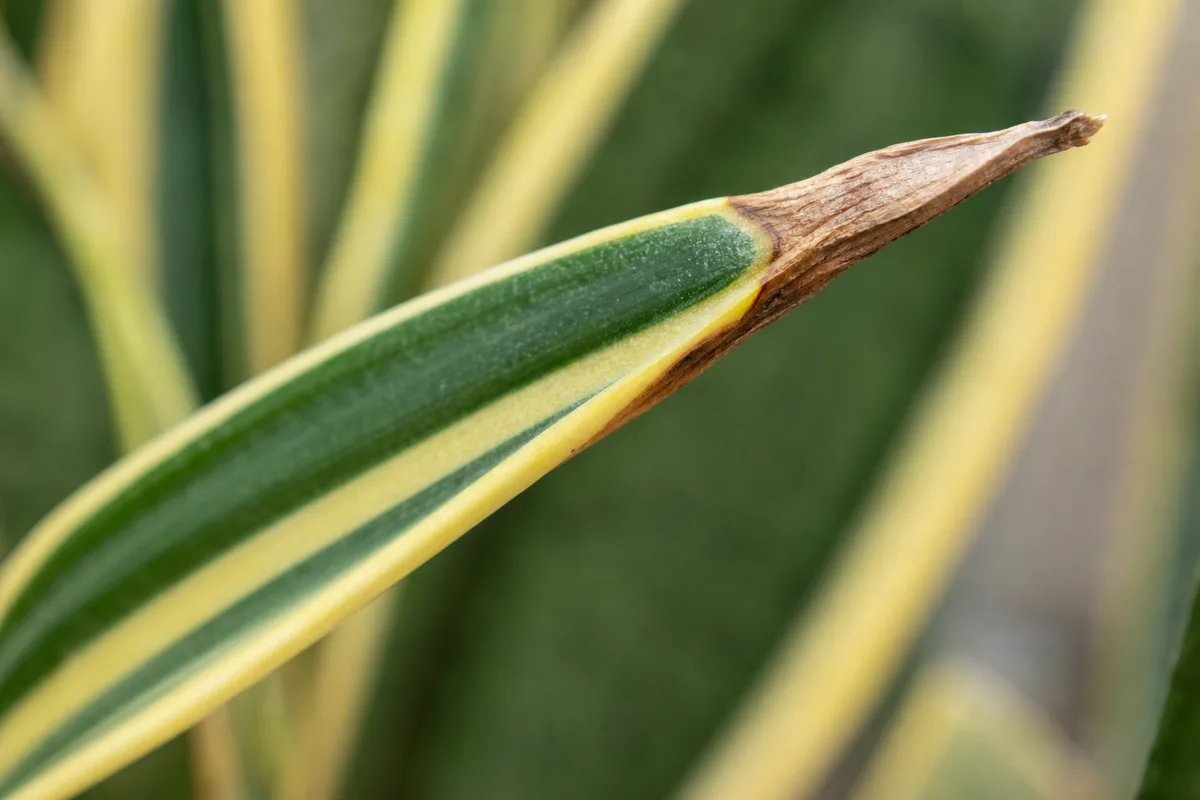
Low Humidity symptoms on Song of India - compare with healthy tissue on the same plant.
- Dry, papery brown tips on otherwise firm leaves, often starting at the yellow margin
- Brown edges that feel crispy, not soft or mushy
- Damage worst on leaves nearest heating vents, radiators, or sunny south windows
- Lower, older leaves may drop if dryness persists for weeks
- New growth emerges with minor tip browning when the air stays dry
What humidity stress usually is not:
- Soft brown patches spreading from the base of the stem (overwatering or root rot)
- Round bleached spots on leaf faces (direct sun scorch through glass)
- Uniform yellowing of entire leaves with wet soil (overwatering)
- Fine webbing or stippling on undersides (spider mites, worsened by dry air)
Already-brown tip tissue will not revert to green. Judge improvement by whether fresh leaves open with clean margins, not by whether old damage disappears.
How to confirm low humidity is the cause
Work through these checks in order:
- Hygrometer reading at plant height - Place the sensor among the leaves, not on a distant shelf. If humidity stays below 40% for a full day, dry air is actively stressing the plant. Household humidity below 30 to 40 percent is common in winter and benefits from targeted humidity boosts. Above 50% with ongoing tip burn points more strongly to water quality or watering rhythm.
- Location audit - Note proximity to heat vents, radiators, fireplace drafts, and window glass. Song of India leaves touching cold winter glass or sitting in a hot air stream brown at the edges first.
- Water source - Review whether you use straight tap water or softened water. Fluoride accumulates at leaf tips on dracaena. Switch one pot to filtered water for three weeks while holding humidity steady-if only that plant improves, fluoride was the driver. Softened water adds sodium that can scorch margins independently of humidity.
- Soil moisture pattern - Press the top 3–5 cm of mix. Song of India wants moist but not wet soil. Chronic drought makes tips crisp too, but the whole leaf often feels limp before edges brown. Soggy soil with tip burn suggests salt or fluoride injury, not humidity alone.
- Pest inspection - Hold a leaf over white paper and tap the stem. Fine specks that move, plus webbing on undersides, mean spider mites-common when humidity is low. Treat pests separately even if you also raise humidity.
- Season timing - Symptoms that appear or worsen within weeks of turning on central heat strongly implicate dry air, especially if other tropical plants in the same room show similar tip patterns.
If humidity reads above 45%, placement is stable, and pests are absent, look harder at fluoride, fertilizer burn, or uneven watering before assuming dry air.
Humidity vs. fluoride - decision table
Use this fork when crispy margins could be dry air, tap water, or both:
| What you measure | Humidity stress likely | Fluoride / salt burn likely | Read next |
|---|---|---|---|
| Hygrometer at leaves below 40% for 24+ hours | Yes | Possible overlap | Stay on this page - humidify first |
| Hygrometer 45–60%, tips still burn on new growth | Unlikely alone | Yes | Brown tips - switch water |
| Damage worst on leaves nearest vents or winter glass | Yes | Possible overlap | Humidifier + move pot off draft path |
| Uniform tip burn on all leaves with municipal tap water | Possible | Yes | Filtered water A/B test per watering guide |
| Whole leaf limp, pot very light, mix bone dry at 3–5 cm | No - drought | No | Underwatering |
| Limp leaves, heavy wet pot, soft stem base | No - root stress | No | Overwatering |
| Stippling + fine webbing on undersides | Dry air may have weakened plant | No | Spider mites |
When humidity is fine but tips persist, do not buy a second humidifier-pivot to brown tips and hold water quality steady for four to six weeks.
First fix for Song of India
Raise humidity at the plant to 40–60% using a humidifier placed within a few feet of the foliage, and run it until a hygrometer at leaf level holds that range for a full day.
A cool-mist or evaporative humidifier changes the whole microclimate more reliably than occasional misting, which evaporates within minutes in a heated room. Set the unit close enough that the sensor among the leaves-not across the room-registers the target range. Aim mist away from direct leaf wetting at night; wet foliage without airflow invites fungal spotting on dracaena leaves. Avoid pushing above 60% in poorly ventilated rooms if mold-sensitive occupants share the space.
Do not respond to dry tips by watering more. Extra water in the pot does not humidify the air and can push Song of India toward root rot, which this species tolerates poorly.
Step-by-step recovery
After the humidifier is running:
- Add a pebble tray beneath the pot if you need a backup boost in a grouped plant corner. Pots may be placed on a bed of wet pebbles so the pot base sits above the water line, not in it. Evaporation lifts humidity immediately around the canopy-helpful in small rooms, insufficient alone in open floor plans near blowing vents.
- Group nearby plants so shared transpiration raises local moisture. Keep enough space for airflow-crowding without ventilation helps mites.
- Move the pot off the vent path while keeping bright indirect light. Even good humidity fails if a heat duct blows directly across the leaves each cycle.
- Switch to filtered, distilled, or rainwater if you have not already. Hold this change steady for several weeks so new growth can show whether fluoride was contributing.
- Trim fully brown tips with clean shears if they bother you cosmetically. Cut into healthy green tissue at a slight angle, or leave minor burn until new foliage replaces the leaf.
- Treat spider mites if inspection finds them-rinse undersides with water, then apply insecticidal soap if colonies persist per the spider mites guide.
Hold off on repotting, fertilizer, or major pruning until the plant holds stable humidity and produces at least one clean new leaf.
Winter recovery example
A common indoor pattern: a Song of India on a bright west windowsill reads 28% RH at leaf level in mid-January after heat kicks on daily. The grower moves the pot 60 cm (2 ft) back from the glass, runs a small humidifier within arm’s reach of the canopy, and switches to filtered water while holding the normal dry-down rhythm from the watering guide. By week two the hygrometer holds 45–50% beside the leaves. By week six the top rosette opens a new spiral with clean yellow margins-old tip burn remains cosmetic on lower leaves. That timeline is typical when humidity was the main driver; if new growth still scorches at 50% RH with filtered water, reassess fluoride load or fertilizer salts on the brown tips page.
Recovery timeline
Expect visible stabilization within one to two weeks once humidity at the plant stays in the 40–60% band and water quality is addressed. New leaves that open with clean margins are the real success signal-usually within four to eight weeks during active growth.
Old browned tips remain cosmetic unless you trim them. If fresh growth still burns at the margins after a month of stable humidity and filtered water, reassess placement near heat sources or reduce fertilizer-heavy feeding can yellow and scorch dracaena leaf edges.
Leaf drop from prolonged dry stress may continue briefly after conditions improve. As long as the stem stays firm and new rosettes push from the top, the plant is recovering.
Lookalike symptoms to rule out
Fluoride and salt burn - Brown or yellow scorch at tips and margins without especially dry room air. Often worsens when fertilizing heavily or using perlite-heavy mixes that release fluoride. Filtered water is the test. Full fork: brown tips.
Underwatering - Whole leaves droop and feel thin before edges crisp. The pot feels light and the top several centimeters of mix are bone dry. Humidity fixes will not replace a proper soak-and-dry rhythm.
Overwatering and root rot - Lower leaves yellow and drop while soil stays wet. Stems may feel soft at the base. Root rot may occur if soils are poorly drained or over watered-humidity changes will not fix soggy roots.
Direct sun scorch - Bleached or tan patches on leaf faces where sunlight hits through glass, not just tip margins. Song of India wants bright indirect light, not hot direct afternoon sun-see the light guide.
Spider mite damage - Bronze stippling, fine webbing, and leaves that look dusty on the undersides. Dry air encourages mites but the pest itself needs direct treatment on the spider mites page.
Mistakes to avoid
Do not buy a humidifier without measuring first-you may already be at 45% while fluoride or drought is the real issue.
Do not mist once daily and assume the problem is solved. In a heated room, mist evaporates quickly and can leave spots if leaves stay wet overnight.
Do not place Song of India directly on a radiator cover or inside a window frame touching cold glass. Local extremes mimic whole-room humidity stress.
Do not increase watering when tips turn brown. Dracaena reflexa needs evenly moist soil, not constant saturation.
Do not fertilize a stressed plant hoping to push new growth. Excess fertilizer burns leaf tips and margins on dracaena and can look like humidity damage.
Do not use sodium-softened water while troubleshooting-salt and fluoride stack on the same margins.
Song of India care cross-check
Humidity fixes work best when light and placement support the species-not when every care parameter is rehashed here.
Light and drafts: Bright indirect light dries leaf surfaces faster than dim shade; direct afternoon sun through glass scorches margins independently of humidity. A dim corner plus dry air compounds variegation fade and tip crispness-see not enough light when stems stretch and chartreuse edges pale. Cold window glass and heat vents create local dry zones even when a room hygrometer reads acceptable.
Water rhythm: Run the top 3–5 cm dry-down check from the watering guide-extra watering does not humidify air and risks root stress.
Pet safety: Song of India is toxic to cats and dogs if ingested. Keep humidifiers and pebble trays on stable surfaces where pets cannot drink standing water or chew fallen leaves. Contact your veterinarian or the ASPCA Animal Poison Control Center at (888) 426-4435 if ingestion is suspected.
How to prevent dry-air damage next time
Run a humidifier from early fall through heating season in rooms where Song of India lives. A steady 40–60% band prevents the crash that happens when outdoor air turns dry indoors.
Position the plant away from heat vents and AC outlets before problems appear. Summer AC cycles dry air the same way winter heat does-check the hygrometer when cooling season starts. If you must keep it near a window, leave space so leaves do not rest on glass.
Use filtered water year-round rather than switching only after damage shows. Fluoride injury is cumulative on dracaena.
Group tropical plants in the same bright room so they share moisture, but maintain enough spacing for air movement.
Check the hygrometer monthly in winter. Humidity can drift down gradually without obvious discomfort to people.
When to worry
Low humidity alone is rarely fatal to an established Song of India. Worry when crispy tips spread to every new leaf despite stable humidity and filtered water-that pattern suggests root failure, severe fluoride load, or hidden pests rather than dry air alone.
Treat as urgent if spider mites web the rosettes, stems soften at the base, or the plant drops most of its foliage within days. Dry air may have weakened the plant, but mites or rot need immediate separate action.
Replace the plant only if the stem is mushy, roots are black and foul-smelling after inspection, or no new growth appears for two months under corrected conditions. Cosmetic tip burn on an otherwise growing specimen is manageable.
Related Song of India guides
- Song of India overview - species hub and variegation biology
- Song of India watering - dry-down rhythm and fluoride-safe water
- Brown tips on Song of India - water-quality-first sibling when humidity reads fine
- Spider mites on Song of India - pest rescue when dry air weakened foliage
- Song of India light - bright indirect needs and sun-scorch lookalike
- Not enough light on Song of India - dim corners compound dry-air stress
FAQs
Does Song of India need high humidity?
Yes, relative to most houseplants. Dracaena reflexa prefers consistently humid air and shows brown tips and margins when indoor humidity drops, especially in winter. It tolerates average room conditions better than desert succulents but worse than true tropical ferns-aim for roughly 40–60% near the foliage.
What should I check first if I suspect low humidity on Song of India?
Measure humidity at plant level with a hygrometer, not a guess from how the room feels. At the same time, note whether you water with unfiltered tap water-fluoride burn on dracaena mimics dry-air tip damage on the same narrow leaves. Use the decision table above if both suspects apply.
Will Song of India recover after dry winter air damages the leaves?
Brown tip tissue will not turn green again, but the plant can look healthy once new leaves emerge under stable humidity. Recovery usually shows within four to eight weeks when humidity holds and water quality is addressed. Continued tip burn on fresh growth means the air or water issue is not fixed yet.
When is low humidity urgent for Song of India?
Dry air alone rarely kills this plant, but it weakens foliage and invites spider mites that can defoliate a stressed specimen quickly. Act promptly if you see fine webbing, stippling, or accelerating leaf drop alongside crispy margins-not just isolated old tip burn on lower leaves. See the spider mites guide for treatment steps.
Humidifier or pebble tray - which is enough for Song of India?
A pebble tray helps the immediate canopy in a small corner but rarely lifts whole-room humidity in open floor plans or near blowing vents. Use a humidifier when the hygrometer at leaf level stays below 40% despite grouping plants and a tray. Aim mist away from direct leaf wetting at night to avoid fungal spotting on dracaena foliage.
Conclusion
Crispy margins on Song of India usually mean the air around the leaves is too dry for this humidity-loving dracaena-but fluoride in tap water copies the same look. Measure humidity at the plant, raise it to 40–60% with a humidifier, filter your water, and watch new growth-not old brown tips-for proof the fix worked. If humidity reads fine but tips keep burning on fresh leaves, read brown tips next. That order keeps you from overwatering, over-misting, or treating a water-quality problem as a dry-air crisis.