Not Enough Light on Song of India: Causes, Checks & Fixes
Quick answer
Not enough light makes Song of India stretch, lose chartreuse variegation, and grow slowly. Move the pot to bright indirect light-protected from harsh direct sun-and adjust watering because brighter spots dry the mix faster.
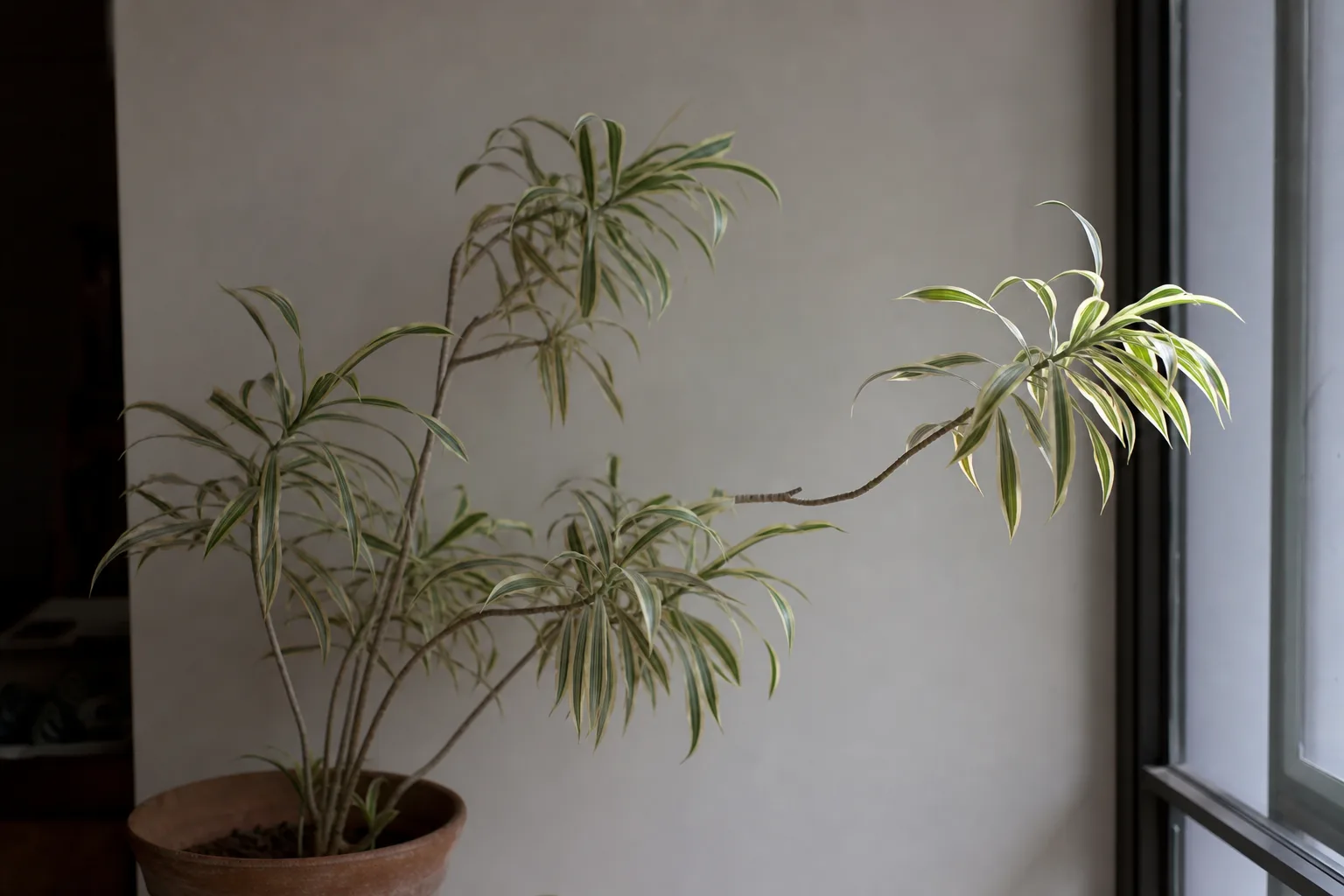
Not Enough Light on Song of India: Causes, Checks & Fixes
This guide covers not enough light on Song of India. See also the general Not Enough Light guide, watering, and light pages for this plant.
Not Enough Light on Song of India: Causes, Checks & Fixes
Quick answer
Song of India is a variegated Dracaena reflexa that needs bright indirect light for best results-not the dim corner tolerance of a Janet Craig dracaena. When light is too weak, the plant grows spindly and variegated leaves lose their variegation-stretched whorls, muddy green margins, accelerated lower-leaf drop, and stalled growth while soil stays wet longer than it should.
First step: move the pot to the brightest indirect spot you can offer-on or within one to three feet of an east window, or two to four feet back from filtered south or west glass. Protect variegated tissue from harsh direct sun except limited early morning sun, especially if the plant has been in deep shade. Acclimate over seven to fourteen days if the new spot is much brighter than the old one, then adjust watering because the plant will use moisture faster in better light.
What not enough light looks like on Song of India
Insufficient light shows up as a pattern, not a single yellow leaf. Watch for these signs on upright stems with spiral leaf whorls:
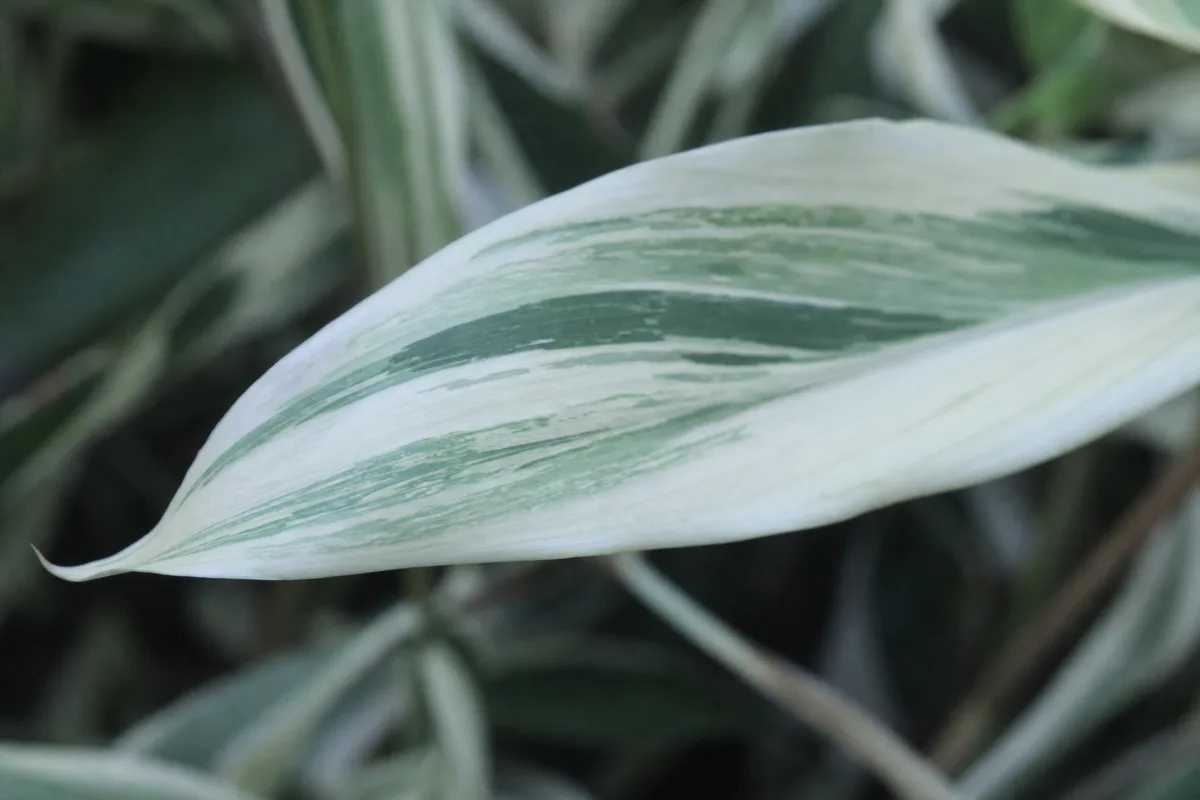
Not Enough Light symptoms on Song of India - compare with healthy tissue on the same plant.
Stretch and spacing
- Long bare sections between whorls, with new leaves smaller than older ones
- Thin, weak stems that lean hard toward the nearest window
- A sparse, top-heavy silhouette as lower foliage drops away
Variegation loss
- Chartreuse or cream margins turning muddy green or lime
- New leaves opening with less contrast between green centers and yellow edges
- Overall dull, washed-out foliage even though nothing else in care changed
Slow metabolism
- Little or no new growth through spring and summer
- Soil that stays damp for two weeks or more because the plant is not actively using water
- Lower-leaf yellowing that looks like overwatering on Song of India but follows a move to a dimmer spot
Song of India can survive low light long enough to fool you. Survival is not thriving. A plant that still has a few green leaves in a north-facing office may look acceptable while quietly losing the variegation you bought it for.
Why Song of India gets not enough light
Light intensity matters more for Song of India than for many other dracaenas because of how variegation works. The yellow-to-cream margins on ‘Song of India’ cultivars contain less chlorophyll than the green centers. Those lighter areas depend on the green tissue to photosynthesize efficiently, which requires higher light energy than an all-green houseplant needs. In dim conditions, the plant prioritizes green tissue-margins fade first, then lower leaves drop because the plant cannot support foliage it cannot fuel.
Placement mistakes are the usual trigger:
- Decor-first positioning - The pot sits where it looks good, six feet from a window, while intensity drops sharply with distance.
- Generic dracaena advice - Song of India is grouped with species that tolerate moderate shade, but this dracaena prefers bright, indirect sunlight and variegated leaves need brighter exposure to keep color and compact form.
- Seasonal fade without adjustment - The same winter window delivers less usable light, but watering and expectations stay on a summer schedule.
- Dirty glass, sheers, or obstructions - Furniture, tinted film, and grimy panes cut light more than owners notice.
Low light also changes water use. A dim plant transpires slowly, so mix stays wet longer. That wetness invites root stress on dracaenas-and yellow leaves from root damage can look identical to overwatering on a plant that is actually under-lit. Fix light first when a dim plant yellows with soggy soil.
How to confirm the cause
Work through these checks before Song of India repotting guide, fertilizing, or pruning heavily:
- Distance test - Measure how far the pot sits from the glass. Light intensity decreases rapidly with distance from the source; more than four feet from any window is usually too dim for long-term variegation, even in a bright-looking room.
- Shadow test - At midday, hold your hand between the plant and the window. A soft but visible shadow with defined edges suggests bright indirect light in the 100–500 footcandle range typical of east or west exposures. Almost no shadow means the spot is too dark. A sharp dark shadow on the leaves for hours means direct sun-fine for short morning periods, risky on unfiltered south or west glass.
- Pattern test - Stretching, fading margins, and one-sided leaning together strongly indicate light shortage. Isolated brown tips with green centers still intact point more toward fluoride or watering stress.
- Soil rhythm test - Push your finger 3–5 cm into the mix. If it stays wet for two weeks in a dim corner while leaves yellow, low light may be slowing metabolism and compounding water stress.
- New growth check - Inspect stem tips. If no firm new whorls have appeared in months during warm seasons, brightness is likely below what the plant needs-not a fertilizer gap.
- Recent change check - Did symptoms follow a move to a darker room, a new shelf away from the window, or shorter winter days? Timing supports light as the primary cause.
If the plant receives several hours of bright indirect light on the foliage itself, new growth is firm and variegated, and soil dries on a normal rhythm, look elsewhere-overwatering, fluoride, pests, or normal lower-leaf aging.
First fix for Song of India
Move the pot to bright indirect light where the leaves-not just the room-receive strong diffused brightness for most of the day.
Practical targets:
- East window: On the sill or within one foot of the glass for gentle morning sun plus bright indirect light the rest of the day.
- South or west window: Two to four feet back, or directly on the sill behind a sheer curtain that softens midday intensity.
- North window or interior room: Treat as temporary survival only; add a full-spectrum LED grow light 12–18 inches above the foliage for 10–12 hours daily.
If the plant is coming from deep shade, do not jump straight to unfiltered south or west sun at midsummer. Increase exposure over seven to fourteen days-farther from the window first, then closer-so variegated margins do not bleach or crisp. Rotate the pot a quarter turn every week once it is in brighter light so growth stays even.
After the move, let the top 3–5 cm of mix dry before watering again. Brighter light increases transpiration; keeping a dim-room Song of India watering guide in a brighter spot is a common second mistake.
Do not fertilize, repot, or hard-prune on day one. Light is the lever; other interventions come after the plant shows new compact growth.
Step-by-step recovery
Once the pot is in brighter indirect light:
- Acclimate if needed - Days 1–4 at double your intended distance from the window or behind a sheer curtain; days 5–9 halfway to the final spot; days 10–14 at final placement. Hold at any step if margins bleach.
- Adjust watering - Check soil every few days. Water when the top 3–5 cm is dry, not on a calendar that worked in the old dim corner.
- Wipe leaves monthly - Dusty glossy foliage absorbs less light; a damp cloth on both sides helps the plant use what you provide.
- Wait for new whorls - Judge success by firm new leaves at stem tips with restored chartreuse margins, not by old faded tissue regaining color.
- Prune after improvement - Once new growth looks compact for several weeks, trim long bare stems to encourage branching. Old stretched sections stay thin unless cut back.
- Add grow lights if windows fail - Full-spectrum LED 10–12 hours daily supplements north rooms and short winter days when natural light cannot maintain variegation.
Make one major change at a time. Song of India already drops lower leaves when stressed; stacking repotting, fertilizer, and a window move makes diagnosis impossible.
Recovery timeline
Expect visible change on new growth, not old leaves. Within two to three weeks in stable brighter light, leaning should slow and the plant should push its first new whorl if roots are healthy. By four to six weeks, new leaves should show tighter spacing and clearer variegation if light is truly adequate.
Old stretched internodes and faded leaves will not revert to their nursery appearance. They can stay on the plant if still green enough to photosynthesize, or you can prune them once new growth looks healthy.
If no new growth appears after six to eight weeks in a clearly brighter spot with corrected watering, inspect roots for rot or compaction-prolonged low light plus wet soil sometimes damages roots before you fix placement.
Lookalike symptoms to rule out
Overwatering and root rot on Song of India - Yellowing often comes with wet heavy soil, sour smell, and soft stems at the base. Can overlap with low light when a dim plant stays wet too long; confirm moisture deep in the pot, not just at the surface.
Fluoride or salt burn - Brown or yellow tips and margins on otherwise well-placed plants, often affecting all leaves regardless of orientation. Dracaenas do not tolerate fluoride and chlorine in tap water; switch water source before assuming the window is wrong.
Normal lower-leaf drop - Oldest leaves yellow and fall one at a time on an otherwise compact, variegated plant with steady new growth. That is aging, not light failure.
Too much direct sun - Bleached white patches on sun-facing margins, crispy edges after a sudden move to harsh south or west glass. Leaf scorch or faded leaves can occur from direct sunlight on Song of India overview-that is excess light, not insufficient light-pull back or filter rather than moving deeper into shade.
Spider mites - Fine stippling and webbing in hot dry conditions, sometimes worsened by dim corners with stagnant air. Mites are pests, not a light diagnosis-confirm with inspection before changing windows.
Mistakes to avoid
Do not leave Song of India in a dim corner because it still looks green enough to survive. Variegation loss is gradual and easy to miss until stems are bare.
Do not fix legginess by blasting the plant with unfiltered midday sun after months in shade. Variegated tissue scorches before all-green dracaenas show damage.
Do not keep watering on the same schedule after a big light increase or decrease. Metabolism and dry-down speed change with exposure.
Do not fertilize heavily in low light hoping to replace missing photons. Nutrients cannot substitute for light on a variegated plant.
Do not assume every dracaena shares the same window. Song of India needs more brightness than Janet Craig or many office-tolerant species.
Do not repot on day one unless roots are clearly rotting. Most low-light cases resolve with placement and watering adjustments.
Song of India care cross-check
Bright indirect light pairs with the rest of this plant’s needs:
- Watering: When the top 3–5 cm of mix dries-faster in bright spots, slower in dim ones.
- Humidity: Average to moderate room humidity (40–60%) supports steady foliage without trapping damp leaves in stagnant corners.
- Temperature: Stable room temperatures; avoid cold drafts below about 18°C (65°F) on stressed plants.
- Water quality: Fluoride-sensitive dracaenas benefit from filtered water if tips brown despite good light.
- Pet safety: Song of India is toxic to cats and dogs if ingested-place brighter elevated spots out of pet reach rather than low dim corners.
When light, water, and drainage align, new whorls stay compact and variegated. When light fails, nothing else fully compensates.
How to prevent not enough light next time
Choose the window before the decorative spot. An east sill or filtered south or west exposure beats a hallway shelf across the room.
Rotate the pot weekly in directional light so stems do not lean permanently toward one source.
Supplement in winter and north rooms with a timed full-spectrum LED rather than accepting faded margins as seasonal normal.
Acclimate whenever you increase exposure-new nursery plants, post-renovation moves, or summer sun strengthening through the same glass.
Dust leaves monthly so available light actually reaches chlorophyll.
Re-check placement when variegation fades even though care has not changed-often the first sign before stretch and leaf drop accelerate.
When to worry
Low light alone is slow damage, not an overnight crisis. Indoor plants in too little light can become spindly and fail after a healthy start. Treat as more urgent when:
- Yellowing spreads quickly with wet sour soil - Root rot risk rises when a dim plant stays saturated; fix light and stop watering until the mix dries appropriately.
- Stems soften at the base - That pattern suggests root failure, not light alone; inspect roots while improving exposure.
- No new growth after eight weeks in a clearly brighter spot with corrected watering - Roots or another stressor may need direct attention.
Low light without wet soil or soft stems is a placement problem you can fix gradually. The plant rarely dies from dim corners alone-it loses form, color, and lower leaves until corrected.
Conclusion
Not enough light on Song of India is one of the most common indoor failures because the plant survives dim rooms long enough to hide the problem. Faded chartreuse margins, stretched whorls, and soggy soil in a dark corner tell the same story: the plant needs bright indirect light on its leaves, not just ambient brightness in the room. Move to a brighter filtered spot, acclimate if exposure jumps sharply, adjust watering to match, and judge recovery by new compact growth at the stem tips-not by old leaves regaining stripes they have already lost. Get the window right and the rest of Song of India care becomes simpler; get it wrong and no amount of fertilizer or repotting restores the plant you saw at the nursery.
When to use this page vs other Song of India guides
- Song of India watering guide - Use for routine moisture checks before assuming not enough light is the main issue.
- Song of India problems hub - Browse all 17 common issues on this species.
- Leggy Growth on Song of India - Different entry point when symptoms overlap with not enough light.
- Slow Growth on Song of India - Different entry point when symptoms overlap with not enough light.
- Yellow Leaves on Song of India - Different entry point when symptoms overlap with not enough light.