Yellow Leaves on Song of India: Causes, Checks & Fixes
Quick answer
Yellow leaves on Song of India may be normal lower-leaf aging or a sign of overwatering (especially in dim light), underwatering, fluoride stress, or cold drafts. Check whether yellowing starts at the bottom or affects new growth, then inspect soil moisture and water quality.
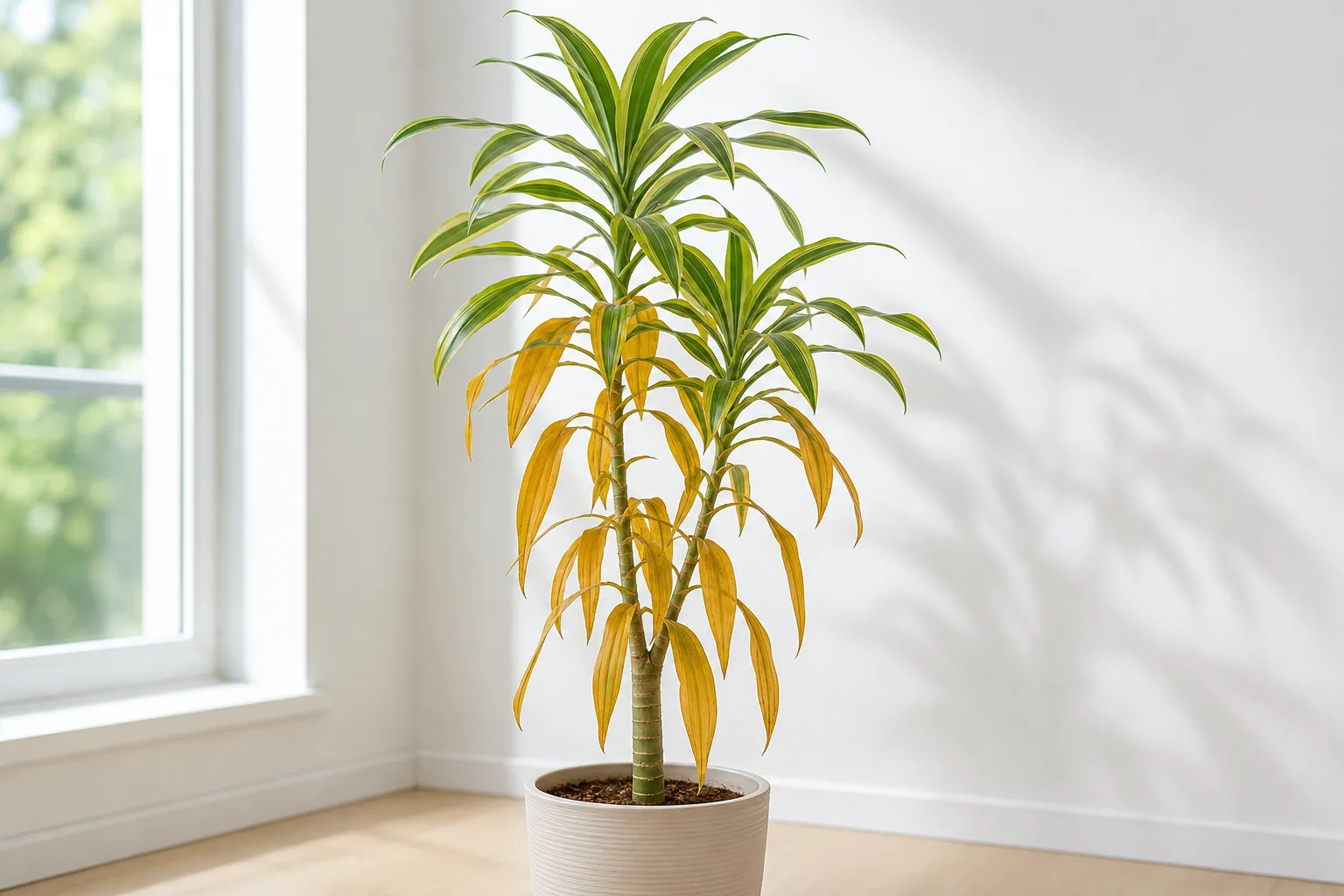
Yellow Leaves on Song of India: Causes, Checks & Fixes
This guide covers yellow leaves on Song of India. See also the general Yellow Leaves guide, watering, and light pages for this plant.
Yellow Leaves on Song of India: Causes, Checks & Fixes
Quick answer
Yellow leaves on Dracaena reflexa ‘Variegata’-the variegated cultivar sold as Song of India-are not always a crisis. Yellow leaves result from overwatering or underwatering on this species, and the oldest lower leaves on upright stems also yellow naturally as rosettes extend upward. Widespread yellowing-especially with wet heavy soil, drooping tips, pale new growth, or chartreuse margins that faded before the yellowing spread-usually means watering stress, poor drainage, low light slowing water use, fluoride accumulation, or cold drafts.
First step: check soil moisture 3–5 cm deep and pot weight before changing anything else. Wet and heavy with multiple yellow leaves suggests pause watering and confirm roots; dry and light with limp foliage suggests a thorough soak once. If moisture and light look reasonable but tips and margins show yellow scorch with green centers, switch to filtered water. For the full care context, see the Song of India overview.
Why Song of India gets yellow leaves
Song of India yellows for different reasons than an all-green dracaena because variegation reduces photosynthetic tissue and the plant uses water more slowly in dim corners. Work through these causes in order of how often they appear indoors.
Normal lower-leaf senescence on upright stems
As stems elongate, the lowest rosette leaves age out. One or two bottom blades fade from green to yellow, then dry and drop while upper whorls stay variegated and firm. That pattern on an otherwise healthy plant with steady new tip growth is normal maintenance-not a watering emergency. Remove spent leaves once they are fully dry.
Overwatering in low light
This is the primary Song of India failure mode. In sub-bright placements the plant transpires slowly, so mix stays damp for days while you keep watering on a bright-window schedule. Overwatering can cause root rot, and damaged roots cannot support foliage-lower leaves yellow first, then spread upward. The trap is common after a move to a dim office or north corner without reducing water. See overwatering on Song of India for the full wet-soil rescue path and not enough light when chartreuse margins faded before yellowing accelerated.
Underwatering in bright dry rooms
Extended dryness stresses narrow reflexed leaves. Yellowing often starts at margins and tips on lower rosettes while the pot feels very light and surface mix is dusty. Song of India is less drought-tolerant than a corn plant-one wilt cycle is recoverable, but repeated drought drops leaves. See underwatering when depth checks read bone dry throughout.
Fluoride accumulation
Song of India belongs to a genus very sensitive to fluoride. On D. reflexa, high fluoride causes chlorotic or necrotic leaf tips-yellow or scorched margins with green centers, distinct from whole-leaf yellowing from wet roots. Municipal tap water is the usual source; letting water sit overnight removes chlorine but not fluoride. Fluoride tip burn can coexist with overwatering-check both water quality and soil moisture.
Cold drafts and sudden temperature change
Song of India prefers stable room temperatures of 65 to 75 degrees Fahrenheit and does not tolerate cold drafts and sudden temperature changes. Brief exposure below about 55°F (13°C)-from a winter window ledge, AC vent, or open door-can yellow and drop leaves quickly even when watering was correct. Draft damage often hits outer rosettes facing the cold source while inner leaves stay green briefly.
Sudden light change
Moving from a bright spot to deep shade-or the reverse without acclimation-stresses variegated foliage. A plant pushed into harsh unfiltered afternoon sun after months in shade can show leaf scorch or faded leaves from direct sunlight; one moved to a dark corner yellows from reduced metabolism plus extended wet soil. Time symptoms to the move before Song of India repotting guide.
Pests on stressed plants
Monitor for spider mites on plants already weakened by dry winter air or low light. Fine stippling, webbing, and dull gray-green foliage point to mites-not fluoride or thirst alone. See spider mites on Song of India when inspection confirms pests.
What yellow leaves look like on Song of India
Yellowing on variegated reflexa follows recognizable patterns:
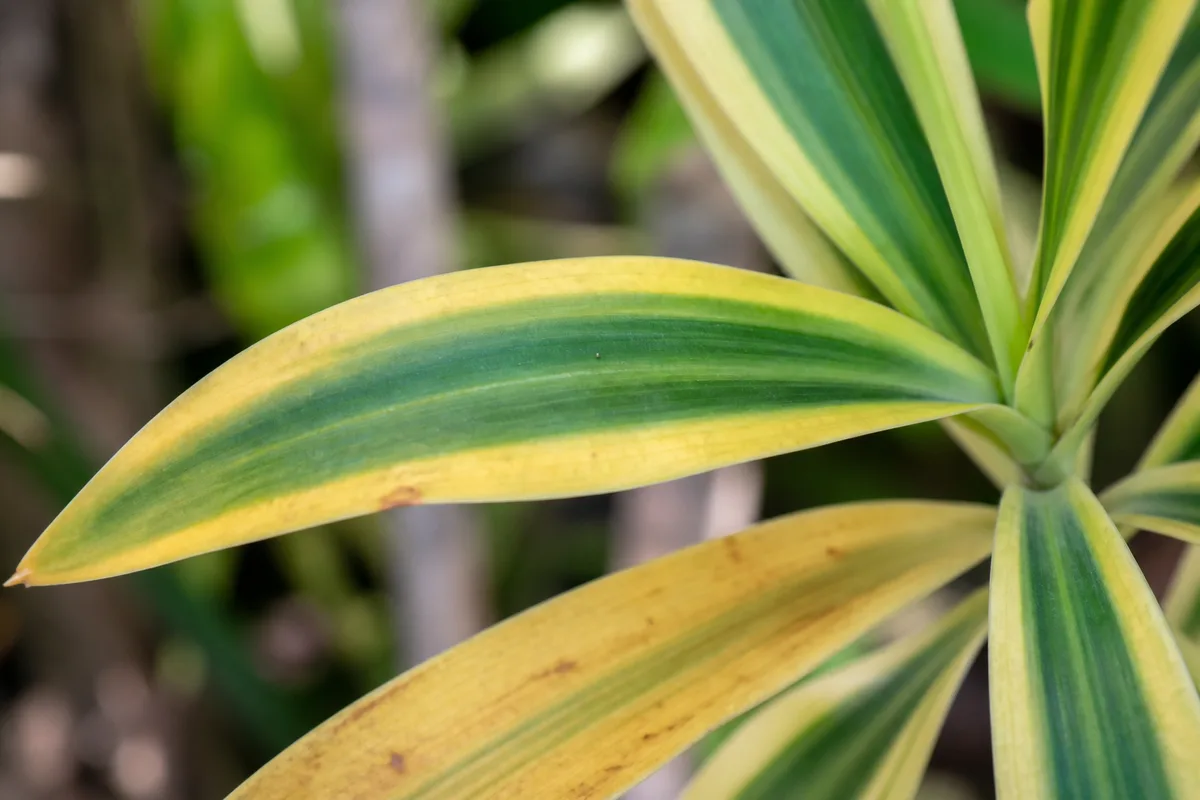
Yellow Leaves symptoms on Song of India - compare with healthy tissue on the same plant.
Normal aging - One oldest leaf per rosette fades yellow while stems stay firm, soil follows a normal dry-down, and new tip growth keeps crisp chartreuse margins.
Overwatering - Multiple leaves yellow at once, often with drooping rosettes, while the pot stays heavy days after watering. Lower leaves go first; sour smell or soft stem base signals escalation toward root rot.
Underwatering - Yellow-brown crispy margins on lower leaves, limp foliage, very light pot, dry mix several centimeters down.
Fluoride - Yellow or scorched tips and margins with green leaf centers; may overlap with brown tips as tissue necroses.
Low-light fade - Chartreuse margins turn muddy green before full yellowing; long bare stem sections and soil that stays wet for two weeks or more.
Cold draft - Rapid yellowing on leaves facing the cold source, sometimes with darkened margins, after a chill event.
How to confirm the cause
Work through this checklist before fertilizing, repotting, or moving the plant again:
- Depth moisture - Push your finger or a skewer 3–5 cm into the mix. Record wet, evenly damp, or dry-not surface color alone.
- Pot weight - Lift the container. Heavy days after watering with yellow leaves suggests overwatering; very light with limp leaves suggests drought.
- Leaf position - Only the single oldest leaf yellowing per stem with firm growth above points to senescence. Widespread or new-growth yellowing points to stress.
- Variegation check - Faded chartreuse margins plus wet soil in a dim corner suggests low-light overwatering coupling-fix light and water together per the watering guide.
- Water source - Review tap vs. filtered water if tips and margins show scorch with green centers.
- Temperature history - Note AC vents, winter window ledges, or recent door drafts below about 55°F (13°C).
- Root spot-check - If soil is wet and sour, or stems soften at the base, slide the root ball out and look for mushy brown roots before dry-down alone.
- Pest scan - Inspect leaf undersides and stem joints for webbing or stippling on stressed plants.
Lookalike symptom comparison
| Pattern | Soil / pot | Stem | Leaf pattern | Likely cause |
|---|---|---|---|---|
| One lower leaf fading | Normal dry-down | Firm | Oldest rosette only; top variegated | Normal senescence |
| Multiple soft yellow leaves | Wet, heavy, slow to dry | Firm or soft at base | Whole leaves yellow, drooping | Overwatering / early root stress |
| Crispy margins, limp plant | Dry, light pot | Firm | Lower leaves first, dry edges | Underwatering |
| Tip/margin scorch, green center | Moisture often normal | Firm | Tips and edges, not whole leaf | Fluoride / salt |
| Muddy margins then yellow | Stays wet in dim spot | Firm | Fade before full yellow; stretch | Low light + wet soil |
| Sudden drop after chill | May be moist | Firm | Outer leaves first | Cold draft |
| Stippling + webbing | Variable | Firm | Speckled dull foliage | Spider mites |
If several patterns overlap-fluoride tips plus wet soil yellowing-address the most urgent risk first (stop watering when sour and soft) then switch water quality once stems are firm.
First fix for Song of India
Match your first action to what the checklist confirmed-one change at a time.
- Normal lower-leaf yellowing: Remove the dry spent leaf; no watering or repot change needed.
- Overwatering: Stop watering until the top 3–5 cm dries completely. Confirm stem firmness; if sour smell or mushy roots appear, follow the root rot protocol.
- Underwatering: Water thoroughly once until a small amount exits the drainage hole, then resume the dry-down rhythm.
- Fluoride: Switch to filtered, distilled, or rainwater and flush the pot with clean water at two to three times pot volume.
- Low light + wet soil: Move to Song of India light guide first, then adjust watering because transpiration will increase-see not enough light.
- Cold draft: Relocate away from vents and cold glass; hold watering steady while the plant stabilizes.
Do not fertilize yellowing plants before fixing water, light, and drainage. Do not repot or relocate dramatically while diagnosing-stacking stress triggers more leaf drop.
Recovery timeline
Judge recovery by new rosette growth, not old yellow tissue.
- Senescence only: Next whorl continues normally; no timeline needed beyond removing spent leaves.
- Mild overwatering caught early: Once soil dries and stems stay firm, yellowing should stop spreading within one to two weeks. Expect the first new firm leaves at stem tips in two to four weeks during warm bright conditions.
- Fluoride correction: New leaves should emerge without tip scorch within four to six weeks of consistent filtered water; damaged margins on old leaves will not re-green.
- Underwatering: Perky foliage often returns within 24–48 hours after a thorough soak if roots are intact; crispy yellow margins on old leaves remain until replaced.
- Severe root damage: Recovery can take six to eight weeks after trim-and-repot, or require stem cuttings if the base collapses-see root rot.
Worsening signs-spreading yellow on wet soil, soft stem at soil line, or no new growth eight weeks after corrections-mean escalate inspection, not more fertilizer.
What not to do
Do not fertilize to “green up” yellow leaves without confirming moisture, light, and water quality. Do not assume every yellow leaf means root rot-check soil depth first. Do not increase watering when tips look scorched; that worsens wet-soil yellowing. Do not leave the plant on a cold window ledge while troubleshooting.
When removing dropped yellow leaves, keep pets away-Song of India is toxic to cats and dogs if ingested. Ingestion can cause vomiting, hypersalivation, loss of appetite, and depression in dogs; cats may show dilated pupils. Contact your veterinarian or the ASPCA Animal Poison Control Center at (888) 426-4435 if ingestion is suspected.
How to prevent yellow leaves next time
Use moist, well-drained potting mix with perlite and water when the top 3–5 cm dries-not on a calendar alone. Place the pot in bright indirect sunlight so the plant uses water predictably; dim corners require longer dry-down intervals. Use room-temperature filtered water to avoid fluoride and chlorine buildup. Accept occasional lower-rosette senescence on mature stems as normal. Learn your pot’s weight when correctly watered so heavy vs. light checks become quick habit.
Avoid cold drafts below about 55°F (13°C) and sudden moves between very different light levels without acclimation. Review the Song of India watering guide for seasonal tables and fluoride-safe practices.
When to worry
Treat as urgent when yellowing spreads quickly with wet sour soil, stems soften at the base, or multiple rosettes collapse within days-that pattern can precede advanced root rot. Lower urgency when a single bottom leaf yellows on a firm plant with crisp new variegation-that is usually aging.
Contact a veterinarian or APCC if a pet chews leaves while you are cleaning up dropped foliage.
Related guides: Song of India overview · Watering · Overwatering · Underwatering · Root rot · Brown tips · Not enough light · Wilting · Spider mites
When to use this page vs other Song of India guides
- Song of India watering guide - Use for routine moisture checks before assuming yellow leaves is the main issue.
- Song of India problems hub - Browse all 17 common issues on this species.
- Overwatering on Song of India - Different entry point when symptoms overlap with yellow leaves.
- Underwatering on Song of India - Different entry point when symptoms overlap with yellow leaves.
- Not Enough Light on Song of India - Different entry point when symptoms overlap with yellow leaves.