Slow Growth on Song of India: Causes, Checks & Fixes
Quick answer
Song of India is a slow grower, so a few inches per year is normal. If no new leaf whorls appear through a full warm season, low light is the usual limiter. First step: move the plant to the brightest indirect spot you have, away from harsh direct sun.
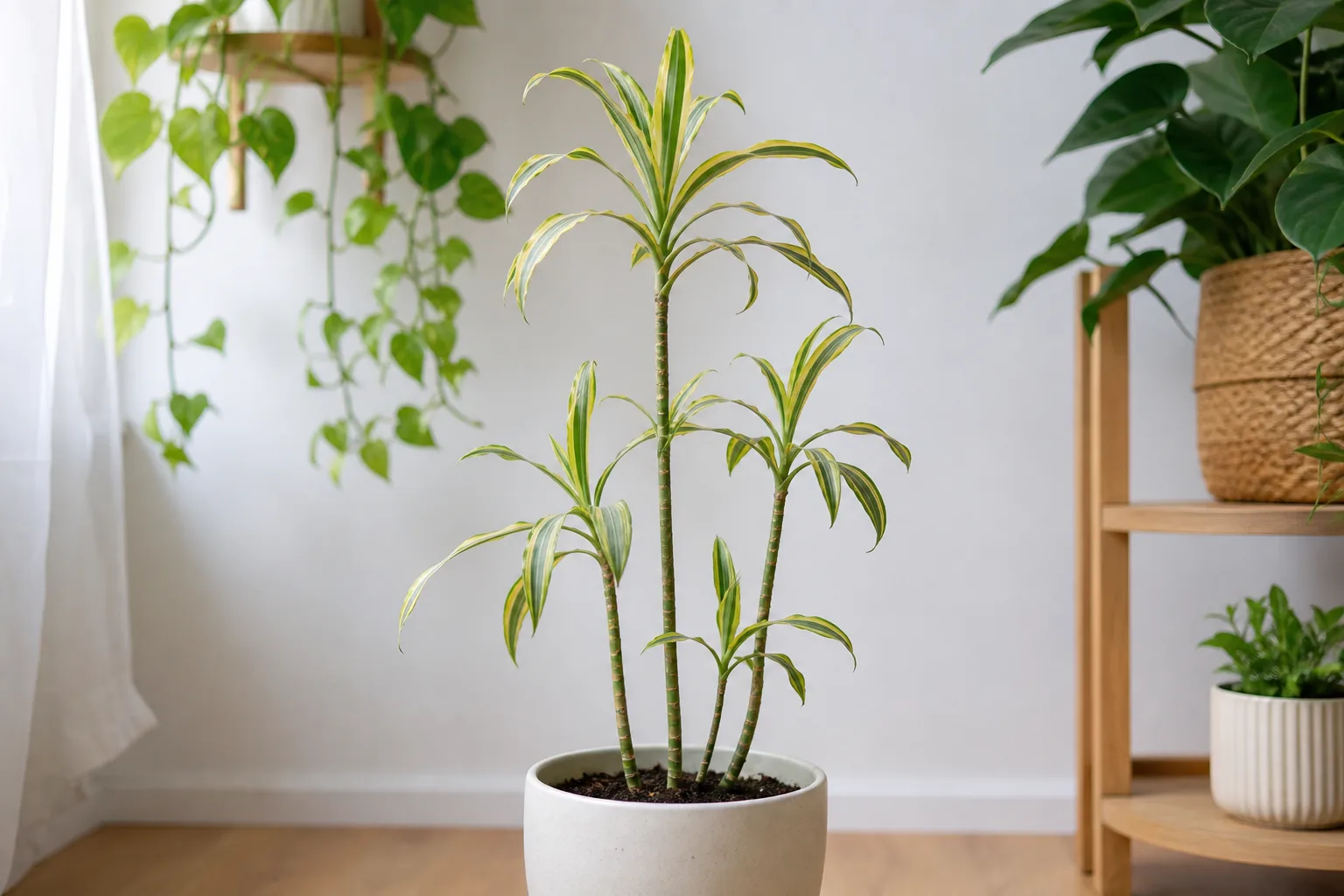
Slow Growth on Song of India: Causes, Checks & Fixes
This guide covers slow growth on Song of India. See also the general Slow Growth guide, watering, and light pages for this plant.
Slow Growth on Song of India: Causes, Checks & Fixes
Quick answer
Song of India (Dracaena reflexa ‘Variegata’) is a naturally slow grower. Indoors it typically adds modest height over years, not weeks, and new leaves emerge in tight whorls at stem tips rather than in a continuous flush. That pace is normal for this species.
Concern starts when no new leaf whorls appear through an entire warm season while the plant otherwise looks alive. On Song of India, the most common limiter is insufficient bright indirect light. Cool room temperatures, root stress from watering mistakes, recent repot shock, and low-level pests can also stall growth-but light is the check that belongs first.
First step: move the plant to the brightest indirect location available, shielded from harsh midday sun. Do not reach for fertilizer, a larger pot, or pruning until you have assessed light, temperature, and root-zone moisture.
What slow growth looks like on Song of India
Song of India grows as upright stems with spirally arranged leaf whorls-each whorl is a ring of narrow, glossy leaves with yellow-green margins. Understanding that growth pattern helps you judge whether the plant is merely slow or actually stuck.
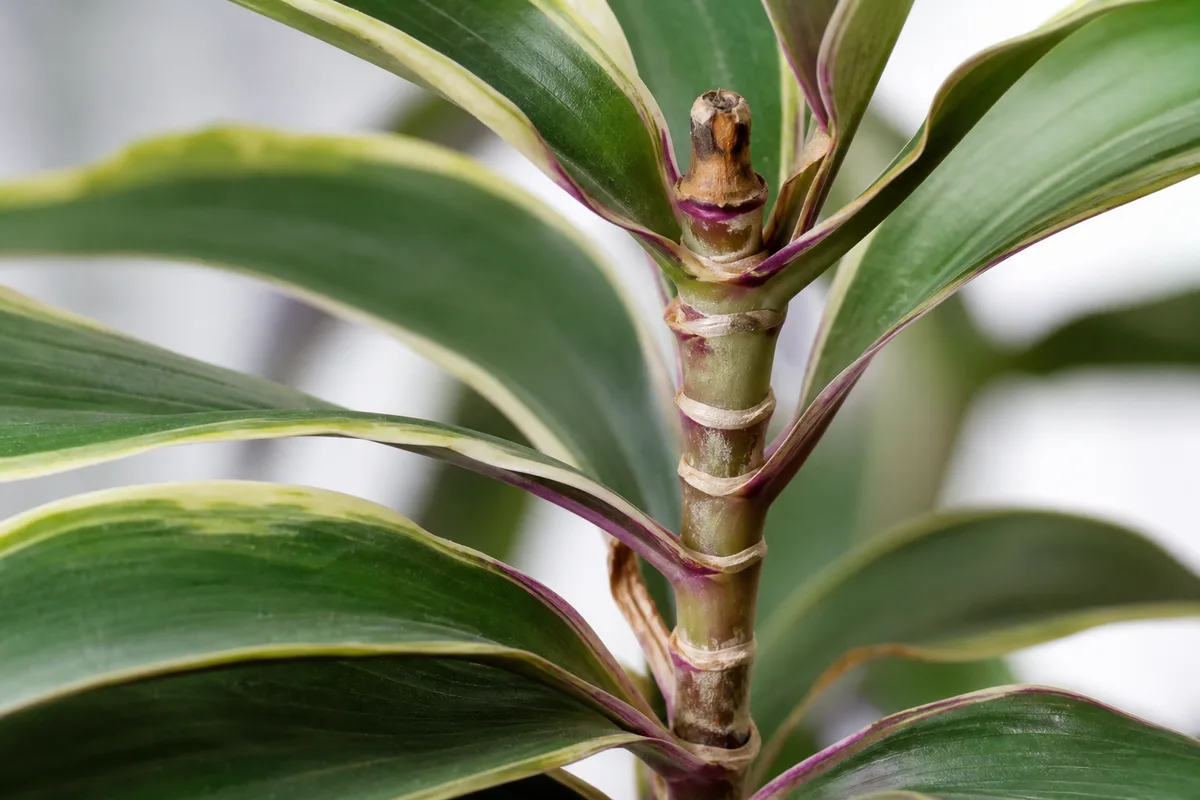
Slow Growth symptoms on Song of India - compare with healthy tissue on the same plant.
Normal slow growth:
- One new whorl every two to four weeks during warm, bright months
- Lower leaves gradually yellow and drop, revealing bare stem sections below-this is typical as the plant ages
- Firm, upright stems with stable variegation on new foliage
- Minimal or no growth in cool, short-day winter months
Problem slow growth:
- No new whorls at the stem tips for three or more months despite warm room temperatures
- New leaves smaller, paler, or with faded cream margins compared with older whorls
- Stretched internodes-extra space between whorls-making the plant look leggy and sparse
- Soil that never dries or dries in hours, suggesting root dysfunction
- Whole plant visually static month after month while other houseplants in similar light are actively growing
Track progress by whorl count and spacing, not leaf count alone. A mature Song of India may shed lower leaves while still growing normally at the top.
Why Song of India gets slow growth
Low light is the top indoor limiter
Song of India needs bright indirect light to maintain variegation and steady structure. In too much shade, plants grow spindly and variegated leaves lose their contrast. Variegated tissue contains less chlorophyll than all-green foliage, so this cultivar is more light-hungry and often slower than solid-green Dracaena reflexa forms such as Song of Jamaica.
Dracaena is classified among houseplants suited to medium-bright light-roughly east- or west-facing window exposure-not dim interior corners. Chronic low light reduces photosynthesis, which limits the energy available for new whorls.
Cool temperatures and drafts
Song of India prefers consistent warmth. Room temperatures should not dip below about 65°F, and cold drafts suppress metabolic activity even when other care looks correct. A plant near an AC vent, single-pane winter window, or frequently opened exterior door may stop pushing new growth while leaves look otherwise intact.
Root-zone stress from watering
Both extremes stall growth by damaging roots:
- Overwatering keeps mix soggy, reducing oxygen around roots and inviting rot. Root rot may occur if soils are poorly drained or overwatered on dracaenas.
- Underwatering shrinks the root system’s ability to take up water and nutrients, so the plant enters conservation mode-few or no new whorls despite firm older leaves.
Song of India prefers uniformly moist but not wet soil. Leaf tips brown when the mix swings too wet or too dry, which often precedes visible growth stalls.
Rootbound or exhausted mix
Because Song of India grows slowly, it can stay in the same pot for years. Eventually crowded roots circle the pot, dry the mix within a day of watering, and limit uptake even when you feed and water on schedule. Old, broken-down peat that stays compacted has a similar effect.
Recent repotting, moves, or environmental shifts
Transplant shock and location changes pause growth for several weeks while the plant re-establishes root contact and adjusts to new light angles. Repotting, moving rooms, and changing watering rhythm all at once can stall a Song of India for a month or more-judge growth rate only after conditions stabilize.
Hidden pests draining vigor
Scale, mealybugs, and spider mites commonly affect dracaenas. Low-level infestations may not cause dramatic leaf damage but sap-feeding reduces vigor, so new whorls fail to appear. Check leaf axils, stem joints, and undersides before assuming the issue is purely cultural.
How to confirm the cause
Work through these checks in order before changing multiple variables:
- Light level - Is the plant within a few feet of an east, west, or filtered south window, or under a grow light? Can you read comfortably without a lamp at midday near the foliage? Dim hall placement or north-window-only exposure often explains stalled Song of India growth.
- Temperature at the pot - Measure near the container, not the thermostat. Below 65°F overnight or frequent cold drafts point to temperature as a co-limiting factor.
- Soil moisture rhythm - Stick your finger 3–5 cm into the mix. Does it dry on a predictable schedule, or stay wet for a week? Does the pot feel feather-light within two days of watering? Match your rhythm to how fast the plant uses water in its current light.
- Recent changes - Repotted, moved, or rotated in the last four weeks? Wait before declaring growth failure.
- Root inspection - If mix stays wet and no new growth appears, gently slide the root ball out. Firm, pale roots support a cultural fix; brown, mushy roots suggest rot and need different treatment than simple slow growth.
- Pest scan - Look for waxy bumps (scale), cottony clusters (mealybugs), or fine webbing (spider mites) at whorl bases.
If light is weak, temperature is cold, and soil is waterlogged, fix light and drainage first. Fertilizer on stressed roots rarely helps.
First fix for Song of India
Move the plant to the brightest indirect spot available.
Place it near an east-facing window, a few feet from a south- or west-facing window with sheer curtain filter, or under a full-spectrum grow light if natural light is insufficient. Protect from harsh direct sun that scorches leaf margins-Song of India tolerates limited early morning sun but not hot midday rays on glass.
Hold that placement steady for at least four weeks while you observe the stem tip. Do not simultaneously repot, fertilize heavily, or prune back hard. Light correction alone often restarts whorl production when that was the primary bottleneck.
Step-by-step recovery
After improving light, address remaining limits in this order:
- Warm and stabilize - Keep room temperatures in the 65–80°F range and move the pot away from AC blasts and cold window sills.
- Reset watering - Water when the top 3–5 cm of mix feels dry. Use room-temperature filtered water if tap water causes brown tips from fluoride sensitivity. Empty the saucer after each drink.
- Increase humidity if air is very dry - Song of India prefers moderate humidity. A pebble tray or grouping with other plants helps; avoid misting so heavily that leaf spots develop from wet foliage.
- Repot only if roots are crowded - Choose a container one size up with drainage holes and fresh, well-draining mix with perlite. Repot in spring or early summer when growth is naturally resuming-not on the same day you move the plant to new light.
- Feed lightly after new growth appears - Apply diluted balanced liquid fertilizer monthly during spring and summer only. Skip fertilizer on a plant that has not produced a new whorl since your corrections; salts on inactive roots add stress.
- Treat pests if found - Isolate, wipe visible insects, and rinse leaf axils. Confirm the pest before spraying; a stressed dracaena responds poorly to stacked chemical treatments.
Recovery timeline
During active growth season with corrected light and warmth, many Song of India plants produce a visible new whorl within four to eight weeks. Winter recovery may take longer even after fixes, because short days and cooler homes naturally slow dracaenas.
Signs you are on track:
- A fresh whorl opens at the stem tip with normal variegation
- Internode spacing tightens on new sections
- Soil dries on a predictable schedule
- Lower leaf drop slows once the plant is actively growing again
Signs the problem is worsening:
- Stem softening at the base
- Mix staying wet while leaves yellow from the bottom up
- New whorls aborting or emerging smaller each time
- Variegation continuing to fade despite brighter placement-may indicate insufficient light duration, not just intensity
Lookalike symptoms
Seasonal winter pause: Minimal growth from late fall through early spring in cool, dim rooms is common. Resume judgment in spring after light and temperatures improve.
Leggy growth vs. no growth: Long gaps between whorls with pale leaves usually mean not enough light, not a separate disease. The plant is stretching toward brighter conditions.
Root rot masquerading as sluggishness: A Song of India that stops growing while soil stays soggy and stems feel soft needs unpotting-not patience. Slow growth with firm stems and appropriate soil moisture is a different problem.
Normal lower-leaf loss: Shedding older whorls at the base while the tip grows is expected. Do not confuse natural senescence with systemic failure.
Mistakes to avoid
- Fertilizing first - Nutrients cannot compensate for inadequate light or rotting roots.
- Overpotting - A much larger pot holds excess wet mix around a slow root system and can stall growth further.
- Expecting fast growth - Song of India will never behave like a pothos. Compare the plant to its own past whorl production, not faster species.
- Stacking changes - Repotting, moving windows, and altering water chemistry the same week makes it impossible to know what helped or hurt.
- Pruning aggressively before diagnosis - Removing the only healthy whorl at the tip removes your best growth indicator.
How to prevent slow growth next time
- Site Song of India in bright indirect light year-round; supplement with a grow light in dark rooms.
- Maintain stable temperatures above 65°F and avoid cold drafts.
- Water when the top 3–5 cm dries; use well-draining mix and pots with open drainage.
- Fertilize lightly and only during active spring and summer growth.
- Scout monthly for scale, mealybugs, and spider mites at whorl bases.
- Repot every one to two years-or when roots circle the pot-rather than waiting until growth has already stalled for a full season.
Song of India rewards steady, boring care with slow but sculptural growth. When whorls resume at the tip with crisp variegation, your bottleneck is resolved-even if the plant will never race.
Related Song of India guides
- Song of India overview
- Song of India watering
- Song of India light
- Not Enough Light on Song of India
- Leggy Growth on Song of India
- Root Rot on Song of India
- All Song of India problems
Conclusion
Use this page to confirm slow growth on Song of India by pattern and pot checks-not by treating every houseplant the same. When symptoms overlap with sibling pages, follow the linked guide for the matching cause before stacking fertilizer, repotting, or pesticide.