Aphids on Song of India: Causes, Checks & Fixes
Quick answer
Aphids on Song of India gather on the newest leaf rosettes and tender stem tips, sucking sap and leaving sticky honeydew. First step: move the plant away from others and rinse the growing tips with a firm stream of lukewarm water before applying any spray.
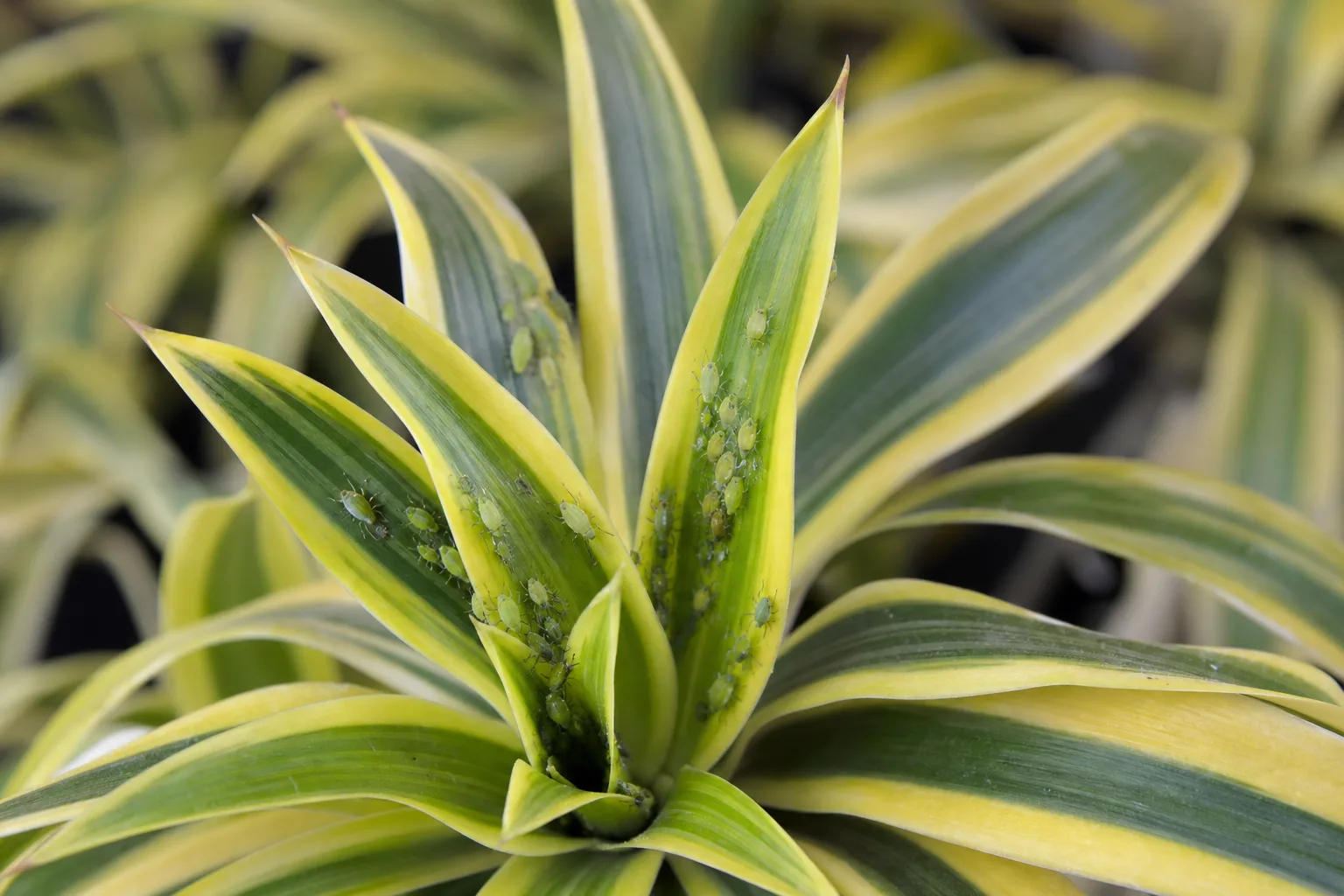
Aphids on Song of India: Causes, Checks & Fixes
This guide covers aphids on Song of India. See also the general Aphids guide, watering, and light pages for this plant.
Aphids on Song of India: Causes, Checks & Fixes
Quick answer
Aphids on Song of India (Dracaena reflexa ‘Song of India’) almost always show up where the plant is actively growing: the newest leaf whorls, tender stem tips, and the soft tissue where fresh variegated leaves are unfurling. These sap-sucking insects leave sticky honeydew that can coat the glossy cream-and-green foliage and attract ants or sooty mold.
First step: isolate the plant and rinse the growing tips with a firm stream of lukewarm water. Wrap the pot in plastic to keep soil in place, tilt the stem over a sink or shower, and spray directly into each new whorl and along the upper stem. You need to see live aphids dislodged before reaching for soap or oil-many Song of India infestations clear with repeated washing alone.
What aphids look like on Song of India
Song of India grows as upright stems topped by spiral rosettes of narrow, sword-shaped leaves. Each whorl opens from the center outward, and aphids target that soft new tissue first.
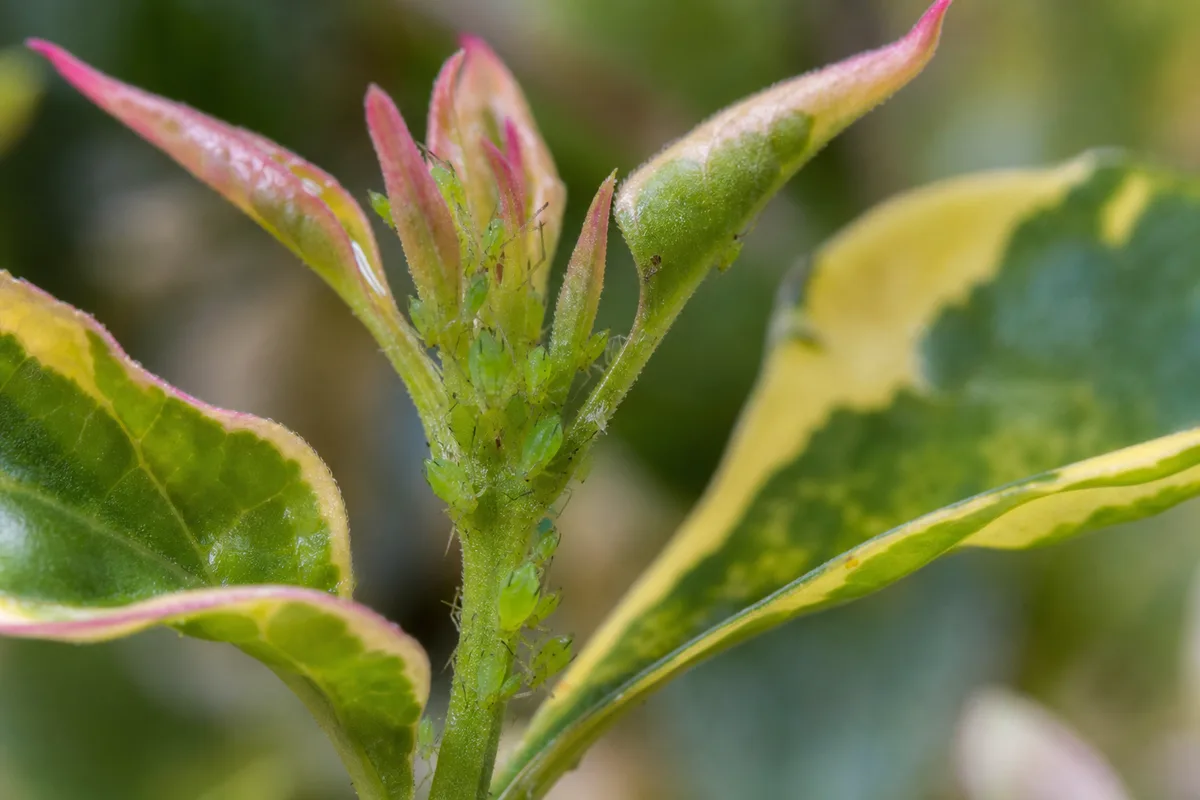
Aphids symptoms on Song of India - compare with healthy tissue on the same plant.
Typical signs include:
- Clusters of tiny soft-bodied insects-often green, black, pink, or gray-packed along stem tips and tucked into the base of opening leaves
- Shiny, sticky patches on upper leaf surfaces where honeydew dripped from colonies above
- Curling or puckering on the youngest leaves in a whorl while older leaves below still look normal
- Ant trails on the pot exterior, saucer, or lower trunk-ants harvest honeydew and often arrive before you spot the aphids
- Black sooty coating on leaves that wipes off with a damp cloth; this is mold growing on honeydew, not a separate fungal disease of Dracaena tissue
Aphids on Song of India are usually wingless and slow-moving. When populations surge in warm weather, you may see winged adults that can reach neighboring houseplants.
Heavy feeding can yellow new growth and, on Dracaena generally, contribute to sudden leaf drop when insect pressure combines with other stress. On a slow-growing plant like Song of India, losing several whorls of variegated foliage is more than cosmetic-it reduces the plant’s ability to photosynthesize until new tips recover.
Why Song of India gets aphids
Aphids are not a random Dracaena disease-they are mobile insects that arrive on new plants, open windows, or plants moved outdoors and then settle on tender shoots. They feed by piercing plant tissue and sucking phloem sap, excreting excess sugar as honeydew.
Song of India is vulnerable at the stem tips for structural reasons. The cultivar produces dense whorls of new leaves during spring and summer active growth. Aphids prefer tender new growth and often cluster near shoot tips and on leaf undersides-exactly where Song of India concentrates its fresh variegated foliage.
Several care patterns make infestations worse on Song of India overview:
- Soft, fast push of new growth from heavy nitrogen fertilizer creates tissue aphids colonize quickly
- Low light that still allows some stretching produces weaker shoots along the stem-easier for crawling aphids to spread downward
- Stress from uneven watering does not cause aphids directly, but stressed Dracaena lose leaves more readily when sap loss adds to the load
- Skipping quarantine on new nursery plants-aphids spread by crawling and short flights to other specimens on the same shelf
- Summer outdoors without inspection before plants return indoors; warm outdoor months build populations that explode in heated rooms
Song of India is not uniquely prone among houseplants, but its slow growth habit means recovery from a neglected colony takes longer than on fast-growing foliage plants. Treat early while damage is still confined to the top one or two whorls.
How to confirm the cause
Work through these checks before spraying anything:
- Location on the plant - Aphids cluster on living tissue at growing tips and leaf undersides. Dry brown tips from fluoride or low humidity affect older leaf margins, not soft clusters of moving insects at the crown.
- Hand lens inspection - Magnify the base of the newest leaves. Aphids are pear-shaped with visible legs and often two small tail-like cornicles. Mealybugs look cottony; scale looks like fixed brown disks; spider mites leave fine webbing and stippling rather than sticky honeydew.
- Honeydew test - Rub a shiny upper leaf. Sticky residue that glues your finger confirms sap-feeding insects above. Sooty mold that smears black confirms honeydew, not dust.
- Ant activity - Ants marching up the pot or trunk strongly suggest aphids or other honeydew producers on upper stems.
- Stem firmness and soil moisture - Press the trunk. Firm wood with appropriate dry-top watering rules out rot as the primary issue. Aphids can coexist with overwatering on Song of India stress, but you will still see insects on tips.
- Collection check - Inspect plants within a few feet, especially other Dracaena, palms, and soft-leaved specimens. Aphids move between hosts.
If you find insects matching the description on new whorls plus honeydew or ants, aphids are confirmed. No insects and no stickiness on tips points to cultural problems instead-review light and watering before treating for pests.
First fix for Song of India
Move the plant away from others and wash aphids off the growing tips with lukewarm water.
This is the safest opening move for Dracaena reflexa:
- Set the pot in a sink or shower. Wrap the soil surface in plastic wrap or a bag so mix does not wash down the drain.
- Use lukewarm water with enough pressure to knock aphids loose but not so hard that you tear soft new leaves.
- Aim directly into each leaf whorl, the upper six to twelve inches of stem, and leaf undersides near the tips.
- Let foliage dry in Song of India light guide the same day.
Repeat every two to three days until you see no live aphids on inspection. Washing removes honeydew and sooty mold residue at the same time, which helps you judge whether the population is actually declining.
Only after two thorough rinses with live aphids still present should you add a labeled product. Song of India leaves are glossy and sensitive to some insecticidal soaps; test any spray on one leaf and wait forty-eight hours before treating the whole plant.
Step-by-step recovery if rinsing is not enough
When colonies persist after repeated washing:
- Prune heavily infested whorls if they are already distorted and covered in hidden aphids inside curled leaves. Sterilize scissors between cuts. Song of India branches readily from stem cuts when light is adequate.
- Spot-treat small groups with a cotton swab dipped in rubbing alcohol on individual clusters. Test one leaf first-excessive alcohol can burn Dracaena foliage.
- Apply labeled insecticidal soap or horticultural oil only if the label lists ornamental houseplants. Coat stem tips and leaf undersides thoroughly; these products kill on contact and have no residual effect, so missed insects survive.
- Repeat every five to seven days for two to three cycles to catch newly hatched nymphs. One spray rarely finishes the job indoors.
- Wipe sooty mold off older leaves with a damp cloth once honeydew stops appearing.
- Keep the plant isolated until you see no new aphids for at least two weeks of weekly checks.
Hold off on fertilizer until new growth looks clean. Feeding a pest-stressed Dracaena pushes soft shoots that attract another wave of aphids.
Lookalike symptoms
Several Song of India problems mimic part of an aphid picture but need different fixes:
| What you see | Likely cause | How it differs from aphids |
|---|---|---|
| Sticky leaves without visible insects | Residue from prior aphids or scale | Wash off; if stickiness returns with new insects, aphids are back |
| White cottony patches in leaf axils | Mealybugs | Fixed cottony masses, not soft moving clusters |
| Brown bumps on stems | Scale | Insects do not move when poked; no rapid colony growth on tips |
| Fine webbing and speckled yellow leaves | Spider mites | Dry stippling, not honeydew; mites thrive in low humidity |
| Brown dry leaf margins | Fluoride or low humidity | Affects older leaf edges, not clustered insects on new whorls |
| Yellow leaves with wet soil | Overwatering | No insect clusters; trunk may feel soft if rot is advanced |
Sticky leaves alone are a clue to investigate, but confirmation requires finding the producer on the upper stem or new growth.
Mistakes to avoid
- Spraying the whole plant with homemade dish soap - Detergents not labeled for plants can strip the waxy cuticle on Dracaena leaves and cause spotting. Use products sold as insecticidal soap and test first.
- Treating once and returning the plant to the shelf - Aphids reproduce quickly in warm rooms; a single application leaves eggs and nymphs behind inside curled tips.
- Ignoring ants - Ants protect aphid colonies from predators. Until honeydew sources shrink, reinfestation continues.
- Over-fertilizing during recovery - Lush nitrogen-driven growth is easier for aphids to colonize.
- Soaking the root zone while rinsing foliage - Dracaena reflexa needs the top few centimeters of mix to dry between waterings. Repeated showering without pot protection can leave soil soggy and invite root problems.
- Using systemic insecticides indoors without reading the label - Some products are inappropriate for home use or pet-accessible rooms. Song of India is toxic to cats and dogs; keep treated plants out of reach while wet.
Recovery timeline
Song of India is a slow grower, so pest recovery is measured in whorls, not days.
- Days 1–7: After the first thorough rinse, live aphids on open tips should drop sharply. Honeydew may still feel sticky until you wipe or rinse again.
- Weeks 2–3: New leaves emerging from the crown should open with less curling if feeding has stopped. Distorted leaves in the current whorl usually stay misshapen.
- Weeks 4–8: With clean weekly checks and stable bright indirect light, the plant should produce one or more fresh whorls with normal cream-and-green variegation. Prune the worst damaged whorl if it looks permanently stunted.
- Signs of success: No live aphids on inspection, no new honeydew, ants gone, and firm stem tissue with steady new growth at the tip.
- Signs of failure: Colonies spreading down the stem, repeated leaf drop, or whorls that fail to open-escalate treatment or consider cutting back the stem to healthy wood and rooting the top if the base is still firm.
Song of India care cross-check
While treating aphids, keep baseline care steady. Aphid treatment works better on a plant that is not fighting multiple stresses:
- Light: Bright indirect light keeps new whorls compact. Leggy pale stems with wide leaf spacing suggest insufficient light-not aphids, but weak growth aphids exploit.
- Water: Water when the top three to five centimeters of mix feel dry. Avoid letting the pot sit in a full saucer after rinsing sessions.
- Humidity: Average room humidity is fine; misting is optional and can leave leaf spots if foliage stays wet overnight.
- Pets: Dracaena is toxic to cats and dogs. Wash hands after handling sticky leaves or pruning, and keep the plant on an elevated stand away from chewing reach during treatment.
How to prevent aphids next time
- Quarantine every new plant for two to four weeks in a separate room. Inspect stem tips twice weekly before placing it near Song of India.
- Scout during active growth - Spring and summer are peak aphid seasons indoors when heating is off and plants push new whorls.
- Inspect after outdoor time - If you summer the plant outside, rinse and isolate it before it rejoins indoor collections.
- Avoid excess nitrogen - Use balanced fertilizer at reduced strength during active growth only; soft flushes of tissue attract aphids.
- Keep ants off - Sticky traps or barriers on pot feet help if ants enter from outdoor nests and farm honeydew upstairs.
- Maintain airflow - Crowded plant shelves slow drying and make pest transfer easier between pots.
When to worry
Most aphid cases on Song of India are manageable if caught at the top whorl. Escalate when:
- Colonies cover more than two whorls or have crawled more than thirty centimeters down the stem
- Ants are actively tending large populations and predators are absent
- The plant drops multiple leaves in a short period during warm weather
- New whorls fail to open after two weeks of treatment
- Mealybugs or scale appear alongside aphids on Song of India-layered infestations need longer, combined treatment
If the stem base is firm and roots are healthy, even a hard prune back to a clean section of trunk can restart the plant. Soft, mushy trunk tissue at the soil line is rot, not an aphid problem-stop watering and inspect roots instead of spraying again.
Conclusion
Aphids on Song of India are a stem-tip pest on a slow-growing variegated Dracaena. They announce themselves with clusters on new whorls, sticky honeydew, and sometimes ants-not with the brown leaf margins fluoride or dry air cause. Isolate the plant, rinse the growing tips thoroughly, and repeat until inspections stay clean. Reserve soaps and oils for persistent colonies, always testing on one leaf first. Weekly checks through spring and summer, plus quarantine on new purchases, keep small outbreaks from stripping the crown that makes this plant worth keeping.
When to use this page vs other Song of India guides
- Song of India watering guide - Use for routine moisture checks before assuming aphids is the main issue.
- Song of India problems hub - Browse all 17 common issues on this species.
- Mealybugs on Song of India - Different entry point when symptoms overlap with aphids.
- Spider Mites on Song of India - Different entry point when symptoms overlap with aphids.
- Yellow Leaves on Song of India - Different entry point when symptoms overlap with aphids.