Money Tree Problems: Causes & Quick Fixes
Quick answer
Money Tree is prone to 16 common issues - each link below is a plant-specific fix guide.
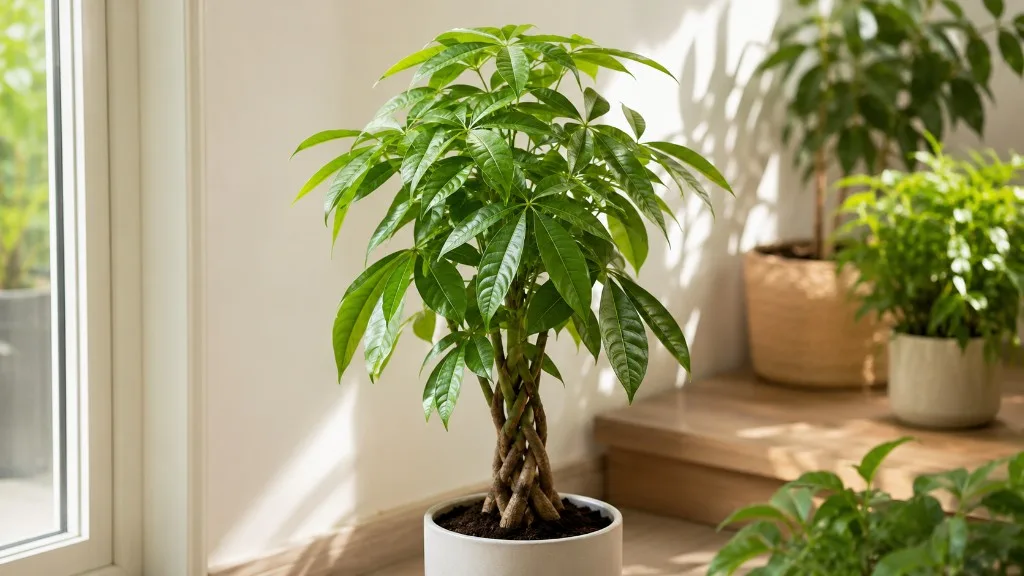
Money Tree problems
Use the guides below to diagnose and fix common issues on Money Tree. Each problem page explains why it happens on this species and what to do first.
Or use our problem diagnosis tool to narrow down symptoms.
Common problems on Money Tree
Brown Tips
LowLikely cause: Low humidity or salt build-up from over-fertilising
Quick fix: Increase humidity; flush soil with plain water
Full fix guide →Leggy Growth
LowLikely cause: Insufficient light
Quick fix: Move to brighter indirect light; rotate quarterly
Full fix guide →Root Rot
HighLikely cause: Persistently wet soil from frequent shallow waterings
Quick fix: Repot in fresh draining mix; adopt deep-water-then-dry cycle
Full fix guide →Yellow Leaves
MediumLikely cause: Overwatering - most common issue
Quick fix: Stop watering; allow to dry; resume correct cycle
Full fix guide →Aphids
MediumLikely cause: Aphids on Money Tree (Pachira aquatica) colonize the newest palmate leaf clusters at the crown and tender shoot tips. First step: isolate the plant and rinse insects off every leaflet underside and le
Quick fix: See plant-specific guide for step-by-step fixes.
Full fix guide →Drooping Leaves
MediumLikely cause: Drooping leaves on Money Tree mean roots are not delivering water to the leaflets. Before watering, probe soil 5 cm deep and lift the pot-dry and light means thirst; wet and heavy means pause and insp
Quick fix: See plant-specific guide for step-by-step fixes.
Full fix guide →Fungus Gnats
MediumLikely cause: Fungus gnats on Money Tree almost always mean the soil surface stays wet too long-especially around braided stems and cachepots. First step: stop watering until the top 5 cm of mix dries completely, a
Quick fix: See plant-specific guide for step-by-step fixes.
Full fix guide →Low Humidity
MediumLikely cause: Dry indoor air stresses Money Tree leaflets and invites spider mites. First step: move the plant away from heating or AC vents and run a humidifier until humidity near the canopy stays above 50%.
Quick fix: See plant-specific guide for step-by-step fixes.
Full fix guide →Mealybugs
MediumLikely cause: Mealybugs on Money Tree (*Pachira aquatica*) show as white cottony clusters tucked into palmate leaflet axils where five to seven glossy leaflets meet the central petiole, along braided-stem crotches,
Quick fix: See plant-specific guide for step-by-step fixes.
Full fix guide →Mold on Soil
MediumLikely cause: White or gray fuzz on Money Tree soil is usually harmless saprophytic mold on a damp surface-not a leaf disease. First step: scrape the top 1–2 cm, then let the top 5 cm of mix dry before you water ag
Quick fix: See plant-specific guide for step-by-step fixes.
Full fix guide →Not Enough Light
MediumLikely cause: Money Tree (*Pachira aquatica*) in too little light stretches between whorls, produces smaller compound leaflets, and leans toward windows. First step: move to bright indirect light-east or filtered s
Quick fix: See plant-specific guide for step-by-step fixes.
Full fix guide →Overwatering
MediumLikely cause: Overwatering on Money Tree shows as a heavy wet pot, limp palmate leaves on damp mix, and sometimes yellow lower leaves-with fungus gnats hovering nearby. First step: stop watering until the top 5 cm
Quick fix: See plant-specific guide for step-by-step fixes.
Full fix guide →Slow Growth
MediumLikely cause: Slow growth on Money Tree is often normal in winter or a sign of too little light-not hunger. First, check the season and whether the plant gets bright indirect light most of the day before changing w
Quick fix: See plant-specific guide for step-by-step fixes.
Full fix guide →Spider Mites
MediumLikely cause: Spider mites on Money Tree (*Pachira aquatica*) show as fine stippling across glossy palmate leaflets and silk webbing at petiole bases-often after dry winter heating near a braided lobby specimen. Fi
Quick fix: See plant-specific guide for step-by-step fixes.
Full fix guide →Underwatering
MediumLikely cause: Underwatering on Money Tree shows as a light pot, dusty dry mix 5 cm deep, and limp compound leaflets on a firm braided trunk. First step: confirm dryness with a finger probe and pot weight, then give
Quick fix: See plant-specific guide for step-by-step fixes.
Full fix guide →Wilting
MediumLikely cause: Wilting on Money Tree almost always means roots are not moving water-check soil moisture 5 cm deep and pot weight before you water. Wet soil with limp leaves needs drying and root inspection; dry soil
Quick fix: See plant-specific guide for step-by-step fixes.
Full fix guide →