Money Tree Repotting: Braided Trunk, Snug Pots & Root
Money Tree Repotting: Braided Trunk, Snug Pots & Root Recovery
Money Tree Repotting: Braided Trunk, Snug Pots & Root Recovery
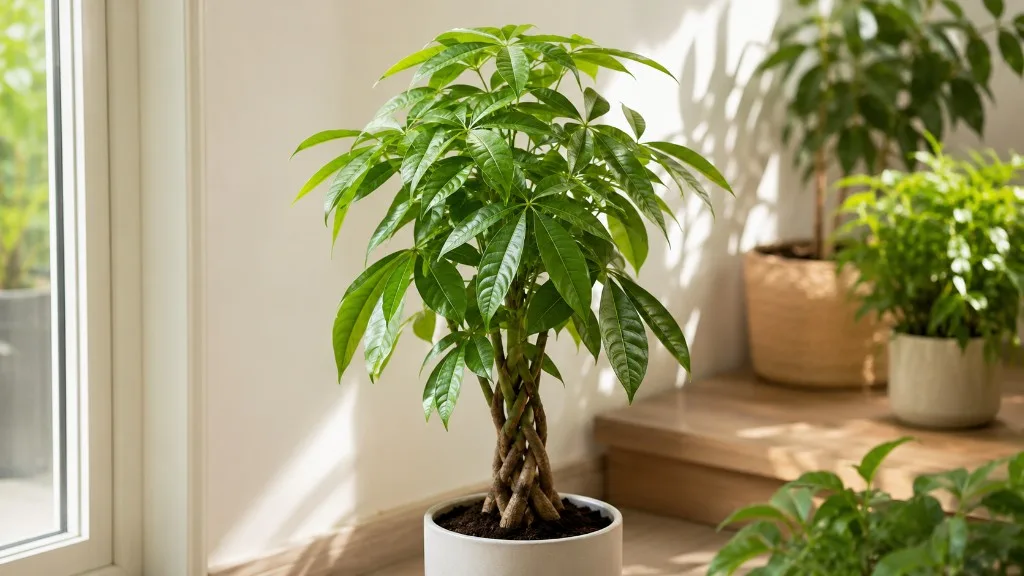
Most money trees sold in shops arrive with a braided trunk - three to five young Pachira aquatica saplings woven together while still flexible, then planted as one display tree. That cosmetic braid is the defining care challenge at repot time. You are not moving a single-stem houseplant; you are stabilizing a fused multi-stem specimen, inspecting the root flare for hidden rubber bands or tape that nurseries bury below the soil line, and choosing a snug pot that will not trap moisture around roots evolved for flowing wetland water, not stagnant indoor mix. Get those pieces right and repotting is a calm spring maintenance task every two or three years. Skip them and even a correctly timed repot can end in a soft trunk and a salvage job on the root rot page.
This guide covers why Pachira aquatica repotting differs from generic houseplant advice, when to repot on a routine schedule versus an emergency rescue, how to move a braided specimen without breaking the weave, how to remove strangling bindings, pot and soil choices linked to the money tree soil guide, and aftercare that matches the watering rhythm this species actually needs indoors.
Why Money Tree Repotting Is Different
Money tree repotting is not interchangeable with repotting a pothos or a fiddle-leaf fig. Pachira aquatica is a Malvaceae tree from Central and South American wetlands that stores water in trunk tissue, is almost always sold in a handmade braided form (Missouri Botanical Garden), and shares one pot with intertwined roots from multiple stems. Indoor specimens rarely flower - so bloom-season repot cautions that appear on generic templates do not apply to typical braided houseplants. What does apply is snug-pot culture, minimal root disturbance, and a binding inspection that prevents slow strangulation at the braid base.
The Wetland Paradox in a Container
In habitat, money tree roots experience flowing, oxygenated water along freshwater swamps and riverbanks. Indoors, the same species sits in a sealed column of mix where water can stagnate. NC State Extension is explicit: standing water is not tolerated in containers and causes root rot - a direct contradiction of the “aquatica” name that tricks growers into oversized pots and peat-heavy soil. NYBG pairs thorough watering with allowing the mix to nearly dry between drinks and mandates a drain hole. Repotting is your chance to reset that physics: fresh, open mix in a one-size-larger pot, not a dramatic jump that surrounds modest roots with wet unused soil for months.
Braided Trunks Change Every Step
The braid is decorative structure, not a single fused trunk. Each stem retains its own vascular tissue; one rotting stem can threaten the others in the same pot. Healthy money tree trunks feel firm; softness at the braid junction usually means moisture trapped in stem crevices or advanced root damage - not thirst. During repot, keep fused stems upright at the same soil depth they had before; burying the braid lower to stabilize a top-heavy plant traps moisture against bark and invites rot. Disturb the braid as little as possible - NYBG recommends minimal root disturbance because money trees often drop leaves when moved aggressively at the roots. Your goal is fresh mix and room to grow, not a bare-root overhaul unless rot forces it.
When to Repot (Routine vs Emergency)
Repotting decisions split cleanly into scheduled maintenance and rescue work. Treat them differently - routine repots happen in spring with light root teasing; emergency repots can happen any season when rot is active, but expect a longer recovery.
Routine Signs Every Two to Three Years
Most indoor money trees need repotting every two to three years in spring, when active growth can repair disturbed roots. Plan a routine repot when two or more of these appear together:
- Roots circling the bottom of the root ball or emerging from drainage holes
- Water runs straight through without absorbing - compacted mix or a root mat displacing soil
- The plant becomes top-heavy and wobbles despite a firm braid
- Growth stalls for a full growing season despite adequate light and feeding
- Mix smells earthy-fresh no longer - sour or stagnant odor suggests breakdown
Being slightly root-bound is acceptable; money trees tolerate snug pots better than spacious wet ones. Repot because the soil or stability failed, not because the calendar says so alone.
Emergency Triggers You Cannot Wait On
Some situations override the spring calendar. Repot immediately - with rot protocols below - when you find:
- Soft or mushy trunk at the braid base, especially with sour-smelling soil
- Black, mushy roots when you probe the drainage hole or lift the plant
- Hidden bindings cutting into bark when you scrape the root flare - remove bindings and repot into fresh mix even if the pot size stays the same
- Severe salt crust or fungus-gnat infestation tied to anaerobic mix
If only the top inch of mix has compacted but roots are healthy and the trunk is firm, top-dressing with refreshed mix may suffice until spring. Full repot is warranted when the core root ball no longer absorbs water normally.
Best Time of Year to Repot
Spring and early summer are the safest windows for routine repotting. As daylight lengthens, Pachira aquatica enters active growth; torn roots heal faster, new leaflets appear within weeks, and the plant tolerates the move with less leaf drop. NYBG aligns repotting with spring upsizing to a one-size-larger pot with a drain hole.
Avoid winter repotting when possible. Cool soil, shorter days, and slower evaporation mean disturbed roots sit in wet mix longer - a rot risk even for healthy plants. Exception: active root rot or binding strangulation. In those emergencies, repot into dry fresh mix, trim all compromised tissue, skip fertilizer for four to six weeks, and keep the plant in bright indirect light without hot direct sun on stressed tissue. Do not expect vigorous new growth until spring regardless of season.
Tools and Materials
Gather everything before unpotting so a braided specimen is not left lying sideways while you hunt for scissors:
- New pot 2–5 cm (1–2 inches) wider in diameter with at least one open drainage hole
- Fresh mix per the 50/30/20 recipe - 50% quality potting mix, 30% perlite, 20% cocopeat - or equivalent moist but well-drained blend
- Clean hand trowel, chopstick or pencil for settling mix, and sterilized scissors or pruners
- Old sheet or tarp - repotting braided trees is messy
- Optional: cinnamon or sulfur dust for cut roots (household practice, not required)
- Tape marker for the original soil line on the braid before unpotting
- A stake and soft tie only if the specimen is severely top-heavy post-repot
Water the plant the day before a routine repot so the root ball holds together. For rot emergencies, skip pre-watering - you want to inspect dry, compromised roots clearly.
Step-by-Step: Routine Spring Repot for a Braided Specimen
Work on a stable surface at roughly the plant’s final height so you are not lifting a top-heavy braid repeatedly. The sequence below assumes a healthy, firm-trunked money tree moving one pot size up.
1. Mark the soil line. Wrap tape around the braid at the current soil surface. You will replant to exactly this depth - never deeper for stability.
2. Prepare the new pot. Cover the drainage hole with a mesh scrap or coffee filter - not a gravel layer that reduces root volume. Add enough fresh mix so the root ball will sit with the tape mark 1–2 cm below the rim.
3. Unpot gently. Tip the plant and slide it out. If it resists, run a knife around the inside edge. Do not pull by the braid - support the root ball from below.
4. Inspect the root flare immediately. Scrape away the top 2–5 cm of old mix at the braid base. Cut off any rubber bands, wire, zip ties, or tape (detailed in the next section). Trim only dead, black, or mushy roots with sterile scissors; tease circling roots at the bottom and sides lightly without bare-rooting.
5. Place in the new pot. Center the braid upright. Backfill with fresh mix, tamping lightly with a chopstick to remove air pockets without compacting the blend. The braid should stand at the marked depth without leaning.
6. First watering. Water lightly once until a little runs from the drain hole. Empty the saucer. Keep the plant in bright indirect light - not direct afternoon sun - for two weeks.
7. Hold fertilizer. Skip feeding for four to six weeks so roots settle; resume at half strength per the fertilizer guide when new growth appears.
Unpot, Inspect Bindings, and Keep the Braid Upright
The most common routine-repot failure is rushing the unpot without checking the flare. Nurseries braid saplings under roughly 30 cm tall, then ship them with bindings just below the soil line to hold the weave during transport. As trunks lignify, non-stretching material cuts into cambium and traps moisture - the plant looks fine for months, then collapses. Every routine repot is a binding audit even if you inspected at purchase. If stems are already soft above a binding, that stem may not survive; remove the dead portion from the braid so rot does not spread, trim black roots, and repot firm stems only.
Inspecting and Removing Nursery Bindings at the Root Flare
Binding removal is not optional grooming - it is structural first aid. At the root flare where braided stems meet soil:
- Clear the top 2–5 cm of mix with your fingers or a soft brush.
- Look for rubber bands, electrical tape, wire, or zip ties - often tan or green, pressed against bark.
- Cut every binding completely. Do not unwrap slowly if that tears cambium; snip and remove.
- Examine bark for constricting grooves. Firm bark may recover; mushy bark above the groove means that stem is compromised.
- Replace cleared mix at the surface and proceed with repot or same-size refresh.
If you find bindings on a plant you are not ready to full-repot, clear the flare and remove them anyway, then top-dress. Hidden bindings kill more retail money trees than incorrect pot size. This step mirrors the day-one inspection on the money tree overview hub - repotting simply guarantees you finally see the base.
Step-by-Step: Emergency Repot After Root Rot or Soft Trunk
Soft trunk plus sour soil is an emergency, not a wait-until-spring scenario. Act quickly and accept a slower recovery.
1. Stop watering immediately. Move the plant to a bright spot and unpot.
2. Assess each stem in the braid. Firm stems stay; mushy stems are removed from the weave with sterile pruners, cutting into healthy tissue until you see clean, pale cambium.
3. Trim roots aggressively. Remove all black, brown, or mushy roots. White or tan firm roots stay. Rinse lightly if needed to see damage clearly.
4. Same-size or one-size-up pot only. Rot rescue never warrants a large pot. Often a same-size repot with fresh mix is safest.
5. Fresh mix only. Never reuse sour soil. Use the 50/30/20 blend or a chunkier mix with extra perlite if humidity is high.
6. Delay the first soak. Let trimmed roots air for 30–60 minutes, then water lightly once. Allow the mix to approach dry before the next drink - rot recovery depends on dry-down, not reassurance watering.
7. Timeline expectations. Mild routine shock clears in 1–2 weeks; rot trim recovery often takes four to eight weeks before consistent new leaflets. Do not fertilize for four to six weeks. Read the dedicated root rot guide if multiple stems fail.
Choosing the Right Pot Size and Material
The safe rule from NYBG and Missouri Botanical Garden: move up one pot size - roughly 2–5 cm wider in diameter, not deeper unless the current pot is unusually shallow. An oversized pot holds moisture the root system cannot use quickly; on a wetland-native species that already confuses growers about water needs, that unused wet zone is the fastest path back to rot.
For braided specimens, prioritize width for stability over depth. A tall tower of mix the roots never explore stays wet at the bottom. The pot should match the root ball and braid footprint, not the leaf canopy height. Drainage holes are non-negotiable - decorative cachepots work only when the inner nursery pot lifts out and never sits in standing runoff.
Terracotta vs Plastic Dry-Down After Repot
The same mix dries at different speeds by material. Unglazed terracotta breathes through the wall and often shortens dry-down by roughly a third versus glazed ceramic in the same room - useful after repot when you must avoid lingering moisture near trimmed roots. Plastic and glazed pots retain moisture longer; pair them with extra perlite (toward 40%) and stricter dry-down checks on the watering guide schedule. Neither material is wrong; mismatched material and watering rhythm is.
Soil Mix for Repotting
Repot with fresh, open mix - not unamended peat-heavy bagged soil. The canonical LeafyPixels recipe (50% potting mix, 30% perlite, 20% cocopeat by volume) matches RHS moist but well-drained guidance and the drainage tests on the soil page. NYBG suggests even parts compost, coarse sand or perlite, and peat or coco for water retention - the same principle: organic matter plus grit.
In humid rooms or plastic pots, push perlite toward 40% and add 10–15% orchid bark. After mixing, run the one-minute drainage test: water poured on the surface should reach the bottom hole within 60 seconds. If it pools, amend before potting - structure beats calendar every time.
Common Repotting Mistakes on Pachira aquatica
Jumping two pot sizes “so it can grow” surrounds small root systems with wet unused mix. One size up only.
Bare-rooting healthy plants strips fine root hairs that absorb water. Tease circling roots; keep most of the old ball intact on routine moves.
Skipping binding inspection leaves strangling material in place for another two years - the most expensive mistake on braided trees.
Burying the braid deeper for stability traps moisture against bark. Replant to the marked soil line only.
Watering heavily every week after repot keeps fresh mix saturated while roots heal. Light first soak, then real dry-down at 5 cm depth before the next drink.
Fertilizing immediately stresses roots. Wait four to six weeks.
Repotting, fertilizing, and moving to a new window the same week stacks stress. Change one variable at a time.
Watering the braid crevices instead of the soil surface keeps stem junctions wet - water the mix, not the decorative trunk.
Recovery Timeline and Aftercare
Transplant response depends on how much you disturbed roots and whether rot was involved.
Routine spring repot (minimal trim): Expect possible leaf drop for 3–7 days. Mild shock clears in 1–2 weeks. New leaflets in 2–4 weeks signal success. Full root colonization of fresh mix takes 4–6 weeks.
Rot-rescue repot (stem or root removal): Recovery stretches to 4–8 weeks or longer. Firm trunk beats calendar dates - if the braid stays hard and soil dries on schedule, patience works. If trunk softens again, stop watering and re-inspect.
Watering after repot: Lighter than normal until roots explore new mix - often the same interval as pre-repot but smaller volume at each drink. Return to the full soak-and-dry rhythm from the watering guide once new growth is consistent.
Fertilizer: Withhold four to six weeks, then resume monthly half-strength feeding during active growth.
Light: Bright indirect - avoid hot direct sun on a stressed braid.
Pet and Child Safety During Repot Work
Money tree is non-toxic to cats and dogs per the ASPCA, though ingestion can cause mild stomach upset. During repot, keep pets and toddlers away from spilled mix, pruned roots, and fertilizer dust. Confirm the plant is Pachira aquatica, not toxic jade (Crassula ovata) sold under similar “money plant” names - the overview hub explains the visual difference. Wash hands after handling cut roots and old soil.
Conclusion
Money tree repotting succeeds when you treat braided Pachira aquatica as the product you actually own - not a generic fibrous-root houseplant. Repot every two to three years in spring into a one-size-larger pot with fresh, fast-draining mix, inspect and remove all nursery bindings at the root flare, disturb healthy roots minimally, and match post-repot watering to real dry-down rather than reassurance soaks. Emergency rot repots trim mushy roots and stems immediately, use same-size or modest upsizing only, and expect a longer recovery. Link repotting to the cluster - soil, watering, fertilizer, and root rot - and the trunk stays firm long after the fresh mix settles.
When to use this page vs other Money Tree guides
- Money Tree overview - Start here for whole-plant context before deep-diving this topic.
- Money Tree problems hub - Jump to symptom-specific fix guides when this care topic does not resolve the issue.
- Root Rot on Money Tree - Escalate here when repotting adjustments are not enough.
Related Money Tree guides
- Money Tree overview
- Money Tree watering
- Money Tree light
- Money Tree soil
- Money Tree propagation
- Money Tree fertilizer
- Root Rot on Money Tree
- Money Tree problems
Related tool
Try the Pot Size Calculator with money-tree pre-selected to estimate needs for your setup.