How to Propagate Money Tree: Stem Cuttings Guide
How to Propagate Money Tree: Stem Cuttings Guide
How to Propagate Money Tree: Stem Cuttings Guide
Money tree propagation turns a healthy Pachira aquatica into additional plants through stem cuttings or air layering - the two methods that actually work on this woody indoor tree. Unlike succulents or rhizomatous houseplants, money tree does not propagate from leaf segments alone, offsets, or divisions. You need a stem section with living nodes, clean tools, and patience for a four-to-eight-week rooting window under warm, bright conditions. This guide walks through exactly where to cut on compound-leaf stems, how to root in water or moist mix, when air layering beats cuttings on thick braided specimens, and how to transition rooted plants into long-term care without the template errors and missing steps that plague generic propagation pages.
The parent plant must be firm and healthy before you take material. Propagation from a tree with a soft trunk base, active root rot, or heavy pest load simply clones those problems into a new pot. If your specimen is struggling, stabilize it first using the Money Tree overview and relevant problem guides - then return to propagation when new growth looks clean.
What Makes Money Tree Propagation Straightforward
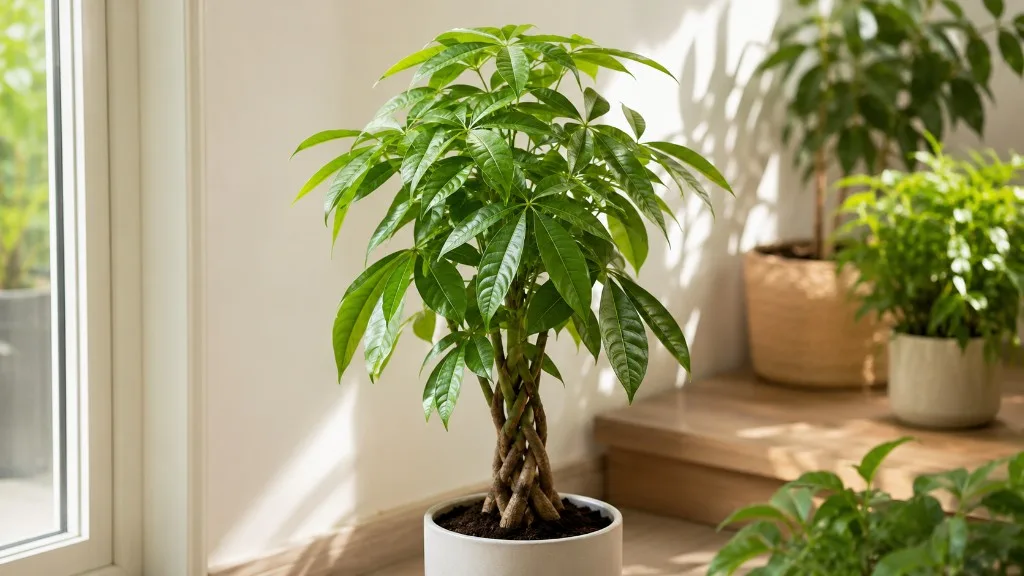
Pachira aquatica is a broadleaf evergreen tree in the Malvaceae family, native to freshwater swamps and riverbanks from Mexico to northern South America. Indoors it grows as a woody stem with palmately compound leaves - each leaf is a long petiole topped by five to nine glossy leaflets arranged like an open hand. That anatomy matters because propagation success depends on nodes along the stem, not on individual leaflets. A severed leaflet without stem tissue may stay green for weeks but will not produce roots or a new plant.
NC State Extension lists softwood cuttings, layering, and seed as the recommended propagation strategies for the species. The RHS confirms semi-ripe cuttings and air-layering as standard routes. For home growers, stem cuttings from spring pruning are the practical default; seed is rare indoors because braided houseplants will not flower in ordinary room conditions.
Woody Stem Biology and the Wetland Drainage Paradox
Here is the paradox that trips up new propagators: money tree evolved in wetlands, yet standing water kills roots in containers. NC State notes that standing water is not tolerated and causes root rot in pot culture. Outdoors in flood zones, periodic inundation drains through soil volumes nature provides; indoors, a propagation jar or small pot holds moisture against stem tissue with no oxygen exchange. That is why cuttings rooted in water need weekly water changes and why mix-rooted cuttings need airy, well-draining media - not saturated peat that mimics a swamp in a four-inch pot.
The trunk also stores water. Healthy money tree wood feels firm, like a young tree branch. Softness at the base signals rot, not thirst - and cuttings taken from compromised tissue fail regardless of rooting setup. Treat firm wood as a prerequisite, not a nice-to-have.
What You Need Before You Start
Gather supplies before cutting so stems do not sit out drying on the counter:
- Sharp bypass pruners or a grafting knife, wiped with rubbing alcohol
- A healthy parent plant with firm trunk tissue and no active pest or rot issues
- Clear glass jar (water method) or small pot with drainage holes (mix method)
- Fresh room-temperature water or moist propagation mix - roughly equal parts peat or coco coir and perlite, matching the Money Tree soil guide philosophy of moisture retention plus drainage
- Optional rooting hormone (IBA powder) for mix-rooted cuttings on thick woody sections
- Bright indirect light location - an east window or filtered south/west exposure per Money Tree light needs
- Sphagnum moss and clear plastic wrap if you plan air layering on a thick stem
Stems removed during spring pruning are ideal cutting material when they carry two or three nodes and firm green bark. Plan propagation for spring through early summer when the plant is in active growth and warmth supports cell division at wound sites.
Step-by-Step: Propagate Money Tree from a Stem Cutting
Stem cuttings are the fastest home method for most money trees. Work through these steps in order - skipping node identification or submerging compound leaf sheaths is the most common reason cuttings rot.
Choose a Healthy Stem and Identify the Node
Select a lateral stem or the top portion of an upright branch with firm green bark and at least two nodes you can use. On Pachira, a node is the slightly swollen point on the stem where a petiole meets the trunk - the joint that would produce a new leaf whorl or side branch. Trace each compound leaf back to that junction; the node sits below the petiole attachment, not at the leaflet tips.
Avoid the braided trunk base and any stem that feels soft or discolored. On store-bought specimens, choose a free stem above the braid rather than cutting into the fused section - the pruning guide explains why severing the braid destabilizes the plant. If you need to reduce height, cut the tallest individual stem above the braid line, then use the removed section as propagation material if it meets length and node requirements.
Cut a 10–15 cm Section with 2–3 Nodes
Using sterilized pruners, cut a segment 10 to 15 cm (4 to 6 inches) long with two to three nodes included. Make the bottom cut just below a node at a slight angle to expose more cambium surface. Make the top cut half a centimeter above the uppermost node you are keeping.
Remove lower leaflets and petioles so nothing submerged will decay in water or bury in mix. Leave one or two leaf whorls at the top so the cutting can photosynthesize while roots form - but if the remaining leaves are very large, trim leaflets by half to reduce water loss. Let the cut end callus for a few hours on a dry counter if the stem is especially fleshy; most money tree cuttings root without extended callusing, but a brief dry period helps thick stems.
Set Up Water or Moist Mix Rooting
Water propagation suits beginners who want to watch root progress. Fill a clear jar with room-temperature water and stand the cutting so one or two nodes sit below the waterline while leaflets and upper stem stay above the surface. Do not submerge compound leaf sheaths or remaining petiole bases - those rot quickly and foul the water. Change the water completely every seven days to prevent anaerobic bacteria and algae buildup.
Mix propagation often produces sturdier roots for woody stems. Fill a small pot with moist, well-draining mix - peat or coco coir with 30 to 50 percent perlite works well. Insert the cutting so the lowest node sits 2 to 3 cm below the surface without burying deeper; planting too deep places tissue in the waterlogged bottom zone where rot starts before roots emerge . Firm the mix lightly around the stem. Optional: dip the cut end in rooting hormone before insertion.
Both setups need warmth between 18 and 27°C (65 and 80°F) - normal indoor range - and humidity around 50 percent if your home air is very dry in winter. A loose clear bag over a mix-rooted cutting can raise humidity, but vent daily to prevent mold.
Light, Warmth, and Weekly Water Changes
Place cuttings in bright, indirect light - the same exposure mature money trees prefer per Missouri Botanical Garden. Direct hot sun scorches leaflets and overheats water jars. Avoid dark corners; dim light slows rooting and increases rot risk because the cutting transpires without replacing water through roots.
For water-rooted cuttings, mark your calendar for weekly water changes. For mix-rooted cuttings, keep the medium lightly moist, never soggy - if the top centimeter is still damp, wait before adding more. Resist pulling cuttings out to inspect; gentle tug resistance after four weeks confirms roots better than daily disturbance.
How Long Until Roots Appear
Under warm, bright indoor conditions, money tree cuttings typically develop roots in four to eight weeks. That timeline aligns with NC State and RHS propagation guidance and with the propagation section on the Money Tree overview. Cool rooms, low light, or weak parent material push toward the longer end; a propagation heat mat at 21 to 24°C can shorten the wait in chilly homes.
Water-rooted cuttings often show white roots first at submerged nodes around week three or four. Mix-rooted cuttings reveal progress through tug resistance and sometimes new leaflet growth before you see roots through drainage holes. Neither method is instant - if nothing happens by week ten, the cutting likely failed and should be discarded rather than left rotting in place.
New roots 2 to 5 cm long are enough to pot up from water. In mix, wait until roots circle the small pot lightly or new top growth looks stable before moving to a larger container.
Air Layering for Thicker Stems
Air layering suits thick, woody stems on larger money trees when a stem cutting would be too short or too lignified to root easily - common on mature specimens with caliper thicker than a pencil. The method roots tissue while still attached to the parent, so the cutting keeps receiving sap until it has its own root system.
Choose a healthy stem at least 30 cm above the soil and above any braid line. Air layering below the braid on fused trunks is impractical and risks destabilizing the display form.
Air Layering Step-by-Step
- Select a stem section with firm bark, roughly 15 to 20 cm below a leafy top you want to keep as the new plant’s crown.
- Remove a 2 to 3 cm ring of bark (girdling) around the stem, scraping down to the cambium. Alternatively, make an upward diagonal cut one-third into the stem and hold it open with a toothpick - both wounds trigger root initials.
- Apply rooting hormone to the exposed cambium if you have it.
- Pack moist sphagnum moss around the wound, then wrap with clear plastic secured at both ends with twist ties or tape. The moss must stay damp but not dripping.
- Check weekly - mist moss through the plastic if it dries. Roots should appear as white threads visible against the plastic in four to eight weeks, sometimes longer on very thick stems.
- Sever below the new root ball once roots are dense, pot in well-draining mix, and treat as a established cutting with standard aftercare.
Air-layered plants often transition to independent pots faster than water cuttings because roots form in moss rather than adapting from aquatic to terrestrial tissue.
Aftercare for New Money Tree Plants
Newly rooted money trees need boring, stable conditions for the first month - the opposite of the constant checking that kills propagation projects. Think of this phase as hardening off a seedling, not launching it into full adult care immediately.
When to Fertilize Propagated Plants
Do not fertilize until the plant shows active new leaflet growth and roots are clearly working - usually four to six weeks after potting up from water or mix. NYBG recommends feeding established money trees with balanced fertilizer at half strength every two weeks during March through September; apply that same conservative approach to young plants, not sooner. Fertilizing a rootless or recently potted cutting burns tender tissue and encourages top growth the root system cannot support.
Moving Rooted Cuttings from Water to Soil
Water roots are adapted to aquatic oxygen levels and break easily when handled. When roots reach 2 to 5 cm, pot into moist, well-draining mix in a container only one size larger than the root mass. Pre-moisten the mix, create a hole, lower the cutting gently without crushing roots, and firm around the stem. Water lightly once, then let the top centimeter approach dry before the next soak - matching the Money Tree watering rhythm of flood-and-dry rather than constant wetness.
Expect some leaf drop or wilt in the first week as roots adjust to soil. Keep bright indirect light, maintain warmth, and avoid Money Tree repotting guide again for at least two months. If the trunk stays firm and one new leaf whorl opens within six weeks, the transition succeeded.
Propagating from Braided or Multi-Stem Arrangements
Most store-bought money trees are three to five saplings braided together while stems were still flexible. Each stem in the braid is a genetically separate plant sharing one pot. Propagation from braided stock follows one rule: cut only individual free stems above the fused braid, never through the braided section itself.
To propagate without ruining the display:
- Choose one outer stem that extends above the braid with usable nodes.
- Cut it above the braid line for propagation material, leaving the remaining braided stems intact for the parent display.
- Alternatively, air layer a thick stem above the braid if you want a larger rooted plant without shortening the visible canopy abruptly.
Taking all stems from a braid for cuttings leaves a root system with no photosynthesizing crown - usually fatal. If you want many plants, propagate one stem at a time across seasons rather than stripping the parent in a single session. Hidden rubber bands or wire at the braid base can also cause soft trunk tissue; inspect and remove bindings per the overview before assuming a stem is healthy cutting stock.
Signs Propagation Is Failing
Stop waiting and restart with fresh material if you see:
- Mushy stem tissue at the base or at the waterline - especially where submerged petiole stubs decay
- Blackened nodes or a stem that shrivels while the medium stays wet
- Sour-smelling water or cloudy slime in propagation jars
- Soft trunk base on the parent after taking a cutting - suggests rot, not propagation stress
- All leaflets yellowing and dropping with no tug resistance after eight weeks
Trim back to firm green tissue only if more than half the stem remains healthy; otherwise discard and diagnose the parent. Chronic failure often traces to overwatered mix, no weekly water changes, or cuttings taken from stressed plants. Review root rot and yellow leaves guides if the parent declines after propagation.
When Not to Propagate
Propagation is a backup plan, not emergency surgery. Do not take cuttings when:
- The trunk base is soft or spongy - fix watering and drainage first
- Active root rot, mealybugs, or scale are present on the parent
- The plant just arrived from shipping - wait two to three weeks for acclimation
- Winter days are short and rooms are cool unless you supply supplemental warmth and bright light
- You hope propagation will save a dying tree - weak tissue rarely roots
Stable the parent, confirm firm wood and new leaflet growth, then propagate from the healthiest stem. The ASPCA lists money tree as non-toxic to cats and dogs, so cuttings on a counter are not a toxicity crisis - but sap and fallen leaflets can still cause mild stomach upset if chewed.
How We Wrote and Verified This Guide
Propagation steps, timing, and species biology were checked against NC State Extension - Pachira aquatica, RHS - Pachira aquatica, NYBG libguide - money tree, and Missouri Botanical Garden Plant Finder, then cross-checked with LeafyPixels Money Tree overview, pruning, watering, light, and soil guides for consistent indoor care numbers.
Author: sai-ananth · Reviewed by: LeafyPixels Review Board · Review date: 2026-06-15 · Methodology: Recommendations verified against extension and botanical garden references and LeafyPixels plant-care data before publication.
Conclusion
Money tree propagation succeeds when you match the method to woody stem biology: take a 10 to 15 cm cutting with two to three nodes just below a compound-leaf joint, root in water with weekly changes or moist airy mix, and wait four to eight weeks under bright indirect light and normal room warmth. Air layering handles thick stems above the braid when cuttings would be too woody; seed remains impractical indoors.
Cut only free stems above braided trunks, never into the fused base, and propagate from firm, healthy parents - not from trees with soft trunks or active rot. After roots form, pot conservatively, delay fertilizer until new growth confirms the root system works, and transition water-rooted plants gently into the same well-draining mix and flood-and-dry watering the species needs in long-term care. With those habits, a single spring pruning session can yield extra Pachira aquatica plants without sacrificing the braided specimen you already enjoy.
When to use this page vs other Money Tree guides
- Money Tree overview - Start here for whole-plant context before deep-diving this topic.
- Money Tree problems hub - Jump to symptom-specific fix guides when this care topic does not resolve the issue.