Root Rot on Money Tree: Causes, Checks & Fixes
Quick answer
Root rot on Money Tree usually starts when a braided Pachira aquatica sits in soil that never dries at depth. Stop watering, press the trunk base for softness, scrape away soil to check for hidden bindings, and unpot only after confirming mushy roots or a sour-smelling mix.
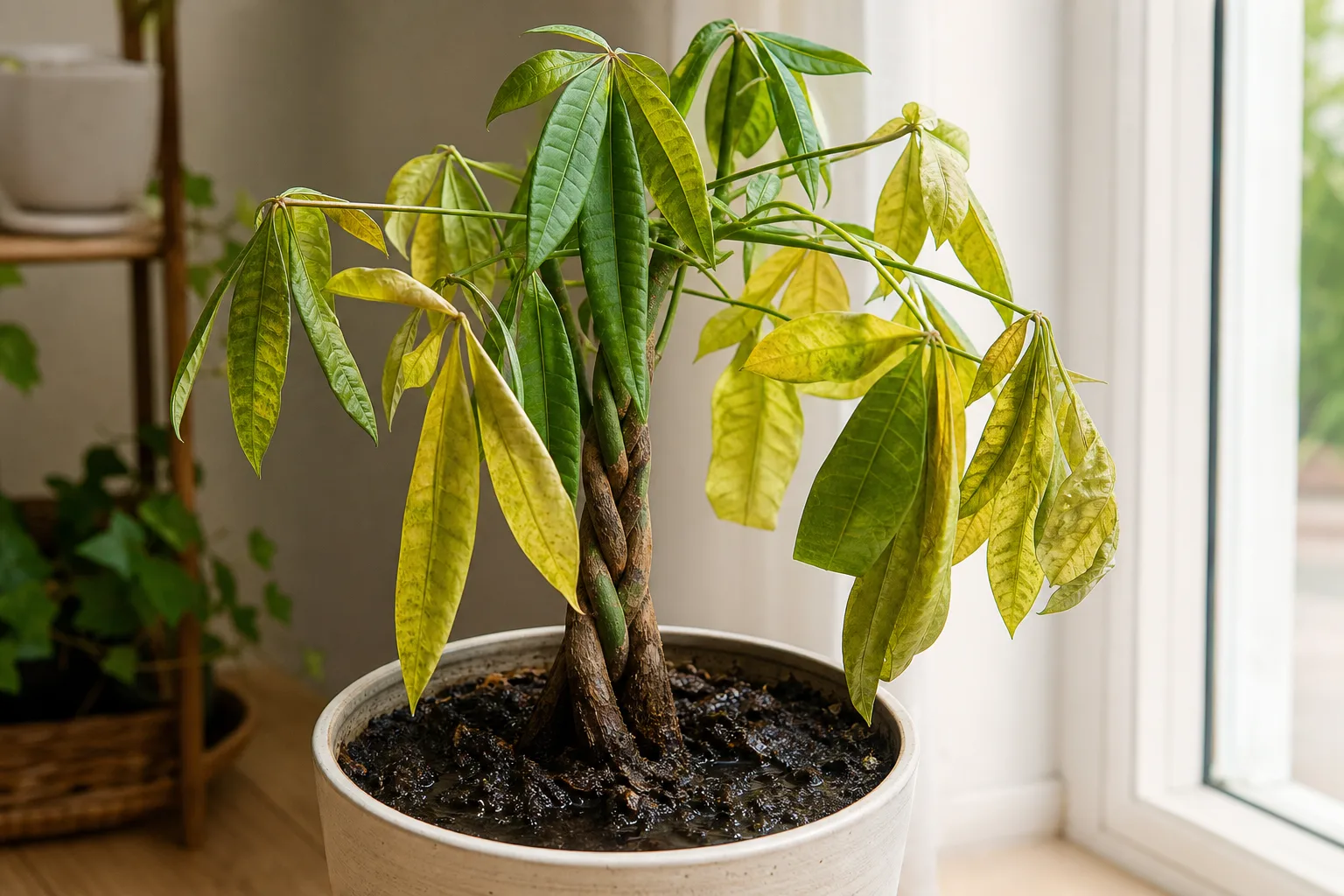
Root Rot on Money Tree: Causes, Checks & Fixes
This guide covers root rot on Money Tree. See also the general Root Rot guide, watering, and light pages for this plant.
Root Rot on Money Tree: Causes, Checks & Fixes
Quick answer
Money tree (Pachira aquatica) is a braided indoor tree with compound palmate leaves-not a rosette houseplant. Root rot here almost always traces to soil that stays wet at depth, often combined with blocked drainage, oversized pots, or hidden nursery bindings at the braid base that strangle stems as they thicken. The signature warning sign owners miss is a soft or mushy braided trunk while the mix still feels damp-not limp leaves on dry soil.
First step: stop watering and press the trunk at the soil line. Firm wood means you have time to diagnose. Spongy give means treat this as urgent. Before unpotting, scrape away the top few centimeters of soil at the braid base and remove any rubber bands, wire, or tape. Full species context and soft-trunk rescue: Money Tree overview. Watering rhythm that prevents rot: Money Tree watering guide.
Root rot vs. other money tree problems - why wilt on wet soil matters
Wilted compound leaflets on wet, heavy soil point toward root failure-not thirst. Healthy Pachira roots move water up to palmate leaves; decaying roots cannot absorb moisture even when the pot is saturated. Owners often see drooping leaflets and pour more water, which accelerates trunk mush and braid collapse.
That pattern differs from underwatering, where the pot feels light, soil pulls away from the edges, and the trunk may look slightly wrinkled but still firm-not spongy. See underwatering on Money Tree when dry weight and dusty surface mix match the wilt.
Low light slows water use and keeps mix wet longer without obvious trunk softness at first-yellow lower leaflets and fungus gnats may appear before the braid fails. Binding damage can soften one stem while soil moisture looks normal because constriction blocks sap flow locally. Work through moisture, trunk firmness, and bindings before assuming a single cause.
| Sign | Root rot (likely) | Underwatering | Binding damage | Low light + overwatering |
|---|---|---|---|---|
| Soil at 5 cm depth | Damp or wet | Dry | Variable | Often wet too long |
| Pot weight | Heavy | Light | Normal to heavy | Heavy |
| Trunk at braid base | Soft, mushy | Firm, may wrinkle | Soft above binding only | Usually firm early |
| Leaf pattern | Yellow lower leaflets, limp on wet mix | Droopy, thin feel, dry mix | Localized stem soft spot | Pale sparse growth, wet mix |
| Smell | Sour from drain holes | Neutral | May smell at constriction | Sour if chronic wet |
What root rot looks like on Money Tree
Early signs
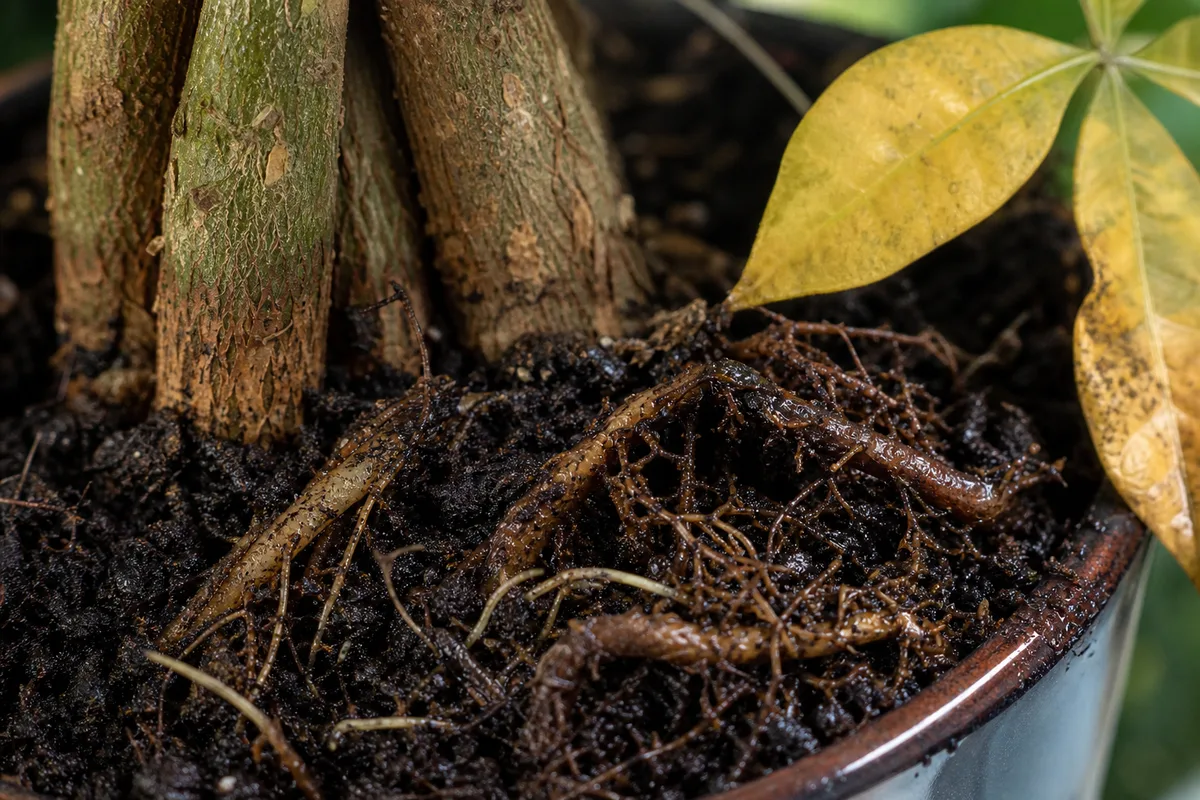
Root Rot symptoms on Money Tree - compare with healthy tissue on the same plant.
- Limp compound leaflets despite moist soil-the five-to-nine leaflet hands hang without spring
- Yellowing on older lower leaves while newer whorls still look green for a time-over-watering can yellow leaves and rot stems
- Sour or musty smell from drain holes after the mix has stayed wet for days
- Fungus gnats hovering at the surface-NC State lists fungus gnats among common Pachira problems on chronically wet mix; see fungus gnats on Money Tree
- Mix that never dries to 5 cm depth within a normal interval for your room and pot
Advanced signs
- Soft, mushy braided trunk at or just above the soil line-the primary money-tree rot signal
- Mushy individual stems within the braid while neighboring stems still feel firm
- Brown, collapsed leaflets that do not recover overnight
- Black, slimy roots on inspection-translucent tissue that strips away with a gentle tug
- Stem rot spreading from one braid member to others when decay is left in place
Do not confuse Pachira aquatica with jade plant (Crassula ovata), also sold as “money plant.” Jade has thick succulent leaves and no braid; it is toxic to pets, while money tree is ASPCA-listed non-toxic. Verify the botanical name on the tag if you searched “money plant root rot.”
Why Money Tree gets root rot
Overwatering, poor drainage, oversized pots, and cachepots
Pachira aquatica grows in freshwater swamps and estuaries in the wild, yet in a container standing water is not tolerated and causes root rot. Indoors, the correct rhythm is deep soak, then real dry-down-not permanently damp mix because the nursery tag says “tropical.”
Common triggers include watering on a calendar instead of checking depth, oversized pots that hold water the root mass cannot use, decorative cachepots without drainage that trap runoff, and heavy peat mixes that stay saturated in dim rooms. Winter slows growth and extends dry-down time; keeping summer watering frequency through a dim, cool season is a frequent rot trigger.
Wetland label vs. container reality
Missouri Botanical Garden notes that outdoor plants tolerate periodic inundation in native flood zones, but houseplants perform best in bright light with moderate, even moisture-which still means never letting the root zone stay soggy for days. NYBG recommends allowing soil to nearly dry between waterings and removing runoff every time you water. The wetland name is not permission to leave the pot sitting in water.
Hidden braid bindings strangling stems
Nurseries braid flexible saplings and often leave rubber bands, wire, or tape just below the soil line to hold the plait during shipping. As trunks lignify and expand, rigid bindings do not stretch-they cut into cambium, trap moisture against bark, and create rot entry points invisible at purchase. One stem constrained this way can soften while the rest of the braid looks fine until decay spreads.
How to confirm the cause
Work through these checks in order. One confirmed mismatch-wet soil plus soft trunk-justifies rescue mode.
- 5 cm finger depth - Push your finger to the second knuckle. Damp or cool at depth while leaflets wilt strongly supports root failure, not drought. Align this check with the Money Tree watering guide dry-down protocol.
- Pot weight - A heavy, cool pot days after watering confirms slow dry-down. A light pot points to underwatering instead.
- Trunk firmness - Press the braid at the soil line. Firm young-wood feel is reassuring; spongy give is advanced rot.
- Binding inspection - Scrape away top 2–5 cm of soil at the braid base. Remove all binding material with clean scissors.
- Drainage and cachepot - Confirm open drain holes and no standing water in saucers or outer pots. NYBG stresses that containers must have a drain hole and runoff must be removed each watering.
- Smell and gnats - Sour mix plus fungus gnats reinforce chronic wet habitat.
- Root inspection - Slide the plant from the pot. Healthy Pachira roots are firm and pale; rotted roots are brown, translucent, or slimy and may fall away when touched.
- Light cross-check - Very dim placement slows water use; pair wet mix with light review on not enough light if growth is sparse and soil stays wet weeks.
Confirmed root rot: wet mix at depth, soft trunk and/or mushy roots, sour smell. Suspected early rot: yellow lower leaflets, gnats, wet mix, firm trunk-stop watering and correct drainage before trunk softens. Not root rot: dry light pot, firm trunk, wrinkled bark-see underwatering guide.
First fix for Money Tree
Stop watering immediately when leaflets wilt on soil that is still damp at 5 cm depth. That single action prevents the most common fatal mistake-adding water to a plant whose roots cannot absorb it.
Then inspect bindings at the braid base before you unpot. Remove every band, wire, or tape. If one stem is mushy and others are firm, plan to cut out the rotten stem so decay does not spread through the fused braid.
Numbered rescue workflow
- Stop all irrigation and empty saucers. Move the pot to Money Tree light guide-not deep shade where evaporation stalls.
- Inspect and remove bindings at the root flare. Replace scraped-away soil lightly after cuts.
- Unpot gently when trunk softness or persistent wet wilt confirms rot. Knock away old mix without tearing firm roots unnecessarily.
- Trim mushy roots and stems with sterile pruners. Cut back to firm, white or pale tissue. Remove any braid stem that is blackened or soft through its cross-section.
- Air-dry cut surfaces for several hours in shade-a brief dry period reduces reinfection risk in fresh mix.
- Repot into fresh, well-drained mix in a pot only slightly larger than the trimmed root mass with open drainage. See Money Tree soil and repotting guide for mix and sizing.
- Water lightly once after repot, then let the new mix approach dry at 5 cm before the next soak.
- Withhold fertilizer until new terminal shoots show stable growth-feeding stressed roots worsens salt stress.
When to remove one mushy stem from the braid
Remove a stem when it feels spongy above the soil line, shows black cambium when you scrape bark lightly, or releases foul odor from the braid crevice while neighboring stems still feel firm. Cut at the base with sterile tools, air-dry the cut, and repot remaining stems upright at the same depth as before. Severe mush through most of the braid base is often fatal-salvage single firm stems if any remain.
Recovery timeline
Mild cases caught while the trunk is still firm may stabilize within one to two watering cycles after trim and repot into dry, airy mix-roughly two to four weeks in bright indirect light. Judge progress by new terminal shoots and firm leaflet whorls, not by old yellow leaves re-greening. Damaged leaflets rarely recover cosmetically; trim them for appearance only after the plant is stable.
Moderate root loss with a briefly soft trunk may need four to eight weeks before consistent new growth. Severe braid-base mush, collapse of most stems, or roots that trim away to almost nothing often ends in discard-replacement is sometimes more practical than repeated rescue attempts.
Signs of improvement: firm trunk, new leaflet clusters at stem tips, mix drying predictably at 5 cm, no spreading black tissue. Signs of decline: increasing trunk softness, more stems collapsing, sour smell returning within days of repot.
What not to do
Do not keep watering because leaflets look wilted when soil is already wet at depth-waterlogged soil drives out oxygen and worsens decay. Do not repot into dense garden soil, a pot without drainage, or an oversized container “to give roots room.” Do not fertilize, mist heavily, or move the plant through several new locations in the same week as rescue. Do not assume ice-cube watering will fix rot; room-temperature deep soaks after confirmed dry-down are the correct long-term rhythm per NYBG and MBG guidance.
Do not leave hidden bindings in place hoping the trunk will outgrow them-the constriction wins on braided Pachira sold in gift pots.
How to prevent root rot next time
Match watering to actual dry-down: water when the top 5 cm is completely dry, soak until runoff, and empty saucers within 30 minutes. Use moist but well-drained mix with perlite or coarse amendments-not water-retaining soil in an oversized glazed pot.
Inspect braid bindings on day one. Keep the plant in bright indirect light so it uses water actively; dim rooms extend wet cycles. Reduce watering frequency in winter when growth slows. Never let a cachepot hold standing water.
For early overwatering signs before rot confirms-yellow leaves on wet mix without trunk mush-see overwatering on Money Tree. For yellowing without confirmed rot, see yellow leaves and wilting.
When to use this page vs other Money Tree guides
- Money Tree watering guide - Use for routine moisture checks before assuming root rot is the main issue.
- Money Tree problems hub - Browse all 4 common issues on this species.
- Yellow Leaves on Money Tree - Different entry point when symptoms overlap with root rot.