Yellow Leaves on Money Tree: Causes, Checks & Fixes
Quick answer
Yellow leaves on Money Tree usually mean overwatering in dim light or natural aging of lower compound leaflets. Check moisture at 5 cm depth and press the braided trunk for softness before fertilizing or repotting.
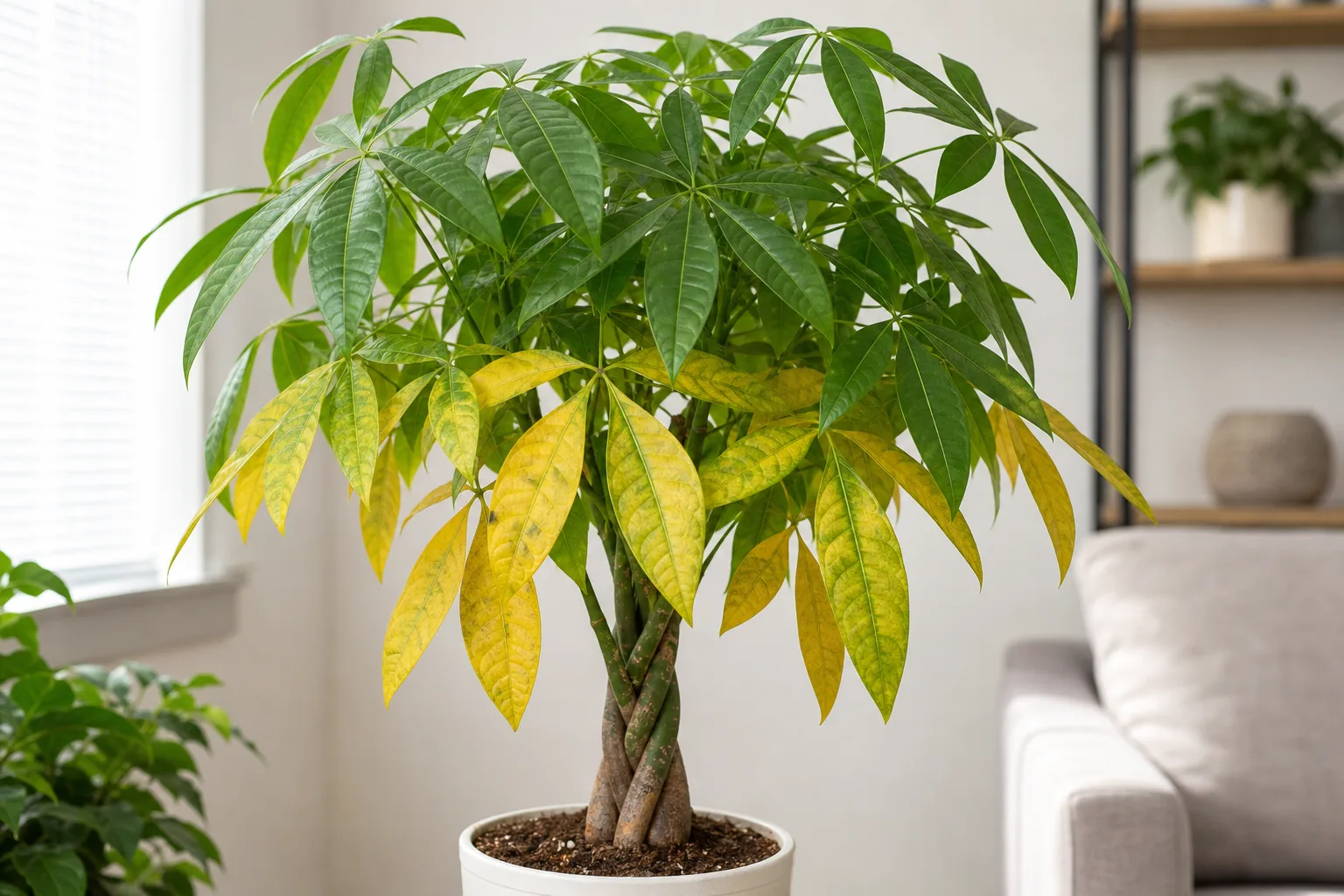
Yellow Leaves on Money Tree: Causes, Checks & Fixes
This guide covers yellow leaves on Money Tree. See also the general Yellow Leaves guide, watering, and light pages for this plant.
Yellow Leaves on Money Tree: Causes, Checks & Fixes
Quick answer
Yellow leaves on Money Tree (Pachira aquatica) are a symptom-not a diagnosis. Money Tree overview is a tree with compound palmate leaves (five to nine leaflets per whorl), often sold with braided trunks-not a rosette succulent. The most common stress pattern is yellow lower leaflets while soil stays wet at depth, sometimes paired with a soft or mushy braided trunk at the soil line.
First step: stop watering and check moisture 5 cm deep. If the mix is wet, let it dry completely before the next drink and move the plant to brighter filtered light. If the trunk feels spongy, treat this as urgent and read the root rot guide. For watering rhythm and seasonal dry-down: Money Tree watering guide.
What yellow leaves look like on Money Tree
Overwatering pattern
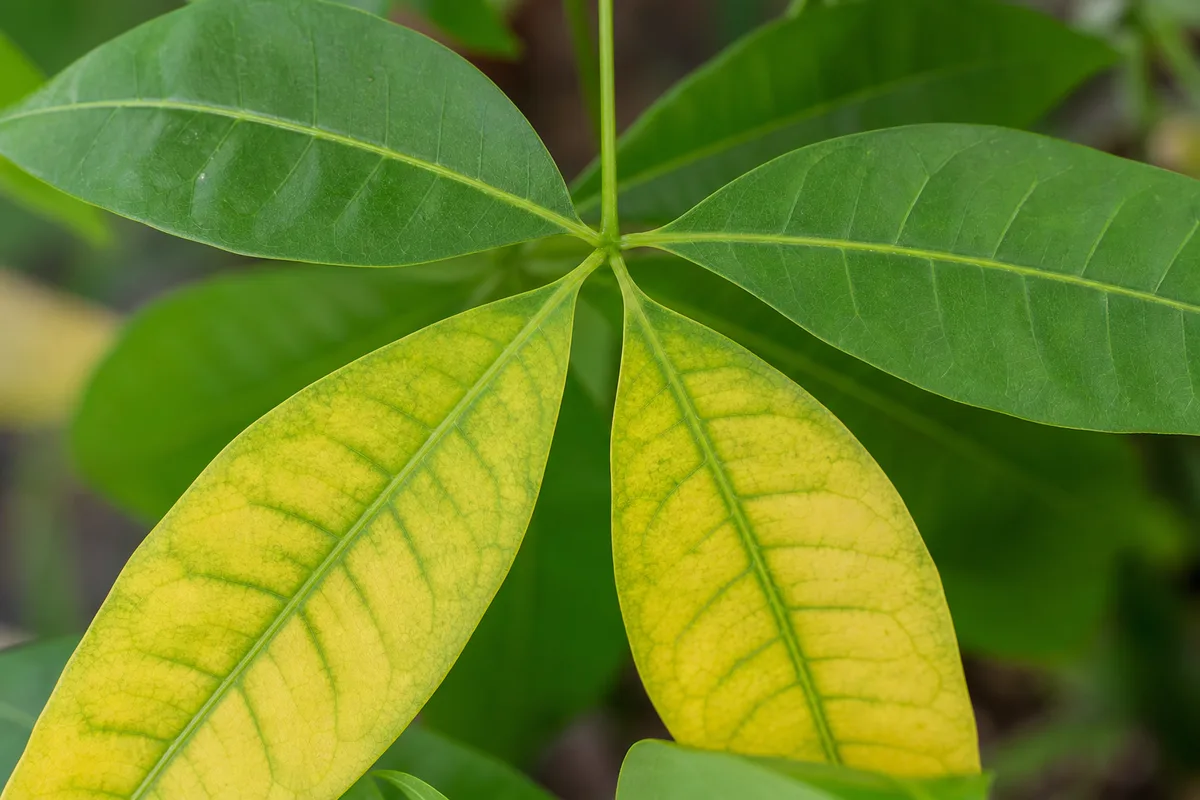
Yellow Leaves symptoms on Money Tree - compare with healthy tissue on the same plant.
Classic overwatering starts on older lower compound leaves-the whole whorl may turn chartreuse then yellow while soil at 5 cm depth stays damp for days. Leaflets hang limp despite moisture. A soft braided trunk at the base is the signature Money Tree warning that distinguishes rot-bound yellowing from harmless aging. Fungus gnats and surface mold often appear at the same time.
Underwatering pattern
Chronic drought yellows scattered leaflets along the canopy with dry, light soil and soil pulling away from pot edges. The trunk may look slightly wrinkled but should still feel firm, not spongy. The plant may droop in the afternoon but perk after a thorough soak if roots are healthy. See underwatering on Money Tree when dry weight matches the yellowing.
Low light pattern
In dim corners, lower leaflets yellow slowly while internodes stretch and new growth stays pale or sparse. Soil may stay wet because the plant uses little water-weak light and overwatering often overlap. Not enough light plus a heavy pot is a common double trigger.
Normal aging
On a healthy mature tree, one or two lower compound leaves may yellow over several months while new whorls at the top stay green and the braided trunk remains firm. That bottom-up, slow pattern on an otherwise vigorous plant is routine senescence-not an emergency.
Why Pachira aquatica gets yellow leaves
Pachira aquatica grows in freshwater swamps and estuaries in the wild, yet in a container standing water is not tolerated and causes root rot. Indoors, yellowing usually means the root zone stayed wet too long-especially in cool, dim rooms where evaporation slows. Calendar watering, oversized pots, decorative cachepots that trap runoff, and heavy peat mixes all keep roots oxygen-starved while leaflets lose green pigment.
Other causes include underwatering after repeated dry-downs, low humidity or inconsistent watering (crispy, curling leaves from these stresses), short winter days when lower leaves yellow and drop as light drops, and inadequate nutrients after years in the same depleted mix-though fertilizing before fixing water and light usually makes yellowing worse.
How to confirm the cause (before you fertilize or repot)
Work through these checks in order:
- Leaflet pattern - Bottom whorls only, slowly = aging. Bottom-up spread on wet soil = overwatering. Scattered yellow on dry soil = drought. Pale sparse new growth in a dim spot = light.
- Moisture at 5 cm - Insert a finger or skewer 5 cm deep. Wet while leaflets yellow supports overwatering. Bone dry with limp canopy supports underwatering.
- Pot weight - Heavy days after watering with yellow lower leaves supports chronic wet feet. Light pot with droopy leaflets points the other way.
- Braided trunk firmness - Press at the soil line. Firm wood is reassuring. Spongy give on wet mix means escalate to root rot protocol.
- Cachepot check - Lift the nursery pot out of any decorative outer pot. Standing water in the cachepot is a frequent hidden cause.
- New growth - Green new whorls after a corrected dry-down mean water was the issue. Continued yellowing on new leaflets while soil stays wet means roots may be failing.
| Sign | Overwatering | Underwatering | Low light | Normal aging |
|---|---|---|---|---|
| Soil at 5 cm | Wet for days | Dry | Often wet too long | Normal dry-down |
| Trunk at braid base | May be soft | Firm, may wrinkle | Usually firm | Firm |
| Leaf pattern | Yellow lower whorls, limp | Scattered, thin feel | Slow bottom yellow, stretch | One to two lower whorls over months |
| Pot weight | Heavy | Light | Heavy | Stable |
| New growth | May stall on wet mix | Perks after soak | Pale, sparse | Green whorls at top |
First fix for Money Tree
Make one correction first based on what you confirmed:
If soil is wet at 5 cm: Stop watering until the top 5 cm dries completely. Move to brighter filtered light. Remove the pot from any cachepot and empty saucers. If soil has been wet for a week or more, or the trunk feels soft, unpot and inspect roots before the next drink-follow overwatering on Money Tree and escalate to root rot if roots are mushy.
If soil is dry: Water thoroughly until excess drains, empty the saucer within 30 minutes, and resume checking dryness at 5 cm depth-not a fixed calendar. See wilting and drooping leaves if the canopy was limp before the soak.
If light is the main issue: Move to a room with bright filtered light for most of the day without blasting direct midday rays on the leaflets. Adjust watering after the move because the pot will dry faster in better light.
If only one or two lower whorls are aging: Remove fully yellow leaves once the plant looks stable. No watering or Money Tree repotting guide change is needed if trunk firmness and new growth look normal.
Do not remove every yellow leaflet the same day you change water; wait until new whorls look healthy.
Recovery timeline
Fully yellow leaflets do not re-green-they drop or can be trimmed once new growth appears. After you correct watering and light, expect green new whorls within two to three weeks in warm, bright conditions. Winter recovery may take longer when growth slows. Judge success by firm trunk wood, stopped spread of yellowing, and new compound leaves-not by old damaged leaflets re-coloring.
Lookalike symptoms to rule out
Wilting on wet soil looks like thirst but means damaged roots cannot move water-adding more water worsens yellowing. Wilting on dry soil with a light pot is underwatering. Spider mites can mottle leaflets yellow with fine webbing-inspect undersides before assuming water alone. Seasonal leaf drop in autumn when days shorten is documented on Money Tree; increasing light and patience often restores the next flush.
What not to do
Do not fertilize yellow leaflets before fixing water and light-salt buildup from overfeeding can also yellow foliage. Do not increase watering when the pot is already heavy and soil is wet at depth. Do not repot and prune every stem at once unless root rot forces it. Do not leave the nursery pot sitting in a cachepot full of runoff after watering.
How to prevent yellow leaves next time
Match watering to real dry-down, not a calendar: roughly every 7–10 days in summer and every 2–3 weeks in winter as a starting range, then adjust for pot size, light, and room temperature per the watering guide. Allow the soil to nearly dry between waterings and remove runoff every time you soak. Keep bright filtered light so the plant uses water at a steady rate. Use well-drained mix with perlite, avoid oversized pots, and accept that lower compound leaves on a tree-form Pachira eventually yellow and drop-remove them once care is stable.
When to worry
Escalate immediately if many whorls yellow within days, the braided trunk feels spongy on wet mix, soil smells sour, or yellowing climbs to new growth at the top while soil stays damp. A few lower yellow leaflets on an otherwise firm, green-topped tree over months is routine. Severe trunk rot through most of the braid may not be salvageable-when in doubt after root inspection, see root rot on Money Tree for rescue vs. discard guidance.
Conclusion
Money Tree yellow leaves usually mean wet roots, weak light, chronic drought, or harmless lower-leaf aging on a compound-leaf tree. Confirm with the 5 cm moisture check, pot weight, trunk firmness at the braid, and new whorl color-then adjust watering and placement before stacking fertilizer, repotting, or pruning. The braided trunk and leaflet pattern tell you more than the word “yellow” alone.
When to use this page vs other Money Tree guides
- Money Tree watering guide - Use for routine moisture checks before assuming yellow leaves is the main issue.
- Money Tree problems hub - Browse all 4 common issues on this species.
- Root Rot on Money Tree - Different entry point when symptoms overlap with yellow leaves.