Watering Money Tree: Schedule, Soil Checks & Mistakes
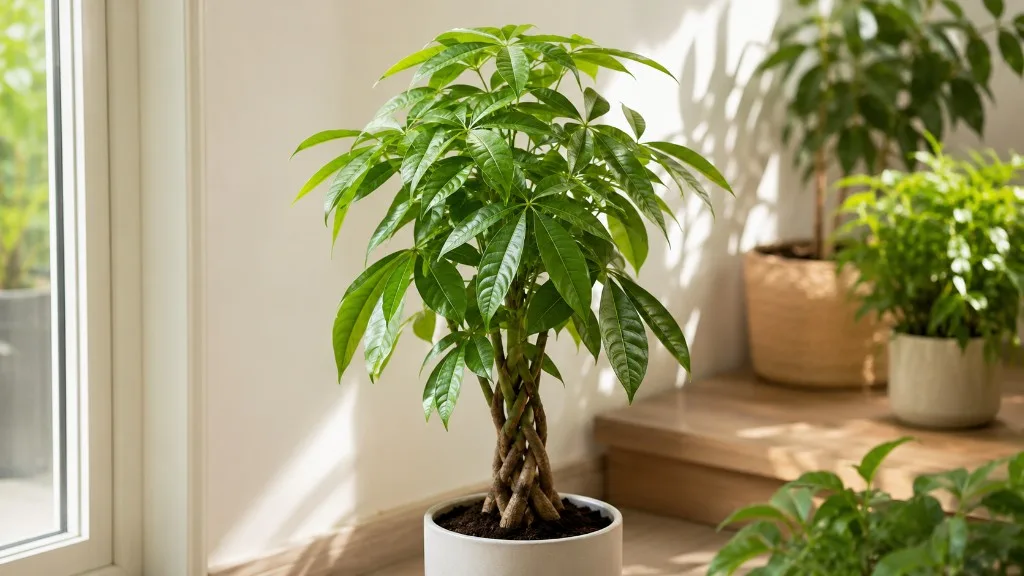
Watering Money Tree: Schedule, Soil Checks & Mistakes
Watering Money Tree: Schedule, Soil Checks & Mistakes
Money tree watering trips up almost everyone who buys a braided Pachira aquatica in a decorative pot. The plant is sold as an easy, lucky tree - and the species really does tolerate a wide range of indoor conditions - but its native biology fights your living-room setup. In the wild, money trees grow along freshwater swamps, estuaries, and riverbanks from southern Mexico to northern Brazil, where periodic flooding is normal and roots breathe between wet cycles in open soil. Indoors, the same plant sits in a few liters of potting mix, often inside a cachepot with no drainage, in dim display corners where evaporation crawls. The main watering mistake is treating a wetland tree like it wants permanently damp soil on a weekly calendar - when what it actually needs is a full soak followed by a real dry-down at root depth.
This guide covers how often to check (not blindly water), the 5 cm moisture test, overwatering and underwatering signs on braided specimens, seasonal slowdown, cachepot runoff workflow, and the mistakes that turn a display tree into a soft-trunk salvage job.
Why Money Tree Watering Confuses People
Pachira aquatica - money tree, Guiana chestnut, Malabar chestnut - is paradoxical in a pot. NC State Extension notes it is found in wetlands yet standing water is not tolerated in containers and can cause root rot. New York Botanical Garden explains the same tension: in habitat the plant experiences heavy rain and then dryness, but indoors you must water thoroughly, then allow the mix to nearly dry between waterings while still not letting roots desiccate completely. That is not “keep it moist.” It is wet-then-dry - a rhythm sealed decorative pots destroy.
The Wetland Plant in a Sealed Indoor Pot
Outdoor flood tolerance does not mean indoor roots should sit in stale water. In nature, water drains through soil volumes measured in cubic meters; oxygen returns as the water table drops. A 25 cm nursery pot inside a glazed cachepot recreates none of that. Runoff pools at the bottom, wicks back into the mix, and keeps the braid zone - where several stems were fused - wet longest. Braided trunks are flexible enough to weave at the nursery (NC State Extension), but the crevices where stems meet hold moisture and rot before lower roots show stress. Display placement compounds the problem: a tree parked in a dim foyer for feng-shui appeal transpires slowly, so the same weekly watering that worked near a bright window keeps the root zone saturated for days.
How Often to Water Money Tree
There is no honest universal schedule for how often to water a money tree. Frequency follows how fast your specific pot dries, which depends on light, temperature, humidity, pot volume, soil texture, and whether the plant is actively growing. What you can use are check reminders - intervals that prompt you to test soil, not automatic watering dates.
In bright, warm active growth, many indoor money trees need a thorough drink roughly every 7 to 10 days - but only after the root zone passes your dryness check. In cooler, darker winter months, the same plant may go 2 to 3 weeks between drinks, sometimes longer in a cool room with a large pot. NYBG notes winter soil may dry faster from heating or slower from shorter days; your calendar must flex with the pot, not the month.
Summer Active-Growth Intervals
During spring and summer, when new whorls of palmate leaves emerge, transpiration rises and the mix dries faster - especially if the tree sits in bright indirect light near a window. Use the 7-to-10-day range as a reminder to check, not permission to pour. If the pot still feels heavy and the top 5 cm feel cool or clingy, skip watering even on day ten. A money tree pushed with extra water in low light is heading toward yellow leaves and braid-zone rot, not faster growth.
Winter Slowdown Intervals
Growth slows as days shorten and rooms cool. Water uptake drops while the same pot holds moisture longer. This is when most braided display trees are lost: owners maintain summer frequency into winter because the heating air feels dry. Heated dry air increases leaf transpiration but does not always dry soil faster - and shorter daylight reduces root activity. Extend checks to every two to three weeks, confirm dryness at depth, and reduce volume if the plant is not using water. If leaves look dull but soil stays wet, the problem is excess moisture, not drought; see root rot on Money Tree before adding more water.
Best Moisture Checks Before You Water
Surface color lies. Peat-heavy mixes can look pale on top while staying damp around the braid. Use at least one physical test every time - the same test, consistently - so you learn how your container behaves.
The 5 cm Finger Depth Check
NYBG and Missouri Botanical Garden both frame money tree watering around letting the mix dry substantially before the next drink. The practical indoor standard is the 5 cm (about 2 inch) finger test: push your finger into the mix to that depth. Water only when it feels dry at that depth, not merely dry on the surface. NYBG advises allowing soil to nearly dry between waterings while not letting roots fully desiccate - the 5 cm check balances those two ideas for typical houseplant pots.
On braided specimens, also notice whether the surface cracks while the pot still feels heavy; that pattern means wet soil below and dry air above - common in dense mix with slow evaporation from a decorative outer pot.
Skewer and Pot-Weight Tests
A dry wooden skewer or chopstick pushed to the pot bottom and pulled out should emerge clean and dry when the plant is ready. If soil clings or the wood darkens, wait. Pot weight is the method experienced growers trust most: lift the container right after a thorough watering, then daily until it feels noticeably lighter. Weight reflects moisture through the whole column, not just the rim. NYBG suggests a water meter probe near the roots if finger tests are awkward on large pots - useful, but calibrate against your mix; meters misread in very chunky blends.
Signs You Are Watering Too Much
Money tree overwatering shows up in leaves, trunks, and soil together. Catch early signs before the braid goes soft.
Watch for yellowing leaves - often lower whorls first - on a plant whose mix stays dark and cool for many days after watering (Missouri Botanical Garden). Fungus gnats hovering at the soil surface breed in perpetually moist organic matter (NC State Extension). Sour or musty smell from the pot confirms anaerobic conditions. Drooping leaves on wet soil is the trap: roots are failing, not thirsty. Whorl drop after a recent heavy watering, especially in a dim corner, often means the root zone never dried.
Soft Braided Trunk and Braid-Zone Rot
The most Pachira-specific overwatering signal is a soft, mushy braided trunk while some leaves still look green. Rot often starts where stems fuse - moisture trapped in braid crevices degrades cambium before you see root damage at the drainage hole. Press gently along the braid: firm wood is healthy; spongy give is advanced trouble. NC State lists root rot from standing water as a primary disease issue; indoors, standing water usually means saucer runoff or cachepot pooling, not a swamp flood cycle. If the braid is soft and soil smells sour, stop watering, inspect roots, and read root rot on Money Tree before deciding salvage versus discard.
Signs You Waited Too Long
Underwatering is less common but easier to correct. Drooping leaflets on a very light pot, wrinkled or shriveled trunk tissue, and soil pulling away from the pot walls point to drought. NC State notes leaf drop can occur if soil is too dry. A single dry episode is usually recoverable: one thorough soak until water runs from drainage holes, full drain, then return to the dry-down cycle. Do not compensate with daily small cups - that keeps the top wet and center stressed, the same pattern that invites rot.
If leaves are limp and soil is wet, you are not underwatered. Diagnose overwatering or root failure instead.
Seasonal Watering Changes
Money tree metabolism follows light and temperature, not a watering app. Spring restart may shorten dry-down time as new growth appears; fall into winter lengthens it even before you notice heating. The same volume that worked in August can waterlog roots in January.
Track two full wet-dry cycles each season change. Note check dates, pot weight, and whether new whorls are forming. Within a month you will know your room’s rhythm better than any generic blog schedule. Pair watering adjustments with Money Tree light needs - a tree moved away from a window for holiday decor uses less water and needs fewer drinks, not the same Tuesday soak.
How to Water Cleanly
When dryness checks pass, water thoroughly and evenly across the soil surface until excess runs from drainage holes. NYBG instructs making the potting mixture moist, then checking back after 15 minutes to remove water sitting in the run-off dish. That soak-and-drain pattern mimics habitat rain followed by dry-down - the cycle container culture must replicate.
Use room-temperature water. Cold shocks warm roots in heated rooms. Avoid repeatedly splashing the crown if your specimen is prone to leaf spotting; direct water at the soil line.
Cachepot and Saucer Workflow
Never let a money tree stand in drained water. If the nursery pot sits inside a decorative cachepot, remove it, water at the sink, let drain 15–30 minutes, empty both saucer and cachepot, then replace. If you cannot remove the inner pot easily, you cannot water correctly - repot into a setup with access or drill drainage. A worked example: a 25 cm braided tree in a ceramic cachepot held runoff 48 hours; the braid felt spongy mid-height while leaves were still green. Emptying the cachepot after every drink, pausing water ten days, and confirming dryness at 5 cm firmed the upper braid segment - but only because rot had not reached the root crown. Prevention is simpler: treat cachepots as display sleeves, not reservoirs.
RHS lists Pachira as preferring moist but well-drained conditions - horticultural shorthand for periodic thorough watering with oxygen between drinks, not constant dampness.
Common Money Tree Watering Mistakes
Most failures repeat predictable patterns:
- Calendar watering without a soil check - the top mistake on display trees in dim corners
- Leaving runoff in saucers or cachepots - recreates standing water NC State warns against
- Small daily sips instead of full soaks - wets the top, starves deep roots, hides wet centers
- Watering because leaves drooped without checking moisture - adds water to rot or ignores real drought
- Oversized decorative pots - huge soil volume stays wet weeks while only the top inch looks dry
- Maintaining summer frequency through winter - the braid rots while leaves still look acceptable
- Ice-cube or shot-glass “trickles” - inappropriate for a tree-form plant that needs deep, infrequent drinks
- Assuming wetland origin means “likes wet soil” - confuses habitat flooding with sealed indoor pots
- Changing water, pot, and placement simultaneously after a scare - stacks stress; fix watering first
If several overlap - cachepot, dim placement, weekly calendar - rot is predictable. Fix drainage and checking before fertilizer, repotting, or pruning.
Know Your Plant: Pachira Aquatica Wetland Context
Money tree is a Malvaceae tree, not a succulent and not a true aquatic. Indoors it typically reaches 6 to 8 feet with good care - far below the 60-foot wild specimens NC State describes, but still a woody plant with a water-storing caudex habit. Houseplants are rarely braided in habitat; braiding is a nursery display technique that changes where rot starts but not the underlying need for dry-down.
Good watering sits on top of the right foundation. Fast-draining mix with perlite - detailed on the Money Tree soil guide - dries at a usable speed. Bright indirect light - on the Money Tree light guide - drives transpiration so the wet-dry cycle actually completes. After repotting, expect slower dry-down until roots fill the new volume; see Money Tree repotting before stacking changes.
Troubleshooting Matrix
| Symptom | Likely cause | First action |
|---|---|---|
| Yellow lower leaves, wet heavy pot | Overwatering / early root stress | Stop watering; check 5 cm depth; empty cachepot |
| Soft braid, sour smell, gnats | Braid-zone rot from standing water | Stop water; inspect braid and roots; see root rot |
| Drooping leaves, dry light pot, soil gap | Underwatering | One full soak, drain fully, resume dry-down checks |
| Drooping leaves, wet soil | Root failure from prior overwatering | Do not add water; inspect roots |
| Crisp tips, otherwise healthy dry cycle | Low humidity or salts - not always watering | Confirm dryness before increasing water; see yellow leaves if widespread |
| Slow dry-down after repot | Large fresh mix volume | Extend interval; verify with pot weight |
How We Wrote and Verified This Guide
Author: sai-ananth. Reviewed by: LeafyPixels Review Board (2026-06-15). Methodology: Recommendations were checked against NC State Extension, New York Botanical Garden libguides, Missouri Botanical Garden, and RHS Pachira aquatica guidance, then mapped to practical indoor constraints - braided specimens, cachepots, and display placement. We prioritize check-before-water over calendar rules and flag contradictions between wetland habitat and container culture explicitly.
Primary sources used: NC State Plant Toolbox (Pachira aquatica); NYBG money tree libguide and watering FAQs; Missouri Botanical Garden Plant Finder; RHS plant profile. Limitations: Individual homes vary; numeric intervals are starting checks, not guarantees. Severe braid rot may be irreversible - professional nursery or extension consultation is appropriate when the trunk base collapses.
Related Money Tree Care
- Money Tree overview - full care hub
- Money Tree light needs - how light drives dry-down speed
- Money Tree soil - mix, perlite, and drainage
- Money Tree repotting - post-repot moisture changes
- Root rot on Money Tree - salvage workflow
- Yellow leaves on Money Tree - when watering is the culprit
Conclusion
Money tree watering works when you respect the container paradox: a wetland species in nature, a drought-sensitive root system in a sealed pot. Check the mix to 5 cm depth, water thoroughly only when dry at that level, drain completely, and empty every cachepot and saucer every time. Use 7-to-10-day summer and 2-to-3-week winter intervals as reminders to check, not automatic watering permission.
Overwatering shows as yellow leaves, gnats, and a soft braid; underwatering shows as a light pot, wilting, and soil shrinkage. Fix the extreme, stabilize for weeks, and adjust light and mix through sibling guides rather than stacking changes. Get the wet-dry rhythm right and a braided Pachira stays firm, leafy, and genuinely low-maintenance - not because it tolerates neglect, but because it tolerates deliberate dry-down between deep drinks.
When to use this page vs other Money Tree guides
- Money Tree overview - Start here for whole-plant context before deep-diving this topic.
- Money Tree problems hub - Jump to symptom-specific fix guides when this care topic does not resolve the issue.
- Root Rot on Money Tree - Escalate here when watering adjustments are not enough.