Money Tree Pruning: When, Where, and How Much to Cut
Money Tree Pruning: When, Where, and How Much to Cut
Money Tree Pruning: When, Where, and How Much to Cut
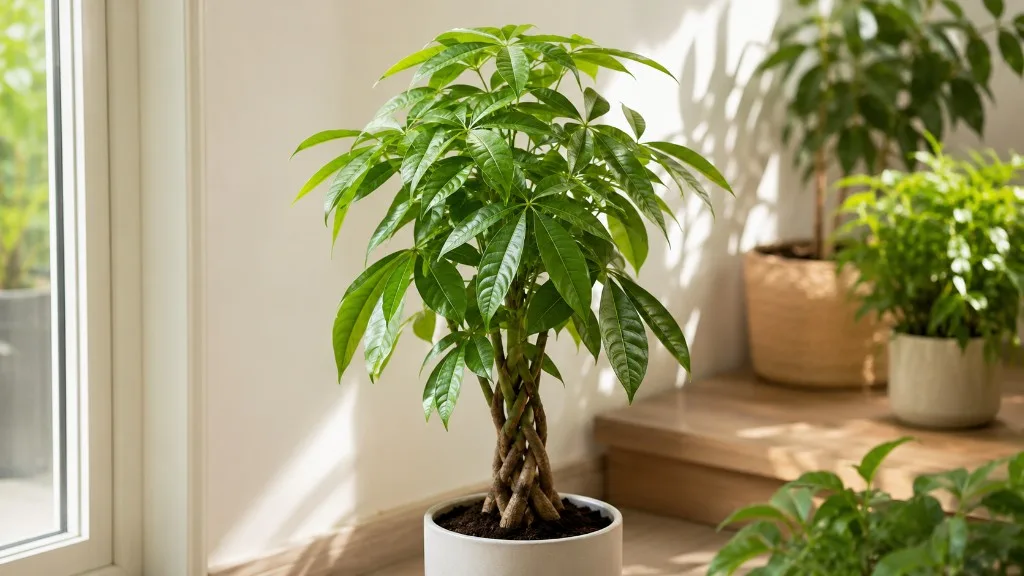
Money tree (Pachira aquatica) grows as a woody indoor tree with palmately compound leaves on long petioles - the familiar braided-trunk specimen that starts compact and often stretches toward the ceiling within a few years. Start by removing only dead, damaged, or fully yellow leaves and stems with clean, sharp shears. Once the plant looks clean, decide whether any living stems need shortening for shape or height control.
Pachira aquatica typically reaches 6–8 feet indoors and can grow much taller in native habitat, which is why regular light trimming keeps the tree manageable without fighting its natural upright habit. The NYBG Plant Information Service confirms that money trees tolerate pruning well when cuts are made correctly and timed to active growth.
What Pruning Does for a Money Tree
Pruning on Pachira aquatica serves three practical purposes indoors:
- Cleanup - removes dead, diseased, or fully yellow foliage that drains energy and hides pest problems
- Shape control - shortens leggy stems so the canopy stays balanced above the trunk
- Bushier branching - heading cuts above a node activate dormant buds below the cut, producing side shoots
Pruning does not fix chronic overwatering, root rot on Money Tree, or low-light stretch on its own. If the plant is yellowing widely and the soil stays wet, correct watering before removing large amounts of living foliage.
When to Prune Money Tree
Shape and size-control pruning: spring, when the plant resumes strong growth. Late spring through early summer is the safest window for indoor specimens because new shoots emerge faster and the plant tolerates change better while actively growing.
Dead, damaged, or fully yellow material: any time of year. These are cleanup cuts, not structural pruning - remove them promptly so pests and rot do not spread.
Avoid heavy shaping in autumn and winter when growth slows. Pachira aquatica does not respond well to sudden change, and out-of-season cuts sit visibly bare for months.
Emergency Removal vs. Shaping Cuts
| Goal | Timing | How much |
|---|---|---|
| Dead or mushy stems | Immediately | Cut back to healthy tissue |
| Fully yellow leaves | Any time | Remove at base of petiole |
| Height or legginess control | Spring–early summer | Shorten stems gradually |
| Suckers at base or trunk | Any time | Pinch or cut at origin |
What to Check Before You Cut
Walk through this quick inspection before touching living stems:
- Overall vigor - firm trunk, no soft or wrinkled sections, at least some active leaf tips
- Light exposure - leggy internodes often mean the plant needs brighter indirect light, not just a hard cut
- Moisture stress - widespread yellowing with wet soil suggests overwatering; dry, drooping leaves suggest drought
- Pests - check leaf undersides and stem joints for mealybugs, scale, or spider mites
- Braid integrity - note where individual trunks merge so you do not cut into the braided section
If the plant is actively declining - soft trunk, heavy leaf drop, sour-smelling soil - fix the underlying stress first. Pruning an unhealthy money tree carries greater risk.
The First Cut to Make
Remove dead, damaged, or fully discolored growth before any shaping decision. Cut brown or black stems back to several inches below the dead portion until you reach firm, green tissue. Pull or snip fully yellow leaves at the base of the petiole where it meets the stem.
This single cleanup pass tells you what healthy structure remains and prevents you from shortening stems that were already failing.
Where to Cut on the Stem
New growth on Pachira aquatica activates from the node - the joint where a leaf petiole attaches to the stem. Make heading cuts about ½ inch (1.3 cm) above a healthy node or leaf, angled slightly so water does not pool on the wound.
Cutting too far above the node leaves a bare stub that yellows and dies back. Cutting into the node itself damages the bud that would produce the next branch. Step back after each cut and check symmetry before moving to the next stem.
Working Around Braided Trunks
Most store-bought money trees have flexible trunks braided together during youth. Do not cut into the braided section - severing fused stems opens large wounds that heal slowly and can destabilize the trunk. Prune only the free stems above the braid, where individual trunks branch into the canopy.
You can nip off suckers forming at the base or along the trunk at any time without affecting the braid structure.
How to Prune Money Tree Step by Step
- Sterilize tools - wipe pruning shears or scissors with rubbing alcohol
- Clean up first - remove all dead, damaged, and fully yellow material
- Identify target stems - look for the longest, most leggy, or outward-growing branches
- Plan the shape - step back and decide which stems to shorten; mark mentally before cutting
- Cut above nodes - make one clean cut per stem, ½ inch above a leaf joint, at a slight angle
- Limit per stem - remove no more than half the length of any single stem in one session
- Reassess - pause between stems; you can always cut more next month, but you cannot undo an aggressive cut
- Collect trimmings - discard diseased material; set healthy stem sections aside if you want cuttings
How Much You Can Safely Remove
Two limits keep Pachira aquatica from sulking after a trim:
- Per stem: shorten by no more than half its current length in one session
- Whole plant: do not remove more than one-third of total foliage at once
If the tree has far outgrown its space, plan a multi-month reduction - trim the tallest stems in spring, wait 4–6 weeks for new buds to break, then shorten the next tier. This staged approach respects the plant’s sensitivity to change and produces a fuller result than one hard chop.
Pruning Leggy, Yellow, or Dead Growth
Leggy stems - long internodes with sparse leaves usually trace back to insufficient light. Shorten the longest stems above a lower node in spring, then move the plant to brighter indirect light so new growth stays compact.
Yellow leaves - remove individual fully yellow leaves at any time. If yellowing is spreading, investigate watering and root health before stripping living foliage.
Brown tips or edges - trim only the damaged portion, following the leaf’s natural curve. Brown tips often reflect low humidity or salt buildup rather than a need for heavy stem pruning.
Dead branches - cut back to healthy green tissue well below the dead zone. Sterilize blades between cuts if disease is suspected.
Aftercare and Recovery
After shaping cuts, keep care steady and boring:
- Light - maintain Money Tree light guide; avoid moving the plant to a new window the same week
- Water - follow your normal deep-water-then-dry cycle; do not increase watering to “help” the plant recover
- Fertilizer - hold off for 2–3 weeks after structural pruning; resume at half strength once new growth appears
- Humidity - moderate humidity (50–70%) supports clean leaf emergence in dry homes
Recovery Timeline
During active growth (spring–summer), expect new buds to break within 2–4 weeks of a heading cut. A noticeably fuller canopy takes 6–8 weeks as side branches lengthen. Out-of-season pruning can leave bare stems for 2–3 months before new shoots appear - another reason to save major cuts for spring.
Signs Pruning Worked
- Fresh green shoots emerge directly below cut nodes
- The canopy looks more balanced from all sides
- Cut ends stay dry and tan - not black, mushy, or shriveling
- Existing leaves remain firm and upright
Signs something went wrong: black or wet cut ends (dirty tools or cuts too far above nodes), sudden widespread leaf drop (plant was already stressed or too much was removed), or no new growth after 6+ weeks in summer (check light and root health).
Mistakes to Avoid
- Cutting into the braided trunk - destabilizes the plant and creates slow-healing wounds
- Leaving stubs above nodes - bare stem sections yellow and look unsightly for months
- Removing more than one-third of foliage at once - shocks a change-sensitive plant
- Heavy pruning in winter - bare stems persist through the slow season
- Pruning a stressed plant - overwatered, pest-infested, or recently repotted trees need stability, not additional cuts
- Using dull tools - crushed stems heal slowly and invite infection
When Not to Prune
Skip structural pruning when:
- The plant was repotted within the last 2–3 weeks
- Active pest infestation or root rot is underway - treat the problem first
- The tree is dropping leaves from a recent move or light change
- You cannot identify healthy nodes on bare stems - wait for a flush of new leaves in spring
Cleanup of truly dead material is fine anytime; defer shaping until the plant is stable and growing.
Using Pruned Stems as Cuttings
Healthy stem sections removed during spring pruning can become new plants. Choose segments with 2–3 nodes, remove lower leaves, and root in water or moist potting mix. NC State Extension lists softwood cuttings and air layering as standard propagation methods for Pachira aquatica; expect roots in 4–8 weeks under warm, bright conditions.
Cuttings are optional - discard trimmings if you do not want extra plants. Wear gloves if pets tend to chew fallen stems; ASPCA lists money tree as non-toxic to cats and dogs, though ingestion can still cause mild stomach upset.
When to use this page vs other Money Tree guides
- Money Tree overview - Start here for whole-plant context before deep-diving this topic.
- Money Tree problems hub - Jump to symptom-specific fix guides when this care topic does not resolve the issue.
- Leggy Growth on Money Tree - Escalate here when pruning adjustments are not enough.
- Brown Tips on Money Tree - Escalate here when pruning adjustments are not enough.