Transparent Leaves on Maranta Leuconeura: Causes, Checks &
Quick answer
Translucent patches on Maranta leuconeura usually mean edema-roots took up water faster than thin leaves could release it. First step: pause watering until the top 2 cm of mix dries and add gentle airflow before you repot or fertilize.
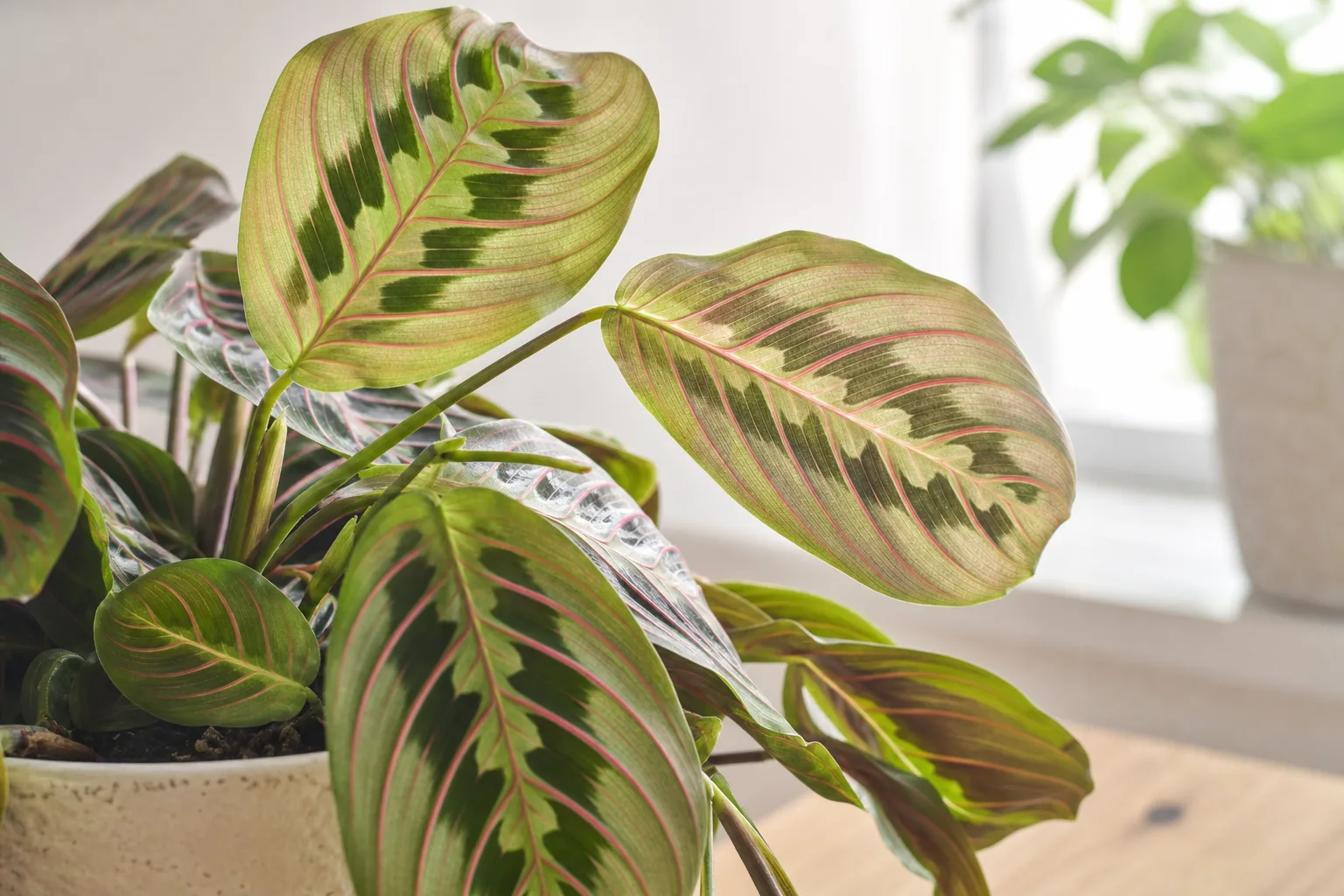
Transparent Leaves on Maranta Leuconeura: Causes, Checks & Fixes
This guide covers transparent leaves on Maranta Leuconeura. See also the general Transparent Leaves guide, watering, and light pages for this plant.
Transparent Leaves on Maranta Leuconeura: Causes, Checks & Fixes
Quick answer
Thin, patterned prayer plant (Maranta leuconeura) leaves are built for tropical understory humidity-not for sitting in saturated mix while the room air stays cool and still. When roots absorb water faster than those broad leaves transpire, internal leaf pressure builds until cells burst. On prayer plants the damage often shows as water-soaked, translucent patches on variegated zones, along margins, or scattered across the blade-sometimes within hours of watering.
First step: pause watering until the top 2 cm of mix dries slightly, then resume a lighter rhythm. Add gentle airflow at leaf level before you repot, fertilize, or soak the pot again. Transparent foliage is usually edema (oedema)-a physiological imbalance, not a mystery disease-and it responds to corrected water flow, not more water.
If stems soften and soil smells sour, escalate to the overwatering and root rot guides rather than treating leaves only.
What transparent leaves look like on Maranta leuconeura
On prayer plants, transparency is a texture and color change-not the healthy nightly fold that makes leaves look darker when stacked upright.
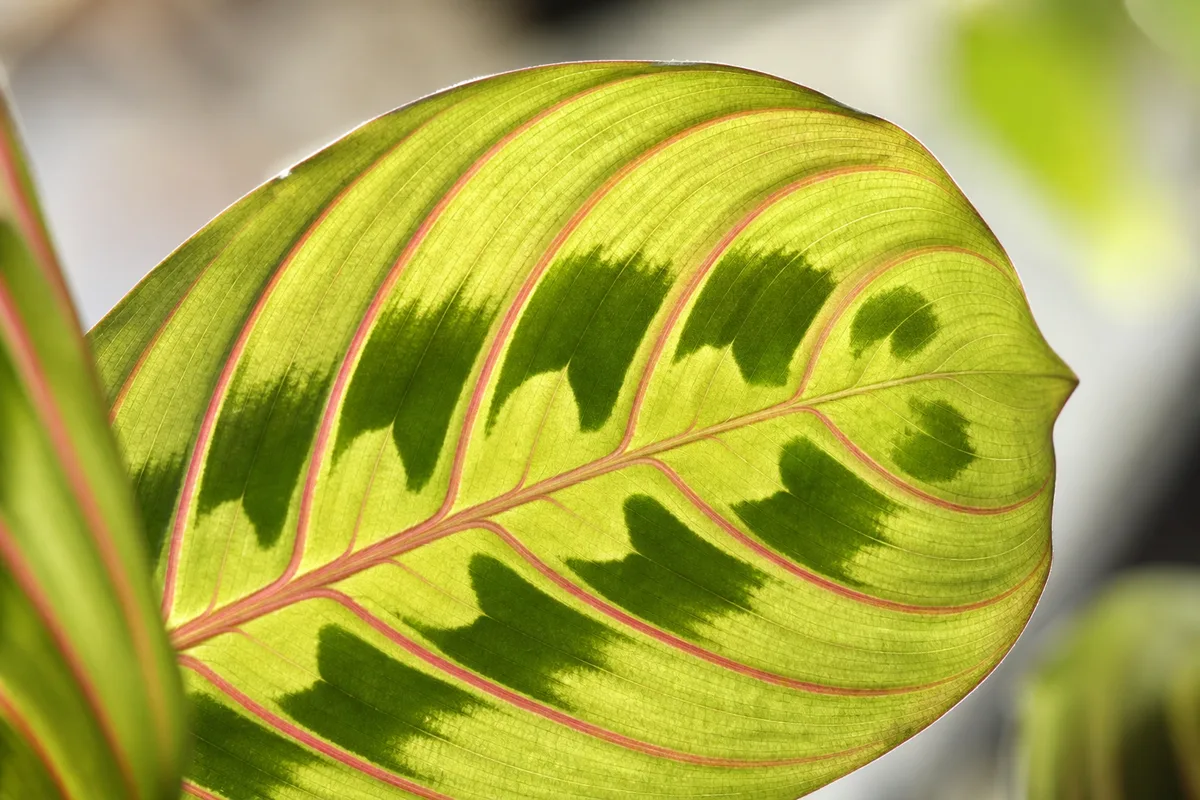
Transparent Leaves symptoms on Maranta Leuconeura - compare with healthy tissue on the same plant.
Typical edema signs:
- Wet-looking, glassy patches where green patterning looks thin or see-through when backlit
- Spots concentrated on lighter variegated sections, herringbone veins, or outer leaf edges
- Patches that appear or enlarge soon after watering, especially during cool or overcast weeks
- Later browning or corky texture as burst cells dry out-translucent tissue does not revert to solid green
- Leaves may still fold at night early on; advanced stress flattens movement as turgor fails
Cultivar note: On M. leuconeura ‘Erythroneura’ (red-veined herringbone), glassy patches often show first on the pale central stripe where tissue is thinnest. On var. kerchoveana (rabbit tracks), lighter splotches along the midrib can look transparent when backlit before darker zones are affected-both patterns still point to edema when they follow watering in cool, still air.
Patterns that help narrow the cause:
- Upper leaf surface - Indentations or pale zones above engorged cells on the underside are classic edema on broadleaf houseplants.
- Underside blisters - Small raised bumps that later erupt into tan corky spots support edema rather than pest scraping.
- Crown and new growth - Translucent crinkles on tightly rolled new leaves may be thrips or edema; tap tests separate the two.
- Lower old leaves only - A single aging leaf with one soft patch is less alarming than multiple fresh leaves on several stems changing overnight.
Maranta spreads from shallow rhizomes, so outer trailing leaves near a cold window may show patches first while inner crown leaves stay clear-a clue that environment, not whole-plant rot, triggered the symptom.
Why prayer plant gets transparent leaves
Maranta leuconeura is a rhizomatous low-growing tropical perennial with large, thin leaves and fine roots near the soil surface. That anatomy makes water balance fragile indoors.
Edema-the most common cause
Oedema develops when roots take up water faster than leaves transpire. Water pressure swells internal leaf cells until they rupture, leaving dead tissue that looks water-soaked or translucent before it browns. On indoor plants this often appears in late winter during extended cloudy weather when soil stays warm but air is cool and humid-transpiration slows while roots keep pulling moisture.
Prayer plants are especially prone because owners follow a “keep evenly moist” rule without adjusting for seasonal slowdown. Illinois Extension notes prayer plants need moist soil but crowns rot if water stands on them-a tight line where heavy watering plus poor airflow tips into edema before obvious root failure.
Environmental triggers that stack on Maranta:
- Watering thoroughly right before a cold snap or heat-off night
- High room humidity from a humidifier paired with unchanged watering volume-see low humidity for balancing RH with airflow
- Low light weeks that reduce transpiration while roots stay active in warm soil
- Stagnant air around dense foliage-no fan, crowded plant shelf, or closed terrarium lid
- Pot staying waterlogged because drainage is blocked or mix is too water-retentive without perlite
Less common but important causes
- Fungal leaf spot - Penn State lists small water-soaked Maranta leaf spots that turn yellow and enlarge for Helminthosporium leaf spot. These can look translucent at first but usually show defined spots with yellow halos rather than scattered glassy patches after watering. See the dedicated leaf spot disease guide for escalation.
- Thrips rasping - Silver, scraped streaks with black fecal specks mimic bleached transparency; insects confirm on tap tests per the thrips guide.
- Advanced overwatering - Yellowing, limp stems, and sour soil accompany transparency when roots fail-not isolated patches on otherwise firm plants.
How to confirm the cause
Work through these checks before changing soil or spraying:
- Timing - Did patches appear within 24–48 hours of watering during cool, cloudy, or high-humidity conditions? Strong edema signal.
- Soil moisture at 2 cm - Moist or wet soil plus new translucent patches points to uptake outpacing release. Bone-dry soil with crisp transparency at tips suggests underwatering overlap-less common for glassy patches mid-leaf.
- Leaf underside - Look for blisters, corky bumps, or erupting spots beneath translucent zones. Edema often starts undersides; thrips leave dry silver flecks and black specks without true water-soaking.
- Tap test on new growth - Hold white paper under a rolled leaf and tap sharply. Moving insects mean thrips, not edema alone-confirm per the thrips page.
- Crown and stem base - Firm rhizomes and stems with moist soil support edema. Soft, mushy crowns with wet mix demand root inspection.
- Spot shape and spread - Edema patches are irregular and tied to recent watering. Fungal spots often show yellow halos and merge into tan dead areas over days.
- Air movement - Is the plant in a still corner with a humidifier running? Stagnant humid air plus wet soil is a classic edema setup on prayer plants.
If humidity is high, soil is appropriately moist, and patches are silver with black specks, switch to thrips diagnosis. If soil is soggy and stems collapse, inspect roots for rot before treating leaves only.
First fix for Maranta leuconeura
Let the top 2 cm of potting mix dry slightly and run gentle airflow across the foliage for several days before the next full watering.
That single step slows root uptake and raises transpiration so leaf pressure normalizes. Do not respond to glassy leaves by pouring more water-the imbalance is excess retention, not drought.
While soil surface dries:
- Move the pot away from cold window glass and heating vents that create cool-leaf/warm-soil contrast.
- Place a small fan on low several hours daily so leaves lose moisture steadily-avoid blasting directly on crowns.
- Keep water off crowns; wet stems rot easily on prayer plants.
- Skip fertilizer until new leaves open cleanly for two weeks.
Check the mix at 2 cm depth daily. When it feels barely dry-not parched-water lightly so moisture reaches roots without saturating the whole column. Judge improvement by whether the next new leaf opens without fresh translucent zones.
Step-by-step recovery
After the first pause-and-airflow fix, support recovery in order:
- Adjust watering rhythm - Maranta needs consistently moist mix during active growth, but allow soil to dry between waterings in winter when growth slows. Water when top 2 cm is dryish, not on a fixed calendar. See the watering guide for seasonal rhythm.
- Improve drainage without emergency repot - If mix stays wet for a week, slide the plant out and check that holes are open. Repot only if soil smells sour or roots are mushy-not for isolated edema on firm roots.
- Trim damaged tissue selectively - Snip leaves that are mostly translucent or brown; leave partially green blades until the plant stabilizes.
- Balance humidity and airflow - Prayer plants like humidity, but edema worsens when humid air is stagnant. Pair a humidifier with gentle fan use rather than sealing plants in still moisture.
- Treat fungal spots if halos appear - Defined yellow-ringed spots that spread independently of watering may need isolation, removal of affected leaves, and avoiding overhead splashing-overhead watering promotes Maranta leaf diseases. Follow the leaf spot disease guide.
- Rule out thrips on crinkled new leaves - If silver streaks accompany transparency, isolate and treat pests after tap-test confirmation on the thrips page.
Avoid stacking Maranta Leuconeura repotting guide, fertilizer, and heavy pruning in the same week-shallow rhizomes already stressed by water imbalance recover slowly.
Recovery timeline and what improvement looks like
Edema recovery is gradual:
- 2–5 days - New translucent patches stop appearing after watering adjustments; existing wet zones may feel less swollen.
- 1–3 weeks - Next leaves open without glassy patches; nightly folding strengthens if turgor returns.
- Several months - Older damaged leaves remain blemished but are replaced by cleaner growth on actively growing plants.
Burst cells do not heal to solid green-judge success by new foliage, not repaired patches. If transparent zones keep forming on every new leaf after four weeks of corrected watering and airflow, reassess light (too dim slows transpiration) and root health.
Signs the problem is worsening:
- Translucent patches spreading to petioles and stems
- Crown softening while soil stays wet-see root rot
- Rapid yellowing from base up with sour soil odor
- Water-soaked spots enlarging with yellow halos daily-possible fungal leaf spot
- Silver streaks and insects on tap tests-thrips compounding stress
Those patterns mean escalate beyond a simple watering pause.
Lookalike symptoms to rule out
| What you see | More likely cause | Quick differentiator |
|---|---|---|
| Glassy patches after watering, moist soil | Edema | Cool/cloudy timing; blisters on undersides; no insects |
| Silver flecks, black specks, crinkled new leaves | Thrips | Tap test shows moving insects; dry scrape marks |
| Yellow halos around enlarging tan spots | Leaf spot disease | Spots merge over days; not tied to single watering event |
| Uniform brown tips, stable humidity | Brown tips / fluoride burn | Margins only; Penn State lists phosphate, fluoride, high light |
| Yellow leaves, mushy stems, sour soil | Overwatering / root rot | Wet heavy mix; limp plant despite moisture |
| Dry soil, wilt plus edge transparency | Underwatering | Light pot; soil pulls from sides |
Edema and overwatering overlap-firm roots and crowns with patchy leaves favor edema; mushy roots favor rot.
Mistakes to avoid
- Watering more because leaves look “thirsty” - Glassy tissue reflects excess internal water, not drought.
- Misting heavily after patches appear - Wet foliage in still air can worsen transpiration imbalance and invite fungal issues on dense prayer plant leaves.
- Repotting immediately into heavier mix - Extra moisture retention without fixing airflow repeats the cycle.
- Fertilizing to “green up” leaves - Nutrients on stressed tissue can burn margins; tip burn on Maranta links to excess phosphate and fluoride.
- Ignoring airflow in humid rooms - High RH without ventilation is a common edema trigger in winter collections.
- Confusing thrips silvering with edema - Spraying pesticides before confirmation stresses foliage unnecessarily.
Maranta care cross-check
Transparent leaves often appear when one care lever shifts without the others:
- Light - Maranta Leuconeura light guide supports transpiration; very dim corners slow water loss and invite edema after watering. See not enough light if new growth stays small.
- Temperature - Missouri Botanical Garden recommends temperatures that do not dip below 60°F (15°C) for prayer plants; cold glass and warm soil mismatch accelerates edema indoors.
- Water - Keep top 2 cm evenly moist in growth season; lighten in winter when extension guidance says to let soil dry between waterings.
- Drainage - The 60/20/20 soil mix (60% potting compost, 20% perlite, 20% coco coir) matches Maranta’s need for moisture retention with oxygen at shallow roots.
- Crowns - Never let water pool on stems; rot-prone crowns fail fast on prayer plants.
How to prevent transparent leaves next time
- Water on soil dryness, not leaf appearance - Check 2 cm depth before every pour, especially November through March.
- Pair humidity with airflow - Run a humidifier and a low fan rather than sealing plants in stagnant moisture.
- Reduce volume before weather shifts - Lighten watering before predicted cold snaps or week-long cloudy spells.
- Scout after every heavy water - Note whether new patches appear within 48 hours; early pause prevents spread.
- Keep crowns dry - Water the soil surface, not folded leaves at night.
- Maintain drainage - Perlite-heavy mix and open pot holes prevent chronic wet soil that keeps roots pumping water.
Related Maranta problems
- Overwatering and root rot - when mushy crowns and sour soil accompany transparency
- Thrips - silver streaks and crinkled new growth with black specks
- Leaf spot disease - yellow-halo fungal spots vs. irregular edema patches
- Brown tips - margin fluoride burn lookalike in the table above
- Low humidity - balancing RH with airflow to prevent stagnant moisture
- Prayer plant overview - baseline culture, cultivars, and nyctinasty as a health signal
Conclusion
If new leaves keep opening with glassy patches after four weeks of corrected watering and airflow, inspect roots and light before assuming the plant is doomed. Escalate to root rot when crowns soften, or thrips when tap tests show insects-most transparent-leaf cases on prayer plants resolve once uptake and transpiration balance again.
When to use this page vs other Maranta Leuconeura guides
- Maranta Leuconeura watering guide - Use for routine moisture checks before assuming transparent leaves is the main issue.
- Maranta Leuconeura problems hub - Browse all 40 common issues on this species.