Thrips on Maranta Leuconeura: Causes, Checks & Fixes
Quick answer
Thrips rasp Maranta leuconeura leaves and hide inside tightly rolled new growth, leaving silvery streaks and crinkled leaves. First step: isolate the plant and tap a new leaf over white paper to confirm tiny moving insects before spraying.
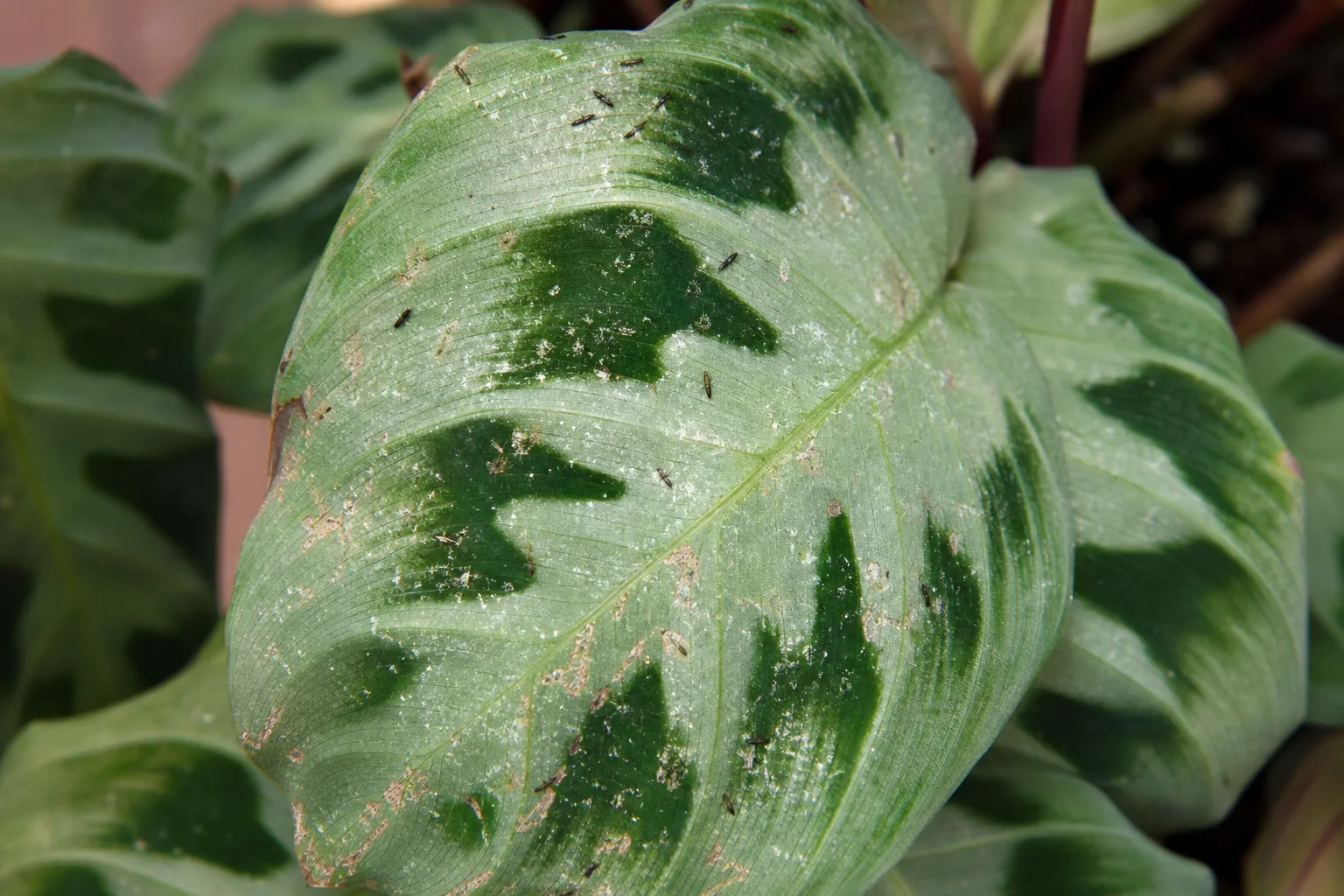
Thrips on Maranta Leuconeura: Causes, Checks & Fixes
This guide covers thrips on Maranta Leuconeura. See also the general Thrips guide, watering, and light pages for this plant.
Thrips on Maranta Leuconeura: Causes, Checks & Fixes
Quick answer
Thrips are extremely small insects-about 1/16 inch long that rasp and scrape leaf surfaces, leaving silvery streaks and black fecal specks on prayer plant foliage. On Maranta leuconeura, they often hide inside tightly rolled new leaves, so damage shows up only after the leaf unfurls-sometimes looking like a humidity or care problem at first glance.
First step: isolate the plant and tap a new leaf over white paper. If tiny slender insects fall out and move, you have thrips-not fluoride burn, spider mites, or ordinary leaf aging. Confirm before you spray anything on patterned foliage that can react to harsh products.
Why Maranta Leuconeura gets thrips
Prayer plants carry thin, patterned leaves that thrips can rasp cell by cell. The broad-elliptic foliage with striking vein patterns makes silvery feeding scars stand out-but also lets thrips blend against red veins and dark blotches until populations build.
Maranta leuconeura pushes new leaves from the crown in tight rolls that stay furled for days. Thrips exploit that habit. They feed inside protected tissue before the leaf opens, which permanently distorts the blade as it expands. That pattern is especially common on prayer plants and close relatives with rolled new growth.
Indoor prayer plants also sit in the humidity band thrips management guides describe-many thrips species are deterred by high relative humidity-yet Maranta still gets infestations when pests arrive on new plants, open windows, or shared greenhouse stock. Skipping quarantine after a nursery purchase is the most common introduction route.
The most common thrips species on indoor ornamentals is western flower thrips (Frankliniella occidentalis). It lays eggs in plant tissue, pupates on leaves or in soil depending on conditions, and can run several overlapping generations indoors where temperatures stay warm year-round.
What thrips damage looks like on Maranta Leuconeura
On patterned prayer plant leaves:
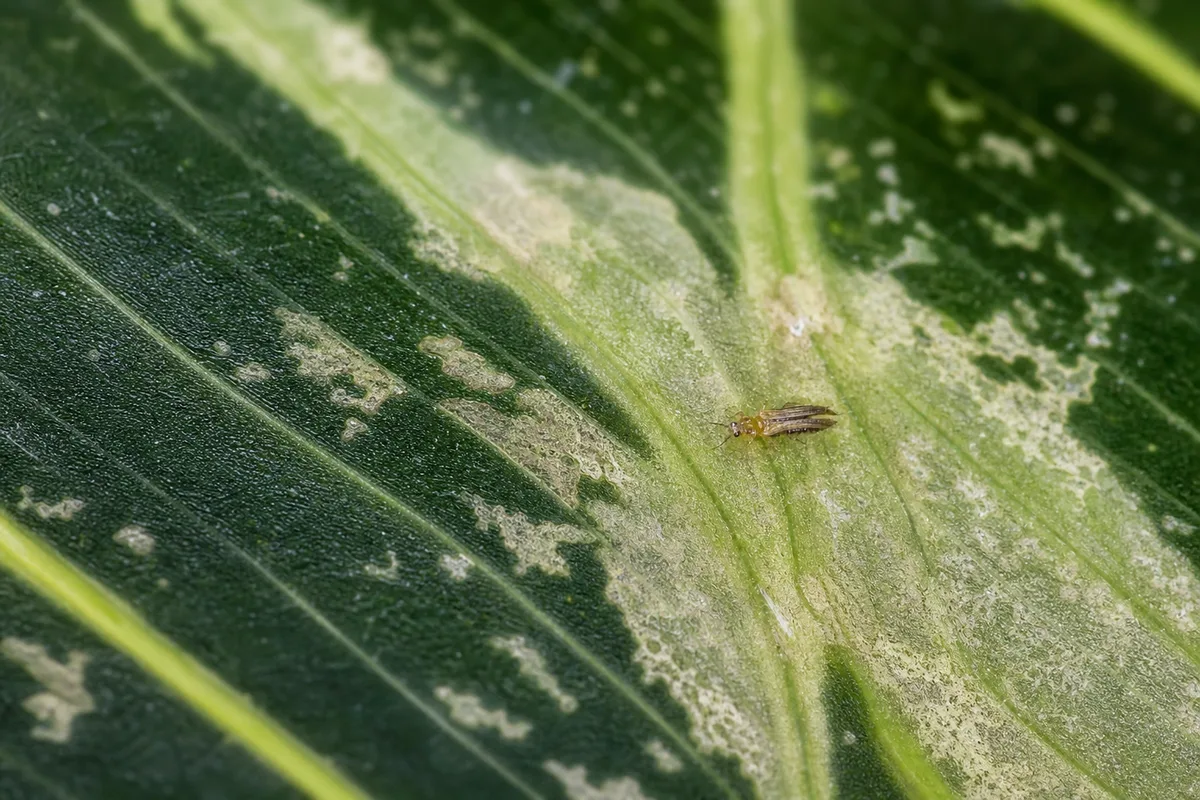
Thrips symptoms on Maranta Leuconeura - compare with healthy tissue on the same plant.
- Silvery, bronze, or bleached streaks and flecks across green areas-often crossing herringbone veins on erythroneura cultivars
- Tiny black varnish-like fecal specks scattered near the silver marks
- Distorted, puckered, or narrow new leaves that unfurl with crinkles already baked in
- Brown scarred patches on older leaves where feeding was heavy
On stems and growing tips:
- Stunted or twisted new shoots at the crown
- Thrips visible as pale yellow to dark brown slivers when you peel back a furled leaf slightly
- No sticky honeydew film-unlike aphids or scale, thrips leave dry scrape damage
Healthy Maranta leaves fold upward at night and show even color when backlit. Thrips damage breaks that pattern with permanent silver scarring that does not wipe off and does not respond to watering or humidity changes alone.
How to confirm the cause
Work through these checks in order:
- Tap test - Hold white paper under a suspect leaf or rolled new growth and tap sharply three times. Moving specks 1–2 mm long confirm thrips. Static debris does not count.
- New-leaf focus - Unroll one small new leaf gently with a fingernail and look inside. Thrips cluster in sheltered tissue; older lower leaves may look fine while the crown is infested.
- Underside inspection - Check leaf backs and petiole joints with a hand lens. Nymphs feed on the undersurface of leaf tissue and along veins.
- Silver vs. other marks - Fluoride or low-humidity brown tips start at margins and feel dry, not scraped. Thrips silvering appears as scattered flecks and streaks mid-blade with black specks nearby.
- Spider mite rule-out - Mites cause fine yellow stippling and webbing at stem tips in hot dry air. No webbing and visible black frass points to thrips instead.
- Collection scan - Inspect other humidity-loving plants nearby-Calathea, Alocasia, and ferns often share thrips once one pot is affected.
If the plant has uniform brown tips only, stable old leaves, and no silver flecks or insects on tap tests, revisit watering quality and humidity before treating for thrips.
First fix for Maranta Leuconeura
Isolate the plant and tap rolled new leaves over white paper to confirm thrips.
That single step stops spread to neighbors and tells you whether you are fighting thrips or a lookalike problem. Move the pot to a bright spot away from other plants for at least two weeks while treating. Bag and discard the worst crinkled leaves only after confirming insects-you want evidence, not guesswork.
Do not shower the entire plant with cold tap water on day one if you have not confirmed pests. Do not apply neem oil or soap to every leaf before a tap test-prayer plant foliage can spot or dull when treated unnecessarily.
Step-by-step recovery
Once thrips are confirmed:
- Isolation - Keep the prayer plant separated until tap tests and inspections show no new damage for two weeks after the last treatment cycle.
- Remove heavily distorted leaves - Cut crinkled new growth that is more scar than green tissue. Disinfect shears between cuts with rubbing alcohol.
- Rinse knockdown - In the morning, use lukewarm water to wash leaf undersides and stem joints. Maranta dislikes cold shocks; avoid drenching the crown repeatedly in cool water.
- Insecticidal soap on contact - Spray undersides, rolled new leaves, and stem crevices thoroughly. Extension guidance recommends insecticidal soaps for thrips knockdown, applied to reach hidden insects. Repeat every five to seven days for two to three cycles to catch newly hatched nymphs-soaps kill on contact, not eggs embedded in tissue.
- Monitor with sticky traps - Hang a blue or yellow sticky card near the plant at canopy height. Rising trap counts mean the population is still building; falling counts mean control is working.
- Hold fertilizer - Do not push nitrogen while the plant is pest-stressed. Resume half-strength monthly feeding only after two weeks of clean new growth.
- Check neighbors - Treat or scout adjacent pots even if they look fine. Thrips move between grouped humidity plants on shared shelves.
If two full soap cycles fail and trap counts stay high, consider spinosad labeled for ornamentals on a test leaf first-prayer plants can be sensitive. Always patch-test one leaf before full application.
Recovery timeline
Light infestations caught on the first silver streaks often stabilize within two weeks of isolation, rinsing, and repeated soap contact. New leaves should unfurl flatter once adult counts drop.
Moderate crown infestations usually need three to four weeks of repeated treatment because eggs inside tissue hatch on staggered schedules. Old silver-scarred leaves will not regain solid color-judge success by clean new blades and fewer insects on tap tests.
If every new leaf emerges distorted despite three soap cycles, reassess whether thrips are still present or a virus is involved. Thrips can transmit viruses on ornamentals; mosaic-like mottling with distortion on multiple stems may mean the plant will not fully recover.
Lookalike symptoms to rule out
Fluoride or low-humidity brown tips affect leaf margins and tips with dry tan edges-not scattered silver flecks with black specks mid-blade. Filtered water and a humidifier fix those; thrips need pest treatment.
Spider mites thrive when indoor air is dry and hot. Look for fine webbing at stem tips and yellow stippling without black frass. Mites worsen in winter near heat vents; thrips can persist year-round indoors.
Mealybugs leave white cottony clusters and sticky honeydew on stems. Thrips damage feels dry and scraped, not tacky.
Cucumber mosaic virus on Maranta causes small distorted leaves with bright yellow line patterns-not silver scrape marks. Penn State lists CMV on prayer plant; distorted yellow-lined foliage with no insects suggests virus, not thrips alone.
Mistakes to avoid
Do not mist heavily to “wash thrips off” and raise humidity at the same time. Maranta leuconeura prefers high humidity but wet foliage overnight invites fungal leaf spot. Use a humidifier or pebble tray instead of repeated overhead misting during treatment.
Do not compost infested clippings near other houseplants. Bag and discard distorted leaves from heavily affected crowns.
Do not treat with dish soap mixtures. Use labeled insecticidal soap products-detergents and additives can burn patterned prayer plant leaves.
Do not return an isolated plant to the shelf after one spray. Thrips eggs protected inside tissue hatch over weeks; one application rarely clears an infestation.
How to prevent thrips next time
Quarantine every new Maranta leuconeura for two weeks before placing it near existing plants. Tap leaves over white paper on arrival-even healthy-looking nursery stock can carry low-level thrips.
Scout rolled new leaves weekly during active spring and summer growth. That is when thrips damage on prayer plants shows up first.
Keep humidity at 60% or higher using a humidifier or pebble tray, which aligns with Maranta’s normal care and can deter some thrips activity. Pair humidity with good airflow so leaves dry between waterings.
Avoid excess nitrogen fertilizer that pushes soft, rapid new tissue thrips prefer. Feed at half strength monthly during active growth only when the plant is healthy.
Inspect leaf undersides whenever you check soil moisture. Early silver flecks on one leaf are easier to treat than a distorted crown on a mature specimen.
When to worry
Treat as urgent when:
- Silver streaking spreads to multiple stems within a week
- Every new leaf emerges crinkled despite rinsing and soap cycles
- Thrips appear on several plants sharing one humid shelf or terrarium
- Mosaic yellow line patterns or severe mottling follow thrips scarring on multiple leaves
For heavy infestations on a large, established prayer plant, repeated contact sprays plus isolation usually still save the plant if virus symptoms are absent. Replace severely declining specimens that produce only distorted tissue after six weeks of diligent control-it is often cheaper than endless chemical cycles, and you protect the rest of the collection.
Conclusion
Thrips on Maranta leuconeura hide in rolled new growth and leave silvery scars that mimic care stress. Isolate, tap-test over white paper, and treat with repeated contact sprays on undersides-not a single rinse or humidity bump. Judge recovery by clean new leaves unfurling flat, not by old silver marks fading. That diagnostic path protects patterned foliage from unnecessary chemicals and stops thrips before they distort the whole crown.
When to use this page vs other Maranta Leuconeura guides
- Maranta Leuconeura watering guide - Use for routine moisture checks before assuming thrips is the main issue.
- Maranta Leuconeura problems hub - Browse all 40 common issues on this species.
- Curling Leaves on Maranta Leuconeura - Different entry point when symptoms overlap with thrips.
- Brown Tips on Maranta Leuconeura - Different entry point when symptoms overlap with thrips.
- Yellow Leaves on Maranta Leuconeura - Different entry point when symptoms overlap with thrips.