Weak Stems on Jade Plant: Causes, Checks & Fixes
Quick answer
Weak jade stems usually mean overwatering root failure or too little light-not a fertilizer shortage. First step: pinch a mid-stem-firm but thin points to etiolation and brighter light; soft mushy tissue near the soil means stop watering and inspect roots before anything else.
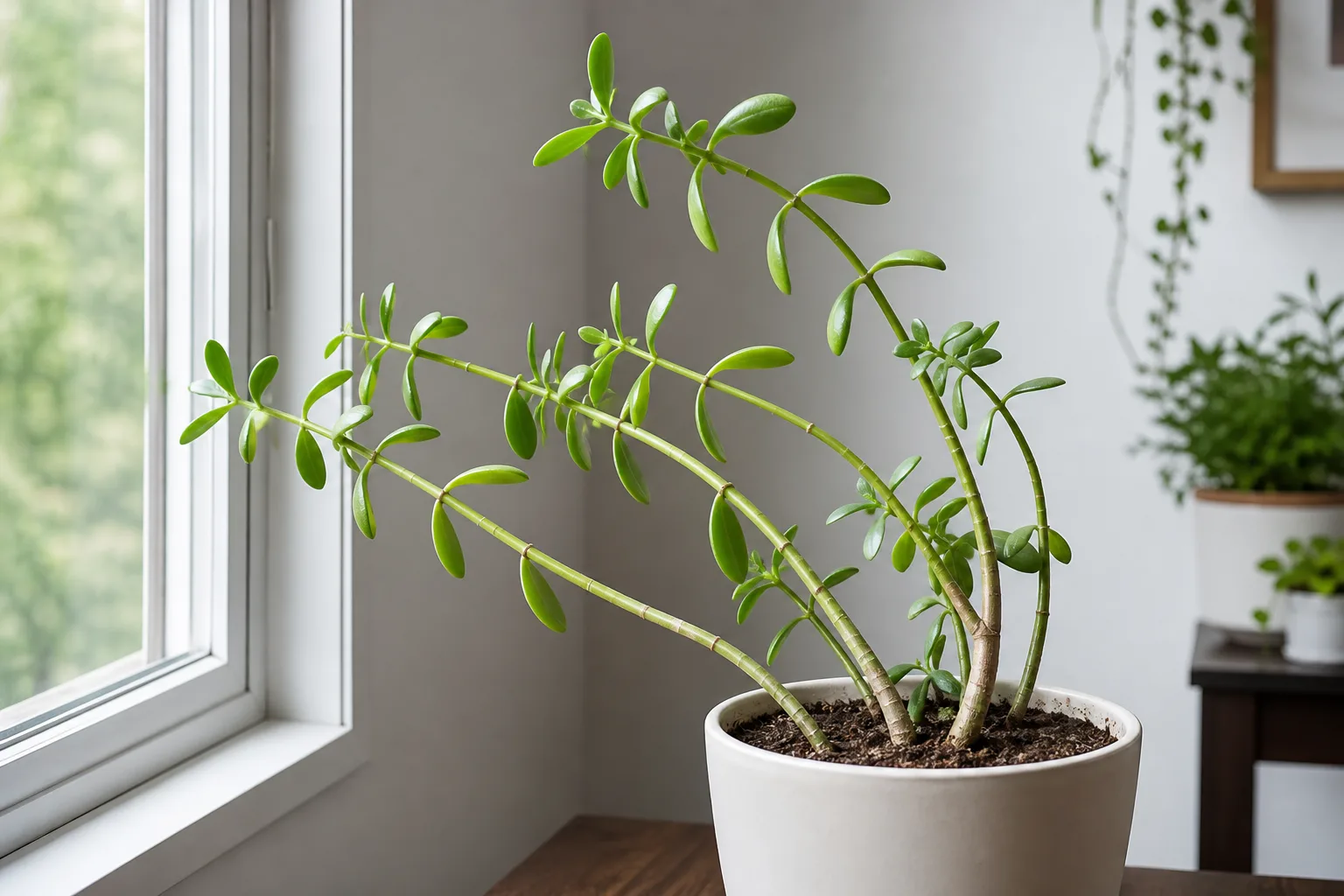
Weak Stems on Jade Plant: Causes, Checks & Fixes
This guide covers weak stems on Jade Plant. See also the general Weak Stems guide, watering, and light pages for this plant.
Weak Stems on Jade Plant: Causes, Checks & Fixes
Quick answer
Weak stems on a jade plant (Crassula ovata) mean branches lose the firm, woody structure that should support paired succulent leaves-not a vague “stressed plant” look. Healthy jade builds short, thick branches on a gnarled trunk; weak stems flop, bend under leaf weight, or collapse at the base.
First step: pinch a mid-stem between your fingers-firm but thin points to etiolation and brighter light; soft mushy tissue near the soil means stop watering and inspect roots.
Overwatering is the most common cause of floppy structural failure indoors-especially in winter when jade growth slows and wet mix sits around roots for weeks. Insufficient light is the other major cause: jade in dim rooms produces firm-but-thin etiolated stems that droop under their own leaves even though tissue is not rotting. Mealybugs and scale can weaken individual branches by draining sap. Stacking repot, prune, and fertilizer on the same day hides which cause you actually fixed.
What weak stems look like on Jade Plant
Weak stems on jade show up in distinct patterns. Match what you see before changing care:
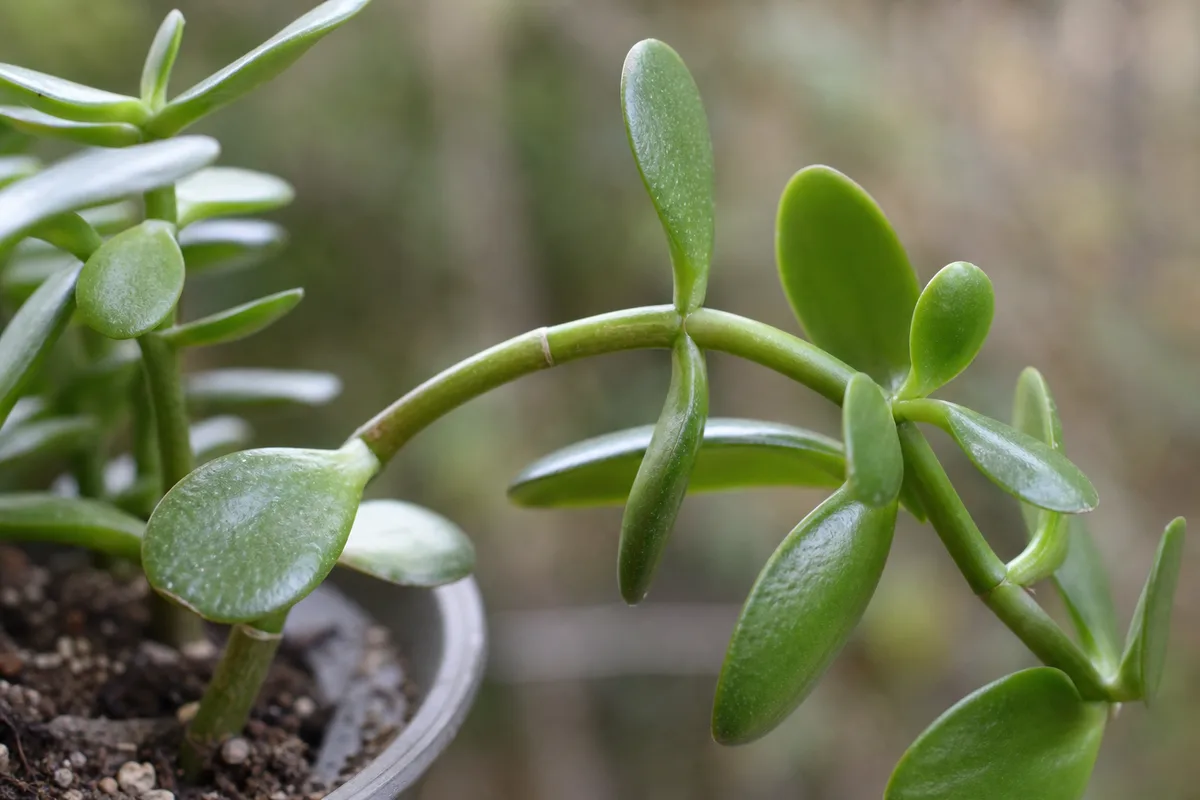
Weak Stems symptoms on Jade Plant - compare with healthy tissue on the same plant.
Floppy mushy base (overwatering / root failure):
- Stems collapse at soil level or bend sharply where they enter the mix
- Stem tissue feels soft, hollow, or discolored-brown, black, or translucent-not firm and green
- Heavy pot that stays wet for many days; sour smell from drainage holes
- Lower leaves yellow and drop easily while upper leaves may still look plump
- One-sided weakness on a branch that was overwatered longest
Firm but thin bending stems (etiolation):
- Stems stay green and firm when pinched but are too thin to hold leaf pairs upright
- Wide gaps between opposite leaf pairs; leaves often unusually deep green without red margins
- Plant leans toward the brightest window; window-facing side may stay slightly firmer
- No sour smell; pot dries on a normal schedule-or even faster than you expect
- Common on jade kept in north rooms, far from glass, or behind furniture
Localized branch weakness (pest sap loss):
- One branch flops while neighbors stay firm
- White cottony mealybugs or scale bumps at stem joints and leaf axils
- New growth on that branch may look deformed or stunted before the stem gives way
Top-heavy mature jade:
- Large tree-like specimens become tippy in small pots-different from disease weakness
- Woody trunk stays firm; only upper heavy branches arc downward
- Often paired with years without Jade Plant repotting guide-see root-bound on jade plant if the pot dries within a day of every watering
Healthy jade stems feel substantial when squeezed-succulent and green on new growth, brown and woody on mature trunks. A compact well-lit jade holds its miniature-tree shape without staking.
Why Jade Plant gets weak stems
Overwatering and root failure are the leading cause of floppy, mushy jade stems indoors. Crassula ovata stores water in leaves, stems, and roots and evolved on dry rocky hillsides. When mix stays wet-especially in cool winter semi-dormancy-roots lose function and stems lose structural integrity from the base up; overwatering will cause leaves to drop and the stem to rot. This overlaps heavily with overwatering on jade plant and can escalate to root rot or stem rot within days once bases soften.
Insufficient light produces etiolation-elongated internodes and thin stems that cannot support thick leaf pairs. Inadequate light produces deep green leaves and drooping stems because the plant lacks enough sun for normal compact growth and red leaf edging. Jade does best with four or more hours of direct sun daily indoors. Dim placement is the same mechanism behind thin stems and leggy growth-weak stems is the structural failure those pages describe in more detail.
Pest pressure weakens stems locally. Mealybugs are the most common insect pest of jade; infestations can deform new growth on succulent stems. Sap loss reduces the resources available to keep branches rigid.
Top-heavy growth without trunk development happens when jade grows tall in low light without the pruning that encourages a thick woody trunk. Pruning encourages the trunk to develop to support the weight of heavy leaves and stems.
Winter compounding: Short days plus reduced watering needs mean jade in dim rooms often gets watered on a summer schedule while growth stalls-wet mix plus weak light produces the worst floppy outcomes.
How to confirm the cause
Work through these checks before stacking treatments:
- Pinch-test (firm thin vs. mushy soft) - Squeeze mid-stem tissue. Firm and thin → etiolation path. Soft, brown, or hollow near the base → rot or chronic overwatering.
- Pot weight and soil moisture - Lift the pot. Heavy and wet for ten or more days after watering → prioritize root diagnosis. Light and fully dry with wrinkled but firm leaves → underwatering may mimic flop; see wilting on jade plant.
- Light-hour and window-lean assessment - Count direct sun on the pot. Fewer than four hours indoors commonly produces drooping etiolated jade per extension guidance. Strong lean toward one window confirms light shortage.
- Root peek if wet - Slide the plant out when mix is damp and stems feel soft at the base. Firm white or tan roots support a drainage or schedule fix. Brown mushy roots with sour smell confirm rot rescue.
- Pest branch inspection - Check leaf axils and stem joints on the weakest branch before assuming pure care deficit.
- New growth marker - Tag a node and recheck in two weeks. Brighter light producing tighter new leaf pairs confirms etiolation. Continued softening on wet mix confirms water stress.
Lookalike table
| Pattern | Likely cause | Stem feel | Pot / soil | Next guide |
|---|---|---|---|---|
| Floppy collapse at soil line | Overwatering / rot | Soft, discolored base | Heavy, wet, sour | Overwatering, root rot |
| Firm thin stems, wide leaf gaps, window lean | Etiolation | Firm but thin | Normal dry-down | Thin stems, leggy growth, light |
| Whole plant limp, leaves soft | Severe overwatering or underwatering | Variable | Very wet or very dry | Wilting, drooping leaves |
| One branch weak, cottony pests | Mealybugs / scale | Firm elsewhere | Usually normal | Mealybugs |
| Upper branches arc, trunk firm | Top-heavy / root-bound | Woody base firm | Dries in 1–2 days | Root-bound, repot |
First fix for Jade Plant
Pinch a mid-stem and lift the pot-then choose one branch of action, not three fixes at once.
If the stem is soft near the soil line, the pot feels heavy, or mix smells sour: Stop all watering immediately. Move to bright light with airflow-not direct outdoor sun in one jump on already-stressed tissue. Unpot, trim mushy roots with sterile shears, let cuts air-dry 24 hours, and repot into dry gritty mix in a appropriately sized terracotta pot. Wait two weeks before the first light watering. Full protocol: overwatering on jade plant.
If the stem is firm but thin, leaves are deep green, and the plant leans toward light: Move gradually to a brighter location with four or more hours of direct sun-south or west window, or supplemental grow light. Acclimate over one to two weeks if coming from deep shade to prevent sunburn on leaves adapted to dim rooms. Do not fertilize until new growth shows tighter leaf-pair spacing. Deeper light guidance: jade plant light.
If one branch is weak with visible mealybugs or scale: Isolate the plant. Wipe pests with alcohol on a cotton swab; avoid insecticidal soap on jade, which can damage succulent leaves. Treat the branch before pruning it away.
Do not repot on day one when stems are merely thin and roots look healthy-that adds stress without fixing etiolation. Do not prune heavily before correcting light or moisture.
Recovery timeline
Light upgrade on firm thin stems: First tighter leaf pairs on new nodes within three to six weeks during active spring or summer growth. Old stretched internodes stay thin permanently-judge success by new tissue only.
After root rot treatment: Two to six weeks before firm new growth appears on remaining healthy wood. Severe mushy main trunks often mean propagating firm branch cuttings instead of saving the base.
After pest cleanup: Branch firmness returns as new growth emerges pest-free-typically two to four weeks if infestation was localized.
Winter weakness: Stems may look soft until March or April even after a light upgrade. Track spring node spacing rather than January firmness.
Signs of improvement: shorter gaps between new leaf pairs, firmer pinch-test on newest stems, red margins returning on leaf edges in bright light, and pots that dry on a healthy rhythm per the jade plant watering soak-and-dry guide.
Signs of worsening: stem bases continue softening, sour smell intensifies, yellow leaves climb the trunk, or no firm new growth through a full warm season after corrections.
What not to do
Do not fertilize weak floppy jade before confirming moisture and roots-nitrogen on stressed succulents pushes weak elongation without fixing the limiter.
Do not keep watering because stems look tired when the pot is already wet. Jade leaves can stay plump while roots fail.
Do not move jade from a dim room to full outdoor summer sun in one day-sunburn on weak tissue adds damage.
Do not expect old etiolated sections to thicken after light improves. Only new growth from nodes will look compact.
Do not stack repotting, heavy pruning, and fertilizer in the same week. Change one variable, observe, then adjust.
Wear gloves when handling cut tissue-jade is toxic to cats and dogs if ingested.
How to prevent weak stems next time
Grow jade where it receives four or more hours of direct sun indoors, or supplement when windows are insufficient. Rotate the pot weekly if one-sided leaning starts.
Water on full dry-down, not a calendar-soak thoroughly, then wait until the entire root zone dries between deep waterings before the next drink. Match winter reduction to semi-dormancy per the watering guide.
Use terracotta and fast-draining succulent mix so wet-soil weakness is less likely. Empty saucers after every watering.
Prune in spring to encourage a thick woody trunk that supports heavy branches-extension guidance ties pruning to trunk development, not just cosmetics.
Inspect stem joints weekly during routine care; catch mealybugs before sap loss weakens branches.
Practical checks
Urgency check
Treat as urgent when stem bases soften, soil smells sour, black patches climb the trunk, or pests spread across multiple branches. Jade rot escalates quickly once roots fail-same-day root inspection beats waiting for leaves to drop.
Best inspection order
Newest growth → pinch-test mid-stem → stem bases at soil line → pot weight → roots if wet → leaf axils for pests → light exposure on the pot.
Jade care cross-check
Also sold as money tree or lucky plant, jade should be judged by firm new leaf pairs and stable woody bases. If the pot stays wet for weeks, fix light and mix before the next drink. If stems stretch firm-but-thin toward glass, light-not water-is the first limiter.
Conclusion
Weak jade stems almost always trace to wet roots or too little usable light-and the pinch-test separates those paths in seconds. Start there before repotting, pruning, or feeding. Mushy bases need dry-down and root rescue; firm thin stems need brighter sun and patience while new compact growth forms. Old stretched tissue will not regain strength, so track recovery through new nodes, not by waiting for floppy sections to stiffen on their own.
For overlapping symptoms, use overwatering on jade plant when bases go soft on wet mix, and leggy growth on jade plant when firm thin stems need a light-and-prune protocol after conditions improve.
When to use this page vs other Jade Plant guides
- Jade Plant watering guide - Use for routine moisture checks before assuming weak stems is the main issue.
- Jade Plant problems hub - Browse all 49 common issues on this species.