Thin Stems on Jade Plant: Causes, Checks & Fixes
Quick answer
Thin jade stems mean the plant never built woody trunk tissue-usually from too little direct sun. Look for long gaps between leaf pairs, pale upper leaves, and green floppy stems that never brown. First step: move to a brighter window and acclimate over one to two weeks before pruning anything.
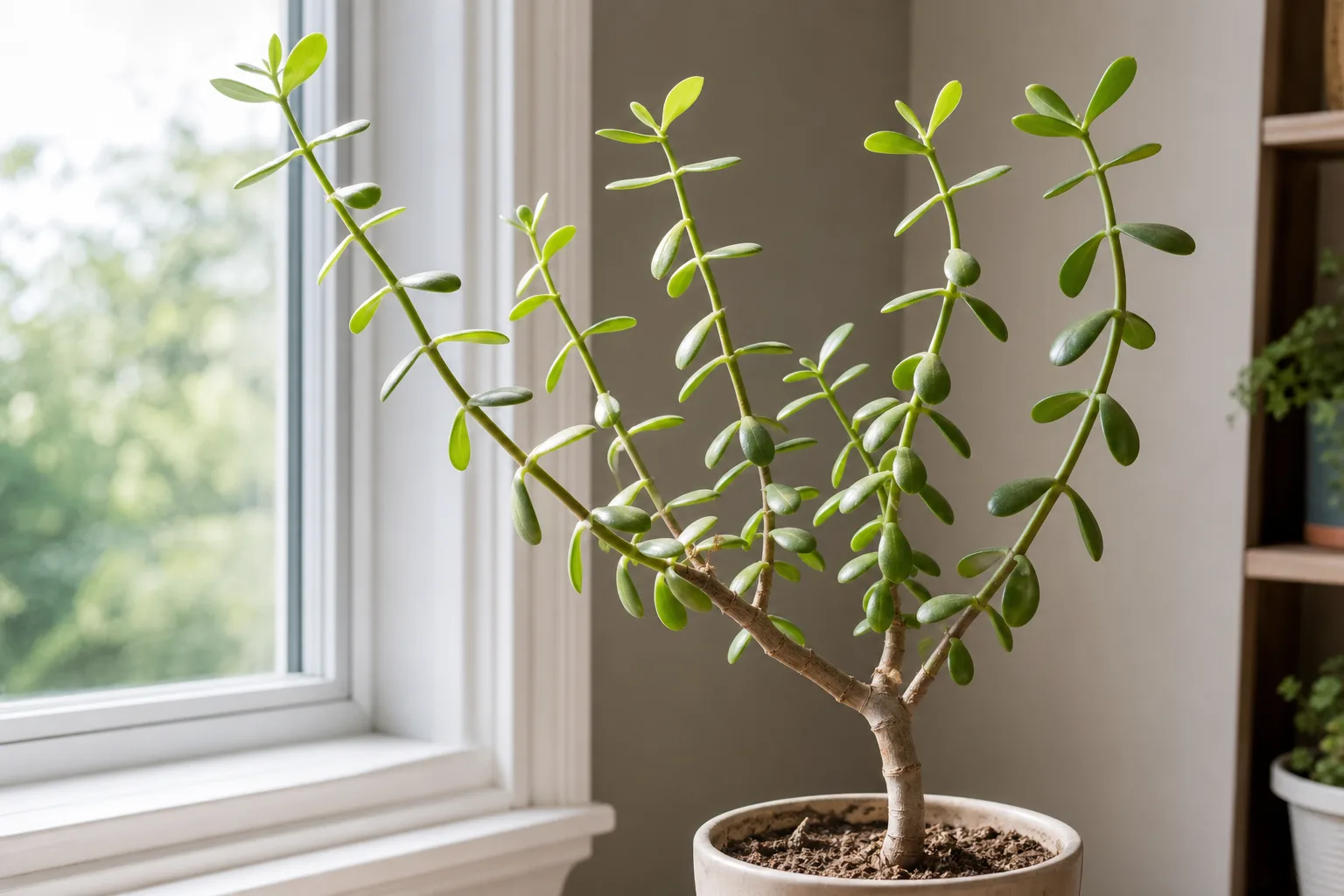
Thin Stems on Jade Plant: Causes, Checks & Fixes
This guide covers thin stems on Jade Plant. See also the general Thin Stems guide, watering, and light pages for this plant.
Thin Stems on Jade Plant: Causes, Checks & Fixes
Quick answer
Thin stems on a jade plant (Crassula ovata) mean branches stay green, succulent, and pencil-thin instead of developing the thick woody trunk that gives mature jade its miniature-tree look. Healthy jade builds short, sturdy branches on a gnarled brown trunk; thin-stem jade looks like a tall green wand with leaves only at the tips.
The usual cause is etiolation from insufficient direct sun. Jade needs four or more hours of direct sun daily for compact growth and normal reddish leaf edging-not the low-light tolerance of a snake plant. In shade, stems elongate toward the window, internodes stretch, and the plant never invests in lignification-the process that turns green succulent shoots into firm brown wood.
First step: move the pot to your brightest location and acclimate to stronger light over one to two weeks. Do not repot, fertilize, or prune heavily on day one. Better light is what stops further thinning; everything else follows once new growth shows tighter spacing.
For the full light-placement workflow, see not enough light on jade plant. For pinch-test separation from floppy rot, see weak stems on jade plant.
What thin stems look like on Jade Plant
Thin stems on jade are a diameter and lignification problem-not vague “stress.” Match these patterns before changing care:
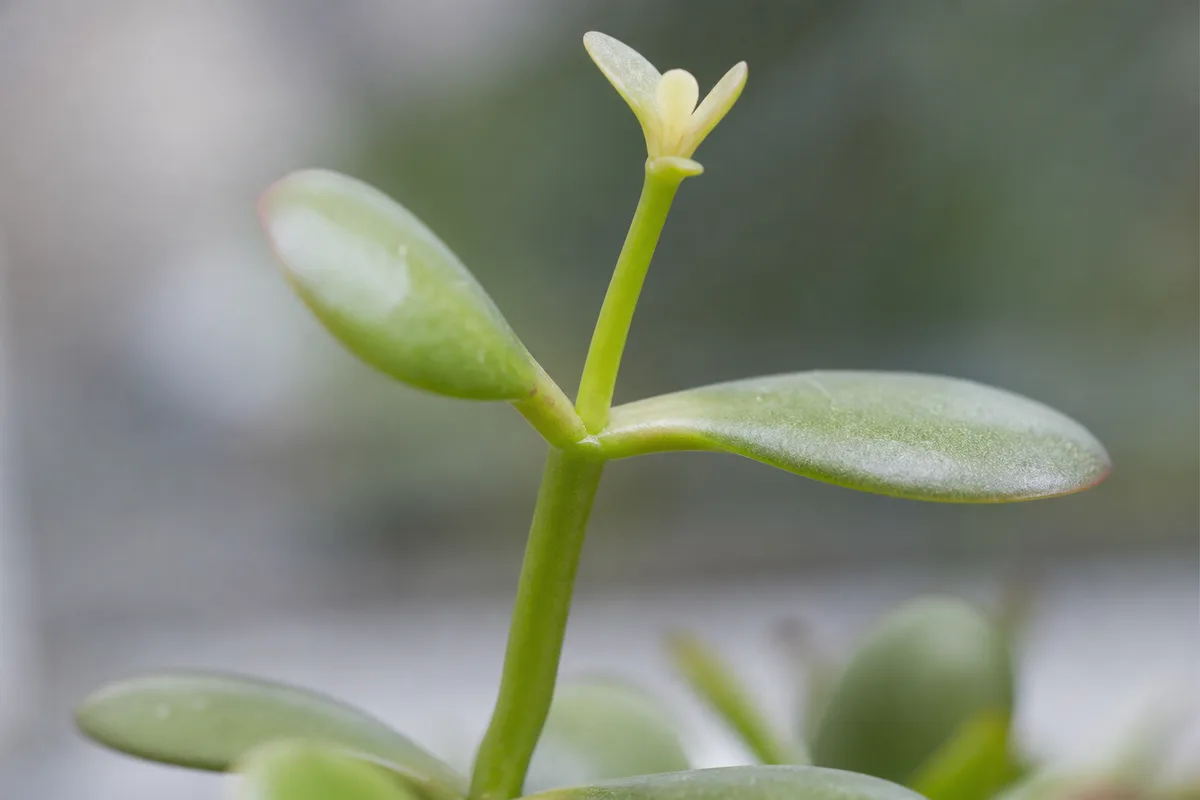
Thin Stems symptoms on Jade Plant - compare with healthy tissue on the same plant.
Etiolation pattern (most common):
- Long gaps between opposite leaf pairs - internodes of one inch or more on young branches; leaves clustered only at stem tips
- Green succulent stems that never brown - new shoots stay soft and bright green year after year instead of developing woody bark
- Pale or small upper leaves compared with older lower pairs; deep green color without red margins
- Failure to build a trunk - the plant grows tall but the main stem stays thin enough to bend under its own leaf weight
- Sharp lean toward the brightest window - rotate the pot and new tips track back within days
Seedling vs. mature jade:
- Young jade naturally has thin green stems at first-that is normal
- Problem thin stems on mature plants mean years without enough sun to lignify: a three-foot jade with a trunk no thicker than a pencil
What thin stems are not:
- Soft mushy collapse at the soil line on a heavy wet pot - that is overwatering or root rot, not etiolation alone
- One branch thin while others stay woody - check mealybugs at stem joints before assuming light
- Upper branches arcing on a firm woody trunk - may be top-heavy growth in a small pot; see root-bound on jade
Stretched tissue is permanent. A thin internode will not thicken after light improves-only new growth from nodes will look compact. Judge recovery by fresh leaf pairs closer together on firm stems, not by waiting for old green shoots to turn woody.
Why Jade Plant gets thin stems
Insufficient direct light is the primary cause. Crassula ovata evolved on dry rocky hillsides in southern Africa with intense sun. Indoors, it belongs in the high-light group-bright south or west windows-not dim hallways more than four to six feet from glass.
When light is too weak, jade stretches toward the window. Cells elongate, epidermis thins, and the plant channels energy into stem length instead of the compact, opposite-paired growth that builds a thick trunk. Wisconsin Extension notes that inadequate light produces deep green leaves and drooping stems rather than normal compact growth and reddish coloration-there is nothing genetically wrong; the environment lacks usable sun for lignification.
Dim light slows water use, which compounds the problem. In bright sun, jade transpires and dries the mix on a healthy rhythm. In shade, the same watering schedule leaves soil wet too long. That dim-light plus damp-mix pattern raises rot risk on already-weak green stems-covered in depth on not enough light on jade plant. If stem bases soften while mix smells sour, escalate to root rot protocol the same day.
Pruning without light correction can also leave thin regrowth. Cutting stretched tips in a dim room forces new shoots that elongate again because the limiting factor-light-never changed. Pruning encourages trunk development only when paired with enough sun to support compact regrowth.
Common triggers:
- North-facing rooms or pots blocked by furniture
- Winter daylight shrink on the same shelf year-round
- Moving outdoor summer jade back indoors without supplemental light
- Dirty or tinted glass cutting intensity more than owners expect
How to confirm the cause
Work through these checks before repotting or cutting:
- Direct-sun hour count - On a clear day, watch whether sun actually hits the leaves for at least four hours. Reflected room brightness is not the same as sun on foliage. Clemson Extension recommends full sun or bright filtered light from a south-facing window with four or more hours of direct sun.
- Internode spacing - Measure the gap between two recent leaf pairs. More than one inch on a young branch strongly suggests etiolation.
- Stem color and texture - Pinch mid-stem. Firm green thin tissue with wide gaps → thin-stem etiolation path. Soft brown or hollow near soil on wet mix → weak stems overwatering path.
- Asymmetry test - Rotate the pot 180°. Within one week, new growth should turn back toward the window if light is directional and insufficient.
- Lignification check - Scratch lower stem lightly. Woody mature jade shows brown firm bark; chronic thin-stem jade stays green and succulent for years.
- Soil dry-down speed - In a dim corner, mix that stays damp ten or more days after watering signals slow water use from low photosynthesis-not necessarily overwatering intent.
- Season context - Did thinning start after days shortened or after a move away from a brighter window?
Lookalike table with urgency
| Pattern | Likely cause | Stem feel | Pot / soil | Urgency | Next guide |
|---|---|---|---|---|---|
| Green thin stems, wide leaf gaps, window lean | Etiolation / thin stems | Firm but thin | Normal or slow dry-down | Routine (light correction this week) | This page, leggy growth, light |
| Floppy collapse at soil line | Overwatering / rot | Soft, discolored base | Heavy, wet, sour | Same day (inspect roots now) | Weak stems, root rot |
| Long stretch, pale tips, prune workflow | Leggy growth | Firm thin | Normal | Routine (after light is corrected) | Leggy growth |
| Deep green droop in dim room | Not enough light (full light guide) | Variable | Often damp in shade | This week (prevent rot overlap) | Not enough light |
First fix for Jade Plant
Move the pot to the brightest location available and increase light gradually over one to two weeks.
Jade coming from months in shade cannot jump to harsh midday sun without scorching. Wisconsin Extension recommends acclimating houseplants gradually to higher outdoor light to prevent sunburn-use the same principle when upgrading window exposure indoors.
Over 7–14 days:
- Shift the pot closer to the glass by a few inches every two or three days, or
- Move from an interior shelf to an east window first, then to south or west once leaves show no scorch
Target end placement: within two feet of a south or west window where leaves receive four to six hours of direct sun or very bright filtered light daily. Full placement detail lives in the jade plant light guide.
Pair the move with a watering reset-not extra water. In stronger light, the pot dries faster. Water only on full dry-down per the soak-and-dry guide; do not keep the calendar from the dim corner.
Hold fertilizer until stable new growth appears for two weeks. Feeding a stressed jade in low light pushes more weak elongation without fixing the limiter.
Prune after compact new growth appears-not before light improves. Cut the thinnest stretched sections back to just above a leaf pair using clean scissors. New branches sprout within weeks during active growth. Step-by-step prune timing: leggy growth on jade plant.
Recovery timeline
First two weeks: the plant should stop leaning aggressively within days of better light; existing thin sections will not thicken or turn woody.
Three to six weeks (active season): watch for tighter new leaf pairs on firm stems-shorter gaps confirm light is working. Red margins may return on leaf edges in strong sun.
Two to three months: after compact new growth is established, selective pruning of the thinnest old sections produces a bushier silhouette. Propagate firm cuttings if you remove large stretches.
Winter correction: growth may stall until March or April. Track spring node spacing rather than January stem diameter.
Signs of improvement: shorter gaps between new leaf pairs, stems beginning to brown at the base on new wood, firmer pinch-test on newest growth, and pots that dry on a healthy rhythm.
Signs of worsening: stem bases soften on wet mix, sour smell from drainage holes, yellow leaves climbing the trunk, or continued elongation through a full warm season after a light move.
What not to do
Do not prune all stretched sections before confirming light improvement-wait for compact new growth first.
Do not move jade from a dim room to full outdoor summer sun in one day-sunburn on thin tissue adds damage.
Do not fertilize thin etiolated jade before light and watering are stable-nitrogen pushes elongation without building wood.
Do not expect old green thin internodes to lignify after light improves. Only new growth from nodes develops normal thickness.
Do not stack repotting, heavy pruning, and fertilizer in the same week when stems are merely thin and roots are healthy.
Wear gloves when handling cut tissue-jade is toxic to cats and dogs if ingested.
How to prevent thin stems next time
Grow jade where it receives four or more hours of direct sun indoors, or add supplemental grow light when windows are insufficient. Rotate the pot weekly if one-sided leaning starts.
Water on full dry-down, not a calendar-soak thoroughly, then wait until the entire root zone dries between deep waterings before the next drink. Match winter reduction to semi-dormancy per the watering guide.
Use terracotta and fast-draining succulent mix so dim-corner wet soil is less likely. Empty saucers after every watering.
Prune in spring once the plant has good light to encourage a thick woody trunk that supports heavy branches-not cosmetic trimming in shade.
When to worry
Thin stems alone are not an emergency-jade survives years in dim rooms looking spindly. Treat as urgent when:
- Stem bases soften while mix stays wet and smells sour
- Black patches climb the trunk
- Pests spread across multiple branches
- No firm new growth through a full warm season after light correction
Those patterns point to root rot layered on slow water use, not simple etiolation.
Practical checks
Urgency check
Same-day root inspection when bases go soft on wet mix. Light-only thin stems can wait for gradual acclimation.
Best inspection order
Internode spacing → stem color (green vs. woody) → direct-sun hours → pinch-test mid-stem → pot weight → stem bases if wet → leaf axils for pests.
Cultivar caveat for trunk expectations
Some jade cultivars stay visually different even in good light. Wisconsin Extension and N.C. State Extension both list cultivars such as 'Gollum' and 'Hobbit' with tubular leaves and slower, unusual branching habits. They still need strong light to avoid thin stretch, but trunk thickening can look less “classic tree-like” than standard Crassula ovata. Judge progress by tighter new nodes and firmer new stems, not by comparing directly to photos of broad-leaf standard jade.
FAQs
Will thin jade stems thicken on their own after I add light?
No. Stretched internodes stay thin permanently even in bright sun. Once light improves, only new growth from nodes will be closer together and firmer. Prune back the thinnest stretched sections after you see compact new leaf pairs, usually in spring or summer active growth.
How much sun does a jade plant need to stop thin stems?
Extension guidance recommends four or more hours of direct sun daily for compact, tree-like growth indoors. Count hours when sun actually hits leaves at a south or west window, not general room brightness. Supplement with a grow light if your only exposure is north-facing.
Are thin stems the same as leggy growth on jade?
Not exactly. Thin stems describes the diameter problem, when green succulent stems never lignify into woody branches. Leggy growth is the stretch pattern with long internode gaps. They often share the same light shortage, but this page focuses on trunk-thickness failure while leggy growth covers cut timing in detail.
How do I tell thin stems from weak floppy stems on jade?
Pinch mid-stem tissue first. Firm but thin green stems with wide leaf gaps usually point to etiolation. Soft or mushy tissue at the soil line on a heavy wet pot points to overwatering and possible root failure, so switch to the weak stems and root rot workflow immediately.
Should I prune thin stretched stems right away?
Not before light improves. Move and acclimate first, then wait for tighter new leaf pairs on firm tissue before cutting. Pruning a jade still in deep shade usually produces another flush of weak elongation.
Conclusion
Thin jade stems usually trace to too little direct sun for normal lignification. Use this escalation rule: if stems are firm and the base is dry, correct light first and reassess new growth over the next month; if bases are soft on wet mix, move immediately to root rot triage the same day. For overlap, use not enough light on jade plant for the full dim-light cascade and leggy growth on jade plant for pruning sequence after compact regrowth appears.
Related Jade Plant guides
- Jade plant overview - light, watering, seasonal rhythm
- Not enough light on jade - comprehensive etiolation and light-hour checks
- Leggy growth on jade - stretch identification and pruning workflow
- Weak stems on jade - pinch-test for rot vs. etiolation
- Jade light requirements - direct sun hours and acclimation
- Jade watering guide - soak-and-dry rhythm
- Root rot on jade - when thin stems pair with wet sour mix
Related tool
Use the Plant Problem Diagnosis Tool to narrow causes for thin stems on this plant before changing multiple variables at once.